
War and the Principles of the Negotiation Process.

George Friedman explains: All wars end. Sometimes, the end is reached when one side achieves its goals, which can range from a limited victory to the conquest of the enemy nation. When neither nation is able to reach its goals, the war ends in negotiations. The evolution and outcome of those negotiations depend on two things. The first is resources; The second is popular support.

Luis Maizel’s Monthly Letter: The Month That Shook the World

The outbreak of hostilities in Iran has caused a surge in oil prices, impacting global inflation and interest rate decisions. While the U.S. economy shows stability, consumer behavior remains cautious amid rising energy costs. The geopolitical situation complicates projections for various markets, affecting industries worldwide, including construction and retail.

World Happiness Report

Young people’s happiness in North America and Western Europe has declined significantly over the past 15 years, coinciding with a rise in social media usage. The World Happiness Report explores the relationship between social media and well-being, highlighting evidence of social media’s harmful effects on adolescents and the need for effective policy responses.

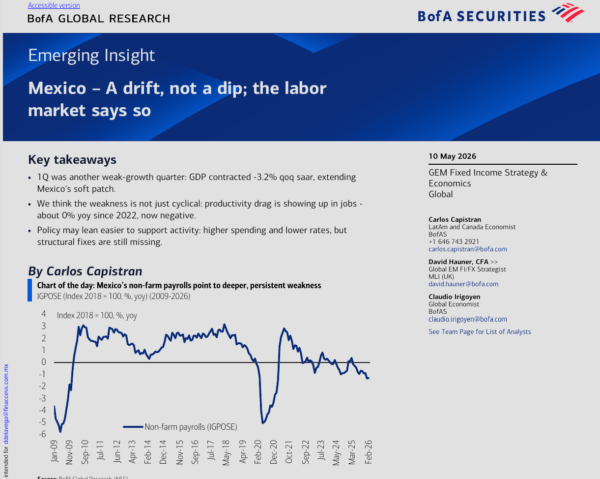
U.S. Voter Attitudes Towards the U.S.-Mexico Relationship.

The content outlines various U.S. voter attitudes towards the U.S.-Mexico relationship, accompanied by further reading links on topics including national defense, economic outlook, and international security strategy. These resources aim to provide insights into current political risks and strategies affecting the U.S. and its foreign relations.

Larry Fink’s 2026 Annual Chairman’s Letter to Investors.

The letter emphasizes the importance of long-term investing amidst a climate of economic uncertainty marked by rising inequality and technological disruption. It advocates for expanding access to capital markets, highlighting that consistent investments can benefit both individuals and their countries, linking personal financial growth with broader economic progress.

2026 Unclassified Annual Threat Assesment of the U.S. Intelligence Community

The ATA-2026 annual report details worldwide threats to U.S. national security, as mandated by the FY21 Intelligence Authorization Act. It presents insights from the Intelligence Community, focusing on imminent threats for the upcoming year and emphasizing the need for a proactive intelligence response to protect American lives and interests.

A Summary of the Iran War, So Far.

The content discusses the ongoing Iran War from a geopolitical perspective, featuring insights from George Friedman of Geopolitical Futures. It also includes links to further readings on various global issues, such as U.S. strategy, economic outlooks, and national security, highlighting the complexities of international relations.

Luis Maizel’s Monthly Letter: A World That Changes In A Flash.

The recent attack on Iran eases global tensions, impacting groups funded by the regime. While the U.S. economy shows signs of strength, disparities between social classes persist. In Mexico, significant events like the death of a drug lord and mixed economic signals define the landscape. Global markets face volatility amid geopolitical shifts.

The Importance of Rules and Their Compliance.

Rules are essential for creating order and enabling cooperation within society. They define acceptable behavior, protect individual rights, and facilitate complex interactions. However, the effectiveness of rules relies heavily on their enforcement. Without fair and consistent enforcement, rules become mere suggestions, eroding trust and potentially leading to chaos.

Future of Europe: Insights from the Munich Security Conference.

George Friedman discusses the implications of recent geopolitical shifts for Europe in his coverage of the Munich Security Conference. The content emphasizes the challenges Europe faces amid evolving global dynamics, urging a reassessment of established policies and strategies in light of emerging threats and opportunities for collaboration. Further reading is provided.

Shares