
Morgan Freeman On Trump’s Threat To Mexico.

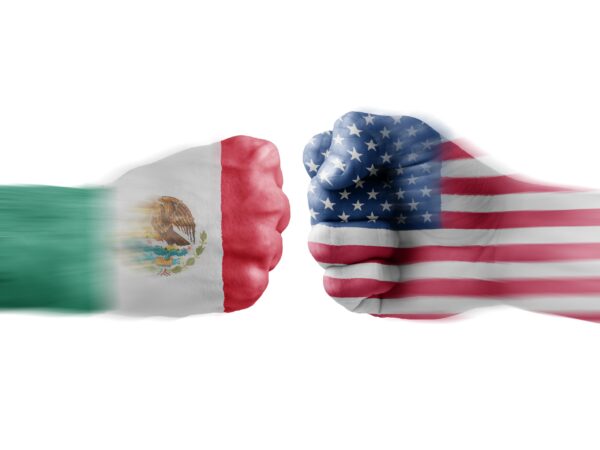
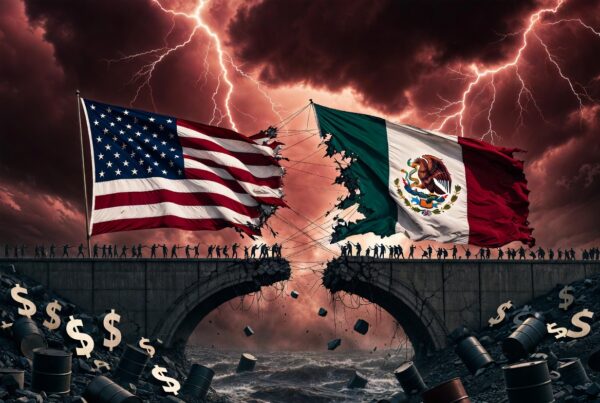
Morgan Freeman critiques Trump’s 2026 threat to use military force against Mexican cartels, recalling the failure of Plan Colombia despite significant investment. He argues that military action has consistently failed to diminish cartel power in various countries, suggesting that Trump’s approach will likely repeat past mistakes with unproductive escalation.

Breaking the Silence: Our Role in Democracy.

Modern democracy is hindered by indifference, as many view politics as the realm of others, leading to a harmful mindset that absolves personal responsibility. The silence and disengagement of citizens allow anti-democratic narratives to flourish. Engaging politically is essential; passivity invites those with less scruple to fill the power vacuum.

Madness in Power: Consequences for Global Stability.

The content critiques the rise of reckless leadership, particularly focusing on Trump’s actions as detrimental to global stability. It contrasts the concept of madness, which can inspire short-term success, with the destructiveness of past tyrants. The author warns that unchecked madness in power threatens democracy and societal well-being.

Sir Niall Ferguson: Trump Was Right To Overthrow Maduro.

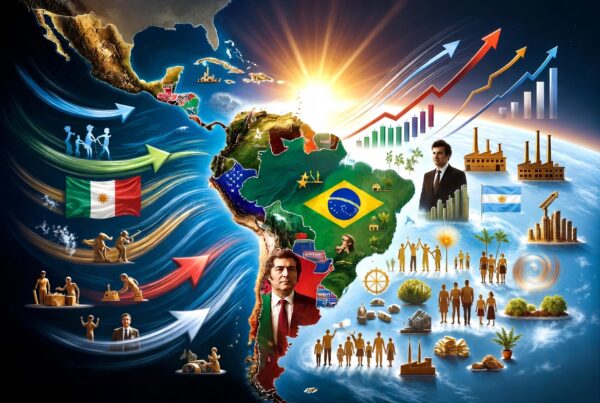
Historian Niall Ferguson discusses President Trump’s decision to oust Venezuelan President Nicolás Maduro, labeling it as overdue. He analyzes U.S. intervention history in Latin America, introduces the “Trump Corollary,” and evaluates the potential risks of regime change while considering global consequences involving China, Iran, and regional power dynamics.

The Double Standard of Moral Outrage in Mexican Politics.

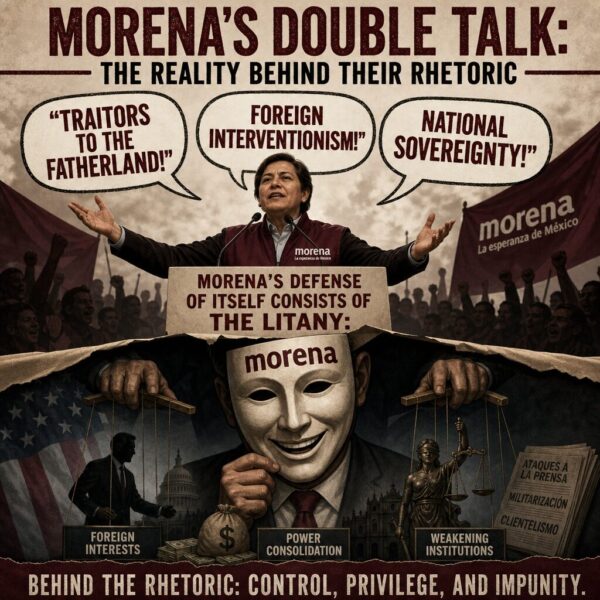
The post criticizes the hypocrisy of leftist Mexican opinion on international law, highlighting their selective outrage against the US while defending authoritarian regimes. It argues that invoking sovereignty to protect dictators is opportunistic, noting historical examples where moral responsibility superseded legal constraints. Ultimately, it warns that ideological consistency jeopardizes Mexico’s national interest in trade and diplomacy.

Eurasia Group Top Risks 2026

The year 2026 marks significant geopolitical instability, driven by an unpredictable U.S. political shift and ongoing global conflicts. While some nations, like China and India, bolster their positions, Europe faces heightened challenges. An AI revolution is also underway, complicating governance. The global landscape is turbulent, with lasting implications for future generations.

Neither Less Poverty, Nor Less Violence.

The National Institute of Statistics and Informatics (INEGI) reported optimistic economic data for Mexico, claiming job growth and reduced crime. However, real incomes are declining, and most workers are in the informal sector, leading to increased poverty. The government’s statistics misrepresent the harsh realities facing many citizens, particularly regarding violence and economic hardship.

Exploring the Risks of Fragmentation in Mexican Politics.

Opposition parties in Mexico, namely PAN, PRI, and MC, intend to run separately in the 2027 elections, believing individual strategies will attract voters disillusioned by Morena’s governance. They anticipate a collapsing economy and internal strife within Morena to bolster their positions. However, a call for unity amidst complexity in reconstruction is emphasized.

My Readings in 2025.

In times of upheaval, many books emerge addressing significant geopolitical and historical themes. Noteworthy titles include Hal Brands’ exploration of Eurasian geopolitics and Claudio Lomnitz’s analysis of Mexico’s dual realities. Robert Kaplan’s pessimistic insights mirror the Weimar Republic, highlighting the fragility of democracy, while Timothy W. Ryback details Hitler’s rise without popular support.

U.S. National Security Strategy.

This official report of the United States Government outlines the priorities of the Trump administration concerning foreign policy, revealing a shift in its geopolitical strategy and values.