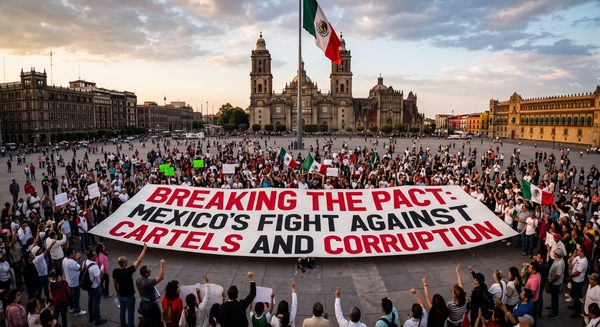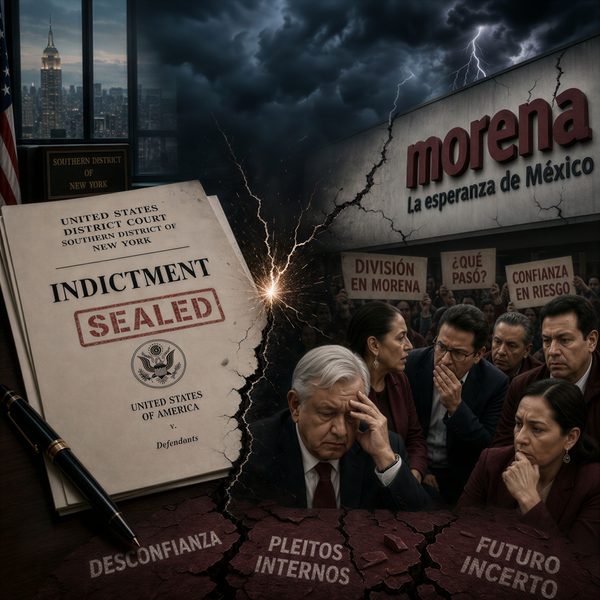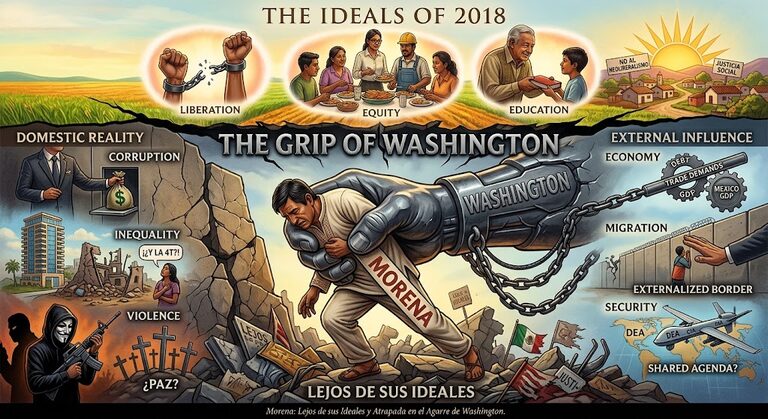
Morena: Betrayals and Political Fallout.

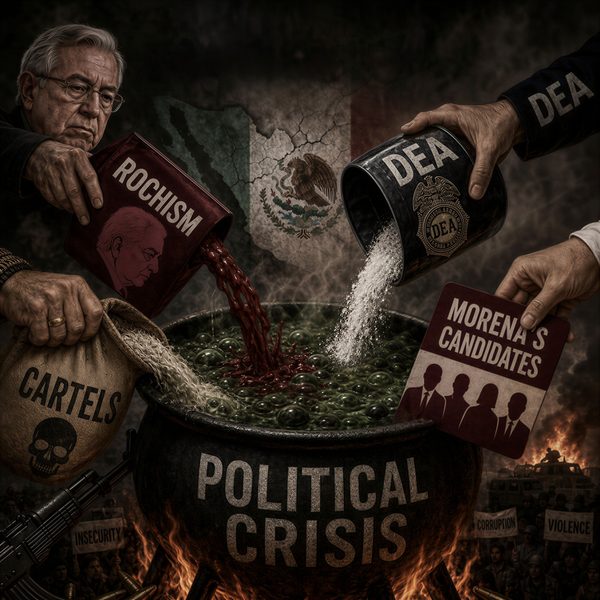
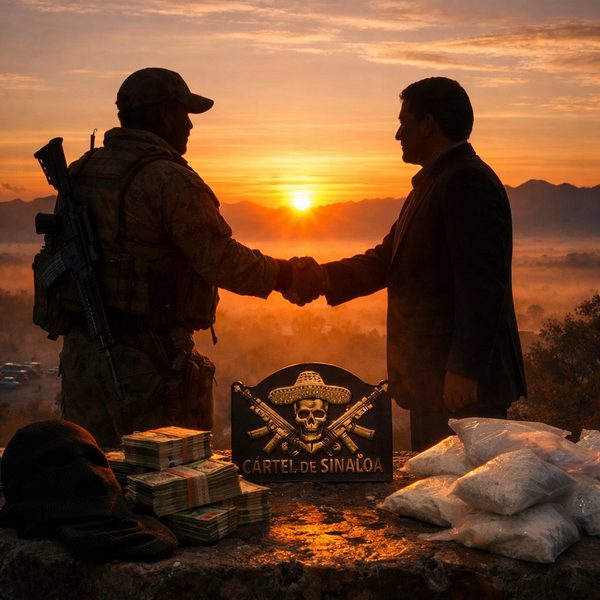
High-ranking members of Mexico’s Morena party are allegedly informing U.S. authorities about connections between the movement and drug trafficking to mitigate future legal issues. The article discusses internal tensions within Morena regarding strategies towards the U.S., amidst fears of betrayals and potential designation as a narco-terrorist organization, signaling impending collapse.

Mexico, Trump, and the Limits of Confrontation.

The U.S.-Mexico border relationship is complex, affected by historical ties and modern challenges such as organized crime and political populism. Leaders Donald Trump and Andrés Manuel López Obrador represent frustrations from globalization. Acknowledging shared security threats may foster cooperation, essential for addressing mutual interests amidst lingering institutional weaknesses in Mexico.

Ali Baba’s Cave

The content discusses FIFA’s operations and corruption, notably illustrated by the FIFAgate scandal involving Chuck Blazer. It critiques FIFA’s dealings with authoritarian regimes and Gianni Infantino’s questionable leadership. It highlights the financial burden on host cities for the World Cup while benefiting FIFA and the media instead of local communities.

The Lame Duck

Socioeconomic challenges are intensifying in Mexico as growth forecasts plummet, job creation declines, and school enrollment drops. Corruption and a deteriorating judiciary exacerbate the situation, hindering foreign investment. Amid rising inflation, the government faces pressure to reform, particularly regarding human rights violations highlighted by the IACHR. Immediate action is crucial for stability.

How We Spend Our Time 1920-2026,

The video analyzes how U.S. adults aged 25 to 35 spend their 24 hours from 1920 to 2026, focusing on shifts in commuting, entertainment, and household activities. Excluding sleep and work, it highlights changes driven by technological advancements and evolving social structures, using a comprehensive statistical approach and various historical datasets.

“The Dystopian World Cup with Utopian Soccer”

The content explores the contrast between dystopia and utopia, particularly in the context of the 2026 World Cup amid geopolitical turmoil. While dystopian elements define the background, the unifying power of soccer brings joy and a sense of community, temporarily mending societal fractures despite the overwhelming challenges faced in the world.

The Pope Rides Again.

Vincenzo Gioacchino Pecci, elected as Pope Leo XIII, symbolizes the Catholic Church’s transformation from a persecuted faith to a political powerhouse post-Constantine. The Church, facing modern crises, seeks renewed moral authority through Pope Leo XIV’s focus on contemporary issues like artificial intelligence, war, and societal polarization, emphasizing human dignity.

Mexico Needs a Course Correction.

President Claudia Sheinbaum’s administration in Mexico has struggled to address significant challenges, following a course inherited from the previous government. With rising polarization, weak investment, and declining public support, the need for change is imperative. Adapting strategy and building unity, especially with the United States, are vital for future stability.

Automotive Psychology

Juan Villoro reflects on his experience of selling a used car after owning it for thirteen years. Once deemed a virtue, the car’s singular ownership faces scrutiny amidst modern-day scams. An unexpected inspection by Manuel, a psychologist, reveals deeper insights into Villoro’s personality and habits, ultimately affecting the sale.

Waiting for November.

The upcoming U.S. midterm elections on November 3 are pivotal, with President Trump’s approval rating falling to 35%. Many Americans disapprove of his economic handling and the war in Iran, anticipating repercussions on global tensions. A potential shift in U.S. foreign policy could occur depending on election outcomes, particularly regarding Europe and Latin America.

Shares