It Was An Ambush.

In terms of military manuals, an ambush depends on five interrelated factors: surprise, concealment, detailed planning, a favorable field of fire, and security. These elements were present in the operation prepared by the government to ambush the Generation Z mobilization. The political objective: to discredit the movement while simultaneously providing the government with an alibi to blame others for the event.

Dictatorships Seem Eternal.

In four days, it will be fifty years since the death of a dictator. Francisco Franco died between midnight on November 19 and the early hours of November 20, 1975. His death was recorded, made up, dressed up, and solemnly announced to the Spanish people. The message was read, with tears in his eyes, by the president of the government appointed by Franco himself: “Spaniards… Franco is dead.”

Mexican Government Repression in the Zócalo

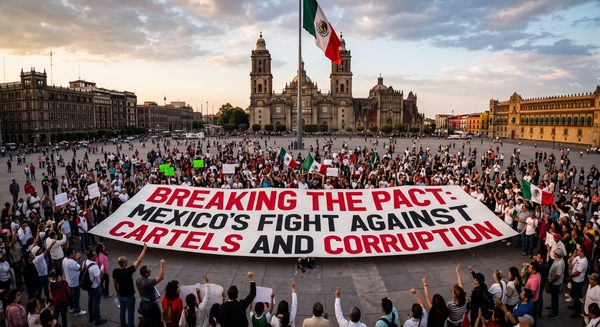
The march was entirely peaceful. There was no sign of any violent tendencies. The outbreak of violence brought to mind the events of October 2 in Tlatelolco. Citizens were protesting peacefully while the government plotted and organized the repression. Did the government strategists think of combining October 2 with the Halconazo? It seems so. What better strategy than to create chaos, violence, and confusion?

The Inverted Pyramid of Power

President Sheinbaum’s approach to Mexico’s security crisis fails to prioritize public safety, viewing organized crime and cartels as ideological issues rather than urgent threats to citizens. Inaction and normalization of violence hinder growth and progress, with citizens living in a climate of fear. Security is essential to prevent societal collapse.

The Global Organized Crime Index 2025.

The global criminal landscape is increasingly adaptive and complex, shaped by socio-economic shifts and technological advancements. The 2025 Index highlights critical changes in drug markets, the rise of non-violent crimes, and growing foreign and private sector involvement. It indicates an urgent need for new resilience strategies to counter evolving organized crime.

Youth Rebellion in Mexico: The Influence of ‘One Piece’.

The youth rebellion, symbolized by Monkey D. Luffy from “One Piece,” reflects a surge of activism in Asia and beyond, particularly within Generation Z. Government attempts to co-opt these movements in Mexico demonstrate a fear of losing control, as genuine student uprisings challenge the status quo amid societal discontent and violence.

The Failure Of The Security Strategy.

Over the past two decades, despite numerous tests and programs, we have not managed to establish trustworthy municipal police forces capable of confronting the expansion of organized crime, which is primarily sustained by their control of local governments. After months in office, President Sheinbaum rectified and presented a plan. Essentially, she is right: the key lies with the municipalities.

Reasons for the Revocation of Mandate.

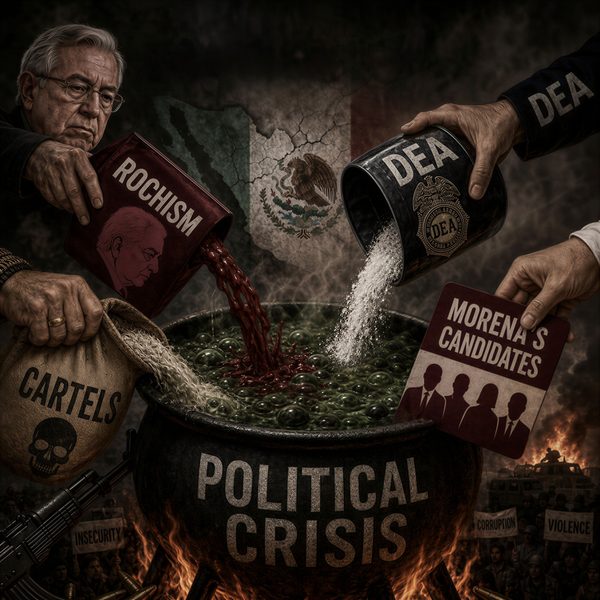
Mexico is experiencing its worst political moment under Sheinbaum’s young administration, with a governance crisis at a boiling point. There are social and criminal uprisings throughout the country. Violence is escalating, and the federal government’s inability to control the situation and to provide peace and tranquility is evident to citizens every day.

Looking For Scapegoats To Avoid Dealing With The Security Crisis.

Luis Rubio argues that Mexico’s crisis stems from structural weaknesses and decades of mismanagement rather than individual blame. The country faces paralysis and corruption while requiring a shift from blame to reconstruction. It needs a comprehensive vision to build state capacity, confront violence, and foster sustainable collaboration with the U.S.

Baker Institute: Mexico Outlook 2026

The Rice University’s Baker Institute for Public Policy report on Mexico Country Outlook 2026, is published by the Center for the United States and Mexico. Experts discuss the opportunities and challenges in Mexico’s political, regulatory, economic, and social environment. It addresses themes, such as the political and diplomatic relationship between Washington, D.C. and Mexico City, the state of politics and democracy in Mexico, shifts in the regulatory environment, pending issues in the legislative and regulatory agenda, the expected performance of the country’s economy, public safety and security, and other relevant social issues.