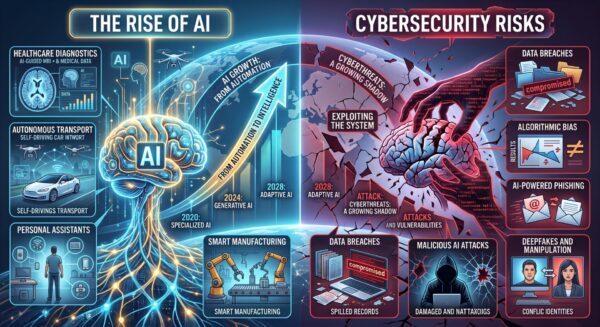
The Rise of AI and Its Cybersecurity Risks.

The article discusses the challenges of academic admissions, emphasizing the issue of cheating during exams at UNAM, where technology failed to prevent violations. It also highlights a significant AI oversight, where OpenAI’s ChatGPT accessed the internet due to a security lapse, raising questions about trust and human responsibility in the digital age.
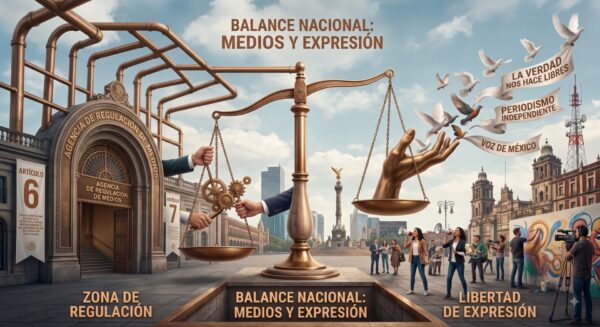
The Impact of Media Regulation on Freedom of Expression in Mexico.

The content discusses the essential role of freedom of expression and audience rights in democracy, particularly within the context of Mexican telecommunications law. It criticizes guidelines proposed by the Telecommunications Regulatory Commission, viewing them as detrimental to both freedom of expression and democracy, asserting they centralize media control under government influence.

Media Freedom vs. Government Control: The Mexican Dilemma.

The government’s push for “General Guidelines for the Protection of Audience Rights” reflects an attempt to foster media control amidst growing polarization. Critics argue that this undermines press freedom and audience autonomy, as it allows government-appointed officials to impose sanctions and blurs the line between news and propaganda, stifling independent journalism.

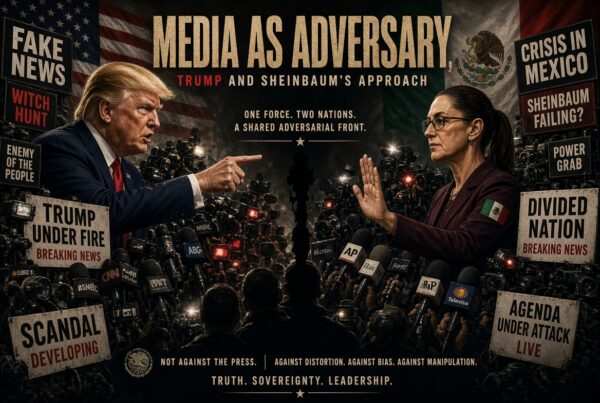
Media as Adversary: Trump and Sheinbaum’s Approach.

The dynamics between Trump and Sheinbaum reveal a shared strategy of viewing critical media as adversaries. Both leaders personalize their conflicts with the press, employing aggressive rhetoric and administrative actions to control narratives. This results in a weakened press landscape, favoring political identities over journalistic credibility, reflecting a troubling imbalance in power.

Fear as a Political Variable Looking Ahead to 2027.

Mexico’s relationship with the U.S. has evolved to encompass national security concerns related to drug trafficking, especially after cartels were labeled foreign terrorist organizations. The indictment of Sinaloa Governor Rubén Rocha illustrates the U.S. intent to engage politically. This dynamic introduces fear among Mexican officials, impacting the 2027 elections and their governance approach.

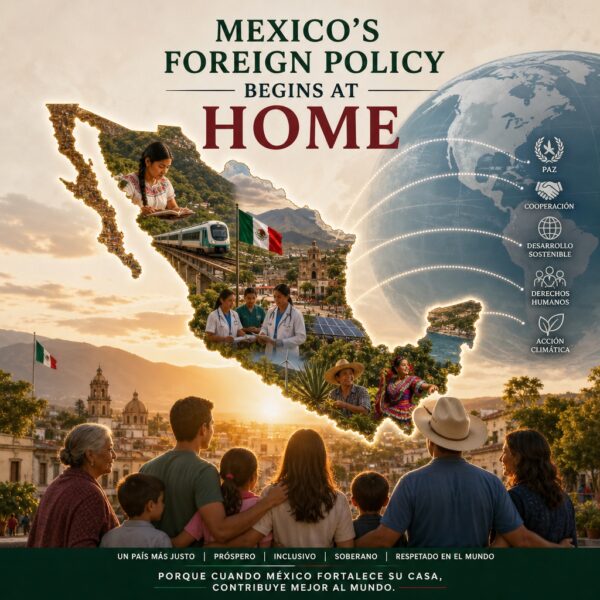
Foreign Policy Begins at Home.

The article discusses Mexico’s shifting diplomatic strategy under its current government, which has retreated from its historical active participation in international forums. It highlights the importance of a diversified foreign policy to reduce dependence on the U.S. and engage with like-minded nations, while criticizing the current government for prioritizing ideological preferences over strategic interests.

Luis Maizel’s Monthly Letter: China: World Power or Looming Disaster?

This month’s analysis highlights China’s transformation into a technological powerhouse, contrasting with its economic struggles, including a slow GDP growth and a near-bankrupt banking sector. Meanwhile, the U.S. exhibits moderate economic growth amid political volatility and rising consumer discontent. Global economies face challenges, including inflation and geopolitical tensions, affecting growth and trade relationships.

The Right to Die with Dignity: Global Perspectives on Assisted Suicide.

The French National Assembly has legalized euthanasia and assisted suicide for patients with irreversible illnesses, marking a significant shift in societal control over end-of-life choices. Meanwhile, Mexico’s progress in this debate remains slow, with active euthanasia still criminalized, necessitating reflections on individual rights and dignity in dying amidst ethical and religious complexities.

Time to Decide.

The Mexican opposition is in crisis, lacking a unified perspective amid the country’s deteriorating state. Party leaders are entrenched in ideological biases, undermining effective responses to pressing issues like corruption and public safety. Without strategic unity, their efforts remain tactically shallow, risking further marginalization as the nation presses towards potential chaos by 2027.

Spain–Morocco: From the Green March to the Ceuta Crisis.

Hassan II. The Moroccan monarch had developed a very close relationship with Henry Kissinger, Morocco was a key component of U.S. strategy in North Africa and a counterweight to Algeria, a country aligned with the Soviet Union and Rabat’s main regional rival. He took advantage of the end of the Franco regime to deliver the coup de grâce to what remained of one of the greatest colonial empires on earth.

Shares