Post-War Iran: Challenges Ahead for a Resilient Nation.

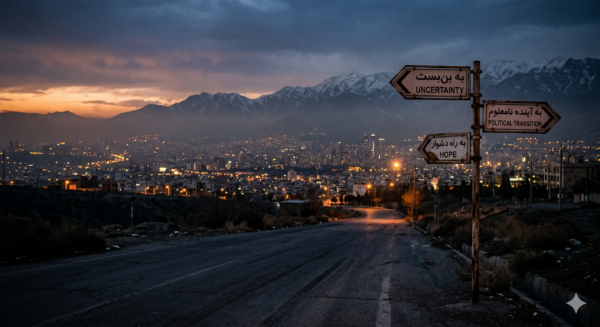
The ongoing conflict in Iran reflects deep-seated internal discontent, shaped by national identity rooted in the Persian Empire. Despite severe repression, the population’s pride is resurfacing. The country’s crises—water scarcity, economic decline, and geopolitical tensions—signal a critical juncture, with potential ramifications for regional and global power dynamics post-conflict.

Luis Maizel’s Monthly Letter: The United States, a Polarized Nation in Search of Direction.

The United States is experiencing significant political and economic polarization, impacting domestic policy and international relations. Political divisions hinder unity and progress, while economic indicators present a mixed outlook, with low unemployment juxtaposed against stagnant consumer spending. Globally, instability in Iran threatens oil prices and economic growth.

The Present Moment.

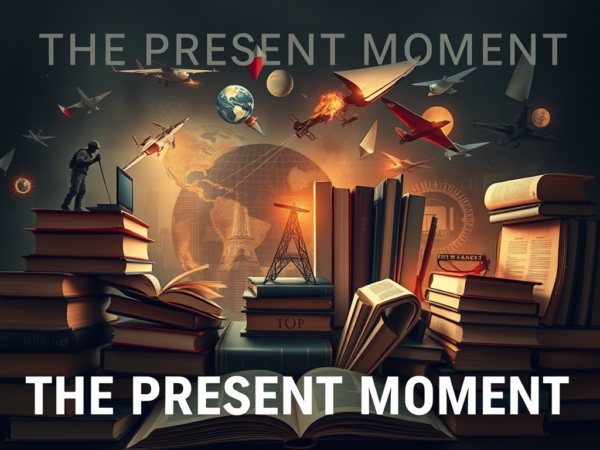
The current global landscape is marked by rapid technological change, shifting power dynamics, and resurgent conflicts. Notable works explore these themes, covering topics from Mexico’s governance challenges to China’s revolutionary history and Iran’s geopolitical strategies. Collectively, these insights highlight the profound changes affecting societies worldwide and the implications for political authority and citizen rights.

The Trump Presidency: A Historical Earthquake.

Antonio Navalón expresses his weariness with Donald Trump’s influence on contemporary history, arguing that he undermines democracy and promotes personal power. The combination of political division, gun ownership, and social issues reflects a destabilizing reality in the U.S., while Trump’s foreign and domestic policies deepen conflicts and economic challenges faced by citizens.

An Impossible War.

This is an impossible war because it has no easy way out. Once the bombing is over, assuming the partial destruction of facilities and even the weakening of the Ayatollahs’ government, we would still have to live with a world full of fanatics, militias, ideological networks, clandestine apparatuses, and political structures that have made holy war and the destruction of their enemies a way of life and a reason for existence.

Remaking the Middle East: The U.S., Israel and Iran.

The documentary “Remaking the Middle East: The U.S., Israel & Iran” examines the origins and consequences of the U.S.-Israel war with Iran. Updated in March 2026, it provides historical context on the conflict, highlighting decades of animosity, U.S. involvement, and the stakes for the Middle East amid ongoing hostilities.

The “Domino Effect” of the War in Iran.

The US and Israeli military actions against Iran in February 2026 have escalated into a potential global conflict, adversely affecting the world economy. With the Strait of Hormuz at the center, energy prices have surged due to disrupted oil and gas supplies, leading to inflation and economic stagnation worldwide, particularly impacting Europe, Asia, and vulnerable emerging markets.

Three Videos on Iran, Trump, and The World.

Thomas Friedman discusses U.S. strikes in Iran on Morning Joe. Canadian Prime Minister Mark Carney speaks at the Lowy Institute about global tensions and strategic alliances with countries like India and Australia, emphasizing diplomacy. David Brooks and Jonathan Capehart analyze the U.S. political landscape, focusing on the economic uncertainty amid recent military actions.

Luis Maizel’s Monthly Letter: A World That Changes In A Flash.

The recent attack on Iran eases global tensions, impacting groups funded by the regime. While the U.S. economy shows signs of strength, disparities between social classes persist. In Mexico, significant events like the death of a drug lord and mixed economic signals define the landscape. Global markets face volatility amid geopolitical shifts.

Israel-Iran: One of them has to disappear.

When this war ends, which I hope will be soon, one of the two countries—Iran or Israel—will have had to change its political, military, or security structure substantially. What is at stake is not a minor adjustment, but the very survival of the Iranian regime or, at the extreme, the strategic viability of Israel in a regional environment that has become reactive.

Shares