

Ricardo Pascoe Pierce
The Mexican opposition is going through difficult times, not to mention a state of uncertainty. Its situation is characterized by contradictory and sometimes conflicting interpretations of the country’s direction. There is no common understanding among opposition party leaders regarding the nature of the State crisis Mexico is facing. Each interprets Mexican reality—and the direction the country is taking—through its own ideological lens and based on its particular interests. Conceptual frameworks have become blurred, and their rank-and-file members tend to accept whatever the party leaderships dictate, even when it sometimes sounds like they’re pandering to the Morena regime. In contrast, their non-partisan social base—which sympathizes with a particular party’s logo or history—sees more clearly the nebulous crisis looming over the nation. This is something the parties do not seem to see.
According to polls, most Mexicans believe that public safety remains a real threat in their daily lives. Crime exists and operates with great impunity. They also observe how the Morena administration conceals and defends “its” politicians allied with organized crime, especially drug trafficking. Given this, it is incomprehensible to the Mexican majority that party leaders and opposition lawmakers fail to see the danger clearly—or even ignore it entirely—thereby failing to direct their efforts toward the common goal.

Polls also illustrate how a majority of Mexicans view corruption within the new ruling class as a cancer that tends to grow ever larger and more visible. Corruption is the hallmark of the Morena party. The perception among most Mexicans is that the opposition, collectively or individually, is not tackling this issue head-on—a problem so deeply entrenched in the government system, the prosecutor’s offices, the police, the Armed Forces, and officials at all levels. This confirms the open collusion between politicians and drug traffickers.

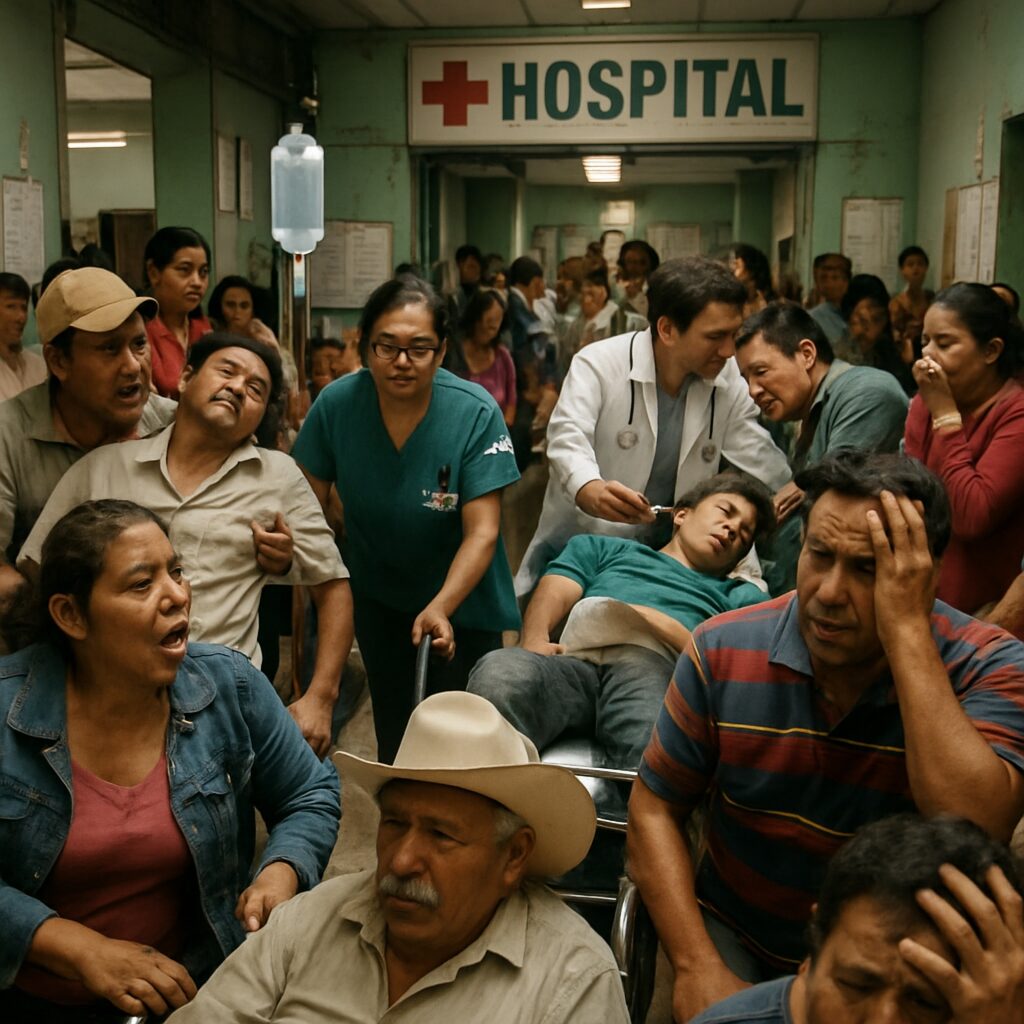
The crisis in the health and education systems at all levels is overwhelming and unsettling the entire society. Between the sick who lack proper care and students at all levels who lack adequate professional training—and thus have no guarantee of a promising job—society sees the possibility of a future for Mexico and for its families slipping away.
All these red flags send an unequivocal message to the Mexican opposition: unite or go down. Political parties are legally considered entities of public interest. Legal registration is not a license to dismiss everyone who does not agree with their political positions. Such sectarianism is a curse for Mexico.
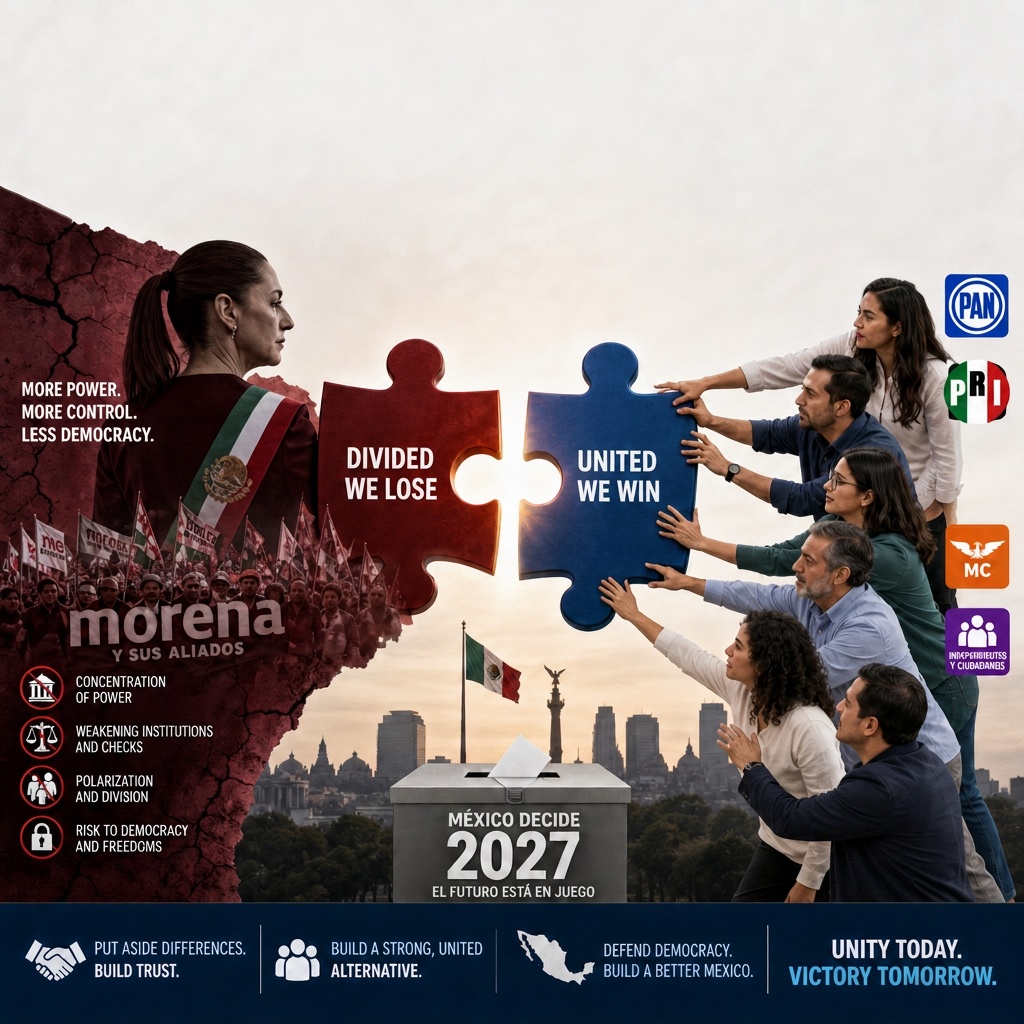
The opposition has a legal obligation to rebuild a country teetering on the edge of an abyss. In addition to presenting a national reconstruction plan, it must also understand the strategic—not merely tactical—nature of its unity. Neither the PAN, nor the PRI, nor the MC, on their own, offers a way out of the crisis facing the country. Their proposals show glimpses of usefulness and feasibility in resolving some of the country’s problems. But with each party stuck in its own corner, they end up merely expressing biased opinions that have no chance of being implemented due to their political weakness.

In the 2018 elections, there was unity among the PAN, PRD, and MC. In 2021, there was unity among the PAN, PRI, and PRD. In 2024, there was unity among the PAN, PRI, and PRD. But truth be told, in all those elections, the logic behind opposition unity was tactical, not strategic. In other words, the parties sought to increase their votes and seats, but they did not seek to create a new governing bloc capable of reorienting the country’s course. And in 2027, when the national crisis is reaching a point of no return—when by 2030 the opposition might not even exist—what is the plan? They deny the need for unity, because the spirit of partisan patriotism prevails over the commitment to save the country.
To change the course the country is on, to rebuild the State on its three fundamental pillars (the Judicial, Executive, and Legislative branches), and to reestablish the mechanisms for effective citizen oversight of government actions and accountability, it will be necessary to reach a common understanding to consolidate the new power bloc formed by the opposition parties. Only in this way will it be possible to break the iron-fisted control that Morena currently exercises over the institutions of the Mexican State and restore the democratic Republic.

For the opposition, it is time to decide between promoting strategic unity to win and create a new governing bloc, or retreating to defend each party’s sliver of power—which remains at the mercy of the merciless sword of vengeful populism.

@rpascoep
Further Reading: