
Ricardo Pascoe Pierce
Morena feels threatened. Even though it has governed the country for nearly nine years, it fears losing the election. Or perhaps that is precisely why. It is as if it knew that the polls indicating its overwhelming popularity were false. The current paradox—that of a party which claims to enjoy widespread popularity yet trembles at the perception of being on the brink of the abyss—explains the authoritarian onslaught that has characterized the Morena government, dismantling all of Mexico’s democratic institutional safeguards. At the same time, it has strengthened its organic alliance with drug cartels as a condition for retaining power, despite facing national and international criticism for doing so.
The President defends Rocha Moya and María del Pilar Ávila on grounds of national interest. She believes that their extradition would cause the Morena system to collapse nationwide. The actions of both the previous and current administrations, taken together, constitute a pattern of actions aimed at reducing the ruling party’s chances of losing power. They seek to ensure their continued hold on power at any cost, even at the expense of democracy itself.

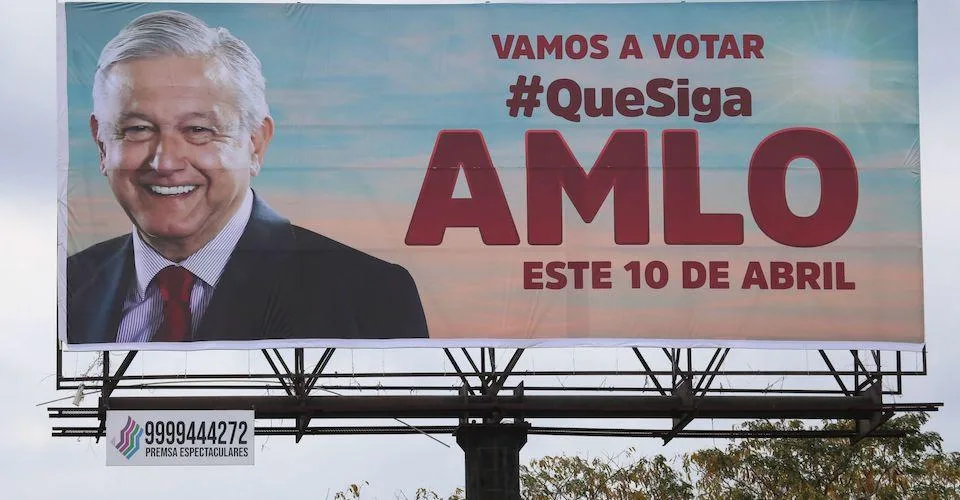
The first step on the path toward authoritarianism was the approval of the mandate recall. Conceived theoretically as a mechanism for citizens to evaluate the performance of the President of the Republic, Morena transformed it into an act of government propaganda and forced mobilization of its electoral base. It was not a democratic exercise in accountability. The recall referendum was merely the first step toward eliminating citizens’ rights, under the guise of a sham democracy. It was the first populist act of the Morena regime.
The second act was the elimination of all autonomous bodies. Instead of accepting that transparency and accountability are inalienable citizens’ rights, Morena and its allies in Congress eliminated seven autonomous bodies, under the premise that “the people” prefer austerity over government accountability. It was a direct blow to transparency and independence in key areas. By transferring the functions of the State to the government, civic checks and balances were eliminated, and political power was concentrated.

Like all populist movements, Morena has eliminated the concept of “citizenship” from its vocabulary and replaced it with the term “the people.” The difference between the two concepts is profound. Citizens understand that they enjoy inalienable human and political rights, and that the State is obligated to respect them. Citizens are proactive and capable of mobilizing. In Morena’s lexicon, the people are passive consumers of whatever the government in power offers them, because they do not consider themselves to possess inalienable rights. They are not in a position to make demands. In populism, the people are a defenseless and expectant entity, mobilizable only in accordance with the interests of the ruling party. Under a populist regime, the citizen is fought against until they are eradicated.

Continuing its offensive against democratic institutions, Morena orchestrated an assault on the electoral arbiter. Budget cuts to the National Electoral Institute (INE) have been a constant. The official rhetoric of “austerity” masks an attempt to weaken the operational capacity of the institution responsible for organizing elections. Without resources, the INE is unable to guarantee the quality of the elections fully. An absolute majority of Morena members was imposed on the institute’s governing body, causing it to lose its ability to ensure a level playing field in electoral contests.

At the same time, control over the Federal Electoral Tribunal (TEPJF) was a primary objective for Morena. The first step toward controlling the TEPJF was to impose a Morena majority, just as at the INE. The appointment of the new Chief Justice, openly backed by the ruling party, casts doubt on the impartiality and autonomy of the highest electoral court. Morena’s absolute control over electoral bodies is crucial to ensuring that alliances between the ruling party and drug cartels are not detected—much less punished—during upcoming and future electoral processes.

One of the most dangerous moves has been the use of the concept of “national security” to justify the politicization of the country’s armed forces. This has been achieved by channeling vast public resources to the Army and the Navy. This not only corrupted the military institutions by subjecting them to economic interests never before seen, but also turned them into a loyal pillar of the ruling political party. Former President Andrés Manuel López Obrador announced this measure ostensibly to end the abuse of power, though it ended up creating “enclaves of corruption.” Even more seriously, it made the Armed Forces complicit in Morena’s alliance with drug trafficking. Instead of serving as society’s bulwark against organized crime in Mexico, the ruling party and its Armed Forces turned a blind eye to the close relationship between crime and politics. This poisoned the very essence of the State’s function in Mexico.

The “Plan C” proposal was the culmination of the authoritarian project. This set of reforms included the popular election of judges, magistrates, and Supreme Court Justices; the legalization of the elimination of autonomous bodies; and the integration of the National Guard into the Army, among other measures. The reform of the judiciary, approved in September 2024, did not seek to democratize the justice system but rather to subordinate it to the executive branch. By electing judges through popular vote using a discredited “accordion” (cheat sheet) list, Morena managed to capture the judiciary—especially the Supreme Court of Justice of the Nation—ensuring that its decisions would always favor the regime.
The imposition of authoritarianism culminated in September 2024 with Morena’s spurious overrepresentation in the Congress of the Union. With just 49% of the vote, Morena secured 72% of the seats in the Chamber of Deputies, supported by its satellite parties. This qualified majority, obtained through the manipulation of the system for allocating at-large deputies, has allowed the ruling party to pass constitutional reforms even without the consensus of the majority of the population. This overrepresentation is the basis of its illegitimate power, which has reshaped the Mexican State in its own image as an authoritarian and anti-democratic project.
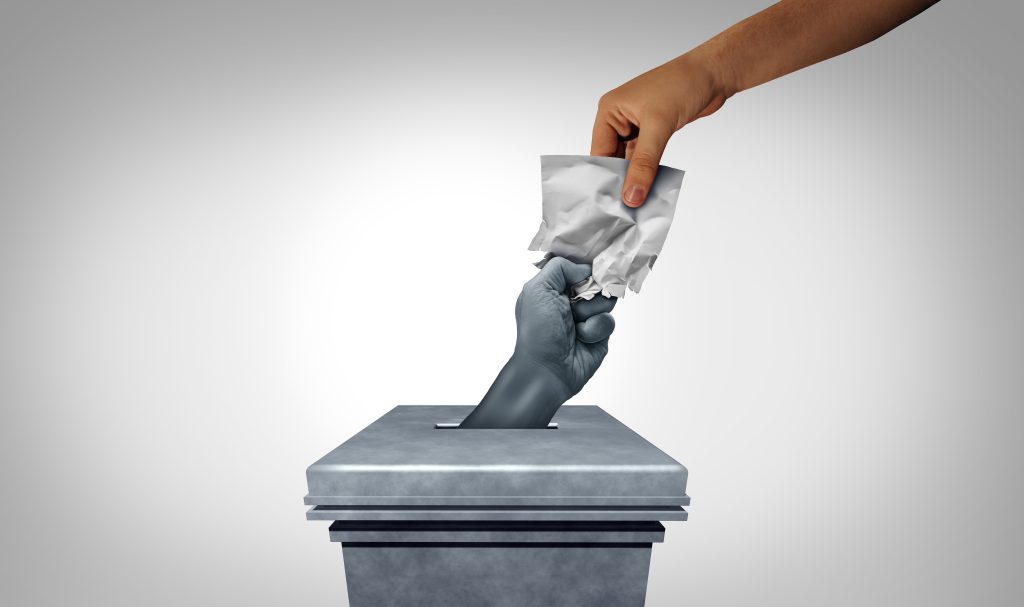
The transition from López Obrador to Claudia Sheinbaum has deepened Morena’s authoritarian drift. The President’s radicalization stems from the growing erosion of the ruling party’s legitimacy and the public exposure of the illegal alliance between the ruling party, its government, and drug cartels. The government’s staunch defense of Governor Rubén Rocha Moya—and now of Governor María del Pilar Ávila as well—has confirmed to national and international public opinion the nature of Morena as a narco-party. It positions Sheinbaum as the bulwark defending the pact between politics and drug trafficking as Morena’s historical legacy.
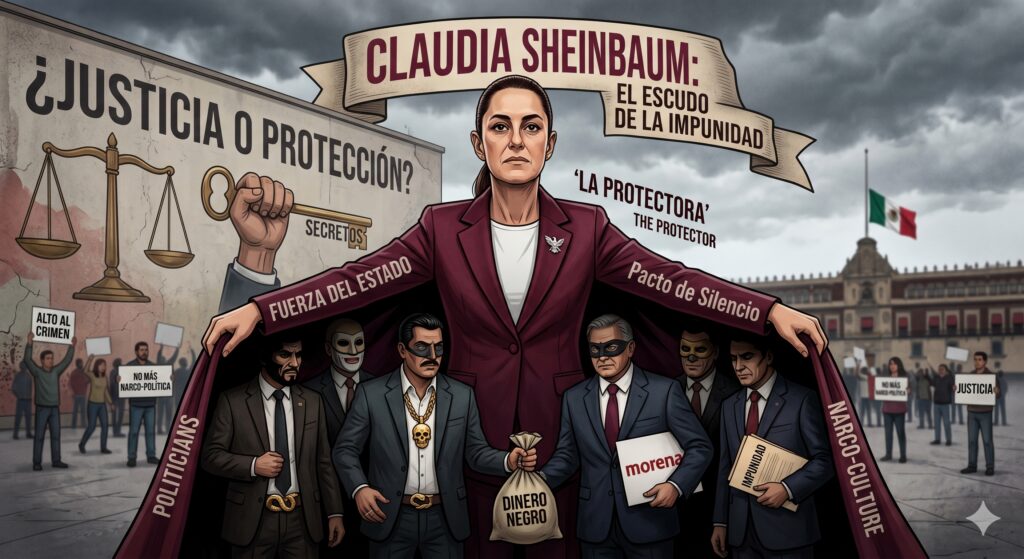
Recent constitutional changes—the result of Morena’s illegal seizure of a qualified majority in Congress—serve as a tool to consolidate control over the State and society. Examples include judicial reform, the appointment of INE commissioners aligned with Morena, and the regime’s total dominance of the TEPJF, which carries out this function. Now, new legislative measures further deepen the assault on Mexican democracy.
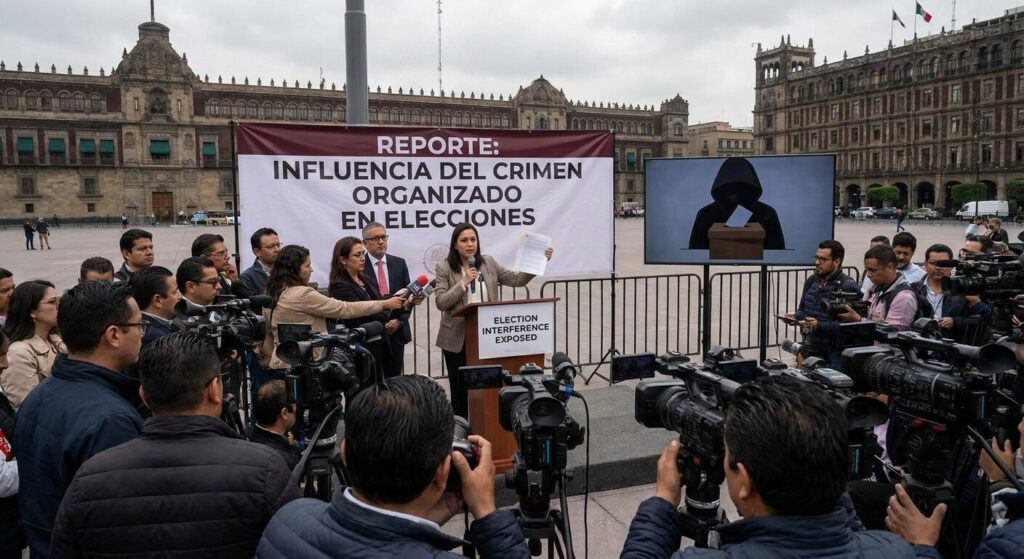
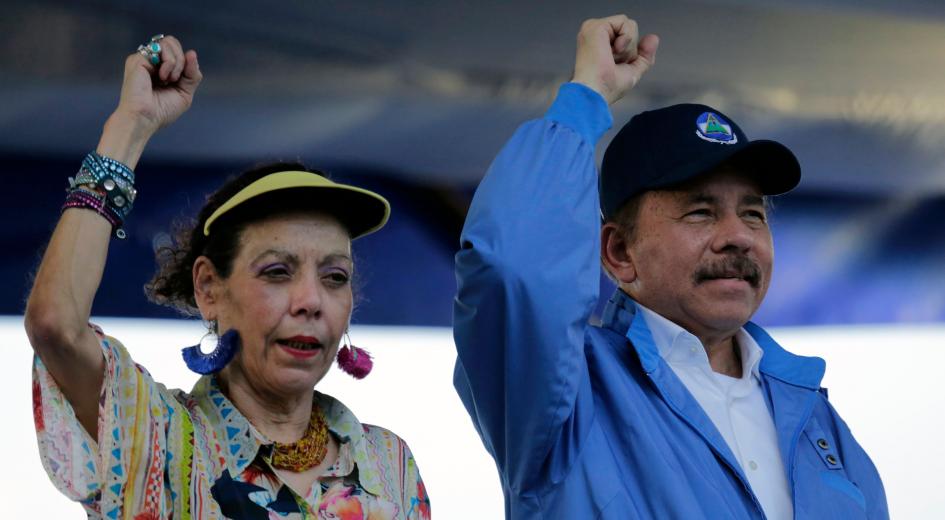
The new legislation, which punishes alleged foreign interference in elections—without explaining what that entails—will allow the regime and electoral bodies to overturn results unfavorable to the government and its party. It opens the door to extreme measures, such as those recently taken by the Sandinistas in Nicaragua: the outright cancellation of the electoral system as a whole. What once seemed absolutely impossible is now not so far-fetched.
But the cherry on top of Morena’s insatiable authoritarian cake is the proposal to legalize the government’s powers to censor, punish, and/or imprison critics of the regime simply for expressing their opinions. The Morena government intends to implement legal mechanisms to control media outlets and opinions not certified by it, under the pretext of “protecting audiences,” in the purest populist style. The intention is to silence dissent. One might even think that the Ruffo case is a trial run to gauge the costs of holding political prisoners. It also serves as a warning to some opposition leaders. Is this a “stay put” signal?

Step by step, Morena has built up an impressive authoritarian arsenal. Despite this, it is not confident of winning the 2027 elections. Its internal disputes, the government’s waning popularity, the security crisis, and growing social dissatisfaction have set off alarm bells. The government does not believe its project can sustain itself. The 2027 elections will not be held under normal democratic conditions. That time will be decisive for a country that has been driven to the brink of the abyss by a government that, blinded by fear and its own incompetence, is determined to sacrifice freedom to prevail and retain its power.

@rpascoep
Further Reading: