Ricardo Pascoe Pierce
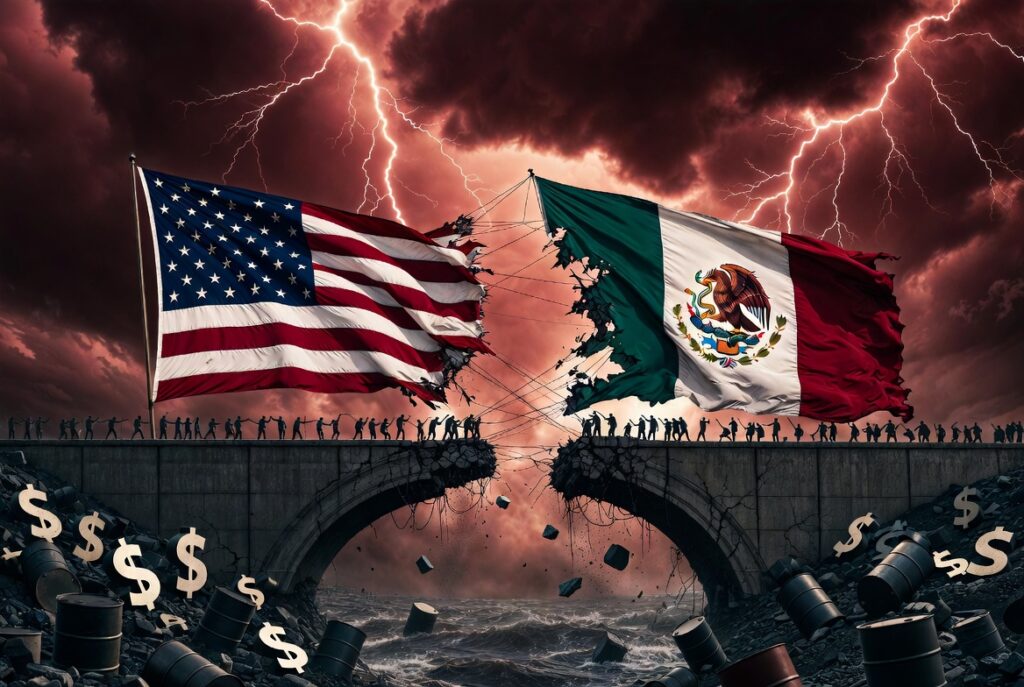
The 4T government believes that the Trump administration’s policy toward Mexico is designed solely with the November midterm elections in mind. From its perspective, everything is about the elections. Consequently, it concludes that once the elections are over—and Trump’s party has suffered a major defeat—the political conditions between the two countries will change in Mexico’s favor.
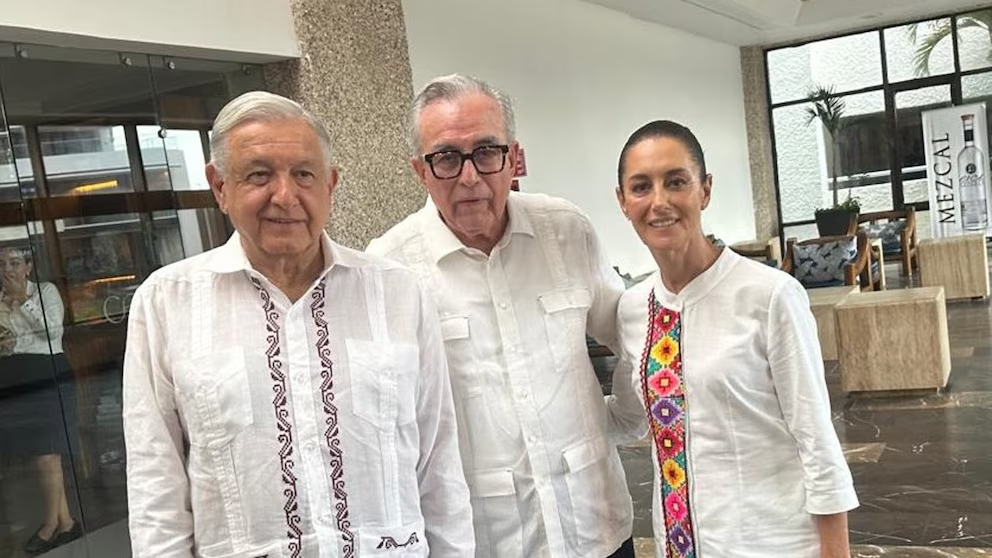
This logic leads the National Palace to adopt a policy of active resistance toward Washington. It ignores the U.S. government’s initiatives, as evidenced by its refusal to hand over former Governor Rocha and his associates to U.S. justice. It does not want to provoke Trump, but it also does not want to yield to his demands. It maintains an outwardly limited-collaboration discourse and an inwardly anti-interventionist discourse.
The 4T and Sheinbaum are applying the electoral thinking they attribute to Trump to their own domestic situation, interpreting Washington’s actions in terms of their potential impact on the 2027 Mexican elections. And they don’t like what they see.
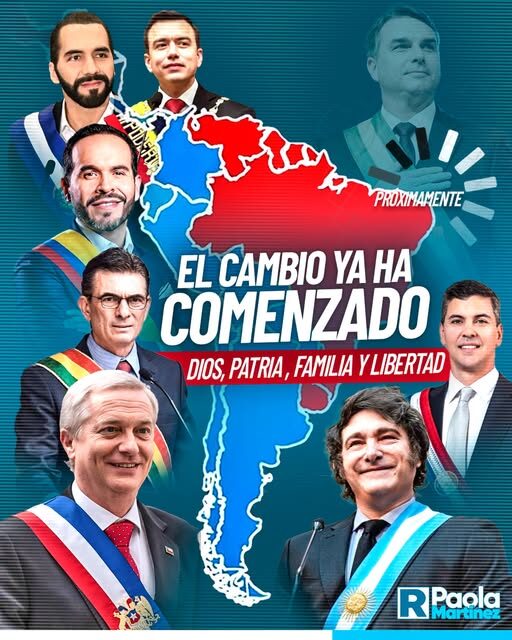
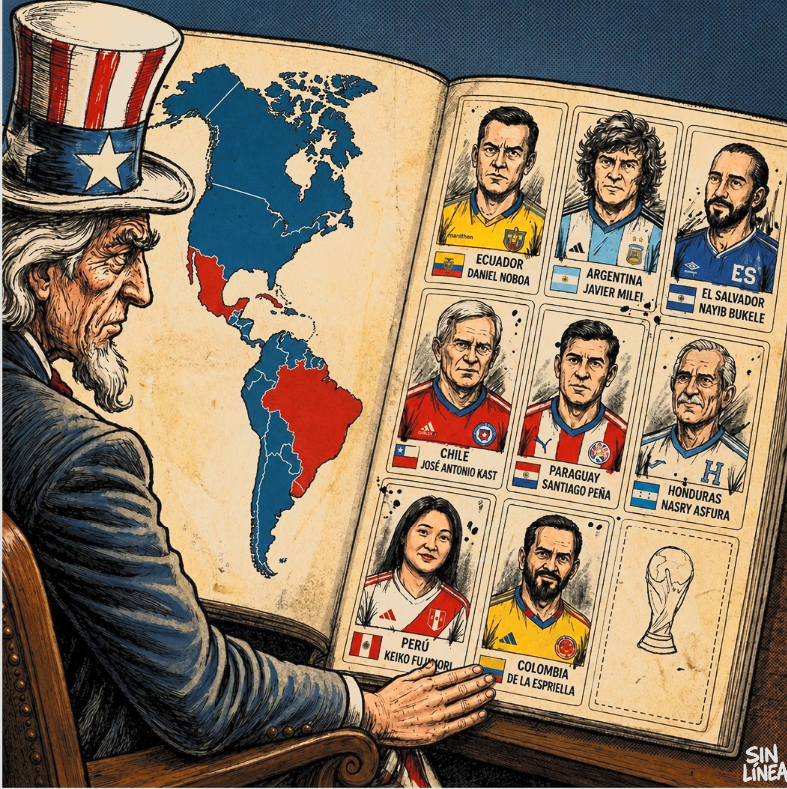
The electoral impact Trump has had in Chile, Argentina, Colombia, Ecuador, Honduras, and Peru—and possibly in Brazil soon—is making the 4T, Morena, Sheinbaum, and AMLO uneasy. If they were confident in the ideological and political support of their social bases, they would have no reason to worry. But they are indeed alarmed, which reveals their lack of certainty that their system of providing aid through social programs will translate into a flood of votes. That insecurity is expressed in the massive media campaign we’re seeing today, which aims to remind people that aid is distributed because “love is repaid with love.” Got it?
When the U.S. Treasury claims that fuel theft is directly linked to vote-buying and the cartels’ control over public officials, the National Palace reacts with fury but takes no corrective action. It is aware of the corruption but denies any association with organized crime.
Given the current climate and these actions, it is clearly a mistake to assume that Washington’s actions will end after the November elections. Trump will likely suffer a major electoral setback in November. But that does not necessarily mean he will change his policy toward Mexico. The reason is clear. The United States considers the Mexican government to be a strategic ally of the cartels, both Sinaloa and the CJNG. It sees it this way because it has already realized that, as part of its preparations for next year’s elections, Morena is considering fielding candidates who are favorable to the interests of drug trafficking. And Trump considers that strategic relationship to be an existential threat to his country’s national security.
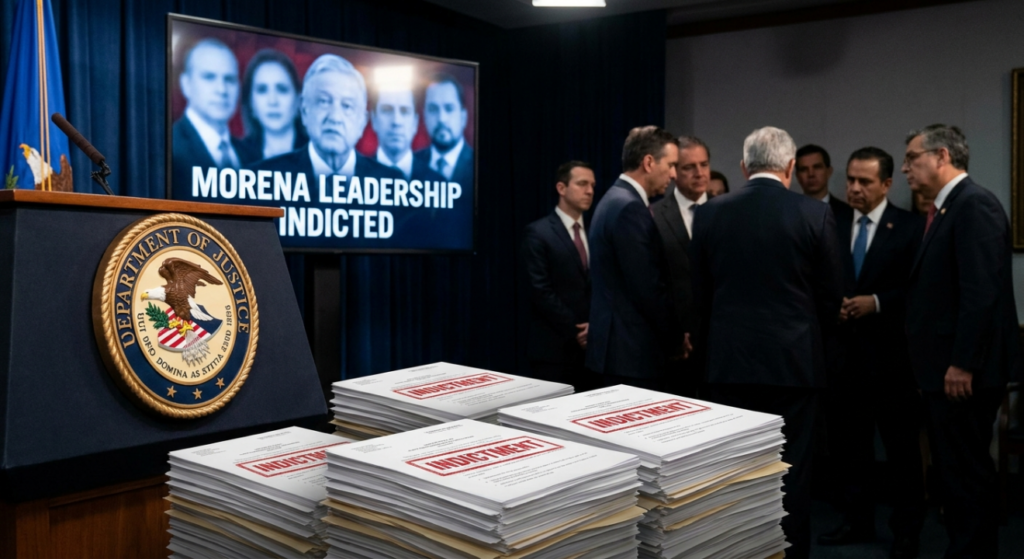
Washington does not want Sheinbaum to step down as president, but it does want to eliminate the threat posed by Morena as a narco-terrorist party. When it decides to declare Morena a narco-party legally, it will be a clear signal that Washington is determined to destroy that party and its most important leaders, and to wrest power from that instrument of political control. If she wants to remain in power, Sheinbaum will have to govern the country under a different model of governance, with other forces—many of which are currently in the opposition.
The USMCA freeze is another sign that warrants political interpretation. Interestingly, the left wing of the Democratic Party agrees with Trump on freezing the agreement. They want to negotiate a new set of conditions to impose additional worker protections in Mexico and are proposing human rights-related measures. These points are not in Trump’s interest, but there is a convergence between MAGA and the Democratic left in their fundamental questioning of the USMCA.
Freezing the USMCA at this precise juncture sends a hostile message to Mexico. First, despite the National Palace’s claims to the contrary, it will harm Mexico by reducing both domestic and foreign investment. It confirms the existence of a crisis of confidence and trust in Mexico. Second, the message is repeated: reform your judicial system, or there will be no cooperation. Mexico does not respect the extradition agreement it has signed and ratified. It has undermined judicial independence. And third, if there is no cooperation on security matters, the economic situation will worsen. Cooperation on security essentially means severing the umbilical cord with drug trafficking. The message is that corruption is linked to organized crime and insecurity.

Democrats and Republicans tend to share the same view of the situation in Mexico. To think that the Democrats will come to our rescue reflects a profound ignorance of political processes in that country. That ignorance allows the National Palace to conclude that it’s simply a matter of holding out heroically until November, and then sanity will prevail once again. Washington will go back to the way it was before. And what was it like before?
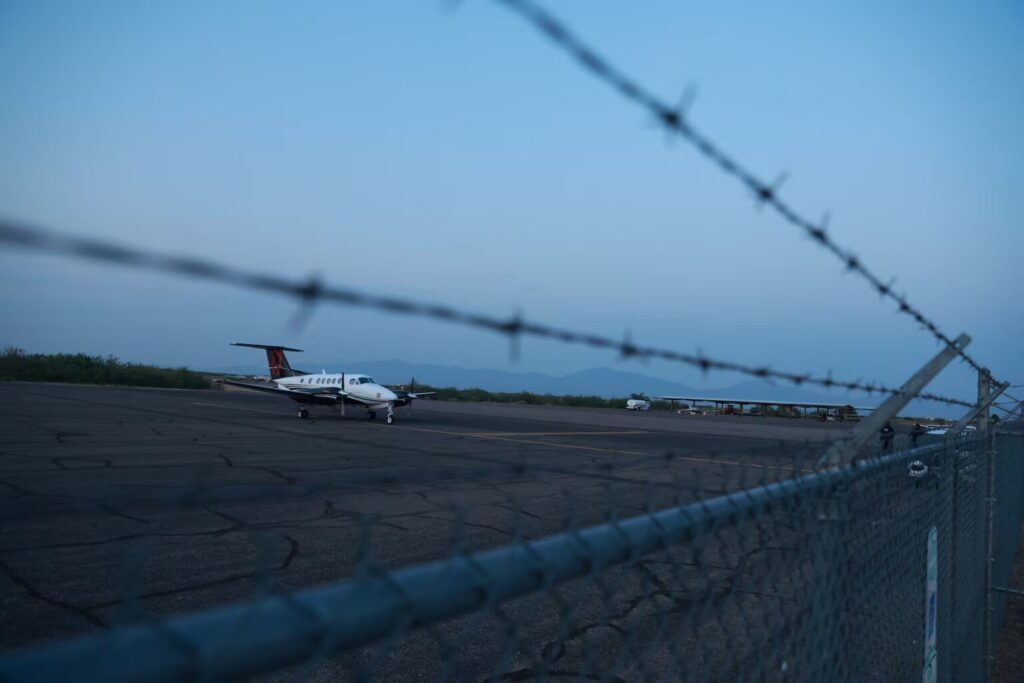
We’ve recently been reminded of how Democrats govern. Images are currently circulating on social media of the aircraft used to kidnap El Mayo Zambada and bring him to trial in the United States. The plane is on public display, like a museum exhibit, complete with the junk food they apparently bought at an OXXO before the kidnapping. That U.S. government operation was planned and carried out by the Biden administration.
It seems the National Palace is politically guided by messages from Palenque. What does Palenque say? “Let the good Trump return.” “We don’t like this one because bad people guide him.” Let’s be clear: there is no such thing as a “good” Trump. There is simply Trump.

Trump’s policy toward Latin America stems from his conception of national security. He thinks of security from Canada and Greenland all the way to Antarctica. Mexico is the border through which all undesirables infiltrate. Of course, he wants a Mexican government aligned with his own, not one that’s antagonistic. He doesn’t demand that it share his ideology, but it cannot be a strategic ally of all of the United States’ adversaries: drug cartels, Cuba, Russia, and China.
This clash opens the door to more aggressive indictments and targeted punitive actions. Everything will be made public to influence the Mexican public’s consciousness. That is what AMLO, Sheinbaum, and Morena fear most. They fear losing control over State secrets. And yes, Trump wants a government in Mexico that fights drug trafficking, because that serves his interests. Just as Morena wants a friendly U.S. government that doesn’t put too much pressure on them, they want a “good Trump.”
In this scenario, it is most likely that, once the World Cup is over, hostilities will resume. September and October promise to be months of constant public displays, accusations, and all kinds of pressure.
Before November, yes, but also to pave the way for 2027.
@rpascoep
Further Reading: