
Luis Rubio
In The Magic Mountain, Thomas Mann tells the story of a businessman who visits a relative at a sanatorium in the Swiss Alps. During his stay, he begins to feel unwell, and the doctors persuade him to remain. A minor ailment turns into a seven-year confinement. What starts as a small inconvenience becomes an all-consuming reality.

Something similar may now be happening to North America’s trade agreement.
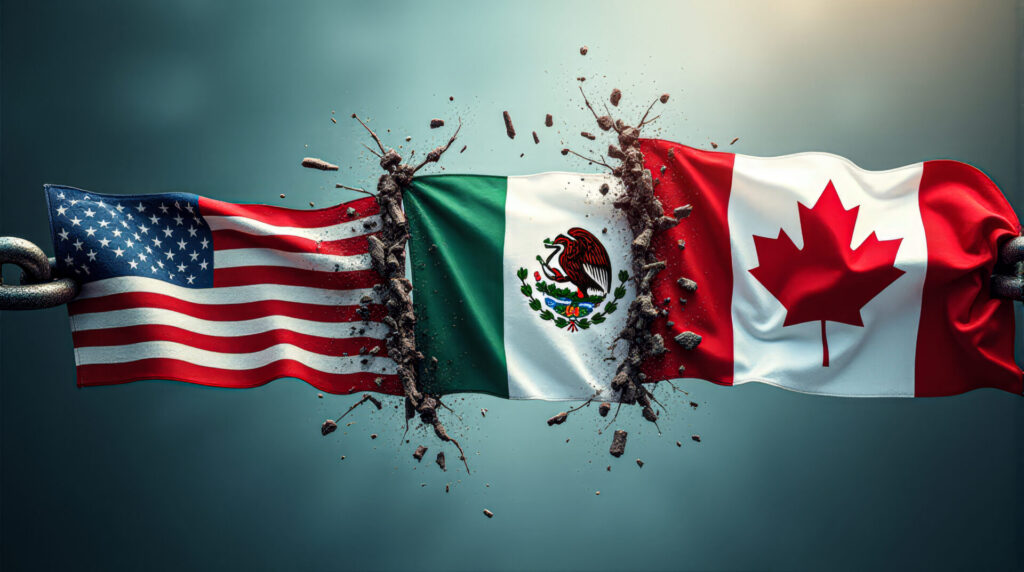
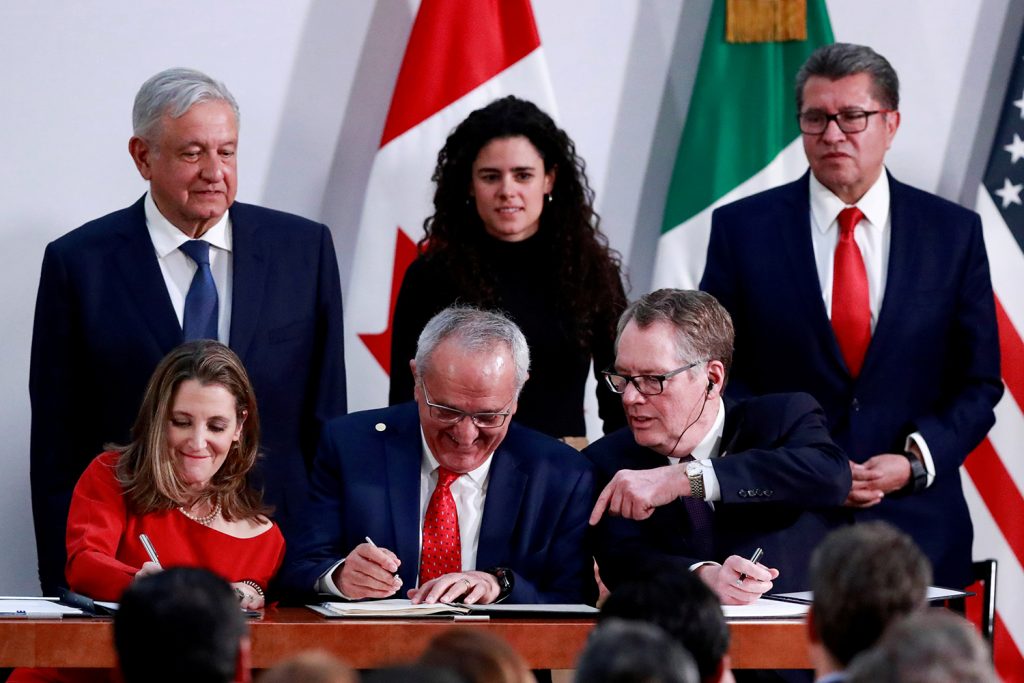
With the U.S. government embracing an increasingly uncertain approach to the future of the U.S.-Mexico-Canada Agreement (USMCA)—originally negotiated as NAFTA—it is worth separating what the agreement actually accomplished from the myths that have grown up around it and from the responsibilities that successive Mexican governments have avoided for more than three decades. The real question is whether Mexico’s current government is finally prepared to assume those responsibilities.
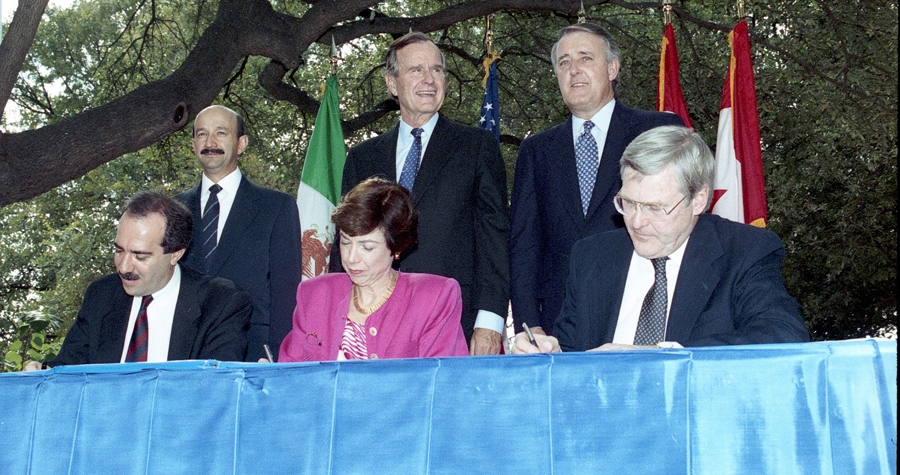
A free trade agreement is, first and foremost, a public policy instrument. It establishes predictable rules that allow businesses, investors, workers, and consumers to make long-term decisions with confidence. By creating stable legal frameworks that are insulated from day-to-day political swings, such agreements encourage investment and economic integration.
NAFTA’s importance rested on three extraordinary achievements.
First, the United States effectively lent Mexico institutional credibility. By guaranteeing impartial dispute resolution and enforceable rules, the agreement compensated for weaknesses in Mexico’s own judicial institutions and gave investors (both national and foreign) confidence that contracts would be honored. This element was stripped from the agreement embodied in USMCA.

Second, it fundamentally reshaped Mexico’s economic framework. The agreement imposed predictable rules not only for international commerce but also for domestic economic life, becoming the country’s single most important source of economic certainty. That institutional role explains why President Trump’s recent decisions have generated such profound concern in Mexico.

Third, the agreement created powerful incentives to integrate the three North American economies. It encouraged investment, raised productivity, expanded exports, generated foreign exchange, and created millions of better-paying jobs. By virtually any measurable standard, it succeeded.

For Mexico, NAFTA was more than a trade agreement. It became a political anchor that restored confidence after decades of economic instability. For the United States, it served a broader geopolitical objective: helping foster a more prosperous and stable neighbor while strengthening security along its southern border.
The agreement also imposed disciplines on Mexican governments—disciplines that were largely respected for decades. Only in recent years have those safeguards begun to erode as key independent institutions have been dismantled, constitutional changes have restricted private investment in sectors such as electricity, and government intervention has increasingly distorted economic decision-making. Unsurprisingly, investor confidence has weakened.

The near-unanimous anxiety now visible across Mexican society reflects an intuitive understanding of what is at stake. Preserving the agreement matters, but preserving it is not enough. The greater challenge is ensuring it becomes the foundation for transforming the entire economy, rather than benefiting only sectors already integrated into North American supply chains.

That is where Mexico’s governments have consistently fallen short.

A trade agreement is not a strategy for economic growth. It cannot eliminate poverty or compensate for bad governance. It is simply a policy instrument—one that must be complemented by investments in education, human capital, scientific research, infrastructure, and strong, independent institutions. Together, those policies can produce sustained growth and rising living standards.

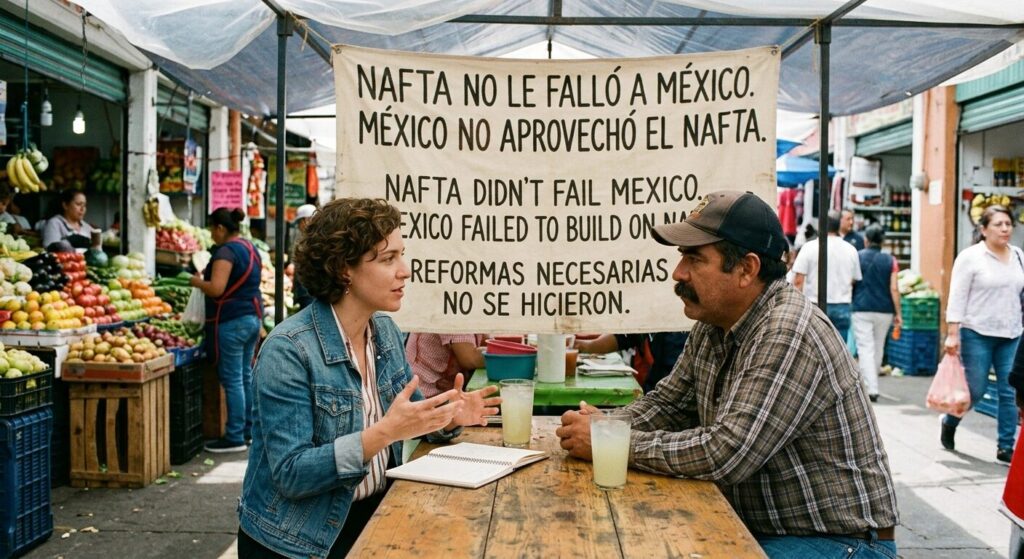
Yet since the 1990s, progress on those complementary reforms has been minimal. Over the past eight years, institutional deterioration has accelerated instead. Blaming either Washington or USMCA for Mexico’s disappointing performance misses the point entirely.

Looking back, one fact stands out. After NAFTA took effect in 1994, no Mexican administration seriously sought to extend its benefits beyond the companies that understood its opportunities and the state governments that actively embraced it.

Because the agreement solved Mexico’s chronic foreign-exchange shortages while migration eased social pressures, the urgency to pursue a deeper development strategy faded. Successive governments—including the two most recent ones—failed to create the conditions for the country’s poorest and least-developed regions to participate fully in the opportunities offered by North American integration.

A government genuinely committed to accelerating Mexico’s development—whether on the left or the right—would focus on strengthening both business confidence and public trust, particularly in an era shaped by President Trump. That means confronting the structural sources of underdevelopment: failing education, inadequate healthcare, weak infrastructure, and fragile institutions.

Instead, Mexico is moving backward on nearly every one of those fronts.

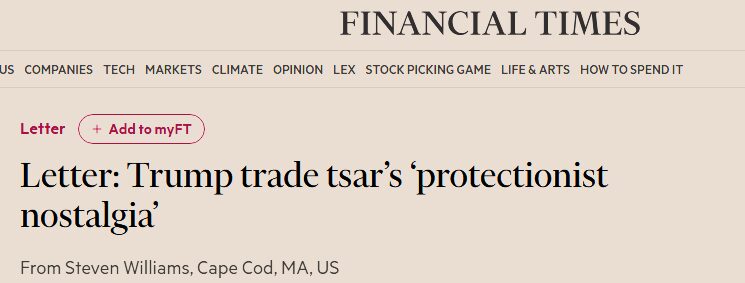
As Financial Times reader Steven Williams recently observed, industrial strength comes from innovation and coherent public policy—not from nostalgic measures that ultimately help no one.
@lrubiof
The original Spanish version of this article can be found at www.luisrubio.mx
Further Reading: