
Luis Rubio
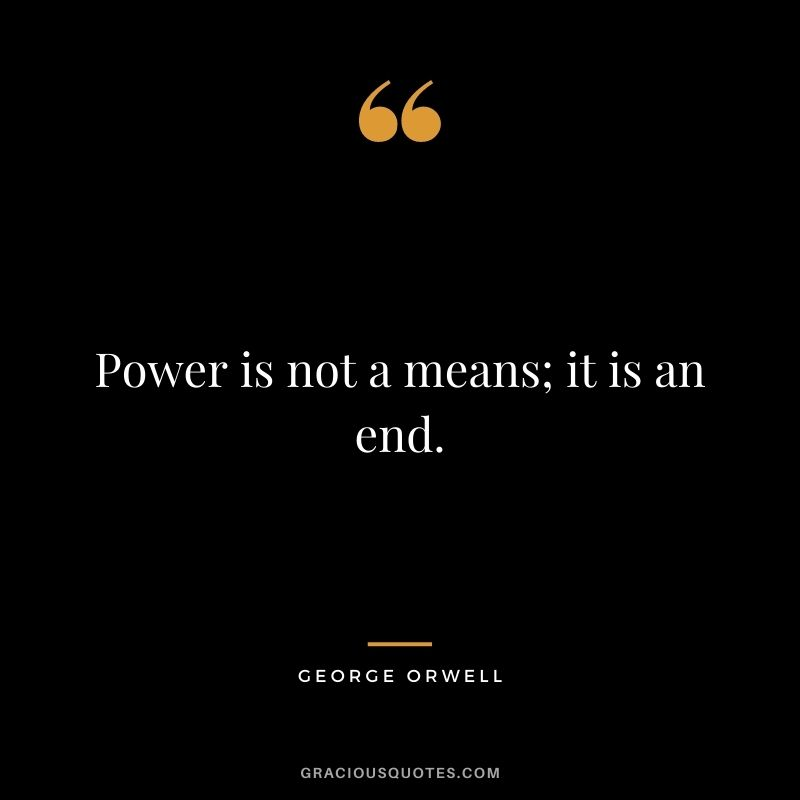
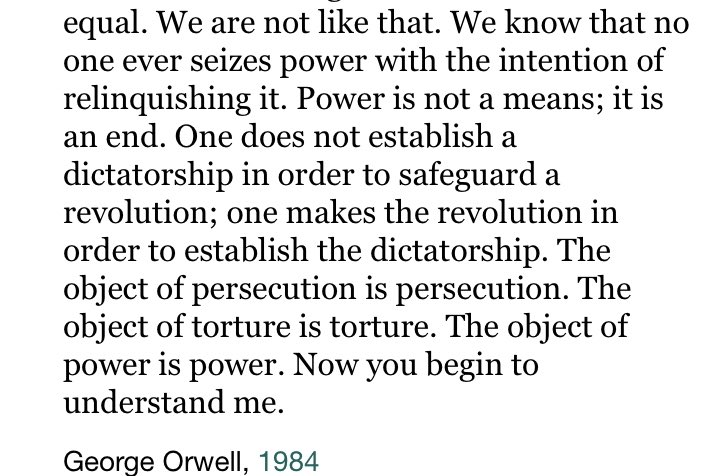
“Power,” George Orwell warned, “is not a means. It is an end.” Every revolutionary movement eventually confronts that truth.
Historian Philipp Blom has argued that dictatorships require a promise of transcendence—a radiant tomorrow that justifies today’s cruelties. Only a near-religious devotion to an unreachable ideal can excuse repression in the present. Morena, Mexico’s ruling movement, fits that pattern uncomfortably well. Exclusion is not an accident; it is a governing method. Politics is framed as a struggle between the virtuous and their enemies. Those who do not belong are cast aside.

The question is whether Mexico can avoid the trajectory followed by other Latin American attempted revolutions.

Revolutions have a habit of devouring their own. Once power is concentrated, no one is safe—not even yesterday’s heroes. Venezuela moved from Chávez to Maduro and now to the rising dominance of Delcy Rodríguez, now under northern supervision. In Nicaragua, it is no longer opposition figures who fill the prisons, but former Sandinistas who displeased the Ortega-Murillo regime. In Bolivia, Evo Morales empowered a politicized judiciary and now finds himself pursued by the very system he helped construct. Time and again, the concentration of power turns toxic for its original beneficiaries.

Revolutionary cycles follow a predictable arc. In The Anatomy of Revolution, Crane Brinton describes the progression from euphoric triumph to radical consolidation and, ultimately, crisis. The initial exhilaration of seizing power soon gives way to purges. Moderates are sidelined. Loyalty trumps competence. Brinton called it a Thermidorian reaction: the revolution narrows in order to survive, until it stabilizes into some form of authoritarian rule.

Disillusionment inevitably follows the failure to deliver paradise. The excluded become dissidents. Yesterday’s comrades become today’s traitors. As Orwell put it bluntly: revolutions are not made to defend freedom; they are made to establish dictatorships. “The object of persecution is persecution.”
Mexico is not there—yet. But signs of fragmentation within Morena are increasingly visible: infighting, accusations, rival factions positioning for succession. As the fervor fades, cracks widen. And the opposition grows, much of it from the ranks of the very revolutionaries.
Morena rose to power amid legitimate public frustration. Technological disruption and global change outpaced the ability of prior governments to respond. Voters demanded speed, empathy, and protection. But governing is different from mobilizing. Eight years in, fatigue sets in. This leaves the government in the odd position of needing to answer the population not only for its own successes and mistakes, but also for those of its predecessor. It is somewhat of an unfair task, but it is the nature of the phenomenon. This does not diminish fragmentation nor guarantee that social unrest can be avoided. But it does open up opportunities rather than keep closing off.

Mexican voters are more pragmatic than politicians often assume. They welcome benefits, but they resist costs—and the two usually travel together. Economic growth is essential to sustain Morena’s ambitious social commitments. Yet many of the movement’s ideological pillars discourage the very investment and confidence that growth requires. That contradiction is becoming harder to ignore.
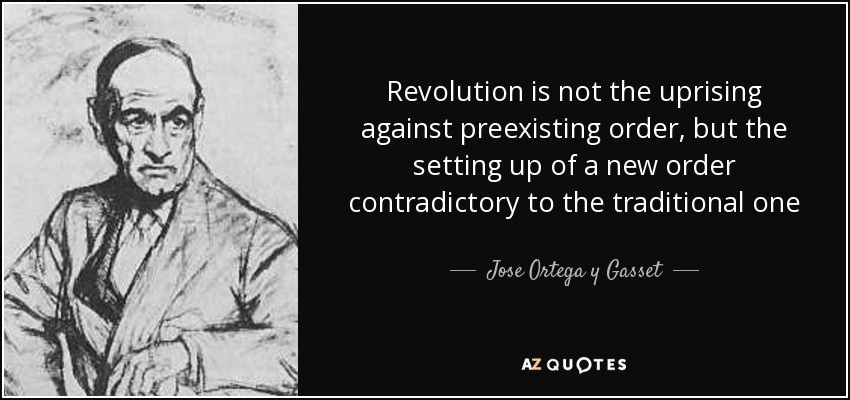
As Ortega y Gasset observed, a revolution is not merely rebellion; it is the creation of a new and contradictory order. Mexico is living that contradiction. The challenge now is whether that new order can become sustainable—and livable—for all.
@lrubiof
Further Reading: