
Luis Rubio
In Milan Kundera’s novel The Book of Laughter and Forgetting, the protagonist Mirek tries to erase the memory of a distant incident with the same ruthless fervor with which Eastern European communist governments once deleted inconvenient politicians from photographs or constructed new realities out of easily sold myths, to populations deprived of alternative sources of information. Kundera recreates that surreal world to expose how public lies and the manipulation of daily life generate myths and beliefs that become just as distorted as official truths.
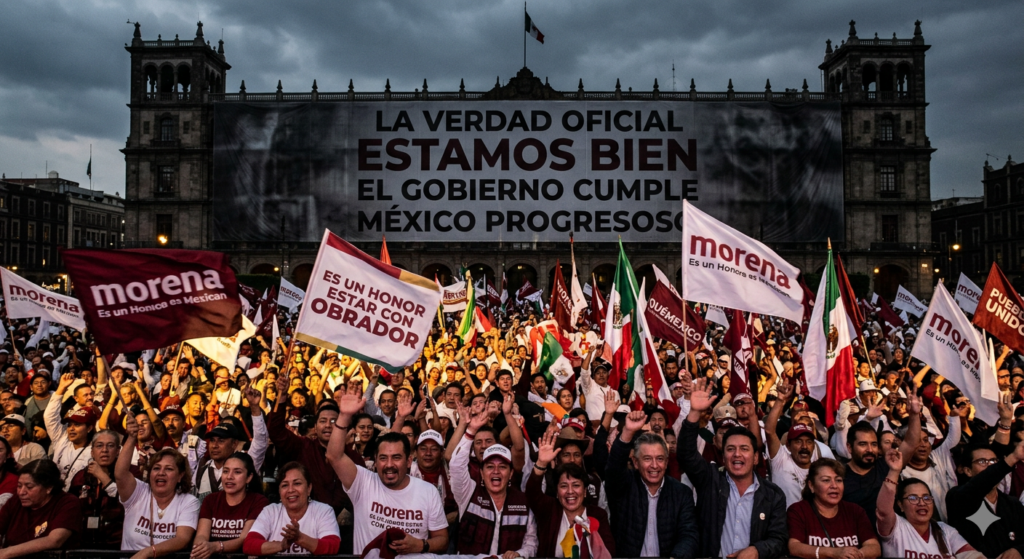
All governments attempt to build a narrative that explains and justifies their actions; there is nothing new or surprising in that. What is peculiar about Morena, the party in power today, is its tendency to see its role as if it were still situated in the mid–20th century—the era Kundera described. Kundera’s world (and that of the PRI back then) could exist because information was tightly controlled from above, and citizens knew only what official spokesmen conveyed. Attempting such a feat today, however, is far more difficult: daily events are known through multiple national and international sources, making it nearly impossible to sustain an official truth, especially when the government is constantly on the defensive rather than anticipating events.
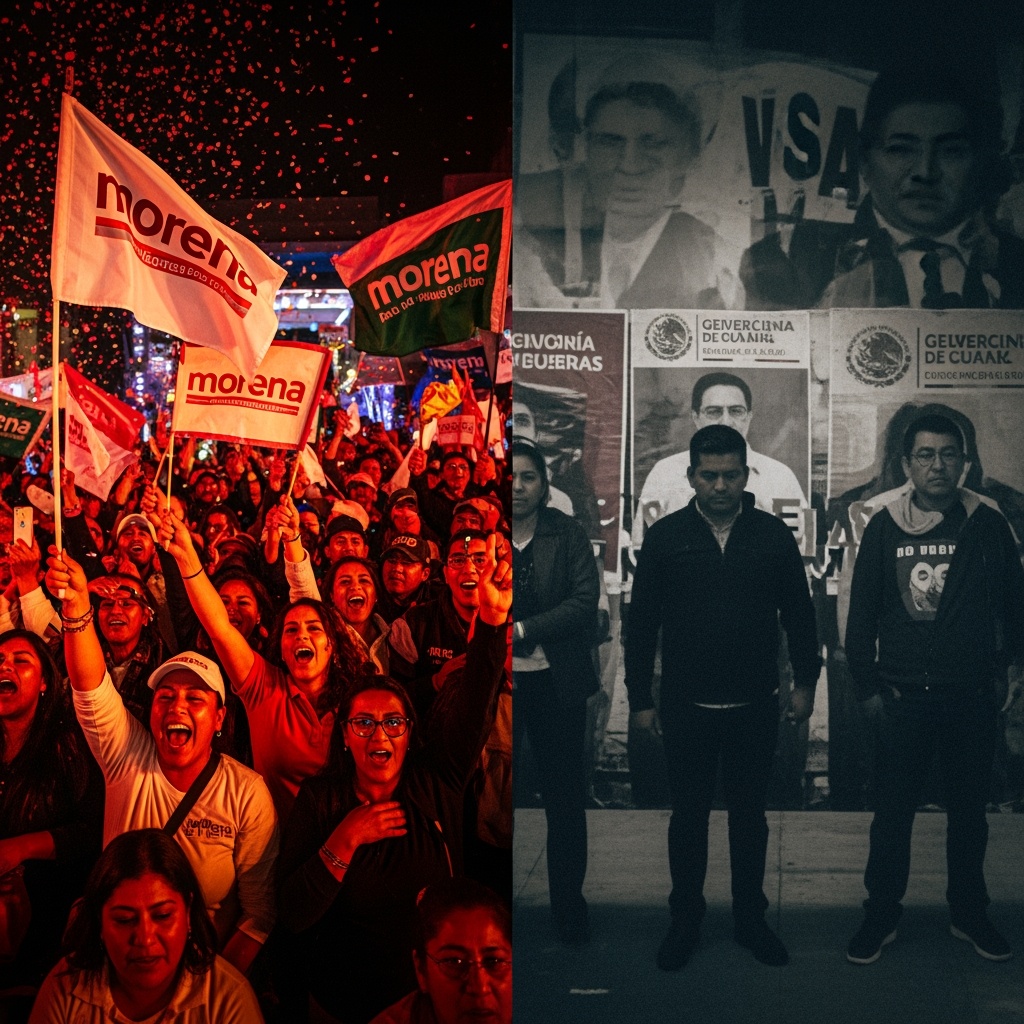
Morena has built both a political structure and a narrative aimed at reconciling the political repression—which it seeks to enshrine in the constitution—with its peculiar definition of democracy. This repression is visible in the way the government and its party have dismantled independent institutions that once offered citizens protection against abuses of authority (such as the weakening of the writ of amparo); corporate and union excesses (competition and telecommunications commissions); access to information (the INAI); and, most fundamentally, free elections and effective representation (INE and the Electoral Tribunal).
In consolidated democracies, governments must earn their legitimacy every single day: a government can enjoy high popularity ratings and still lose the next election, as George H. W. Bush did in 1992. For Morena, legitimacy flows exclusively from the day it won power. Everything else is irrelevant—which explains why it sees no need to cultivate broad public support, or even to recognize that dissent might exist. Recall that in the recent election for the new judiciary, Morena argued that the 12% who turned out at the polls represented an overwhelming majority. In comparison, the 88% who abstained were dismissed as a “fascist minority.”

Liberal democracy rests on the principle that government must answer to its citizens through representative mechanisms (varying from country to country). The citizen is at the center, and their rights constrain the abuse of authority, with specific institutional safeguards in place. For Morena, this definition is absurd and irrelevant: what matters are the original votes that gave it the right to govern for its loyal base, with no obligation to be accountable to society at large. Hence, its conception of democracy is literal rather than liberal.
The problem for Morena—and for Mexico—is that reconciling political repression with democracy not only means disregarding those outside the movement but also sacrificing development opportunities in favor of securing permanent control of the state apparatus. One cannot claim to be a democracy while simultaneously dismantling the mechanisms that guarantee free expression and protection for citizens.
Mexico is, of course, not the only society under siege (one need only look north), but the weakness of the few independent institutions that remain makes the slide toward dictatorship particularly swift. As that process advances, it becomes ever harder—if not impossible—to reconcile the idea of democracy with the government that actually exists.

All of this leads to a crucial question: how sustainable is a regime that increasingly centralizes power yet fails to resolve basic security issues such as extortion, cannot overcome its staggering propensity for corruption, and produces too little growth to sustain even its own budgetary priorities? Added to this is the pressure from the north, where organized crime in Mexico is now viewed as a matter of national security. The real question becomes one of survival for a government that does not even seem interested in forging a coherent identity of its own.

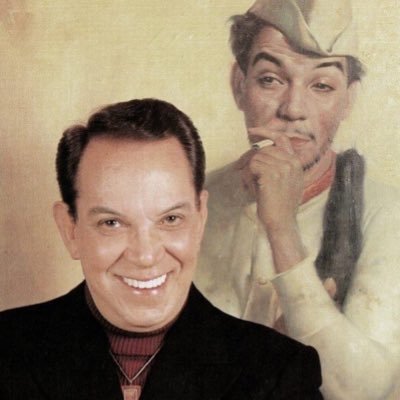
As Cantinflas once said: “Our government is neither very bad, nor very good, but quite the opposite.”
@lrubiof
Further Reading: