
The Art of Diverting Attention.

The article discusses how political power in Mexico hinges on public attention and distraction tactics, exemplified by Sheinbaum’s arrest of Ernesto Ruffo Appel. This move aims to divert scrutiny from Morena’s internal crises and safeguard its leadership from allegations of corruption and ties to organized crime, emphasizing the importance of managing public perception.

The Bells Ring For Justice.

The first time the phrase that would come to define the concept of crimes against humanity was used in an international declaration was on May 24, 1915. The International Criminal Court is disappearing. It must be acknowledged that, from the moment the major powers refused to accept the Rome Statute fully, the Court was born limited.

When Criminals Become Political Actors.

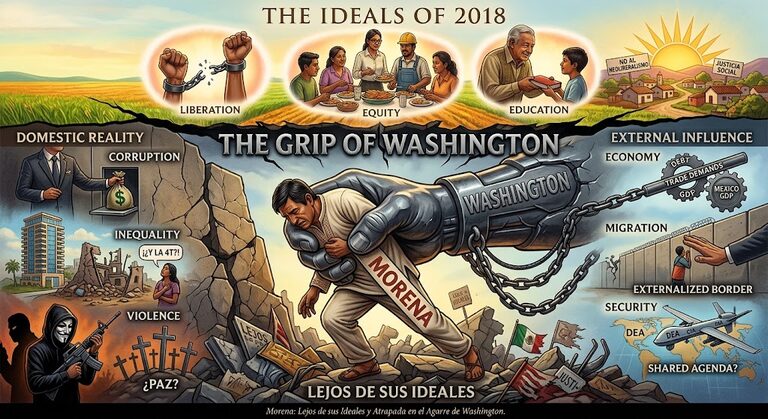
Mexico’s political landscape has shifted dramatically from a clientelist system to a more fragmented state, compounded by organized crime’s integration into politics. Former President López Obrador’s strategies inadvertently normalized criminal elements, fostering a dangerous “narco-politics.” This poses significant risks to state authority and bilateral relations with the United States, highlighting a shared security challenge.

Red Eyes.

The article reflects on the evolution of photography and its impact on how people are perceived in images. It discusses the challenges of looking good in photos, cultural shifts in posing and smiling, and personal stories that reveal emotional complexities tied to memories. Ultimately, it highlights how technology shapes our visual representation and self-awareness.

Why Advanced Societies Fall for Mass Delusion.

Yuval Noah Harari discusses the paradox of human intelligence in a Big Think presentation, emphasizing that while we accumulate knowledge rapidly, we remain susceptible to misinformation and deception. He highlights the impact of information technology on societies and warns of the dangers posed by artificial intelligence, underscoring the importance of quality information.

Back to the Origins.

The post discusses the historical ebb and flow of globalization, highlighting conflicts between universal values and local cultures. It contrasts the integrity of the Olympics with the corruption in FIFA, emphasizing the need for ethical standards in global sports. The narrative calls for inclusion and excellence as guiding principles for fans and organizations alike.

Democracy in Decline: The Impact of Immigration and Voter Rolls.

The content discusses the concept of “bread and circuses” in politics, highlighting that contemporary democracy often relies on superficial forms of engagement like voter registration rather than genuine representation. It critiques how leaders exploit promises and immigration to maintain power, questioning the true essence of democratic governance amid moral decay and public disillusionment.

Mexico’s Dangerous Disconnect.

The content critiques the discrepancy between Mexico’s perceived progress and its actual situation. While the government presents a narrative of a thriving democracy and economy, the reality shows a rise in authoritarianism, weakening economy, and eroding democratic institutions. The government’s failure to align rhetoric with reality poses significant risks for the country’s future.

Careless People: A Cautionary Tale of Power, Greed, and Lost Idealism.

“Careless People” is a revealing memoir by Sarah Wynn-Williams, chronicling her experiences at Facebook. It highlights the consequences of unchecked power, workplace misogyny, and the challenges of motherhood in a high-pressure environment. The book offers insights into the personal and political impacts of social media’s evolution and responsibility among its leaders.

Shares