
Juan Villoro
For Umberto Eco, Pope John Paul II represented “the Middle Ages plus television.” The Polish pontiff embodied that contradiction: a media figure who spread an atavistic message.
His successors have faced a different reality, one in which communication is more difficult to control. On May 25, Leo XIV released the surprising encyclical “Magnifica Humanitas,” which draws on millennia-old beliefs to arrive at a modern analysis of artificial intelligence—a tool that cannot be considered “morally neutral,” since its design depends not on civic committees but on economic actors.
The encyclical acknowledges the benefits of data processors but warns of the challenge of interacting with mechanisms that mimic human reactions and are blindly trusted.
ChatGPT offers instant responses that are both “cordial” and “objective,” but “simulated speech does not build a relationship, but rather an illusion” because the operating system lacks ethical awareness and any sense of emotion—from pain to joy.

To what extent can AI be controlled? One of the encyclical’s most interesting reflections addresses this issue: “Modern artificial intelligences are more ‘cultivated’ than ‘built’: developers do not directly design every detail, but rather create an architecture upon which the AI ‘grows.’” This process is not completely autonomous, but it does take on unprogrammed tasks, and the way this happens is inscrutable: “The computational processes of these systems remain unknown.”
Behind the “intuitive” use of a “user-friendly” technology lies a mechanism whose inner workings are unknown, not only to users but also to the vast majority of programmers.

In a radical move, Leo XIV proposes dismantling AI, which means separating it from the logic of armament and from the “equivalence between technological power and the right to govern.” This call is also grounded in an ecological imperative; it is crucial to recognize that AI requires an excessive amount of water for cooling and, furthermore, “is already an environment in which we are immersed.” The harvesting of data must belong to a Common Home that recognizes the “universal destination of goods.”

What values must be protected in the face of the advance of machines? Leo XIV responds: “The quality of a civilization is not measured by the power of its media, but by the care it is capable of offering.” In times of automation, what makes us human stems from caring for one another.
The pope’s ideas are more progressive than those of most world leaders. This is due not only to the Vatican’s clarity of vision but also to the growing influence that the digital world has on Catholicism.
In 2025, Carlo Acutis, known as “God’s influencer,” became the first millennial saint. He died of leukemia in 2006 at the age of 15, having dedicated his life to promoting the Eucharist online. He is credited with two miracles that led to his canonization.
In 2009, the Vatican launched its YouTube channel, and in 2011, Pope Benedict XVI, mindful of Acutis’s example, noted that using social media was not a sin and called on the faithful to express their devotion online. Immediately, iTunes launched a confession app that cost $1.99 to download. This marked the beginning of a market that today includes digital options such as Catholic Confession Journal, My Parish Confessions, and Catholic Family, which offer quick access to the act of contrition, reminders to examine one’s conscience, and a step-by-step program leading to the sacrament of reconciliation.
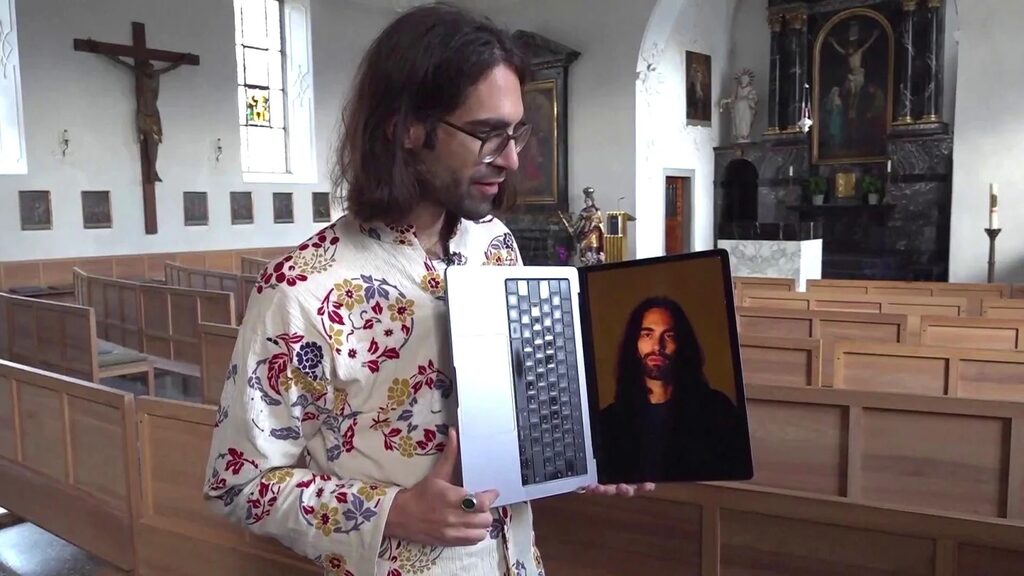
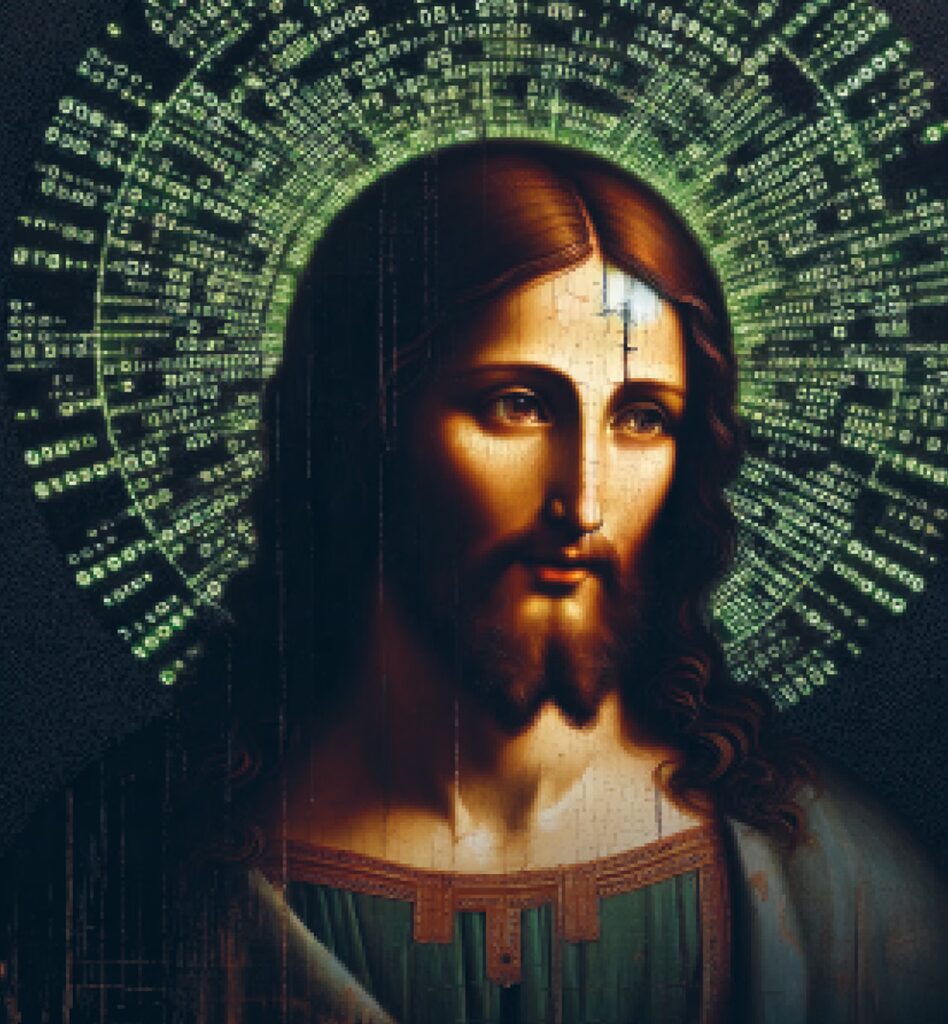
Thousands of Catholics have found pastoral comfort on their phones; as a result, many churches have emptied. To reverse the trend, in 2024 the Swiss curia invited parishioners to St. Peter’s Chapel—the oldest in Lucerne—to experience the installation “Deus in Machina,” which allowed them to converse with an avatar of Jesus. The theologian Marco Schmid led the project. In an interview with The Guardian, he said, “It was an experiment,” but he added that, during the two months the exhibition lasted, two-thirds of those who confessed to the virtual Messiah felt a “religious experience.”
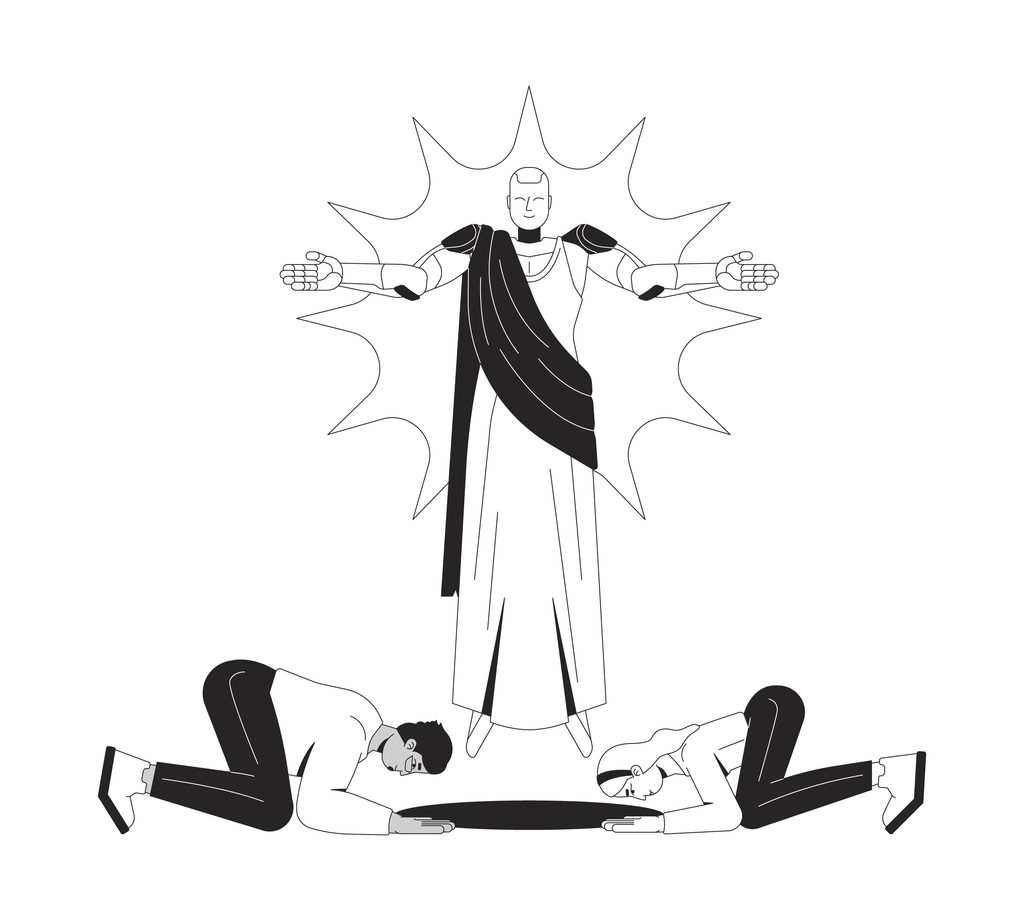
Pope Leo XIV knows what he’s talking about: the robot God is now part of the mysteries of the faith.
Further Reading: