Antonio Navalón
The betrayal lies in the fact that, when people were first asked to vote for a woman in accordance with the principles of the 4T, no one explained that, when the time came to choose between the rule of law and suspicious deals with organized crime, the deals—and not the rule of law—would be chosen. It is an alternative that the people neither chose nor deserve. For, given how protected the governor of Sinaloa seems to feel, it appears that regulation, institutional sensitivity, international commitments, and the rule of law are worth nothing in the face of the preeminence of certain agreements that—given the way they are presented and defended—sound like a confession of illegality and, worse still, a betrayal of the nation.
The rebellion within the Morenista farm is very difficult to resolve. The historical defense of the rights acquired by the movement’s founder and the political agreements he built over the years seems to be taking precedence over the State’s institutional defense. The problem becomes especially serious when those agreements intersect—at least in the public’s perception and now also according to a formal indictment filed in the United States—with individuals and groups linked to the criminal underworld. The more than 35 million votes that backed Claudia Sheinbaum are being betrayed. So too are the country, the movement, the reform, and the 4T—at its top and middle levels, and, worse still, deep within its foundations.
The problem is not merely defending sovereignty or reminding everyone that Mexico cannot allow another country to determine who is guilty or innocent within our territory. The problem is that we have been unable to articulate a solid and credible institutional response to the accusations against the governor of Sinaloa. His reinstatement may have formally complied with state procedure, but that does not resolve the political, institutional, and judicial issues surrounding him. Nor is it a matter of automatically accepting everything the United States says. It is about Mexico making its own institutions function to investigate, verify, refute, indict, or exonerate.
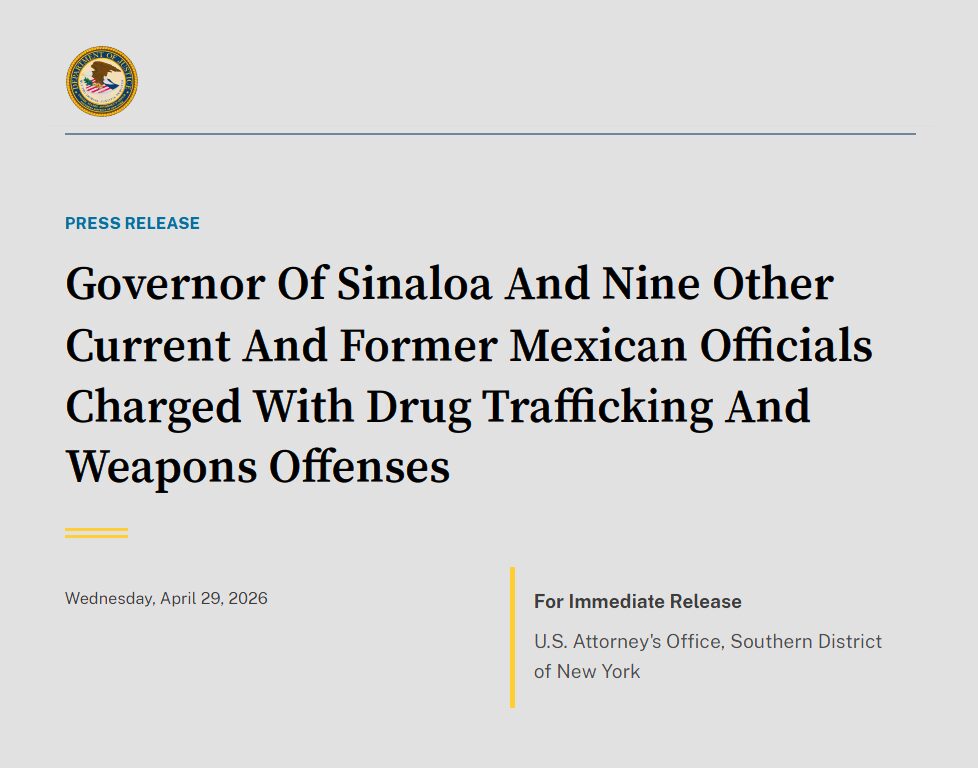
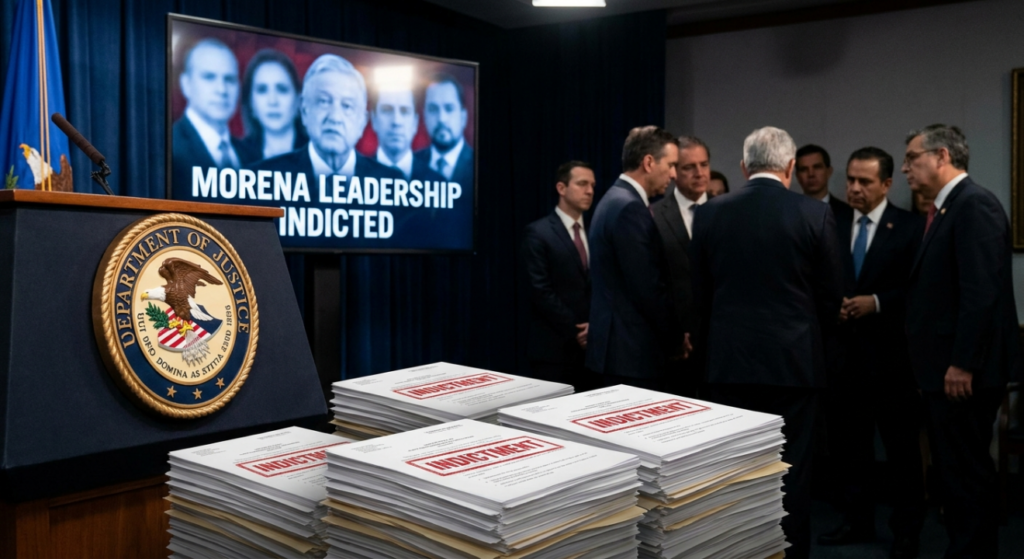
On April 29, the U.S. Attorney’s Office for the Southern District of New York made public an indictment filed by a federal grand jury against Rubén Rocha Moya and nine other current and former officials from Sinaloa. According to the indictment, they allegedly collaborated with the Sinaloa Cartel—particularly with Los Chapitos—in exchange for political support, protection, and impunity. These are charges, not convictions, and those named retain the presumption of innocence. But they are serious enough to demand a response from the Mexican government.
Mexico also received a U.S. request for provisional detention for extradition purposes. It was neither a Mexican arrest warrant nor an extradition granted. The Attorney General’s Office deemed the available evidence insufficient to detain the governor and requested further information from the United States. That, too, does not amount to an exoneration. The investigations remained open, and as recently as August 21, the Ministry of the Interior noted that the inquiries were still ongoing.
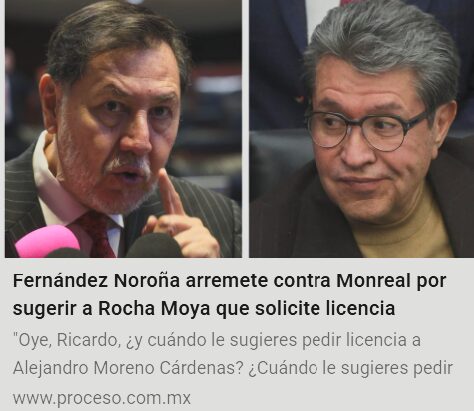
And so, after 112 days on leave, Rocha resumed his duties and returned to the governorship. The state legislature received the notification and deemed a new vote unnecessary. Legally, state institutions recognized his reinstatement. Politically, something far more revealing occurred: the federal government and Morena distanced themselves from him. The Ministry of the Interior made it clear that this was a personal decision. The speaker of the Chamber of Deputies, Ricardo Monreal, asked Rocha to reconsider and request another leave of absence. And 23 governors from the Fourth Transformation (4T) issued a statement calling for “maturity and responsibility” and reminding everyone that no individual project can take precedence over the collective good. Rocha acted as if he had sufficient political autonomy to return to power without needing anyone’s public support.
I do not know—because I have not been there firsthand and there is no public evidence to support it—whether communication between Palenque and Rubén Rocha Moya has been as fluid and ongoing as has been implied. Nor do I know if former President Andrés Manuel López Obrador has provided any backing for this decision. Nor do I know whether the recent revocation of Andrés Manuel López Beltrán’s—Andy’s—U.S. visa could have influenced any political reaction from the founder of the 4T. But there is one question that can no longer be avoided: Do the old loyalties of the “Obradorismo” movement carry more weight than the institutional authority of the president currently governing Mexico? Because, if that is happening, the problem is much bigger than Rubén Rocha.
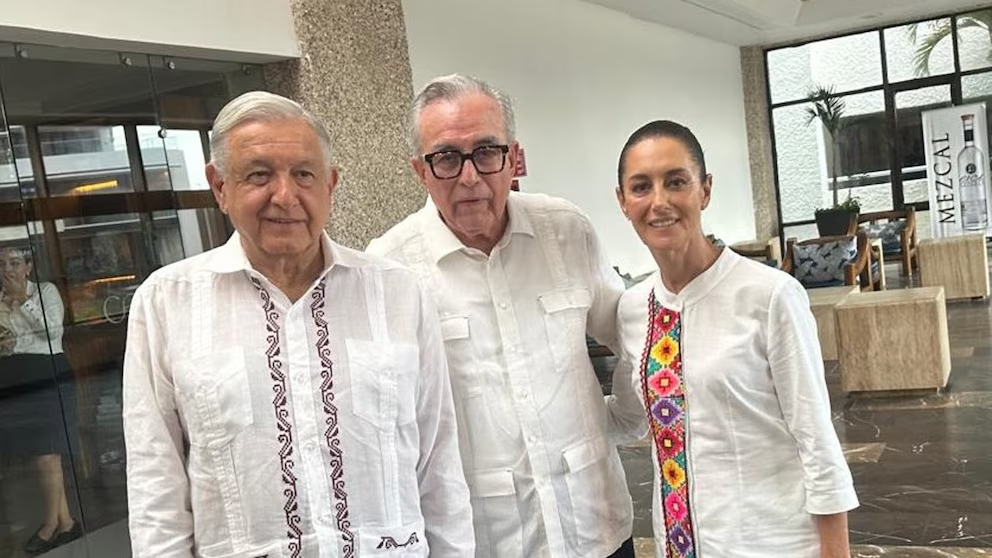
If the founder of the 4T—wherever he may be and whether or not he is directly involved in this episode—retains enough influence to ensure that the agreements, commitments, and loyalties forged during his administration take precedence over presidential authority, then we are not dealing with an internal dispute within Morena. We are facing a power struggle. And it would be profoundly self-destructive. It would mean prioritizing those loyalties over the millions of citizens who elected Claudia Sheinbaum as president and over whatever remained of the moral argument that for years justified the country’s transformation. A transformation that promised to reform the Mexican State and ended up destroying or weakening a good portion of its pillars, without it being clear that what replaced them is better, stronger, or more independent. If one reads the statements by the governors of the 4T, the Morena leadership, and Ricardo Monreal, one must conclude that the rebellion on the farm is already visible.
At this point, everyone faces their moment of truth. Claudia Sheinbaum cannot continue to govern as if this were solely a problem involving the governor of Sinaloa. She cannot strip him of his immunity, remove him from office, or declare him guilty based on a personal decision, because the law does not grant her those powers. But she does have a political obligation to ensure that federal institutions act without interference, that cooperation with the United States allows for the collection of the evidence that country claims to have, and that, if sufficient evidence emerges, the corresponding constitutional and judicial mechanisms are activated.
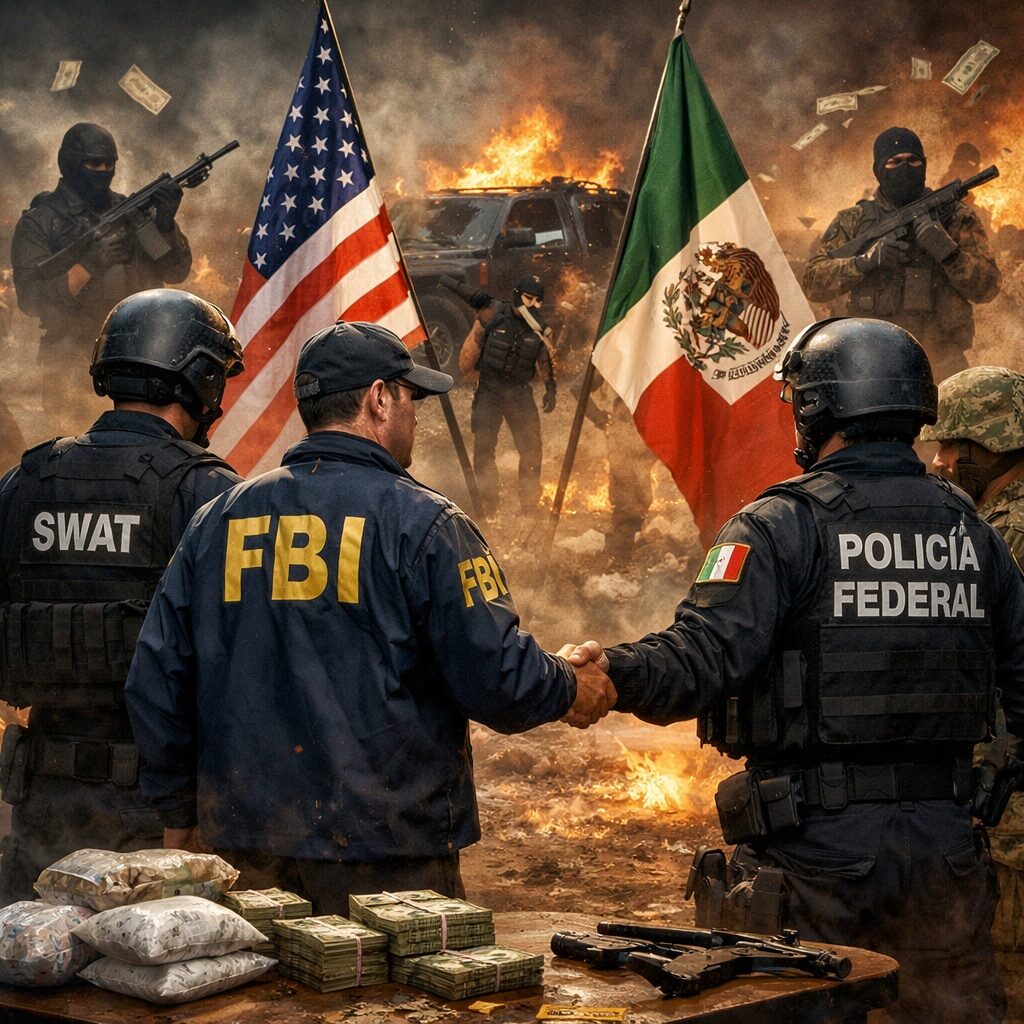
Defending sovereignty does not mean protecting a Mexican official simply because he is being accused from abroad. It means demonstrating that Mexico has institutions capable of investigating and determining—based on evidence and in accordance with the law—whether those accusations are true or false. Meanwhile, Sinaloa continues to pay the price. Since the kidnapping or illegal extraction of Ismael “El Mayo” Zambada to the United States in July 2024 and the murder of Héctor Melesio Cuén, Sinaloa has been caught in a spiral that eventually escalated into an open war between factions of the Sinaloa Cartel itself.
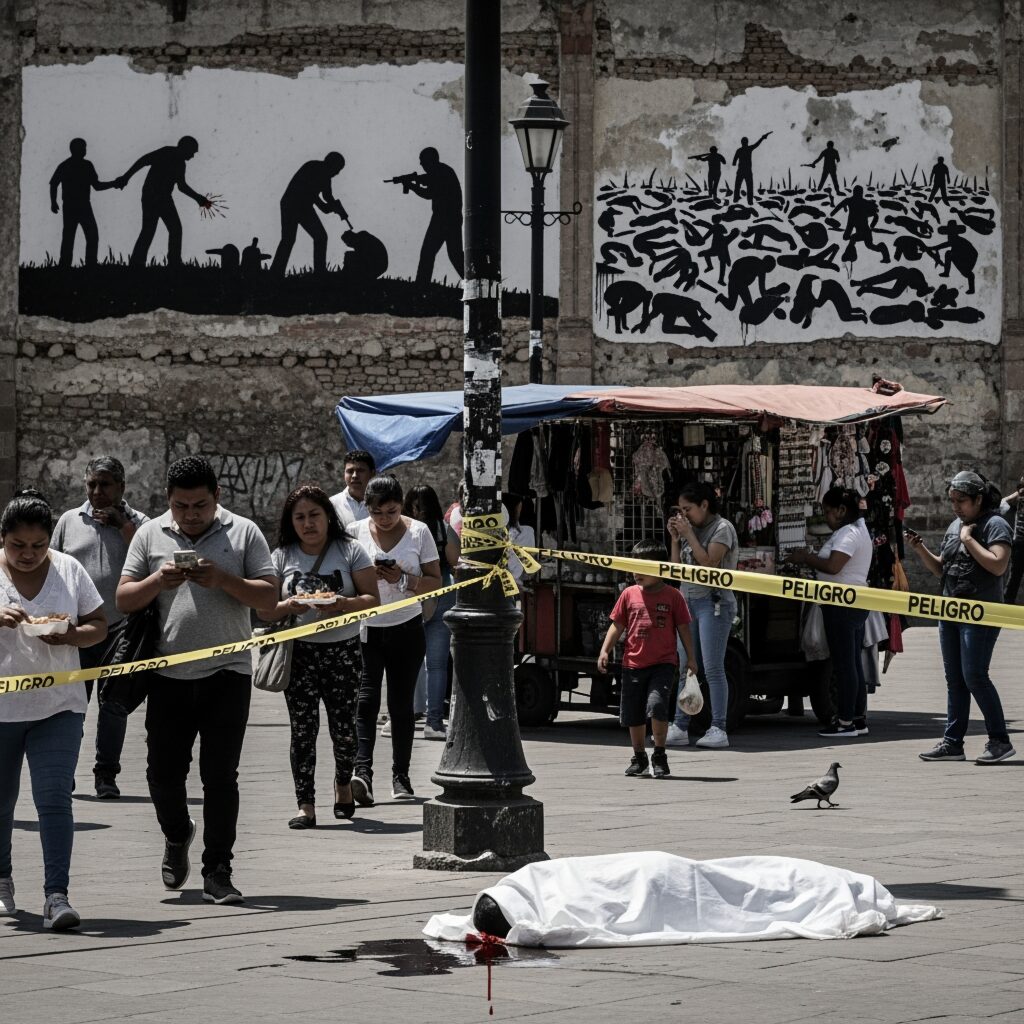
Since then, there have been more than 3,000 homicides, in addition to thousands of reports related to disappearances and unlawful detentions. The confrontation between Los Chapitos and La Mayiza has not only filled the streets with blood and dealt a blow to economic activity; it has also called into question something even more fundamental: who truly exercises territorial control and who is in charge in Sinaloa. That is why Rocha’s return is such a bad sign. Not because a U.S. indictment in and of itself proves that he belongs to one of the factions—it does not. But the indictment filed in New York alleges that Los Chapitos aided his political career and that, once in office, he reciprocated by providing protection and impunity.
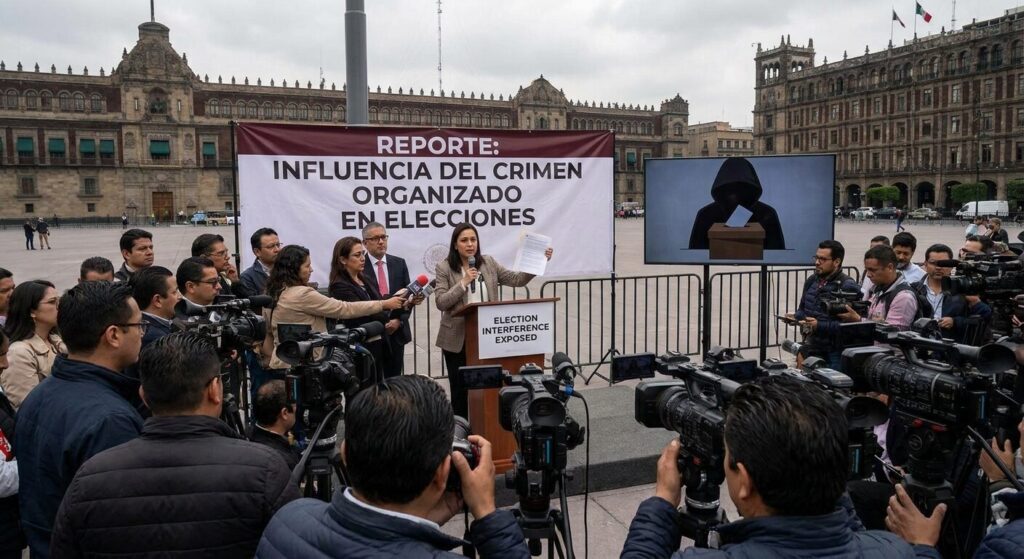
As long as such an allegation remains unresolved in a convincing manner in Mexico, the governor’s full exercise of power will continue to fuel a suspicion that institutions should be interested in dispelling. The entire Mexican State — or what remains of it after years of institutional erosion — is called into question by this decision. Because in politics, it is not enough simply to be: one must also appear to be. And what it appears to be today is deeply troubling. Standing before the federal government, the parliamentary majorities, Morena, and the presidency itself is a governor capable of temporarily stepping down from office, returning of his own accord, and regaining power—all while facing a U.S. federal indictment for drug trafficking and with an ongoing investigation in Mexico related to those same allegations. As if he were Caligula’s horse, he appears to rise above the logic that should govern institutions.
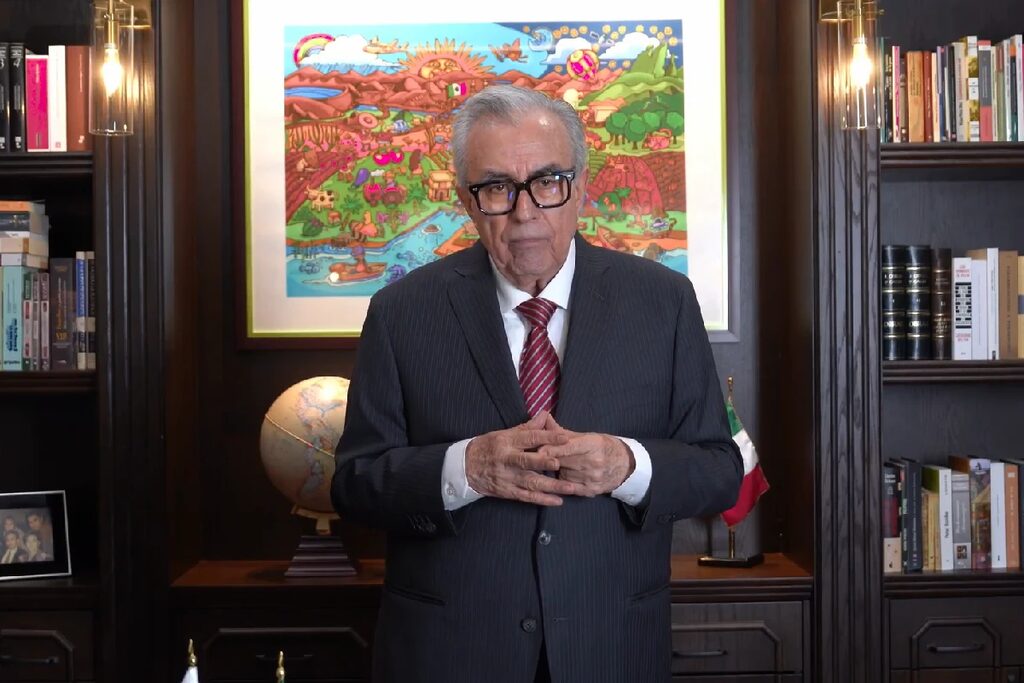
And the case inevitably becomes international news. Mexico is not only faced with the image of a country incapable of resolving, through the courts, suspicions of corruption and collusion between authorities and criminal organizations. It also projects the image that these relationships—whether real or alleged, since they have yet to be proven—may be so deeply ingrained in the very fabric of the political system that a governor under scrutiny can return to power even as his own party, allied governors, and the federal government seek to distance themselves from him. This is devastating for Claudia Sheinbaum.
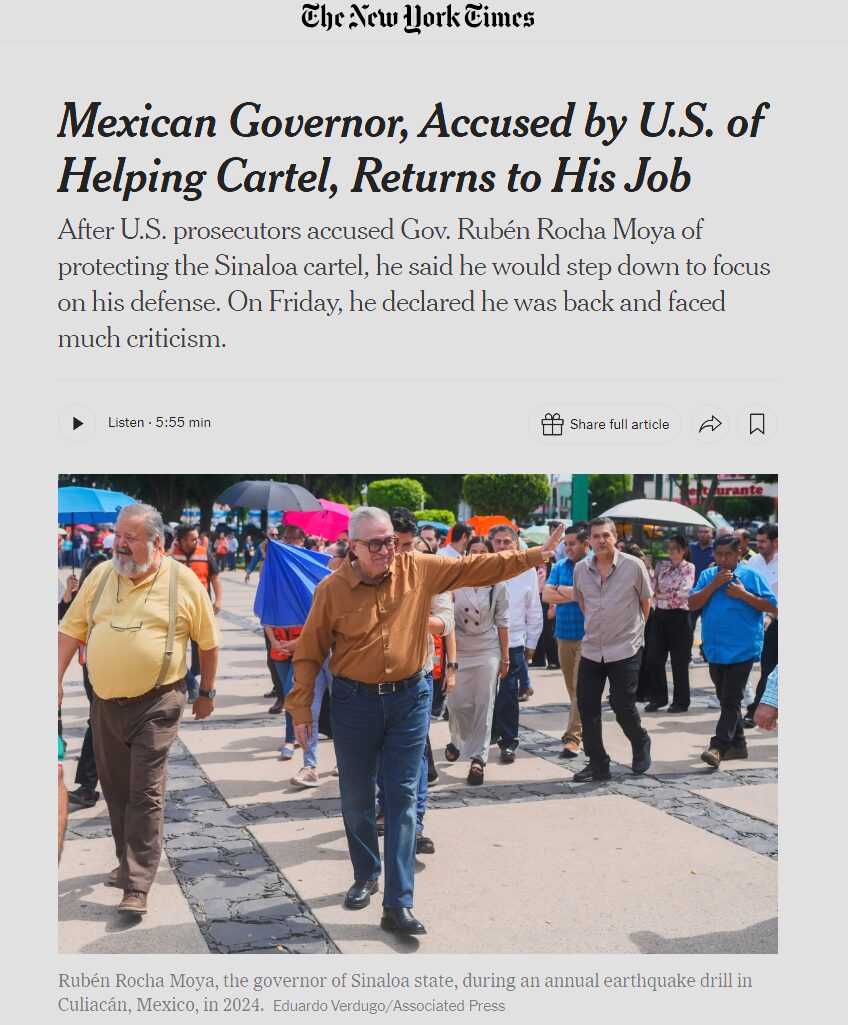
There is no turning back from betrayal. And whoever is behind this decision—whether it is Rocha alone, Rocha with some support from Palenque, or some other combination of interests—must know that it is no longer just the fate of the governor of Sinaloa that is at stake. The president’s authority is at stake. The citizens who voted for Claudia Sheinbaum did not vote to elect an administrator subordinate to the agreements inherited from the previous presidency. They voted for a president of the Republic.
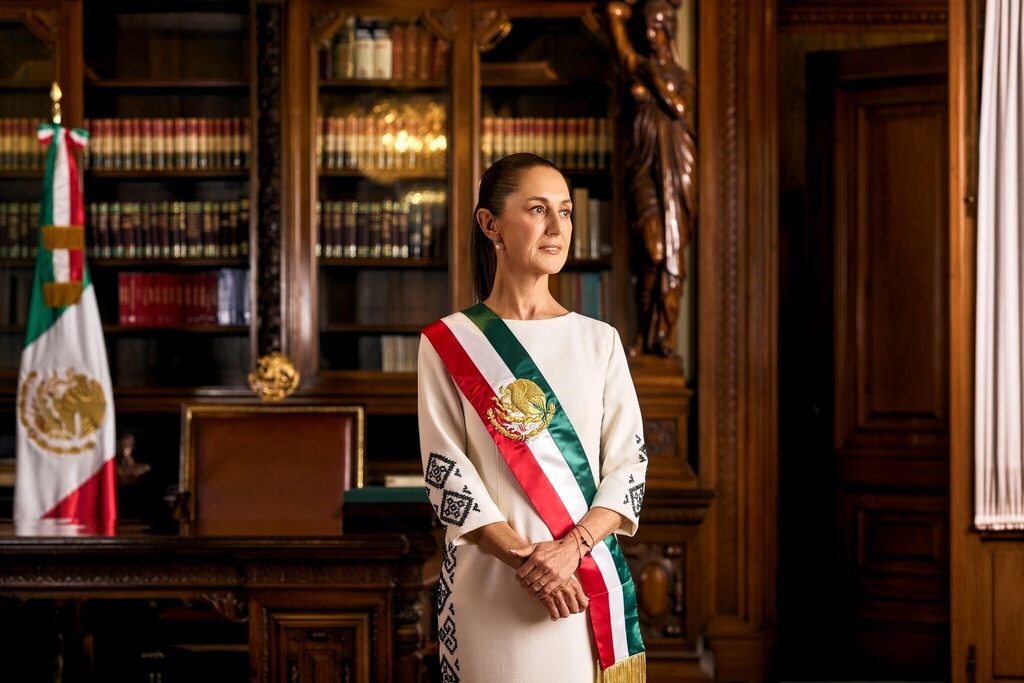
If there are officials capable of defying the federal government by relying on historical loyalties, party structures, legal immunities, political commitments, or powers accumulated during the “Obrador era,” Sheinbaum will have to decide what to do with them. And she will have to do so soon. Because perhaps the most serious consequence of Rocha’s return is not what it demonstrates, but what it makes it seem like. And today, it seems as though Claudia Sheinbaum is not in charge.
Further Reading: