
Antonio Navalón
Knowledge often stands in the way of hope. It is not the same to believe in what one needs, senses, or thinks one knows, as it is to believe despite what one knows. That is why true love is born not of ignorance or fantasy, but of real knowledge—of seeing the other clearly, with their virtues and flaws, and choosing to love them anyway.

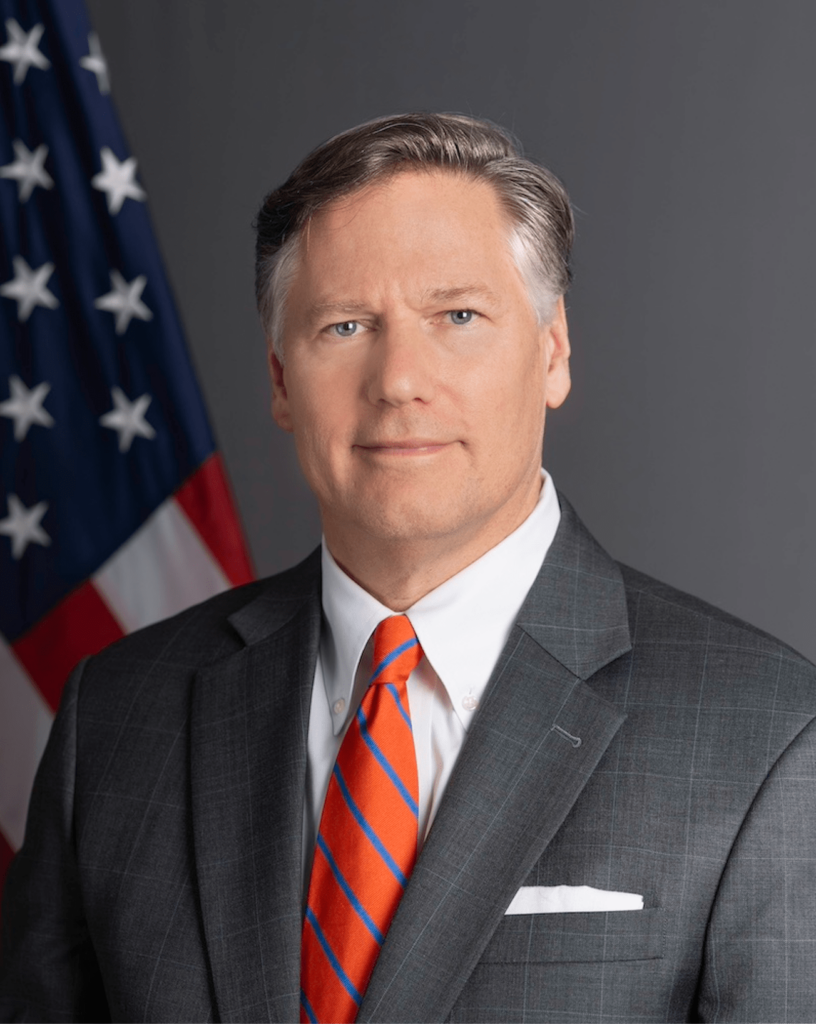
Mr. Christopher Landau loves us, without a doubt. Of all of Latin America, the place where he seems to have felt most fulfilled, most integrated, and most at home is Mexico. Landau was born in Madrid—the son of U.S. Ambassador George W. Landau—and from a very early age, Spanish was a natural language for him, almost like a second mother tongue. His biography is not that of an official who discovered Mexico through a file, but that of someone shaped by Latin American codes, diplomatic traditions, and a deep connection to the region.
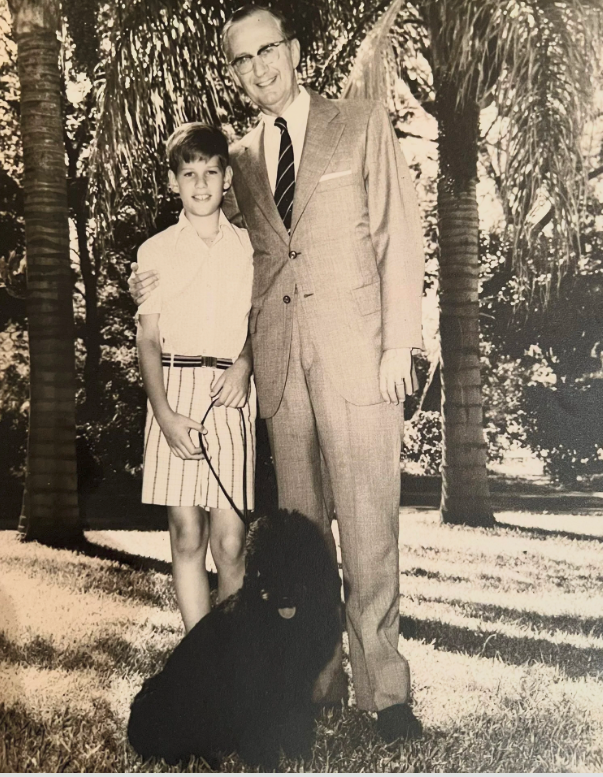
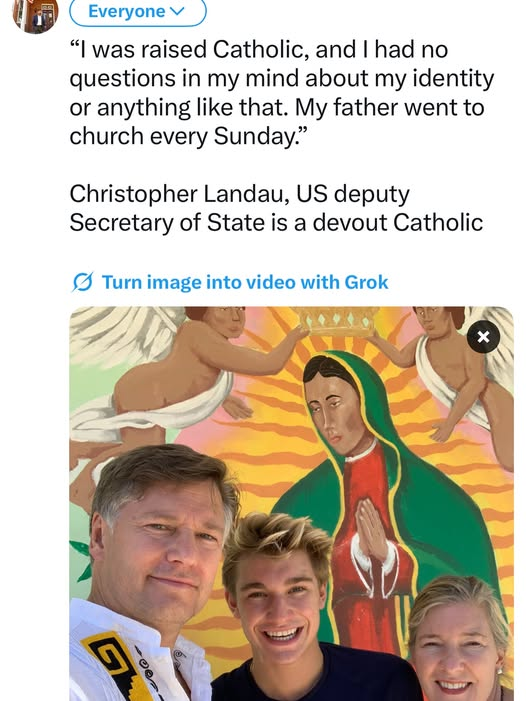
But the problem isn’t that he’s spoken Spanish since birth. The problem—or perhaps the advantage, depending on your perspective—is that he knows us and has come to know us throughout his entire life. The son of a diplomat, a visitor to several Latin American countries—including Paraguay, Chile, and Venezuela due to his father’s diplomatic work—familiar with their unique characteristics, a devotee of the Virgin of Guadalupe in his public gestures, and a faithful follower of certain Mexican traditions, Landau did not arrive in Mexico as a stranger. When, during his first term, Donald Trump appointed him as the U.S. ambassador to Mexico, Landau came from a top-tier legal career in litigation and corporate law.
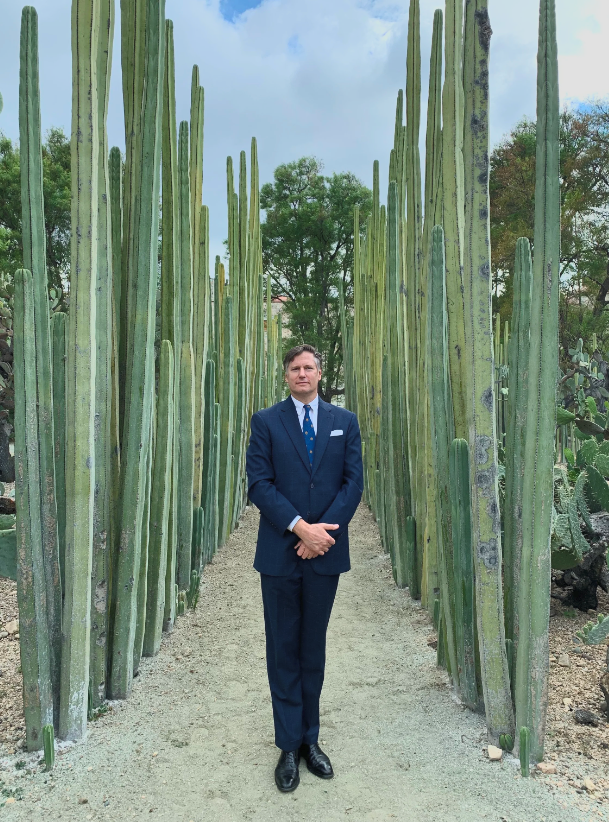
In 2019, he was appointed as Trump’s ambassador, but he also identified himself as someone who understood that Mexico cannot be fully grasped simply by speaking the language. Mexico is understood by deciphering the code, the double meanings, the silences, and the manners. That unwritten code is the best and worst of our people. Landau knows it. That is why he is now one of the central pillars of the political architecture of the bilateral relationship between Mexico and the United States; it is no accident. It is a recognition of his deep knowledge of the country and his ability to understand us from the inside.
It is not that Secretary of State Marco Rubio distrusts other interlocutors. Landau is Under Secretary of State and, therefore, the number two at the State Department. Rather, what is relevant here is that Landau has something more important than his position: he has a mandate, memory, and, above all, knowledge. He knows who he is talking to when he speaks with Mexico. He knows what we say, but also what we mean. He understands the silences, the evasions, the gestures, and the pitfalls of our political discourse.

Perhaps that is why Marcelo Ebrard—when he served as foreign minister during the administration of Andrés Manuel López Obrador—had such difficulty communicating with him. In that theater of appearances that is the conduct of relations between countries through embassies, there was one factor that stood in the way of mutual trust: Landau knew too much and understood too well. And when a foreign interlocutor is familiar with the inner workings of Mexican power, the relationship no longer rests on diplomatic courtesy. It enters the far more uncomfortable terrain of truth.

It must be said that, of all the mistakes Ebrard made during his time as foreign minister, his underestimation of Christopher Landau—his carelessness in dealing with him and his lack of understanding of what that ambassador represented—were, without a doubt, among the most serious. Not because Landau was invincible, but because he was not a conventional ambassador. He was a seasoned operator with knowledge, access, a keen memory, and a precise understanding of the Mexican political system.
The Cienfuegos case marked a turning point. The arrest of General Salvador Cienfuegos at Los Angeles International Airport in October 2020 was no minor event. It was the brutal emergence of a new logic. It was a shift from generic mistrust of the cartels to a precise search for the thread linking political power to the power of organized crime.
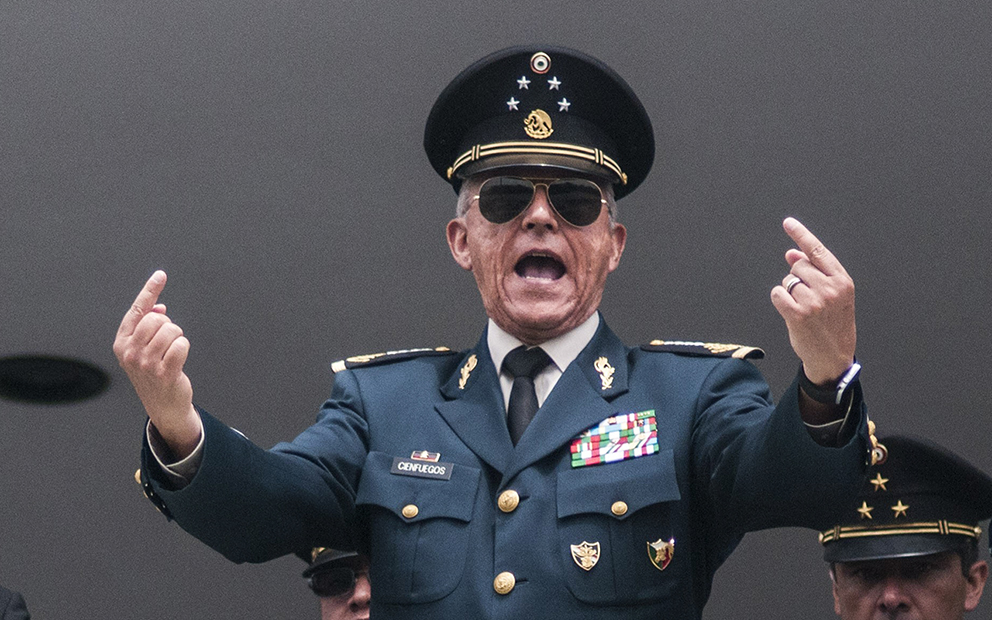
Cienfuegos was not just any official. He had served as Secretary of National Defense during the administration of Enrique Peña Nieto. For that reason, his arrest triggered a political and diplomatic earthquake. Ebrard never forgave the embarrassing role he was forced to play following that operation. The question was inevitable: how was it possible that, with such a close relationship, with an ambassador so deeply involved in Mexican life—in its symbols, its traditions, in taking his family out for tacos or celebrating tamales on February 2—could an investigation, indictment, and arrest of that magnitude have taken place without anything coming to light in the relationship between the ambassador, the Foreign Ministry, and representatives of the federal government?
That required an enormous diplomatic effort. It forced the U.S. government to petition a judge to have the charges dropped so that Cienfuegos could return to Mexico. The official explanation was that the case would be transferred to Mexican territory so that national authorities could analyze the evidence and, if warranted, proceed with the case. That is why Cienfuegos returned to Mexico.
The story is, or should be, known to all of us. Cienfuegos returned to Mexico. He received no honors or medals, but he was not subjected to a criminal trial in our country either. The Attorney General’s Office concluded that there was insufficient evidence to proceed against him.
That precedent explains much of what is happening now. It also helps us understand our president’s response when she demands evidence from the United States and asserts that Mexico will decide in accordance with its own legal framework. In legal terms, asking for evidence is not a mistake; no serious State should act without evidence. The problem lies in turning that demand into a preemptive political defense, or in forgetting that the Cienfuegos case left a deep wound in bilateral trust.

The difference is that today the bilateral relationship operates under different names, but with an institutional logic that has not disappeared. Landau is once again in a strategic position within the State Department, and Christopher Cole—a key figure in the Cienfuegos case—currently heads the DEA. It is not accurate to say that this is literally the same operational team that handled the Cienfuegos case. However, it is accurate to state that there is continuity in the U.S. perspective: the conviction that the problem does not end with the cartels, but extends to the political, institutional, and financial networks that protect them or allow them to operate.
It’s not all bad. Landau knows who he can trust on this side of the border. He also knows who speaks to buy time, who speaks to confuse, and who speaks to avoid committing. That’s why, following the change in the foreign minister, at least a space of minimal trust may open up to begin talks. The biggest unknown is whether the president will know how to use an advantage that Mexico hasn’t had since the days of John Gavin, Ronald Reagan’s ambassador during the Miguel de la Madrid administration. That is, having a U.S. counterpart who knows the country deeply, but who also knows when Mexico is playing at pretense.

The duck syndrome still surrounds us. If it walks like a duck, quacks like a duck, and swims like a duck, then it is a duck. In international politics, that phrase is not a quip; it is a warning. Countries are not judged solely by their speeches, but by their patterns of behavior. And when those patterns repeat themselves, rhetoric ceases to serve as a shield.

Christopher Landau is a skilled and likable politician. He possesses an obvious charm and embodies well that old definition of a velvet glove over an iron fist. He shares certain elements of Central European heritage with President Trump, although their career paths and temperaments are very different. Unlike Trump, Landau projects a cooler, more methodical, and systematic personality.

Given this background, and with the accumulated knowledge each side has of the other, it is more dangerous and futile to invoke the argument of political interference automatically. Doing so may sound patriotic, but it can also reveal a lack of understanding of the legal, political, and judicial structure of our primary commercial, political, and military partner. The United States does not operate like Mexico. Its agencies, prosecutors, judges, and cooperation mechanisms follow their own logic. Ignoring them does not strengthen Mexican sovereignty; it weakens it.
That is why the fundamental question cannot be solely whether the United States should send evidence. Of course it should. The truly uncomfortable question is what Mexico will do with that evidence, if it arrives. Because, inevitably, the precedent of the Cienfuegos case will arise on the other side of the table. And the question will be brutal: do you want the evidence to investigate it or to do the same thing you did back then—that is, nothing?
The fact is, when knowledge replaces innocence, there is no longer any room for pretense. Landau knows Mexico. The DEA knows its files. And Mexico should know itself well enough to understand that, in this new phase, the old strategy of asking for evidence only to bury it later could end up being far more costly than facing the truth.
Further Reading: