Antonio Navalón
Undoubtedly, the night of January 3 this year marked a turning point in the global debate on new forms of warfare, domination, and strategic control, not because of open military action or a conventional invasion, but because of the consolidation of a model of coercion that no longer requires occupying territories, deploying troops, or declaring formal conflicts to alter the political balance of a country like Venezuela profoundly.
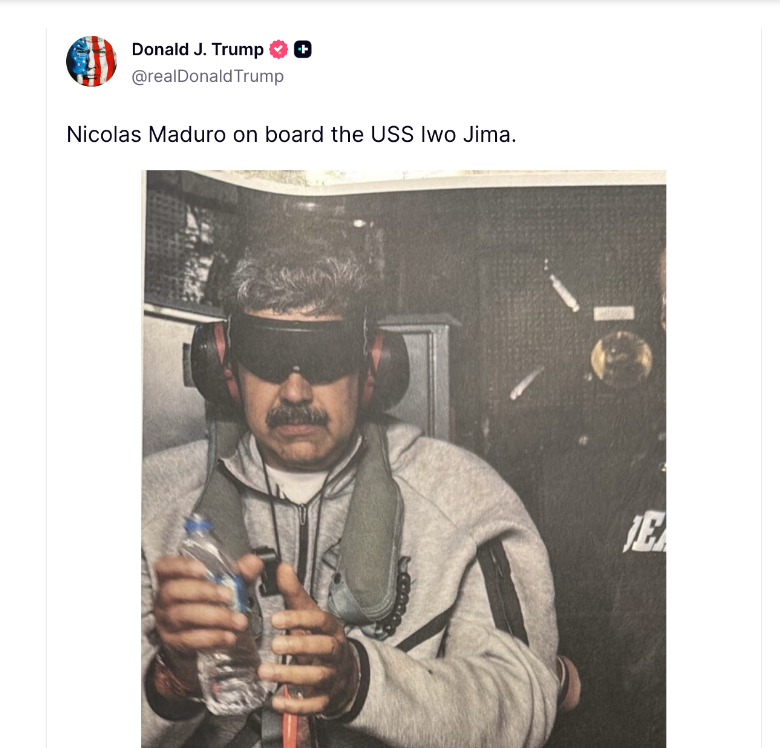
In the weeks leading up to the operation, the United States had visibly increased its strategic pressure on Nicolás Maduro’s regime. The naval deployment in the Caribbean, diplomatic moves, public and private warnings, and months-long indirect negotiations demonstrated that the scenario of confrontation extended beyond rhetoric. However, what ultimately prevailed was not a classic armed intervention but the confirmation that special operations, advanced intelligence, and hybrid warfare have completely transformed the exercise of power in the international system.
From this point on, it is clear that the great powers no longer need to conquer in order to control. War is no longer just a matter of visible weapons, deployed troops, or massive bombings. Today, technological, informational, and operational capabilities enable highly protected spaces to be penetrated, power structures to be neutralized, and strategic decisions to be modified without a single shot being fired or visible casualties being incurred. The United States, Russia, and China possess these capabilities—at different levels—and their mere existence redefines the rules of global balance.
From a military perspective, the message is clear. No space, no matter how sophisticated its Russian or Chinese defense system, can be considered completely impenetrable. The real surprise lies not in the force employed, but in the absence of traces. It is a form of intervention without occupation, an invasion without invaders, where control is exercised without the formal presence of the occupier.

History offers disturbing parallels. The Roman Empire already understood that it was not always necessary to destroy or directly rule a territory in order to dominate it. It was enough to replace or condition those who held power, secure internal loyalties, and ensure that strategic decisions responded to imperial interests.

We have long wondered what the United States has learned from the wars it has waged since the end of World War II. For decades, it was assumed that the world had never witnessed such a vast display of material resources, intelligence capabilities, and military power as that deployed by Washington in the various conflicts in which it has intervened. However, a rigorous review of the facts reveals an uncomfortable conclusion: the United States rarely won those wars on its own.
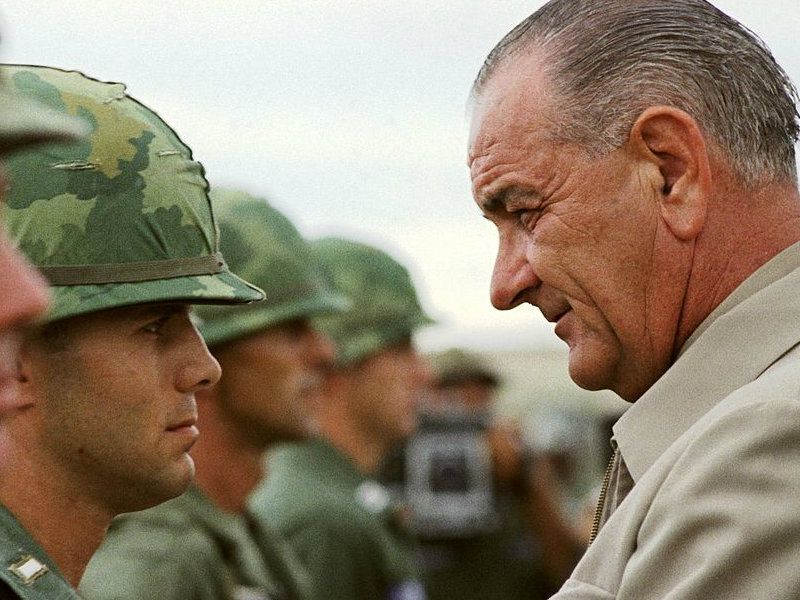
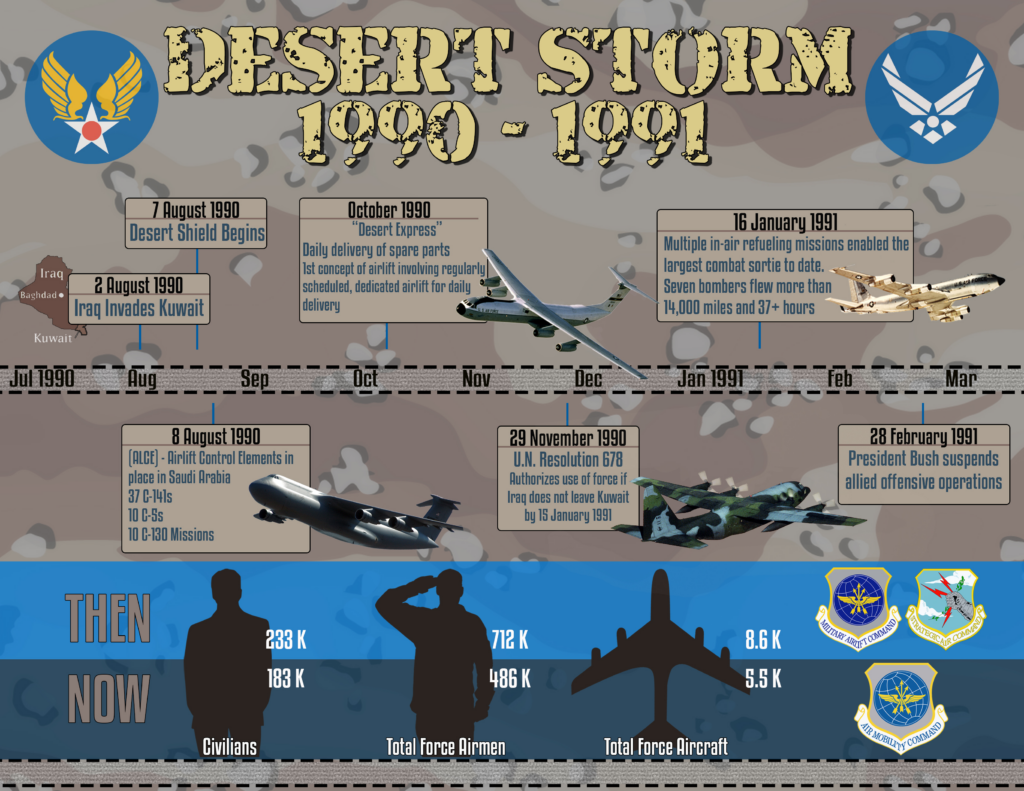
It did not achieve a clear victory in Korea, failed strategically in Vietnam, failed to stabilize Afghanistan after twenty years of occupation, and ended up withdrawing from Iraq without having consolidated the political objectives that justified the invasion. The only operations that can be considered triumphs since 1945 were those carried out under very specific conditions: Operation Desert Storm, a broad international coalition led by President George H. W. Bush to expel Saddam Hussein from Kuwait, and the limited interventions in Grenada and Panama, which were more rapid regime change actions in low-resistance environments than long-range conventional wars.
This assessment explains why the United States ceased to rely on prolonged wars of occupation and began to develop a different model of power projection, based less on territorial conquest and more on technological superiority, advanced intelligence, financial deterrence, and the ability to shape political outcomes without the need to win traditional battles.

In this context, with Maduro’s removal, Venezuela has become a laboratory for the new order. The idea of this “invasion without invaders” has become part of the new political and military approach. No US troops are occupying the country, no US proconsul administering the territory, and no visible foreign military authority. However, the Venezuelan regime’s room for maneuver has been drastically reduced. Real control no longer lies with those who formally govern, but with those who define access to markets, the lifting of sanctions, the administration of frozen assets, and, above all, the destination of oil revenues.

Key decisions on privatization, amnesties, institutional reconfiguration, and economic openness have begun to move through channels that previously seemed unthinkable within Chavismo. The National Assembly, which for years functioned as a space for ideological confrontation, is now accompanying transformations that mark a profound shift from the founding discourse of the Bolivarian revolution. The closure of emblematic detention centers, the promise to end the era of political prisoners, and the normalization of economic relations point to a redesign of power rather than its disappearance.

The real question is not whether there will be a military counteroffensive, but whether there is a real capacity to resist this new model of control. Everything indicates that, except for isolated actions or symbolic gestures, there is no room for a large-scale violent response. Ultimately, as always, the determining factor is who controls financial flows and strategic resources. In the case of Venezuela, oil—the largest known reserve on the planet—has become the absolute linchpin of that equation.

The eventual lifting of sanctions, full reintegration into international markets, and the recovery of assets would allow for an injection of resources capable of reviving the Venezuelan economy. At the same time, that money would be strictly conditioned, making it impossible to use it to finance alliances with Tehran, sustain structures that support terrorism, or continue subsidizing collapsed regimes such as Cuba’s. Global geostrategy does not operate on isolated impulses but rather as a multi-band carom, in which each move responds to a larger design.

On that board, Venezuela is just one piece. Pressure on Cuba, containment of Iran, and the redefinition of the balance in the Middle East are all part of the same power logic. Forces hostile to Israel will continue to exist, but with limited capabilities and under an increasingly restrictive international environment. None of this is accidental or improvised.

For any country or company with interests in Venezuela, the message is unequivocal. The ability to operate in the new Venezuelan era will depend on aligning with the political, economic, and strategic standards defined by Washington. Those who cannot or will not do so will be excluded from the present and the future being shaped for this new model of a functional state, an open economy, and a deeply conditioned politics.
Further Reading: