
Antonio Navalón
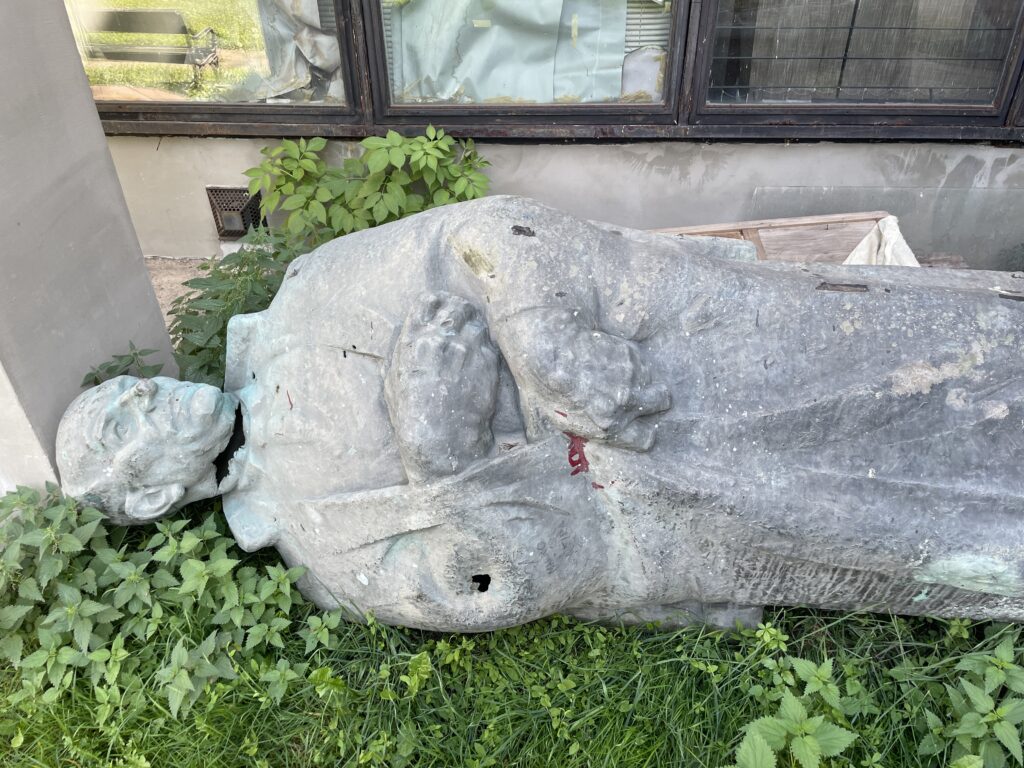
Politics, by definition, does not understand internal loyalties or immutable points of view. Everything changes according to the circumstances of the moment. In this context, Alejandro Gertz Manero was removed. He did not resign because he did not want to; in fact, the staging of his replacement at the Attorney General’s Office was, in itself, an admission that he had no intention of leaving office.

Why did he leave? What did he do? Why did that kind of indefinite leave, which he seemed to enjoy from the day Julio Scherer Ibarra (then advisor to the President) brought him a cake with nine candles symbolizing the years of his term, actually end?

He was the first “independent” Attorney General whose term, although initiated at the request of a government, was conceived as spanning two six-year terms and, on paper, untouchable. With that guaranteed nine-year backing and the idea that his appointment shielded him from political pressure, he seemed to feel privileged to become a turning point. But in history, things never turn out as planned or as proclaimed. They turn out as they can, considering everything that surrounds them.

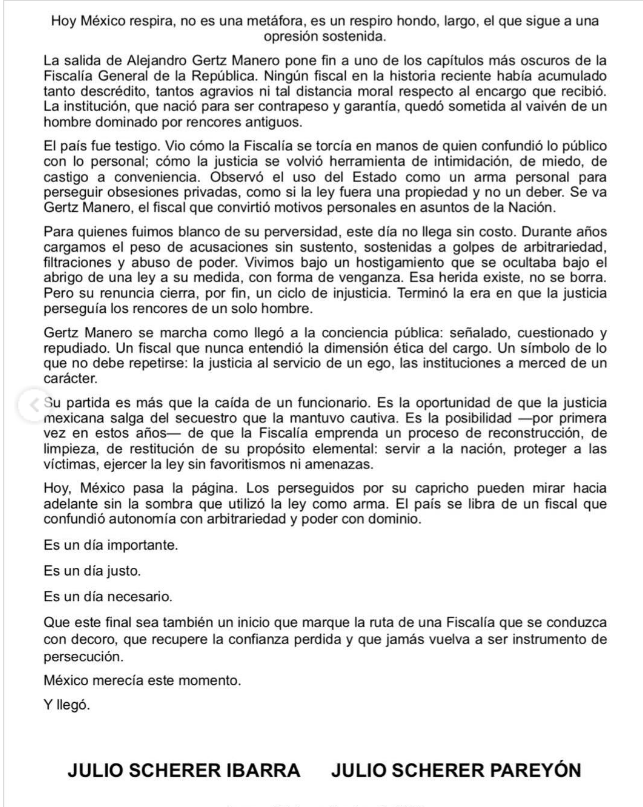
His departure was so significant that it even prompted a public statement in the newspaper Proceso, signed by the person directly responsible for his appointment—the former legal advisor—and by his son, now a congressman and first on the Green Party’s multi-member list. Both were swept up in the personal animosity of the now former Attorney General of the Republic. Why did this happen?
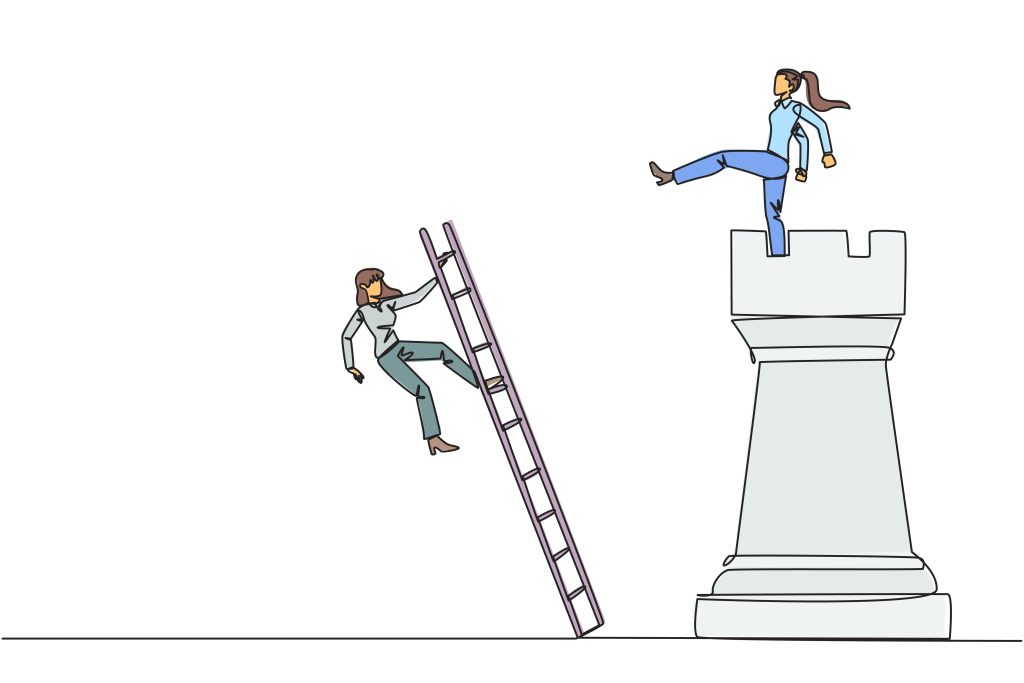
Undoubtedly, it was due to the merits of a personality as experienced in life as in politics, as former prosecutor Gertz Manero. Amidst that movement of political pieces, it was not possible to assess in time who was really close to the President’s heart—or at least to her political needs. In these journeys, since history was made, people such as the former Secretary of Public Security of Mexico City, while the current President was head of government, forged bonds that transcended time and presidential terms. The prosecutor did not want to leave and demonstrated this right up to the end. The report, the relations with Rocha, the handling of the Rocha case, and the convenient use of intelligence resources in the hands of the government’s favorite did the rest.
Today, the entire application of justice is in the hands of those closest to the President and her circle of trust. Now we will have to wait and see what they do and how they do it. We will have to see where the line is drawn between the architect of the political climate that enabled the arrival of the Supreme Court Justices—the result of a complex institutional assembly—and the needs of a government whose real program is just beginning, since it has been in office for only 13 months. That program must define the characteristics, guarantees, and recovery of a competitive justice system for the country. Following the change in the Attorney General’s Office, it is only a matter of time before the National Palace—and nowhere else—determines what environment will offer sufficient certainty to continue investing in Mexico.
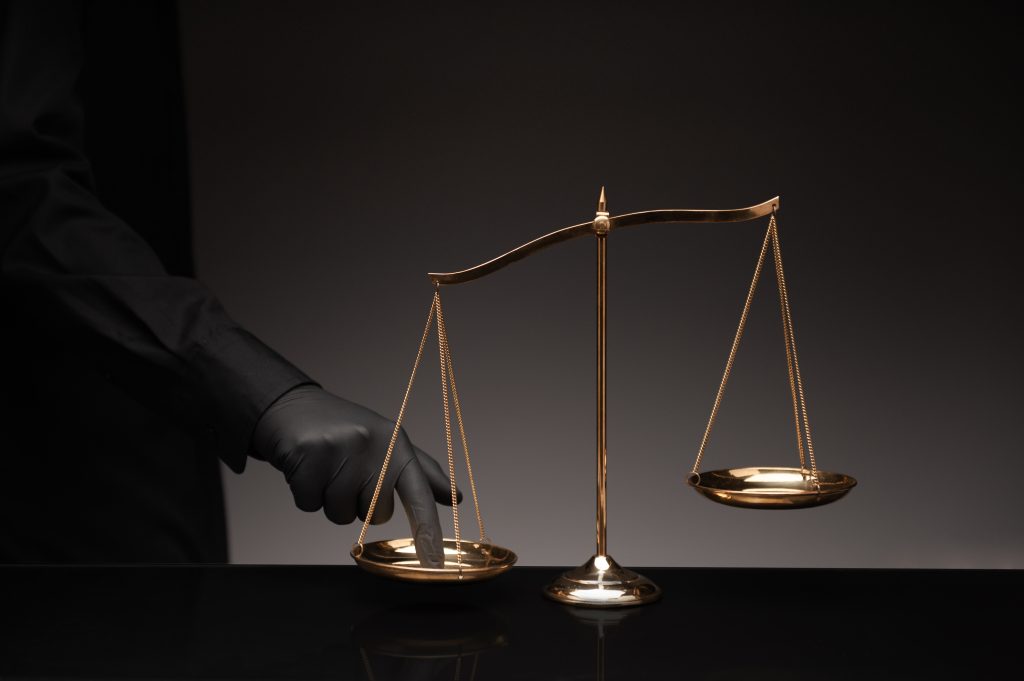
In conclusion, it is not difficult to anticipate that adjustments will occur sooner rather than later. Not necessarily in the composition of the Supreme Court, but in judicial policy and in the limits of what justices can and cannot do. Since shortly after Rome, the concept of “res judicata” (Latin for “thing judged”) has been a pillar of any legal system. Today, in the justice system derived from popular election—and, above all, in its constant adaptation to the political needs of the moment—that guarantee has begun to disappear. Everything can be reopened, reinterpreted, or judged according to the political climate. This, as you will understand, will be decisive in the regulation of the USMCA. It already is. And it will be key to convincing the public and the world that, despite the problems, Mexico remains a country where individual rights enjoy real guarantees within the legal system.
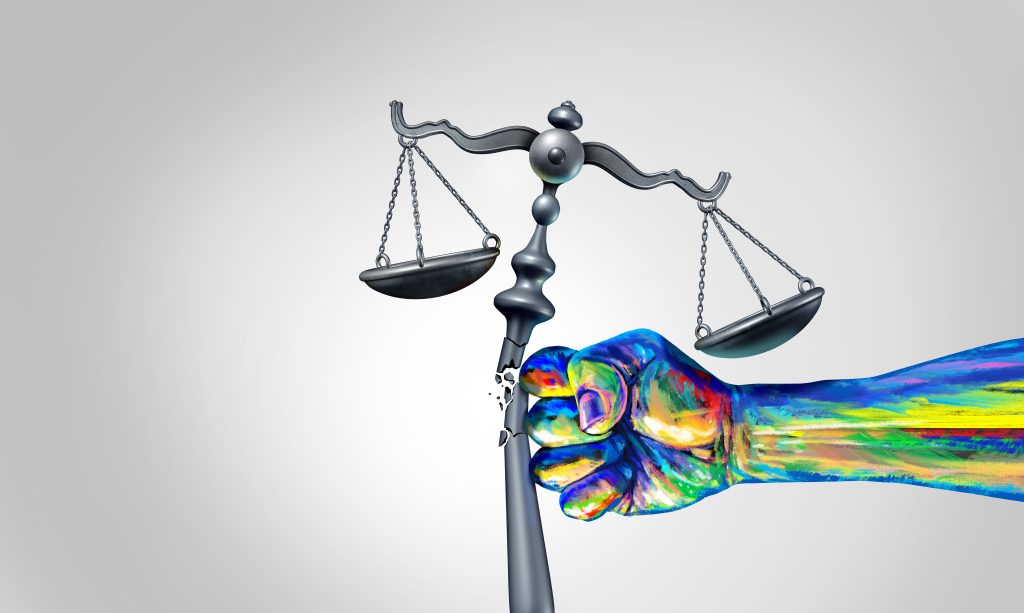
We must not make the mistake—even though the argument has been repeated a thousand times—of believing that no one, including the Attorney General, is above the political situation. Nor can we assume that, because someone has emerged from an impeccable institutional design, they will be able to remain on the sidelines of the climate and tensions that define national jurisprudence.

All of the above is contrary to the six-year term, the presidency, and, above all, the historical legacy that this administration will inevitably want to leave behind. And when the inevitable moment of reckoning arrives—as it always does—Gertz will be haunted by the question: What happened to the country’s legal structure and, linked to that, to the investment guarantees that sustain its development?
Further Reading: