

Antonio Navalón
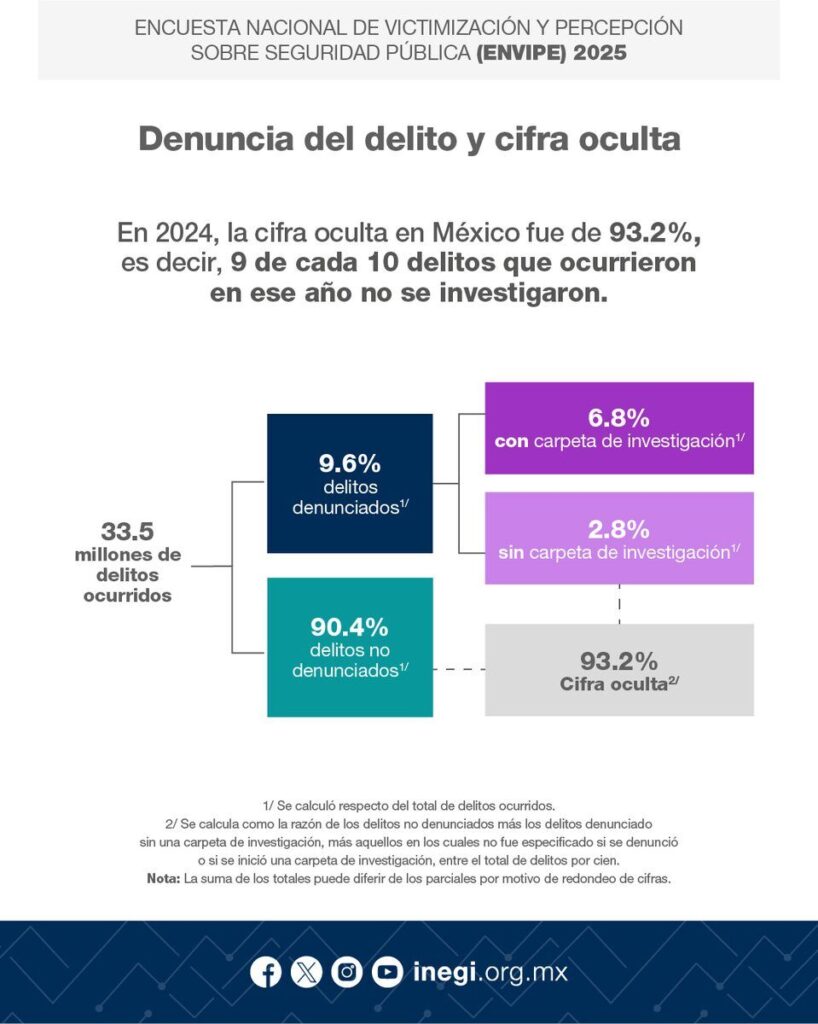
A country without reliable judicial and investigative institutions is doomed, and everyone—sooner or later—ends up paying the price for the absence of these elements essential to life in society. In Mexico, this is not merely a perception; it is something backed by data. According to INEGI, in 2024, 93.2% of crimes were not reported or did not result in an investigation. We are indeed living through a time of universal transformation. Much of the future will depend on how we choose to apply the tools created by the great innovators of our time: the technologists and those who made the digital revolution possible.
That is precisely why it is even harder to understand our helplessness. In the midst of this algorithmic dictatorship, we are so closely monitored that the platforms seem to know better than we do ourselves how many rolls of toilet paper we use, how many boxes of Kleenex we go through, where we are, what we buy, and what we want. However, when it comes to determining political or criminal liability, legal and institutional uncertainty remains enormous. I have never understood why the United States has been granted not only the benefit of the doubt, but also an institutional advantage. Despite Trump, Trumpism, and all its excesses, its justice system retains international credibility that ours has squandered. Washington accuses, sanctions, investigates, and points fingers; Mexico, on the other hand, tends to respond from the political podium, wrapped in the flag and without a case of its own with which to defend itself.
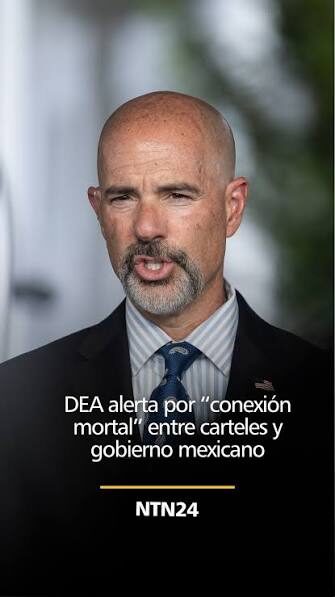
The most recent example is hard to ignore. On July 13, DEA Director Terrance Cole publicly stated that there was a “deadly connection” between the cartel networks and the Mexican government, and went so far as to claim that the two “are the same.” This is an extremely serious accusation made by the head of a U.S. government agency—not a mere offhand remark in an interview or an insignificant statement. I have never understood why we have never dared to respond and order a thorough judicial investigation to determine whether the accusations repeatedly leveled by the Washington administration have any basis. If we have the evidence to prove they are false, we should do so through case files, hearings, and judicial rulings—not merely through speeches.
It would be desirable, even if the accusations turned out to be unfounded, to have the opportunity to refute them legally. We should be able to establish where we agree, where we disagree, and why. Simply demanding ‘evidence, evidence, evidence,’ as if the absence of a dossier provided by Washington were enough to acquit the theoretically ‘bad guys’ in advance, is a poor policy for which we all end up paying. Make no mistake. For many years now, I have known that, on both sides of the border, there are agreements and collusion. It’s hard not to see that the drug trade and the drug empire would be impossible without criminal networks and corrupt, complicit authorities in both countries.

The problem is that, while on this side we bear the brunt of the deaths, the violence, the doubts, and the institutional imbalance, on the other side the discussion focuses on demand and addiction. Substance use should indeed be addressed as a public health issue, but that cannot obscure the fact that the drug trade also relies on distribution networks, protection, financing, and money laundering within the United States. Without them, fentanyl and other drugs could not make their way all the way to the end consumer. We are mistaken when we try to reduce everything to anti-gringo sentiment or ICE raids. We have also been mistaken in failing to understand that, in the absence of institutions capable of investigating and clarifying responsibilities, we all end up under suspicion or deemed guilty by association. For far too long, Mexico has failed to establish reliable mechanisms to determine the degree of criminal responsibility for each individual.

It seems that if someone is involved in some kind of tax-evading fuel theft scheme, they will pay the price—unless they’re from Tabasco. And if you’re from Tabasco, not only will you not pay, but you also seem to be entitled to exemptions and even tax incentives. It is, of course, a complete contradiction. Still, it illustrates the mistrust caused by a justice system that seems to operate at different speeds depending on a person’s origin, partisan preferences, and connections. This is why we’re in trouble. Just like Caesar’s wife, our justice system not only needs to be just, but it also needs to appear to be just. Nor is it reasonable to think that, after so many years, so many ships, so many rail tankers, so many shipments, and so many investigations, responsibility might end up being concentrated solely on one side of the political spectrum.

Even if all politicians from Tabasco were innocent, the protection network built around them and the coordinated manner in which the ruling party responds to any allegations ultimately make them politically suspect. Not because suspicion equates to guilt, but because the absence of visible, independent, and conclusive investigations destroys the public presumption of impartiality. But that’s not the worst part. The worst part is that you and I—ordinary citizens who are neither from Tabasco nor Baja California and who, at least in my case, have nothing to do with fuel theft—are absolutely defenseless. We live within a system that, instead of investigating and delivering justice—even if it were selective—has simply vanished from our daily lives. We only know about justice through everything that isn’t done or through what it decides to do when the political script demands it. We no longer know whether an arrest is the result of a legitimate investigation, a media sensation, an international negotiation, or the need to balance the scales politically. That is precisely the tragedy of not having trustworthy institutions.
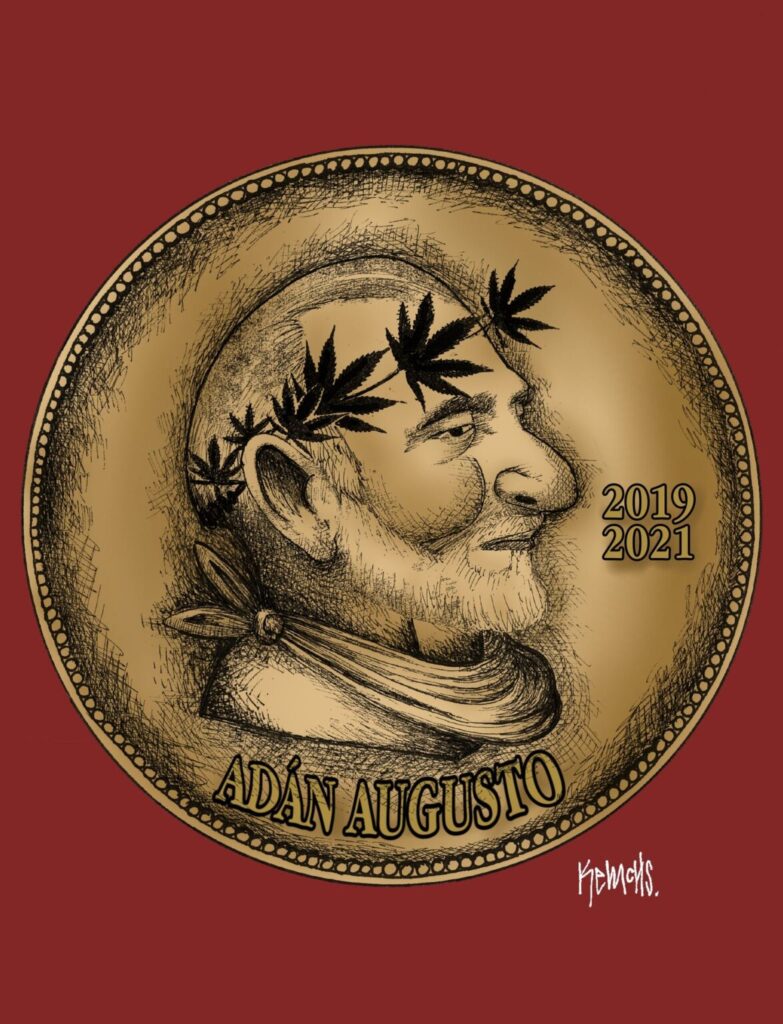
Cartoon: Kemchs on facebook.com
Amid this climate of national mistrust, the arrest of the former governor of Baja California, Ernesto Ruffo, occurred just a few days after the release of several audio recordings that put pressure on the current governor, Marina del Pilar Ávila. The governor acknowledged that the voice and conversation in the recordings were hers. In the recordings, she can be heard expressing her willingness to cooperate and stating that she could discuss what she had heard at security meetings. The conversation also took place in the context of her efforts to clarify the cancellation of her U.S. visa. Marina del Pilar maintains that it was the former governor, Jaime Bonilla, who put her in contact with people who presented themselves as intermediaries to U.S. authorities, and that the whole thing was part of a trap to record her and discredit her. Bonilla denies this. This does not allow us to assert as a proven fact that the governor handed over confidential information in exchange for immunity. However, it does allow us to state that she offered to discuss what she had heard at the security meetings while seeking to resolve a personal issue with U.S. authorities. The legal distinction is important, but the political gravity remains.
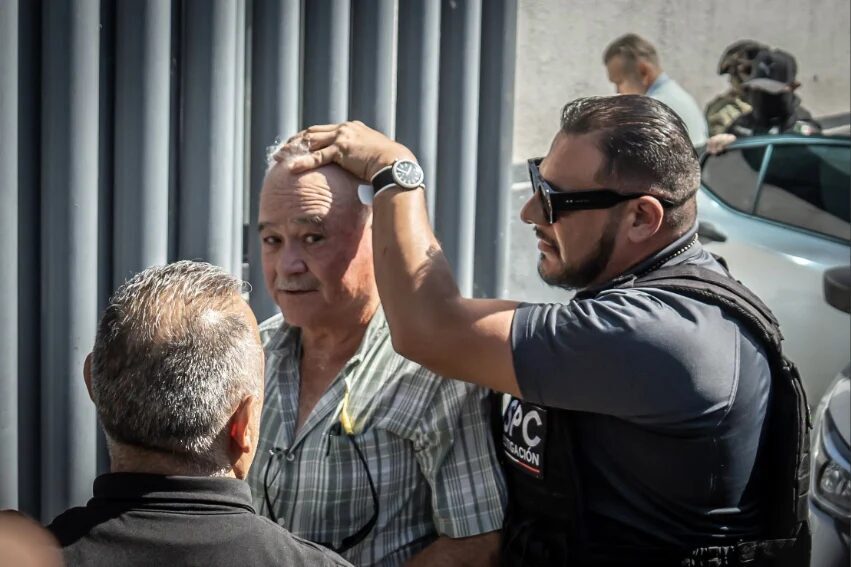
The coincidence is disastrous. While the governor remains in office and receives the backing of the federal government, the former governor—a member of the opposition—was arrested, placed in pretrial detention, and presented as a member of one of the largest fuel smuggling networks ever investigated in the country. It may be that there is sufficient evidence against Ruffo and that the proceedings are entirely legitimate. What is lacking, however, is an institution with the necessary credibility to dispel doubts about the selective application of justice. What can we do? Ernesto Ruffo won Baja California in 1989 and became the first non-PRI governor to secure a victory for the opposition in six decades. That track record does not grant him immunity nor prove his innocence, but it does oblige the state to ensure a transparent process free from any suspicion of political retaliation. One can be very wicked and have a strong dictatorial streak, but the least we must demand of our leaders is that they be intelligent and surround themselves with intelligent people. Perhaps even then, the harm they intend to cause might turn out for the best and without harming the Mexican people.
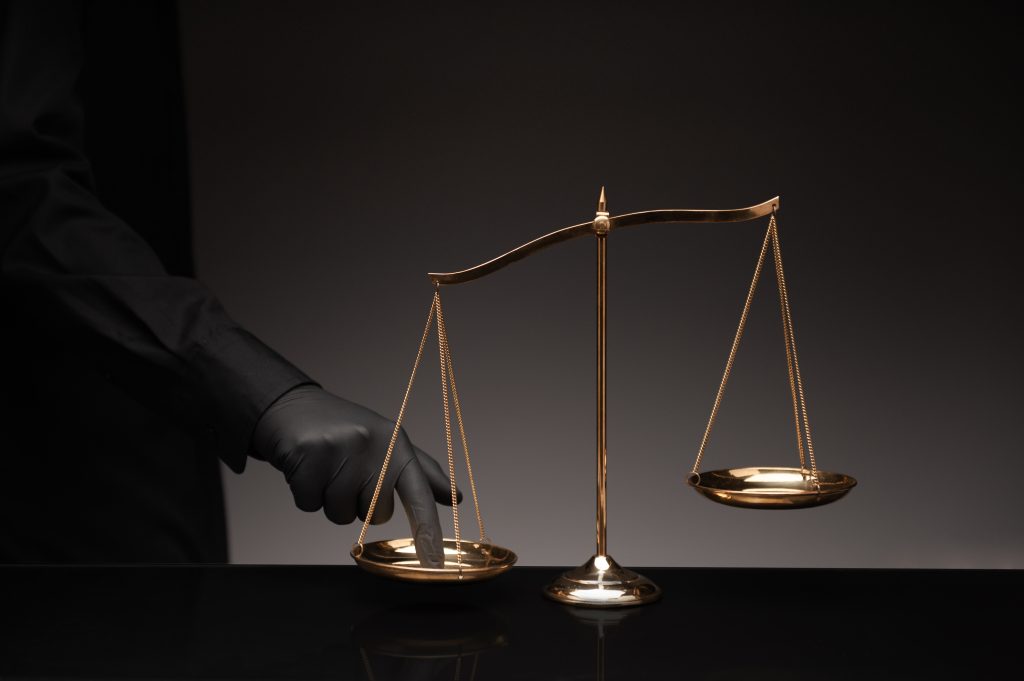
In any case, we, the people, cannot continue to be like leaves in the wind, swept along by whatever the political climate dictates at any given moment. Without institutions capable of investigating, proving guilt, acquitting, and convicting independently, no one is truly protected, and no one can know when they will cease to be a citizen and become a target. When justice ceases to be an institution and becomes a tool of the moment, the problem is no longer simply a matter of who is guilty or innocent. The real problem is that we are all subject to the power of those who accuse, those who investigate, and those who decide when and how to apply the law.
Further Reading: