
Antonio Navalón
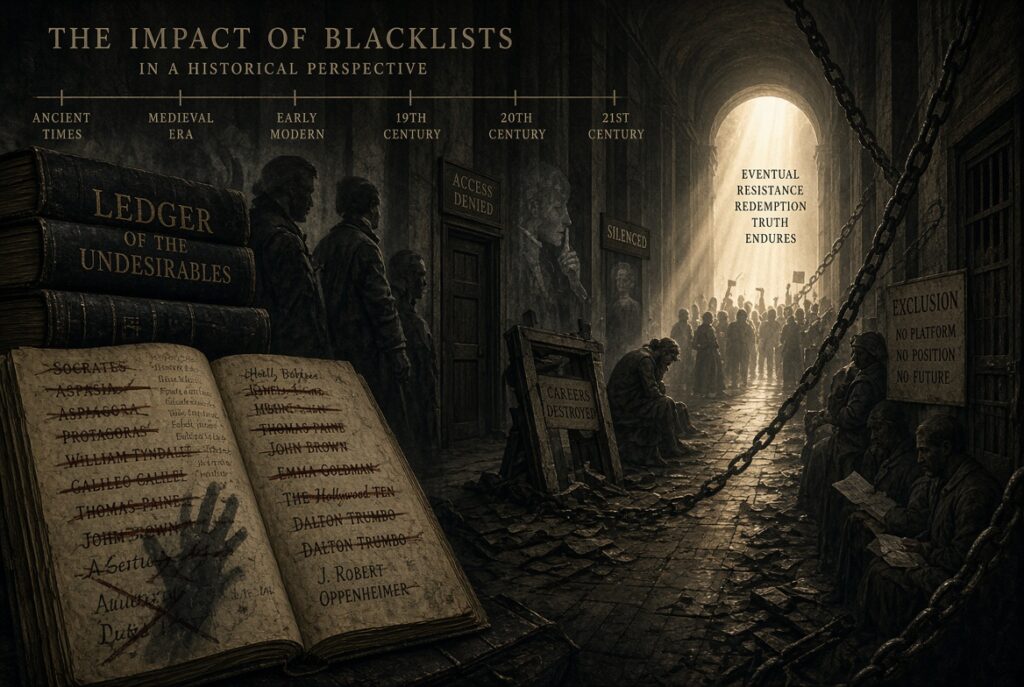
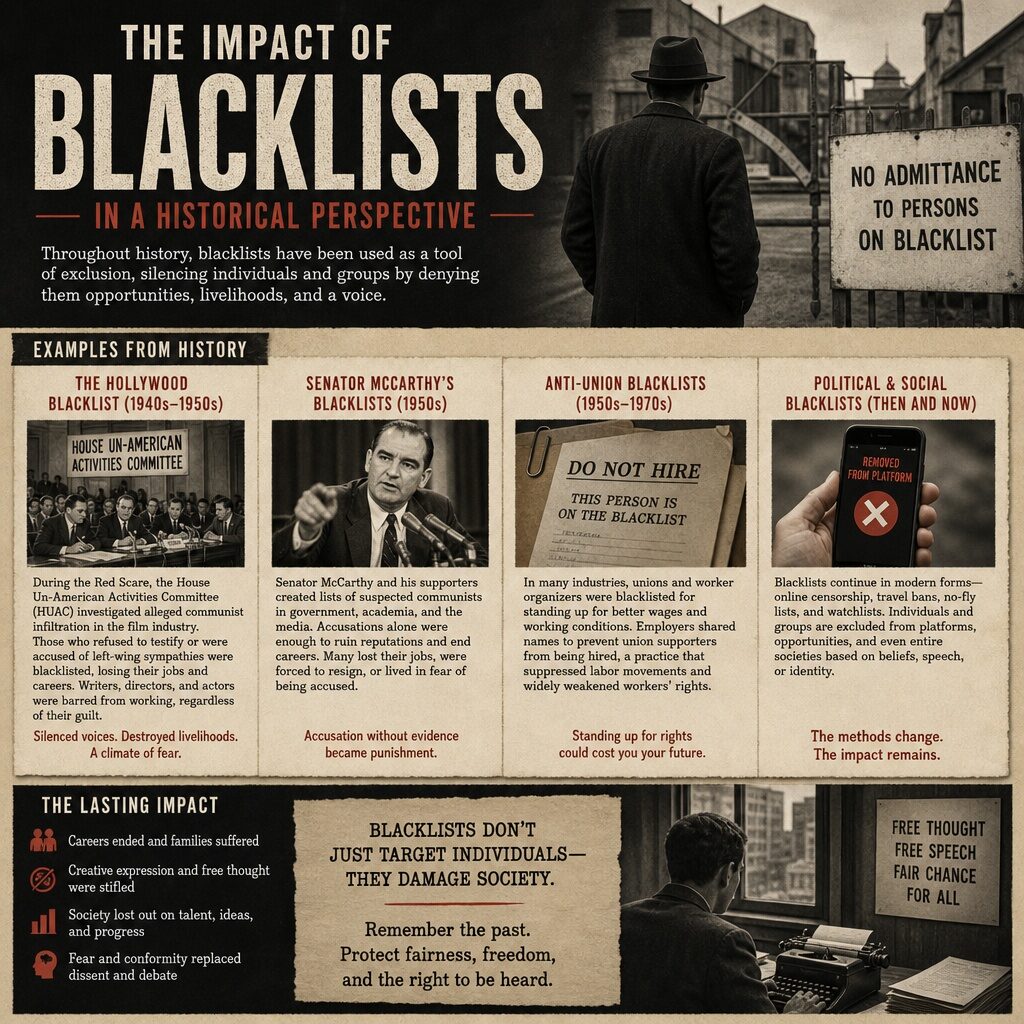
Things started to go wrong when, in the United States, Hollywood, intellectuals, and politicians began to tremble at the prospect of a list. Those were the difficult years of the postwar period and the beginning of the Cold War. Harry Truman was still in the White House, before the transition that would bring Dwight Eisenhower to the presidency. That was when a Republican senator from Wisconsin named Joseph McCarthy—whose serious alcohol problems would later come to light—turned the hunt for America’s enemies into a political crusade. He first set his sights on the State Department.
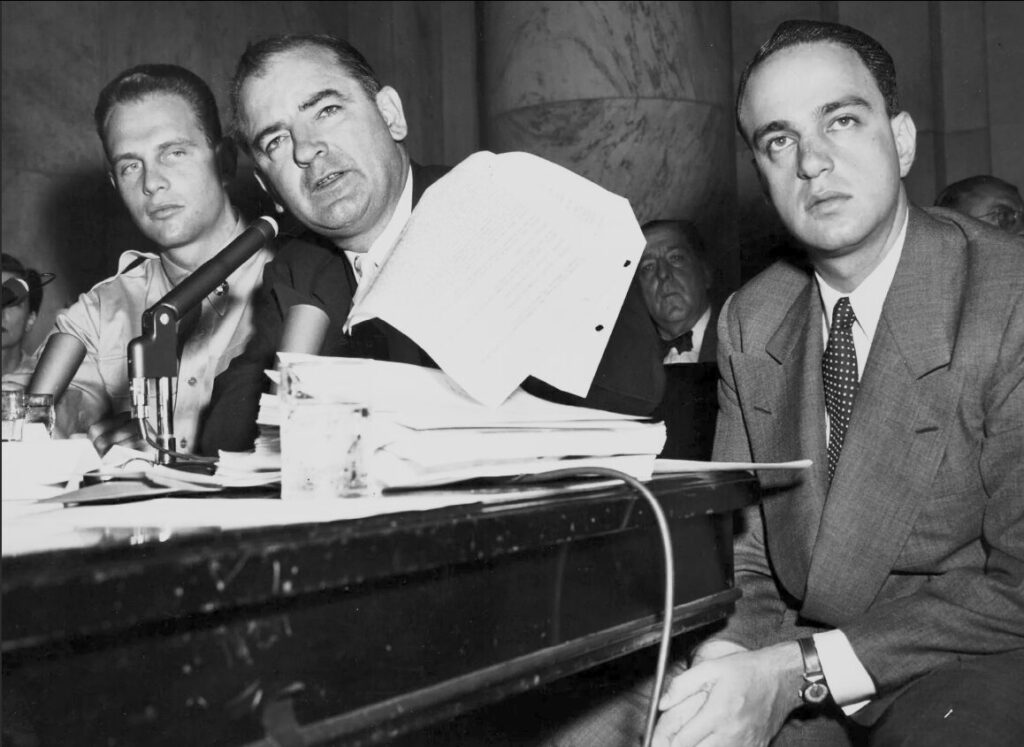
In February 1950, he claimed to have in his possession a list containing the names of 205 communists who had infiltrated the U.S. government. He was never able to prove such an accusation. It mattered little. By then, the list had already begun to circulate and take effect. The accusation was simple: being a communist, having been a communist, sympathizing with them, collaborating with them, or simply being suspected. A mere accusation was enough. The world trembled.
Lillian Hellman, Dashiell Hammett’s partner for decades and a hugely successful playwright, wrote a book about that era that still stands today as one of the most compelling testimonies of what happens when people go mad and turn differing opinions, dissenting thought, or the mere possibility of believing that what lies ahead might be better than what one has into a form of treason. She called it Scoundrel Time.
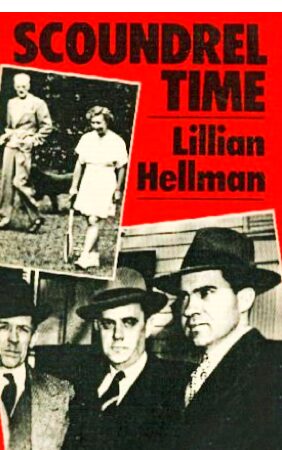
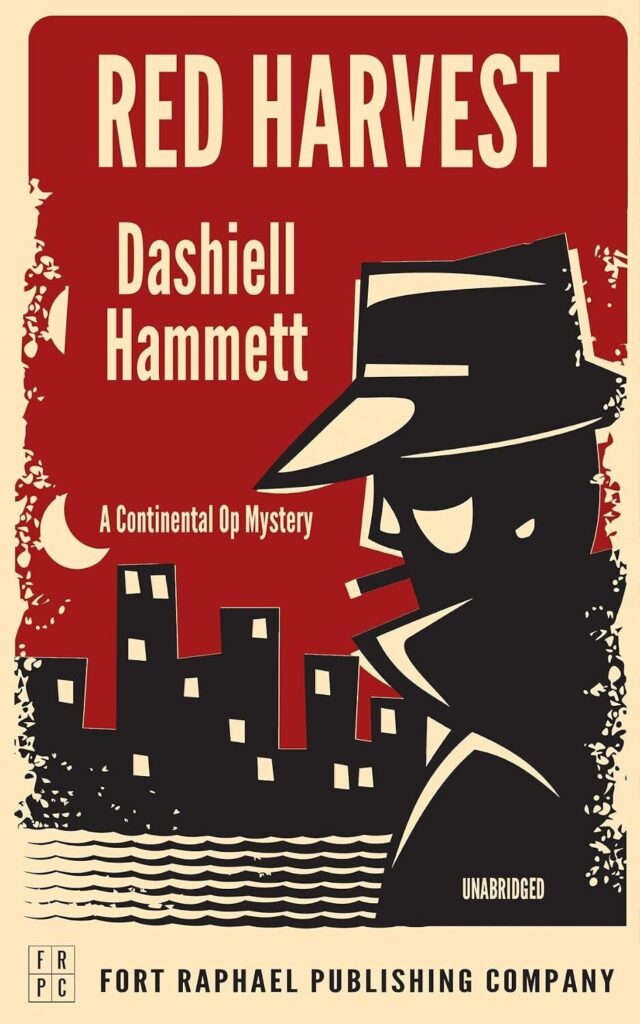
Hellman portrayed a world in which her partner, Dashiell Hammett, author of Red Harvest; friends and contemporaries; great film directors like Elia Kazan; and screenwriters like Dalton Trumbo were caught up in the era’s climate of suspicion, denunciation, and persecution. Not everyone reacted the same way. Hammett refused to provide information and ended up in prison.
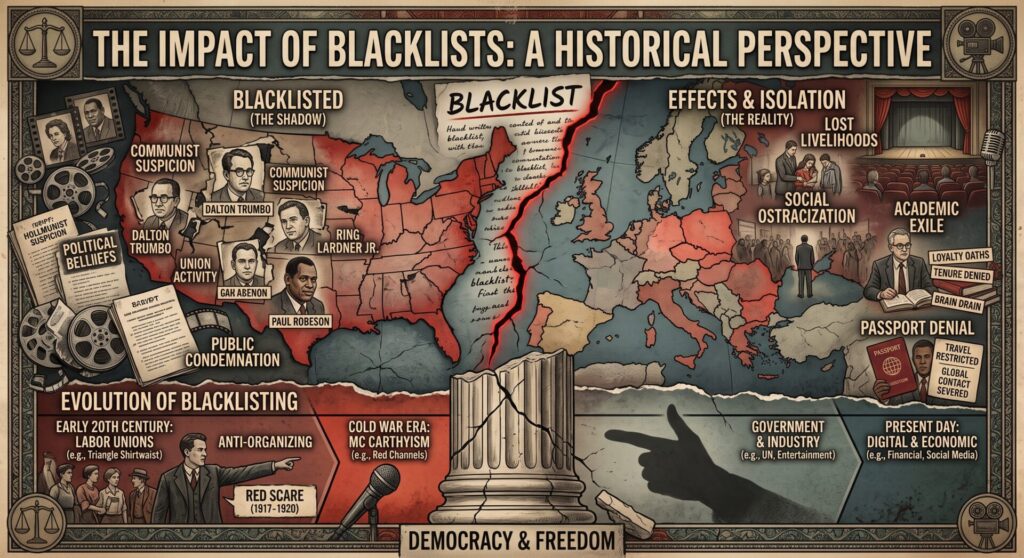
Trumbo, one of the Hollywood Ten, was convicted of contempt, imprisoned, and forced for years to write without signing his own name. Kazan took the opposite path: after initially refusing to provide names, he ended up collaborating with the House Un-American Activities Committee and named former colleagues. That was a time when many had to take refuge in alcohol, go into hiding, vanish professionally, and live, metaphorically speaking, with the cockroaches in the sewers of American society to survive the blacklists, the accusations, and the fear.
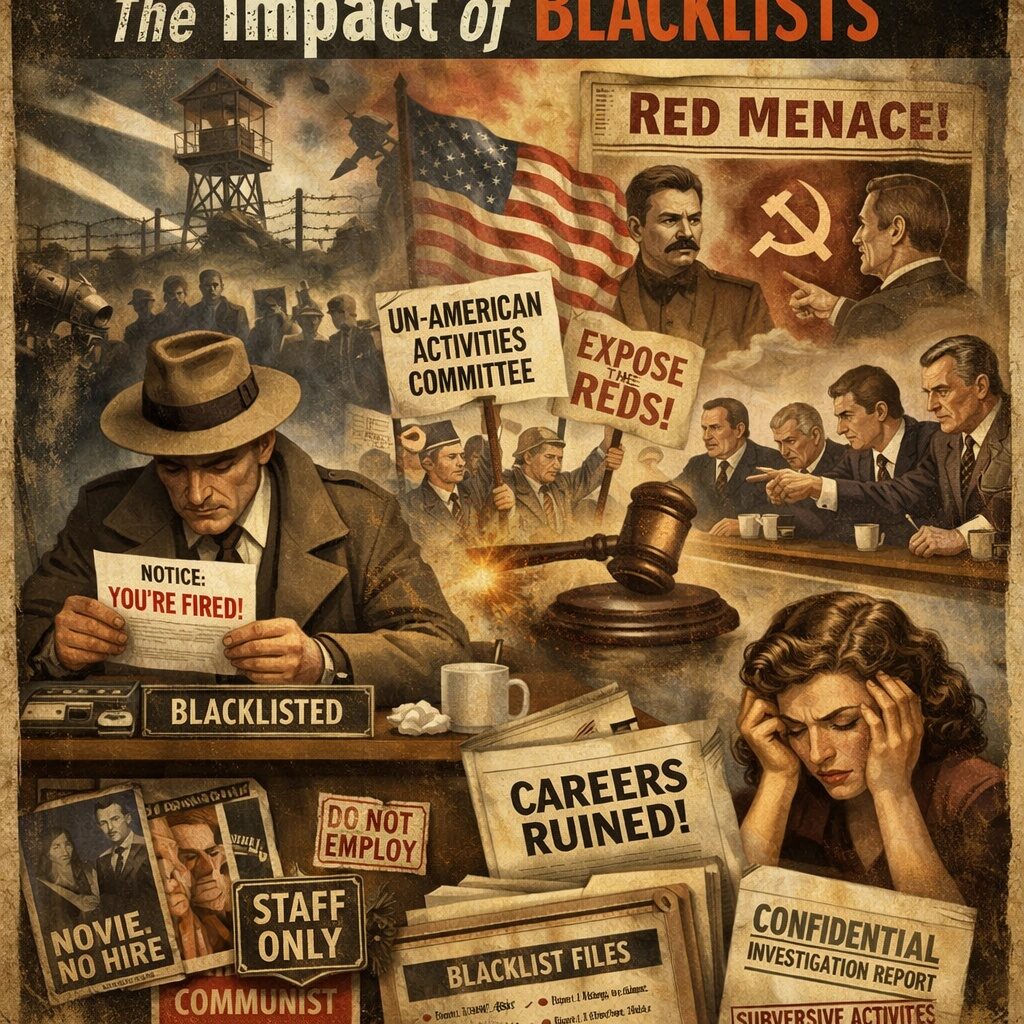
It’s worth making one clarification: the persecution in Hollywood had begun before McCarthy gained national notoriety and was directly linked to the investigations by the House Committee on Un-American Activities and the studios’ own blacklists. But McCarthy ended up giving his name to an entire era. McCarthyism became something much bigger than McCarthy himself: a way of pointing fingers first and asking questions later.
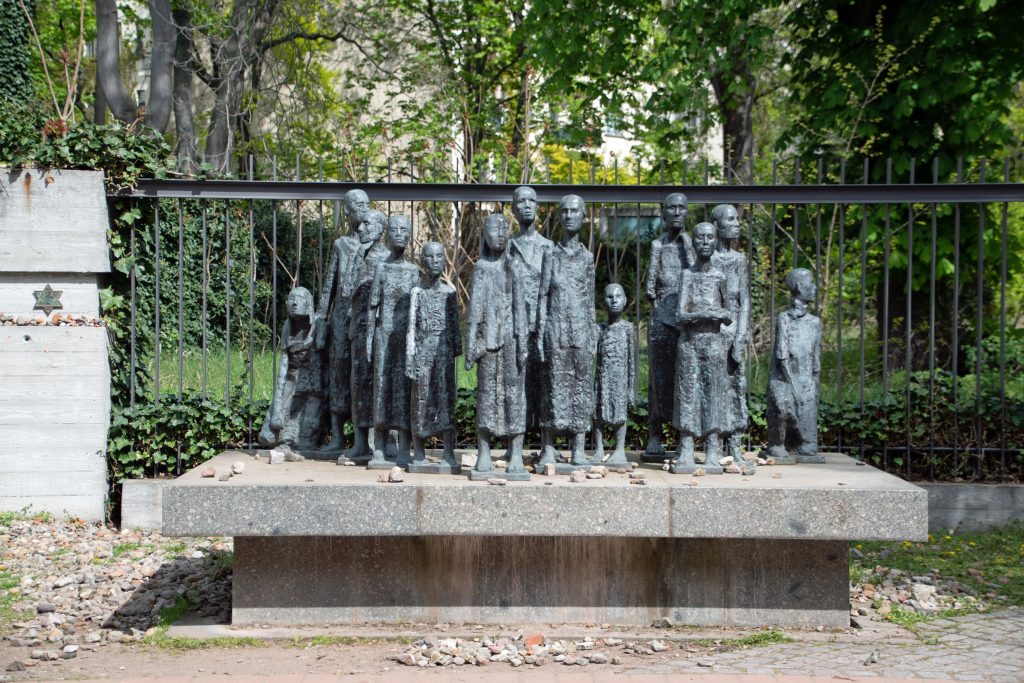
Long before that, during the war against fascism and Nazism, another list went down in history and, decades later, led to one of the greatest films of all time: Schindler’s List. Once again, terror, finger-pointing, names, and the search revolved around a list. Except that, in this case, it saved lives. Oskar Schindler managed to protect around a thousand Jews from the Nazi system of persecution and extermination, primarily by transferring workers from Płaszów to his factory in Brünnlitz. The real story is more complex than the film, and in reality, the list that mattered was not Oskar Schindler’s.

The lists that mattered were those of the SS and the entire bureaucratic apparatus of the Third Reich—the ones containing names upon names, the ones that identified, classified, persecuted, deported, and condemned millions of human beings.
Throughout history, many other lists have existed. That is why it is intriguing, significant, and thought-provoking to ask what it means that Luisa María Alcalde—daughter of attorney Arturo Alcalde and Bertha Luján—is in the spotlight. Her mother was a longtime collaborator of Andrés Manuel López Obrador, Comptroller General of the Federal District during his administration, one of the founders of Morena, the party’s secretary-general between 2012 and 2015, and later President of its National Council.
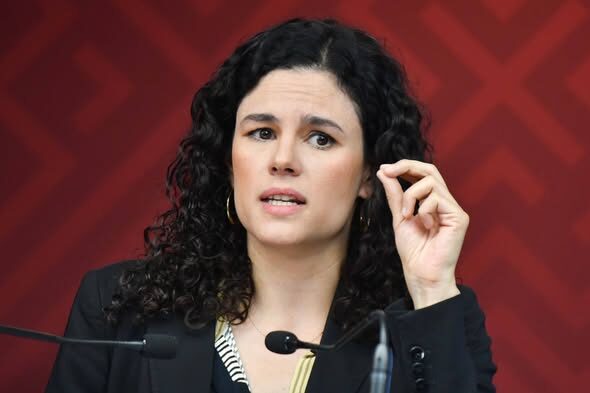
Luisa María Alcalde was one of the young, spirited—and graceful and self-assured—leaders of the movement’s early years; she served as Secretary of Labor under the “prophet” López Obrador; then as Secretary of the Interior; and later as Morena’s national pPresident What a miracle life can be: last week, in her current capacity as legal counsel to the Federal Executive, she appeared from the National Palace to bring to the table something that inevitably reminds us once again of the political significance of a list. Not the defense of the State against scoundrels attempting to sabotage it. Not the identification of criminals wanted by the law. Not a list of fugitives. The list of the inconvenient ones.

On August 12, during the segment known as Right of Reply, Alcalde presented from the National Palace what the government described as a “digital amplification network” against the Fourth Transformation. The scheme was divided into different layers: 54 media accounts and commentators; 32 accounts belonging to public figures; 34 anonymous or attack accounts; and, finally, a so-called “amplification ring” consisting of 560,520 accounts that the government identified as bots and to which it attributed 22 million posts. There were the names. Journalists. Media outlets. Commentators. Politicians. Former presidents. Opponents. The list of those who might be considered a thorn in the side.
Of course, bots may exist. Of course, coordinated campaigns may exist. Of course, political operations may aim to amplify certain messages artificially. No reasonable person should deny that possibility. The question is a different one. What does it mean when the political establishment, from the National Palace, publicly classifies journalists, media outlets, commentators, and opponents as members of a network operating against the government? What is the intended purpose of this information? It is one thing to study social media behavior and quite another for the State, from the very center of power, to publicly display the names of those it considers part of a political or media structure opposed to its agenda. It is the government Sheinbaum leads that is publicly classifying journalists, media outlets, and political adversaries.

Legal and structural change? Yes. Because all of this is also taking place amid a transformation of the telecommunications framework and the debate over audience rights. The new Telecommunications and Broadcasting Law expressly reaffirmed those rights, and José Antonio Peña Merino, head of the Agency for Digital Transformation and Telecommunications, has been one of the government’s leading voices in defending the new model. The government insists that there is no censorship and that it is simply a matter of guaranteeing constitutional rights. That may be so. But it is one thing to analyze each measure separately and quite another to look at them all together: the new rules, the regulation of audience rights, the government’s Right of Reply platform, and, now, the public shaming of those allegedly involved in a network opposing the Fourth Transformation.

The question is how far this can go. It’s best not to start gauging the level of fear, because it’s possible that somewhere in the National Palace—perhaps a chief of staff, perhaps an advisor, or someone who harbors deep animosity toward the President—someone has convinced her that this is the right time, place, and moment to unleash a special and particular reign of terror on the second floor of the 4T. Because governments always believe they can control the instruments they create. Until they can no longer do so.

Justice is indeed slow. It’s true that, in Mexico, it often seems that death comes before justice. But it’s very curious that, all of a sudden, prosecutors now know the details. It turns out that the police know where those under investigation—and who may have pending cases—are located. It turns out that files, addresses, complaints, and arrest warrants are now actually surfacing. It turns out that, in a matter of hours, two high-ranking officials from the State of Mexico’s Ministry of the Environment—accused of alleged involvement in an extortion ring targeting owners of vehicle emissions testing centers—can be located and arrested. One of them, Raúl Piña Horta, was by no means a stranger to politics: he served as a federal deputy for the Green Party and, according to information published after his arrest, had been the private secretary to Jorge Emilio González Martínez during the latter’s tenure as head of the PVEM. In other words, for years he operated at the very heart of the Green Party.
And what do you think? Within days, they were already in court and subject to precautionary measures. Investigations by the State of Mexico Attorney General’s Office allege that the alleged network forced vehicle inspection center owners to pay illegal fees to keep operating and even used administrative powers to threaten to revoke concessions and damage infrastructure. The accusations are serious. It must also be clear: these are charges in ongoing legal proceedings, not final judgments. It wasn’t, then, that we lacked justice. It wasn’t that the bad guys were never caught here. It wasn’t that the prosecutors’ offices were incapable of investigating. It wasn’t that the police didn’t know where to look. When the State wants to investigate, it investigates. When it wants to find someone, it finds them. When it wants to arrest someone, it arrests them.
And this is happening while other politically motivated cases are also moving forward at a pace that inevitably draws attention. Among others, there are the recent cases of Ernesto Ruffo, a longtime PAN member and the first governor to defeat the PRI in Baja California, who was arrested and placed in pretrial detention on charges related to organized crime and fuel smuggling. There is also the case of Ángel Aguirre Rivero, the former governor of Guerrero who was politically schooled for decades in the PRI and later came to power with the PRD, arrested in August as part of new investigations into the Ayotzinapa case. Both are facing legal proceedings, and both, naturally, retain the presumption of innocence. I don’t want to think that, in any country in the world, people tend to even the score. In other words, I don’t mean: three from Morena and three from the others. That wouldn’t be justice either. Justice does not consist of arresting a PAN member and then “balancing” it by arresting a Morena member. Nor does it consist of imprisoning a PRI member to demonstrate impartiality. Justice should mean exactly the opposite: that a person’s party affiliation, last name, proximity to power, or position on the political spectrum should be irrelevant.

But that is precisely the question. Is the same standard being applied to everyone? Is there the same speed and the same enthusiasm when allegations point to those who belong to the ruling party? The same investigative capacity? The same willingness to pursue cases to their ultimate conclusion? Because it’s very curious that, when adversaries, former opponents, or politically inconvenient figures appear, the Mexican government suddenly demonstrates an extraordinary ability to find case files, reconstruct events, and carry out orders.
And my question is: Are they also setting up a special prosecutor’s office for crimes committed by members of Morena? I’m not saying there aren’t investigations into figures linked to the ruling party. There are. What I’m asking is whether they’re being pursued with the same intensity, the same speed, and the same publicity. Because that’s where the difference lies, tell me, dear reader, under these conditions, how are you going to sleep peacefully?

If you made the mistake—or committed the crime of high treason—of having once been a member of the PAN or the PRI, of belonging to the opposition, of criticizing the government, or simply of failing to become a faithful follower of Andrés Manuel’s sect in time, tremble. Be worried because you may be at risk. Because, as things stand, this risks ceasing to appear merely as the enforcement of the law and beginning to look like a purge of those who have betrayed the true faith. The one in which there is only one correct interpretation of reality. A single reason. A single truth. As if the way, the truth, and political life were still rooted in La Chingada. And as if there were only one way to be on the right side of history.

That’s why the lists matter. They mattered when McCarthy held up a sheet of paper and claimed that there lay the enemies of the United States. They mattered when Hollywood decided who could work and who had to disappear. They mattered when the SS classified millions of human beings. They mattered when, in the exact opposite sense, a list meant the chance to stay alive for Schindler’s workers. And they should matter to us now, too. Not because Luisa María Alcalde’s list can be compared, in terms of its consequences, to those lists. It would be absurd to claim that. But because the principle we must be vigilant about is always the same: when those in power begin to compile lists of their adversaries, their critics, or those they consider a nuisance, society has an obligation to ask why.

Ultimately, throughout history and under every government, lists have been nothing more than a litmus test: an attempt by those in power to reorganize reality, to separate the obedient from the troublesome, the useful from the expendable. And in the face of that, the only dignified response is not silence or fear, but the stubborn determination to keep thinking, writing, and asking questions—even if one’s name inevitably ends up on the wrong list.

Further Reading: