Ricardo Pascoe Pierce
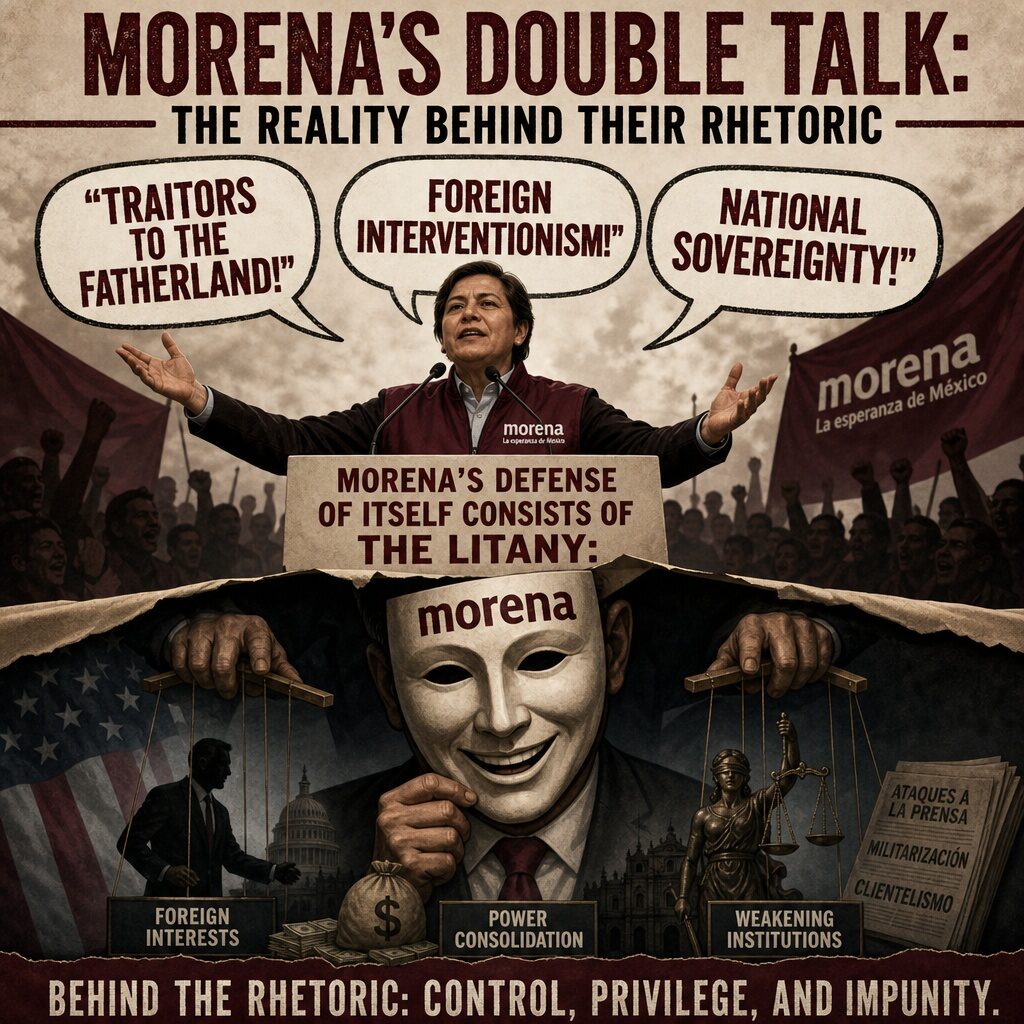
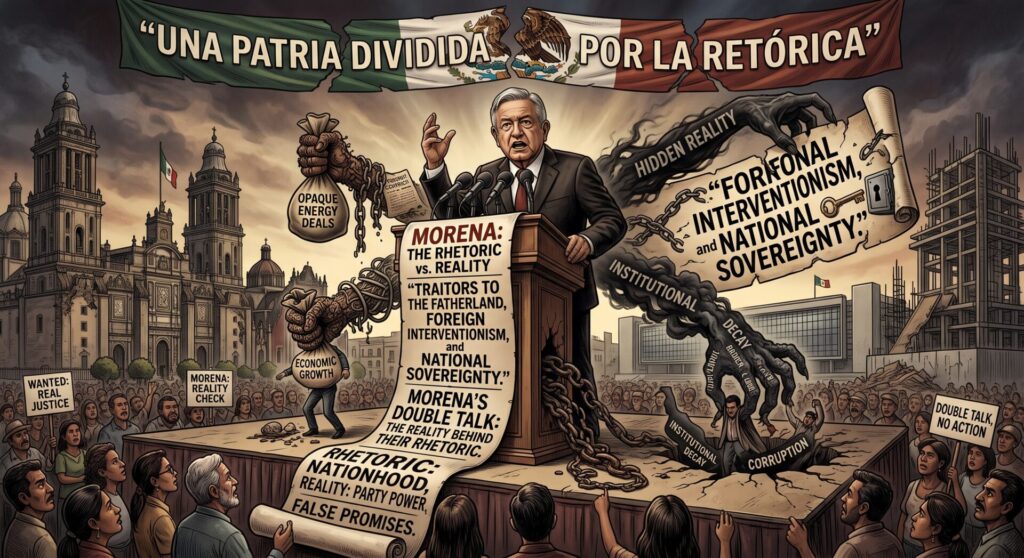
Morena’s defense of itself consists of the litany: “Traitors to the Fatherland, Foreign Interventionism, and National Sovereignty.” Obviously, its leaders believe this serves their purpose of capturing the popular imagination and securing social support from their militant base. But it also keeps what the party decides and does out of the public eye. It resorts to double talk as if it were a matter of State, when it is not.
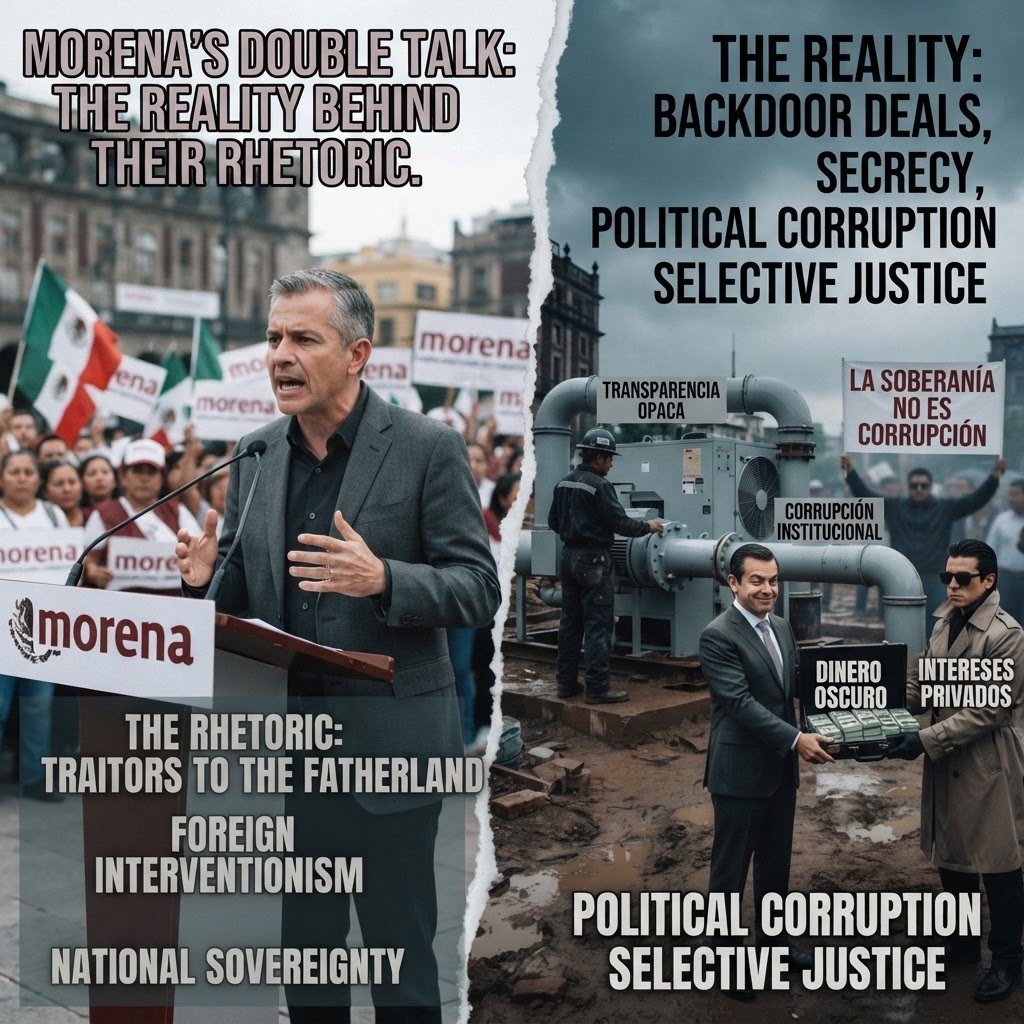
The U.S. government’s revocation of the U.S. visa for Andrés López Beltrán, son of Andrés Manuel López Obrador, sparked anger, paranoia, and despair within Claudia Sheinbaum’s administration and among the ranks of the Morena party. No previous visa revocation involving a Morena member—and there are already several “visa-less” individuals—had sparked such fury. Morena governors published an open letter reaffirming, as if it were in doubt, their honesty and integrity in governing. If they intended to defend López Beltrán, they never said so. Clara Brugada denounced imperialism. Sheinbaum stated that the decision to revoke his visa was because Andy is a “politically exposed person” and that it was a discriminatory action against Mexico. The president was—need we say it?—ambiguous in her “analysis and explanation” of the incident.
The “Morena ecosystem” is lashing out at the opposition in a desperate attempt to shift the national narrative. The heavy burden of the “narco-party” and “narco-government” mantra is taking its toll, a trend particularly visible in the polls. Luisa María Alcalde’s blacklists targeting journalists, politicians, and media outlets are a prelude to justifying the repression and imprisonment of opposition members. The cases of Ruffo and Aguirre serve as tests to gauge social resistance to such actions. They also warn those who will have to think twice.
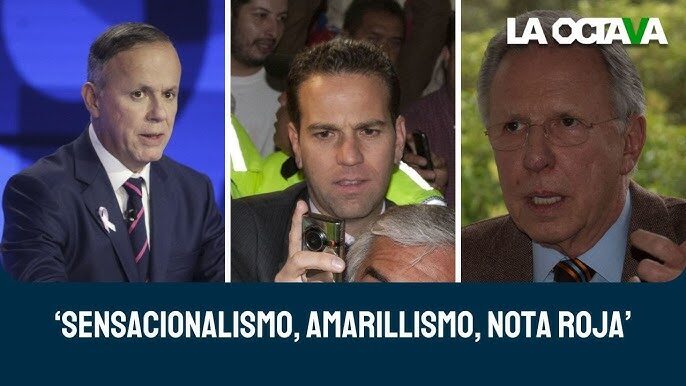
Morena’s national president, Ariadna Montiel, proclaims from the party’s podium that Alejandro Moreno, “Alito,” the national president of the PRI, is a “traitor to the homeland” because, in her opinion, he promotes foreign intervention in the country. She says this because the PRI and Moreno have turned to international bodies to denounce the Morena party for having ties to drug trafficking and because Sheinbaum’s administration is promoting legal measures to silence the opposition’s complaints in Mexico by threatening them with imprisonment.
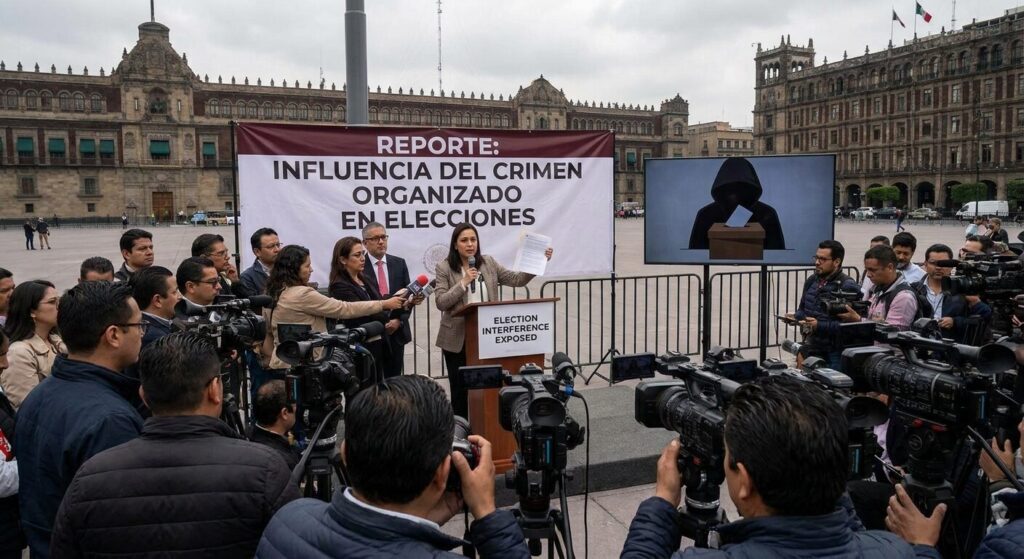
At the same time, Morena’s official organ, the newspaper Regeneración, carries a headline across its eight columns stating that “The PAN Is a Traitor to the Fatherland.” Morena’s accusation stems from the fact that the Chihuahua state government, under the leadership of PAN Governor Maru Campos, sought the assistance of U.S. CIA agents in an operation that uncovered and destroyed one of the largest and most sophisticated fentanyl production laboratories in all of Mexico. Sheinbaum also accused her of being a traitor to the nation during a morning press conference. Repeatedly using the term “traitor to the nation” is dangerous.
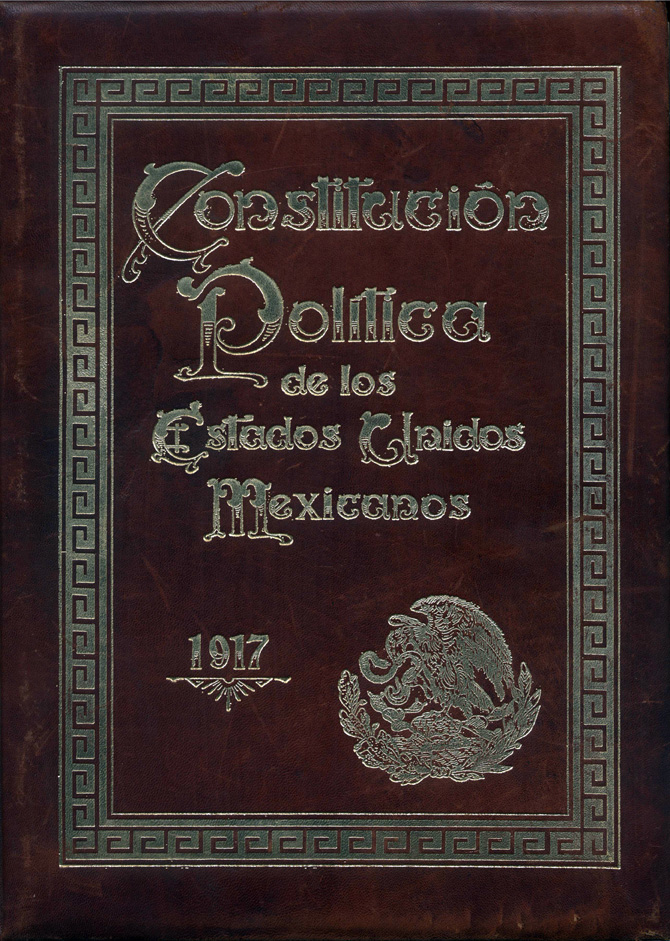
The Constitution of the United Mexican States defines treason as follows: “Article 123: A Mexican who commits treason in any of the following ways shall be sentenced to imprisonment for five to forty years: (the Constitution describes 15 forms of intervention carried out by Mexicans from abroad, related to military invasions of national territory).” The first point reads as follows: “Commits acts against the independence, sovereignty, or territorial integrity of the Mexican Nation with the intent to subject it to a foreign person, group, or government.”
In such an interconnected world, what does it mean to exercise independence and sovereignty within the community of nations? Excluding military invasion by a foreign power, Mexico has exercised its sovereignty by signing more than 1,500 bilateral and multilateral treaties, conventions, and agreements with nearly 100 countries, all of which remain in force. In the area of security, the Morena government, under López Obrador, has sovereignly established its own 2021 Bicentennial Understanding with U.S. intelligence and security agencies. The Bilateral Understanding Group was established to oversee its operational implementation.
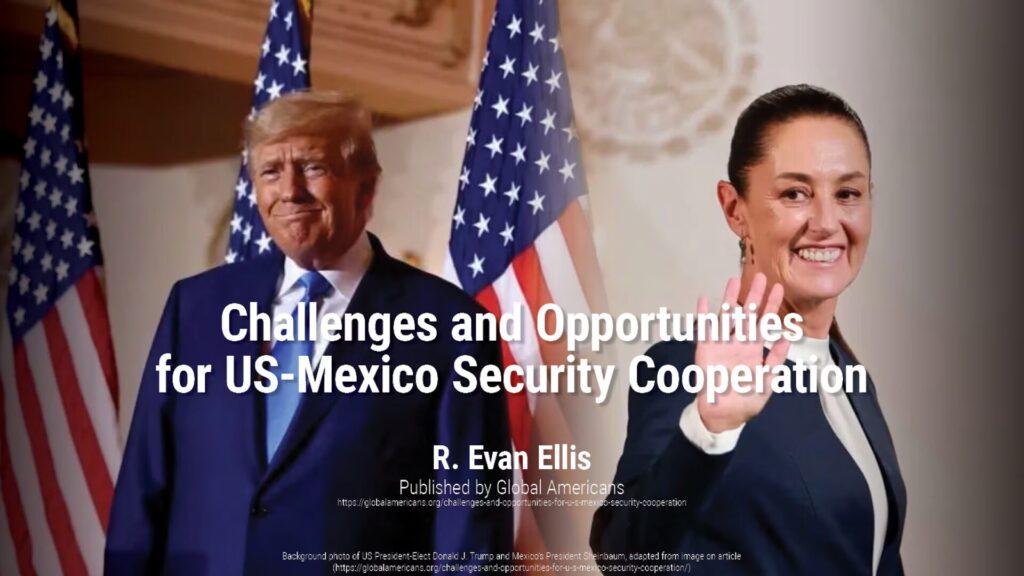
In August 2026, exercising sovereign authority, the Sheinbaum administration issued the Bilateral Declaration of Intent on Unmanned Aerial Systems. This Declaration complements the Bilateral Military Cooperation Mechanism, in effect since 2016. In addition, the Mexican Congress, with a Morena majority, has formalized joint training exercises between the Mexican Armed Forces and elements of the U.S. Armed Forces, some of which are currently underway as this article is being written.
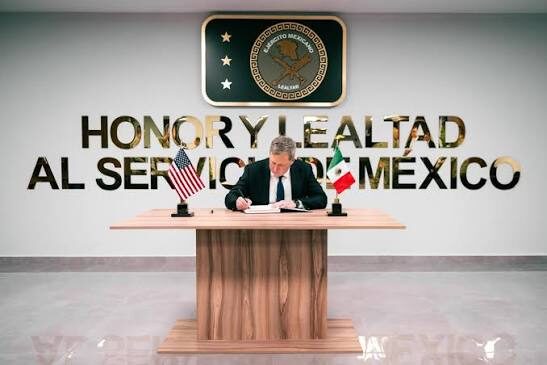
Federal Secretary of Public Safety Omar García Harfuch will soon attend a Latin American meeting convened by the DEA as part of the Shield of the Americas initiative, to be held in Buenos Aires, Argentina. Mexico had not attended previous Shield of the Americas meetings, considering it a grouping of the “Latin American right and far right.” Harfuch has now decided to attend, with the unanimous approval of the federal government’s security cabinet. This comes amid a crisis in which the government accuses the United States of interventionism intended to impact the ruling party in the 2027 midterm elections negatively.
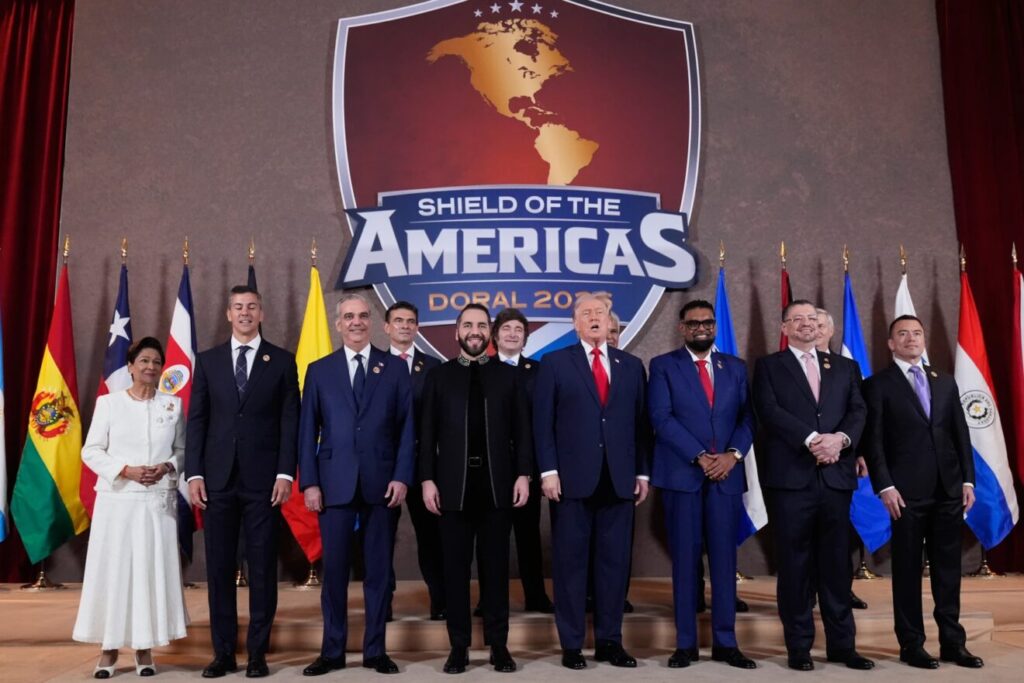
In national security, public safety, and strategic defense, the Mexican government maintains a privileged relationship with the United States Armed Forces through U.S. Northern Command, in which Mexico’s secretaries of defense and the navy participate. Mexico also shares real-time intelligence with U.S. intelligence and investigative agencies, including the CIA, DEA, FBI, and Homeland Security. But its ideological modesty prevents it from publicly acknowledging its actual behavior.
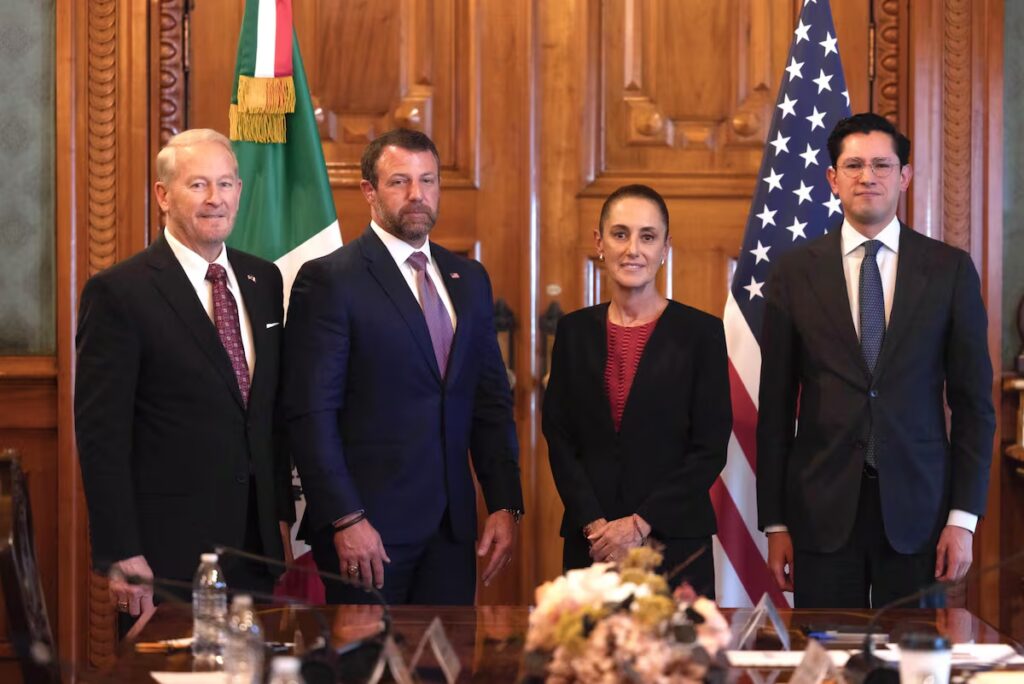
Is the Morena government engaging in double talk? The short answer is yes. It adopts an anti-imperialist rhetoric domestically for the domestic audience, while maintaining a discreet and selective subservience toward the United States. Morena specializes in double standards to defuse the pressures it faces. It imprisoned Ruffo to cover up the scandal involving Governor María del Pilar Ávila. It published lists of opposition critics to minimize the impact of Andy’s visa revocation. Accusations against opponents of being traitors to the homeland surface when Morena is afraid to name its candidates because it fears they will be accused of being drug traffickers.
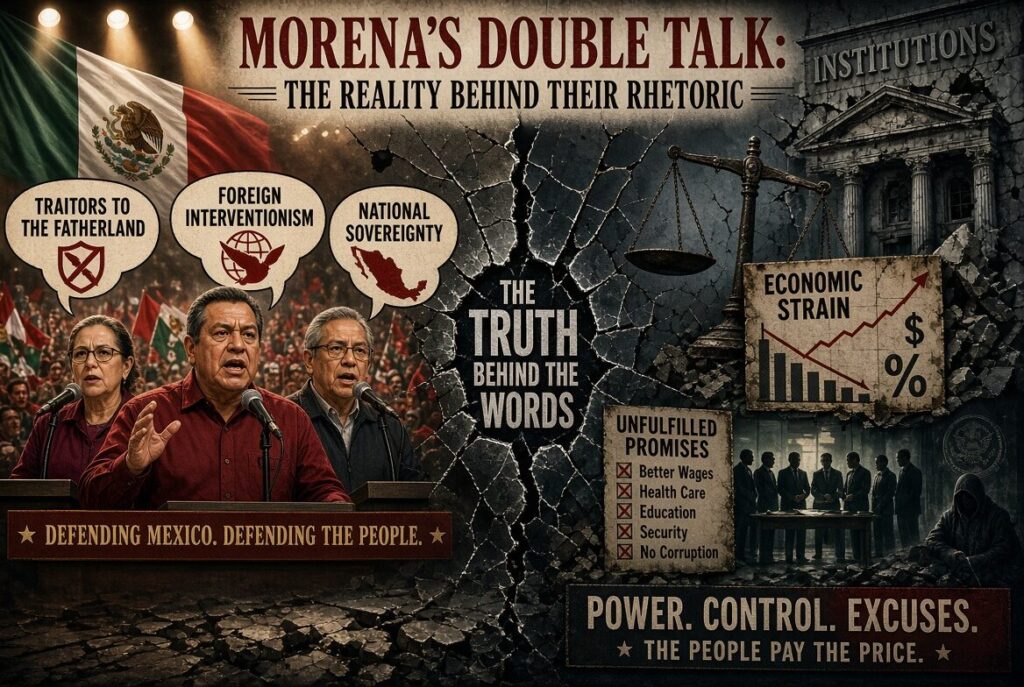
Double talk is not a legitimate political strategy for a government. Yet Morena applies it indiscriminately and in every situation. Herein lies its failure as a government, and it signals a bleak outlook for the survival of its political project.
Further Reading: