
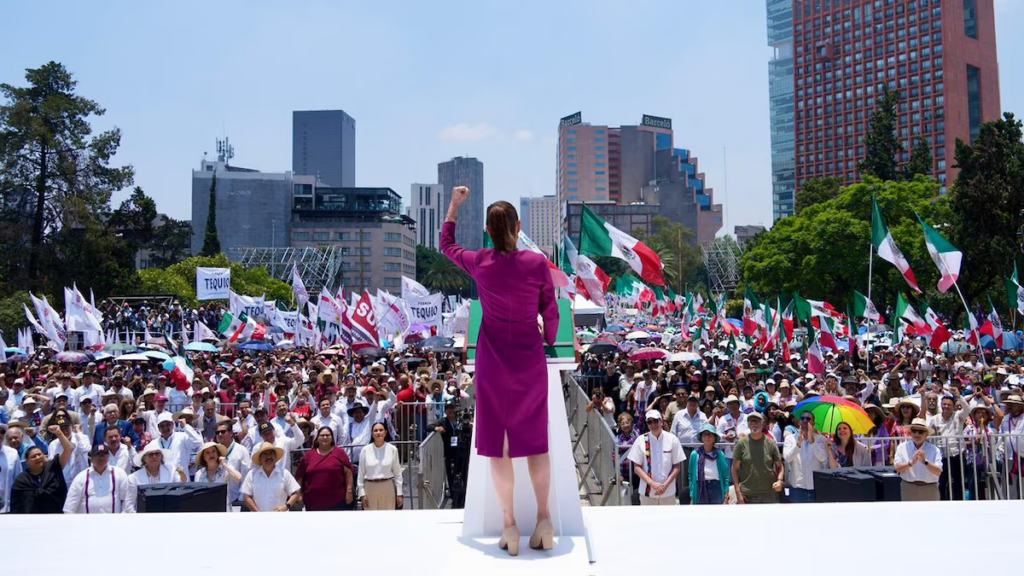
Ricardo Pascoe Pierce
The photograph of President Sheinbaum addressing the crowds—most of whom had been bused in—at the Monument to the Revolution could not have been more telling. Though it was presented as an official event of the Mexican government, it was, in reality, a partisan gathering, with thousands of flags from the ruling Morena party. The president attempted to give the event the tone of a State of the Union address, recounting her administration’s achievements, but failed to spark any interest. The entire discussion has centered on the political debate sparked by her defense of Morena’s “narco-politicians” and her accusations of U.S. interference. It was the event that publicly unveiled, for the first time, the merger of the State with the party.
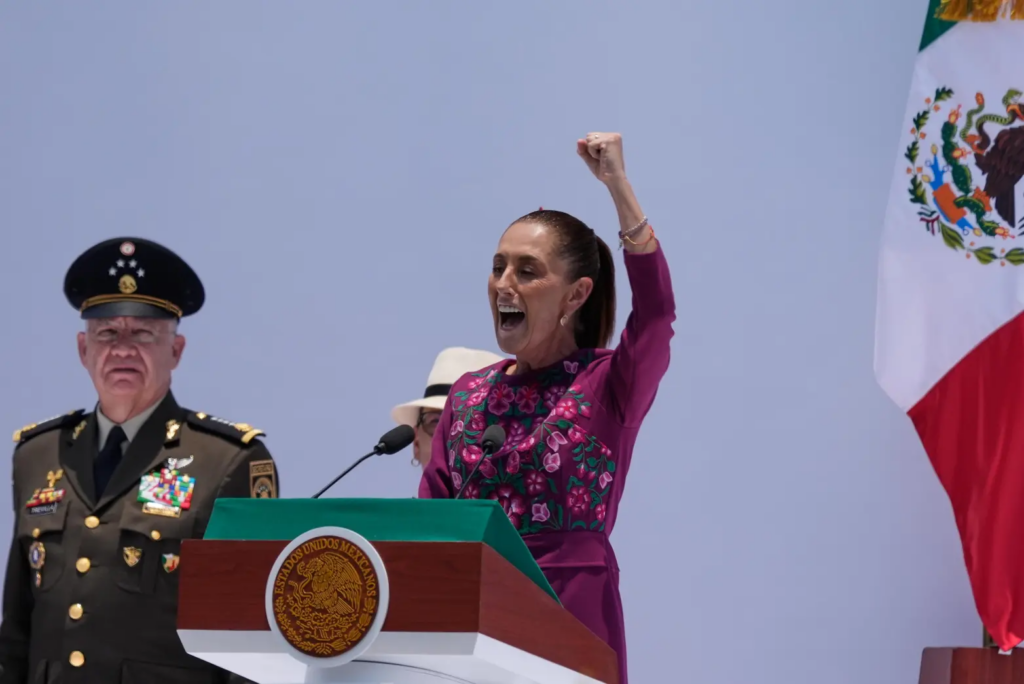
The nine Supreme Court Justices attended that partisan event, the expanded cabinet, including the Secretaries of Defense and the Navy. Representatives from both the Senate and the Chamber of Deputies attended, including the president of the Senate, as she is a Morena member. The president of the Chamber of Deputies did not attend, as she had not been invited because she is not a Morena member. That exclusion simply reaffirmed the partisan nature of the event, cloaked in the flag of the Mexican State.
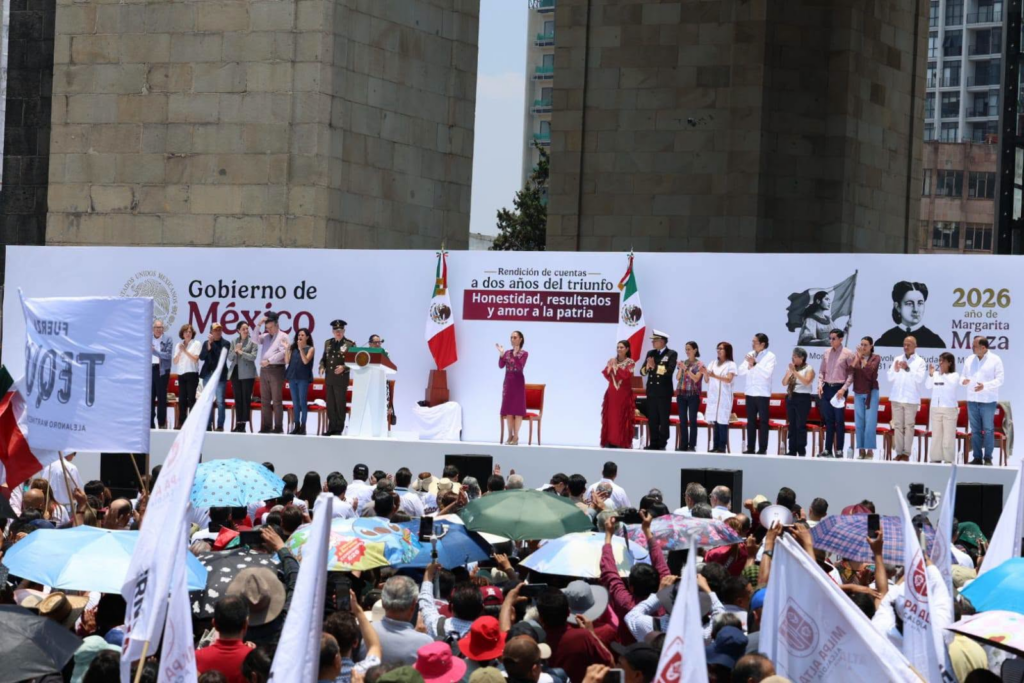
The structurally united relationship between the State and the party was made clear in that square. For the first time, López Obrador’s golden dream was realized. The event demonstrated that Morena had achieved absolute control of the Mexican State.

To fully establish the “new Mexican State, the only thing missing was the physical presence of representatives from the main organizations involved in drug trafficking. Despite that omission, their presence was assured in every idea and word of the president’s speech. Moreover, drug trafficking and its close relationship with the Mexican State were the central theme of the presidential address. Thus, the presence of drug trafficking at the event can be presumed.

With everyone present and ready to applaud, that historic day captured the confirmation of the theoretical and operational inauguration of the totalitarian State in Mexico.

How is a totalitarian State defined? By the totalitarian character captured on May 31, 2026. The aim of totalitarianism is precisely to achieve or impose unanimity of thought and conformity, mandatory for all citizens of the country. The party becomes the vehicle that integrates the masses into control structures within a state that proclaims itself “ethical” or “totalitarian,” which amounts to the same thing. The leader embodies that union, whether it is López Obrador or, in his absence, his functional deputy and subordinate, Sheinbaum. The inclusion of the masses in that equation is not a harmonious fusion but a forced, hierarchical one under vertical command. It is a fusion in the sense of an imposed, non-democratic organic synthesis. That is totalitarianism: without democracy, yet offering a utopia to the desperate masses.

The totalitarian State in Mexico aims to consolidate a severe, asymmetrical, yet uniform power, based on control over social movements, as well as directing and managing the demands of the middle classes and ensuring the subordination agreed upon with the business classes to the interests of the ruling elite, endowed with a supposed moral and ethical authority that allows it to persecute those who question its continued hold on power.
Behind this scheme of political and social control, we witnessed, on that fateful Sunday at the Monument to the Revolution (a site deliberately chosen to imply “totality”), the curtain drawn on the dramatic reality of weapons within Mexico’s power structure. Both formal and informal weapons. Of course, the formal weapons were present. The Secretaries of Defense and the Navy were there, in the midst of a partisan event, as just another group of Morena activists.
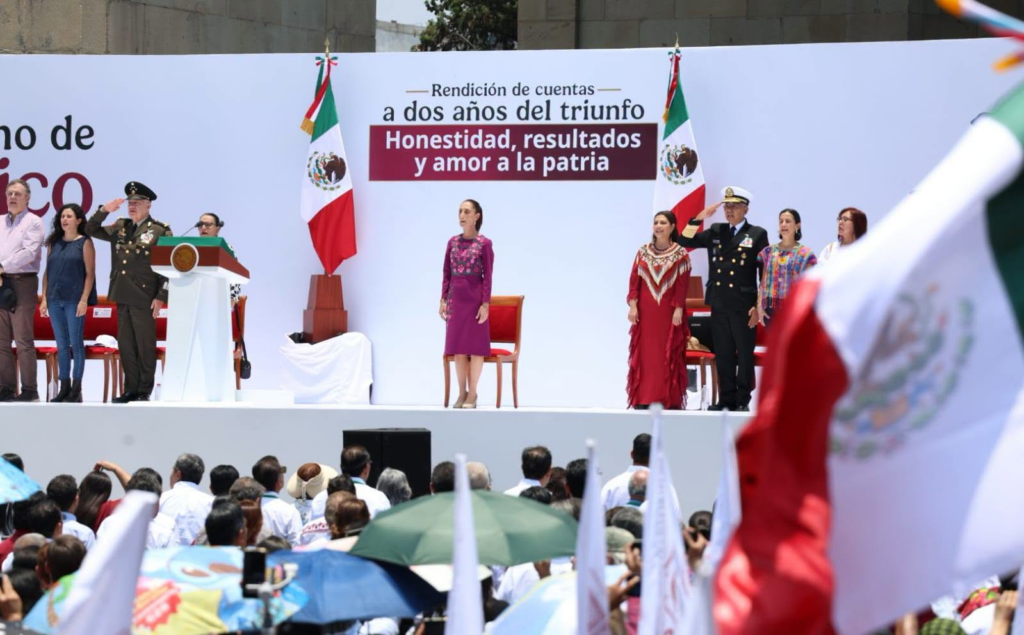
They set aside their role as representatives of the Mexican State, bound by loyalty to the Constitution, to serve and defend all Mexicans. At that event, as just another group of Morena activists applauding the president’s remarks, the crowd—military personnel included—applauded the policy of unrestricted protection and defense of the narco-politicians who are also Morena activists. That day, it was Rocha and his associates. Today, it includes Durazo and Villarreal; tomorrow, it will be others.

Our military applauding the president’s defense of narco-politicians? The formal arms of the State applauding the informal arms? That aberrant contradiction is what characterizes a totalitarian state. By its very nature, authoritarianism is taking root in every nook and cranny of the Mexican State, from the most remote municipality to the National Palace. The Justices of the Supreme Court of Justice of the Nation applaud it, standing. The representatives of the Congress of the Union applaud it, standing. The expanded cabinet echoes, as it should, the presidential words. And everyone applauds the official interpretation that sovereignty means defending the narco-politicians.

The challenge for totalitarianism to complete its work of domination is to convince—or force the entire population to believe—that any dissent or criticism of official policy is treason. For this reason, it can be anticipated that, sooner rather than later, disagreeing with or questioning official policies will be legally considered an act against the Mexican State. Such acts will be subject to political and judicial persecution, dismissal from employment, and social harassment. This is contained in various legal proposals by Morenismo in Congress. Critics of the ruling party are already being systematically persecuted in Puebla, Campeche, Sonora, Morelos, and Veracruz. All authorized, of course, by that morning megaphone, which is where Big Sister speaks. The persecution of journalists, along with their kidnapping and murder, is an everyday occurrence. The instinct of the totalitarian beast demands the elimination, by any means necessary, of critics, free thinkers, liberals, conservatives, leftists critical of Morena, and simple dreamers.
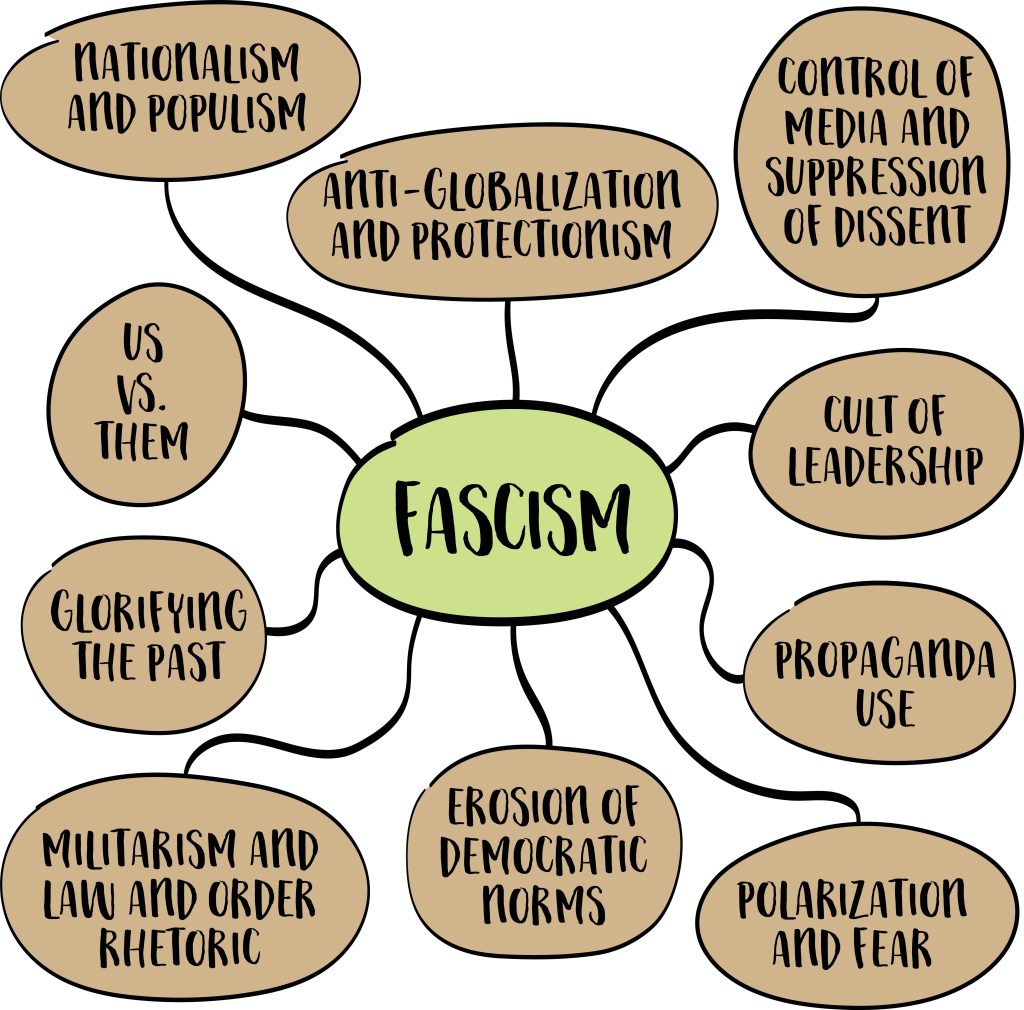
This is what awaits society from now on. In the country of “you’re either with me or against me,” the consequences of criticism, dissent, and seeing things differently will radicalize very quickly. It is the logical consequence of that Sunday’s event: it was the snapshot for the public, a full-color unveiling of the new totalitarian model of governance that is currently taking root in Mexico. Those who do not adapt or conform to the authoritarian model of government will be considered enemies of the system and must be silenced, imprisoned, or marginalized. They will be legally classified as traitors to the Nation.

The days of respectful debate between opponents and, especially, of electoral alternation, are coming to an end. The electoral legislation recently passed by Morena is designed to prevent political alternation. The narrative of foreign interference in elections serves the regime to justify actions and measures intended to intimidate voters, seeking to direct their votes against phantom enemies. The name of the game is total imposition.
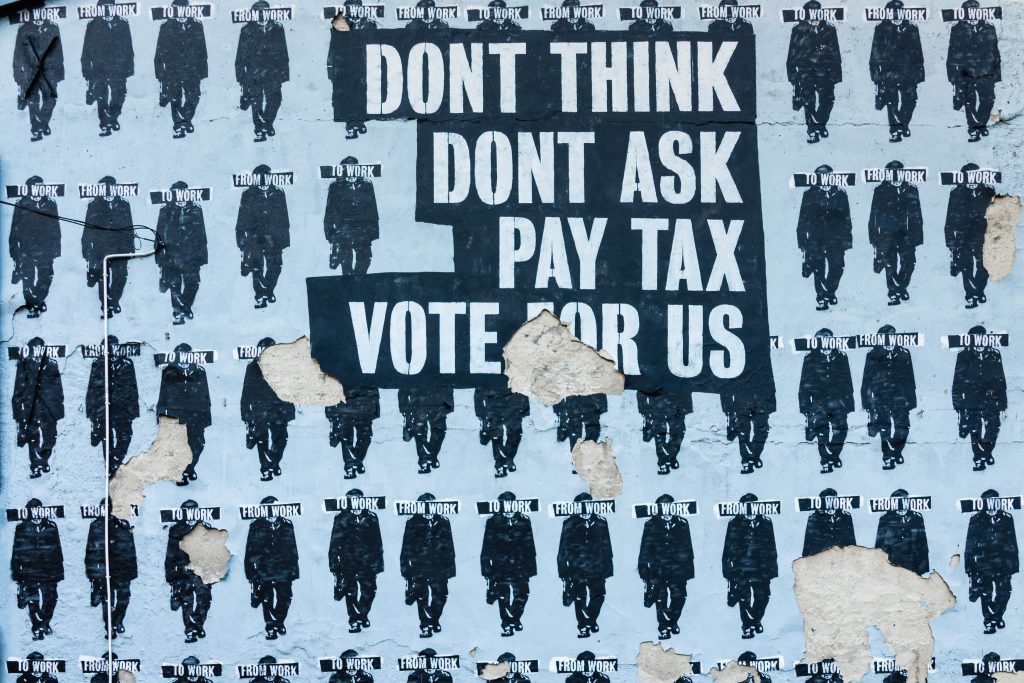
Morena has transformed Mexico’s political regime through drug trafficking, institutional violence, and electoral fraud. Having been a Republic with three independent branches of government and institutional mechanisms for citizen oversight of government actions—equipped with the tools to ensure political alternation until six years ago—Mexico has now transformed into a totalitarian regime where power is pyramidal, highly hierarchical, and centralized, having eliminated the autonomy of the branches of government and subordinated them to the Executive. The autonomous bodies of citizen oversight were destroyed, and Morena co-opted the electoral system to eliminate the alternation of power.
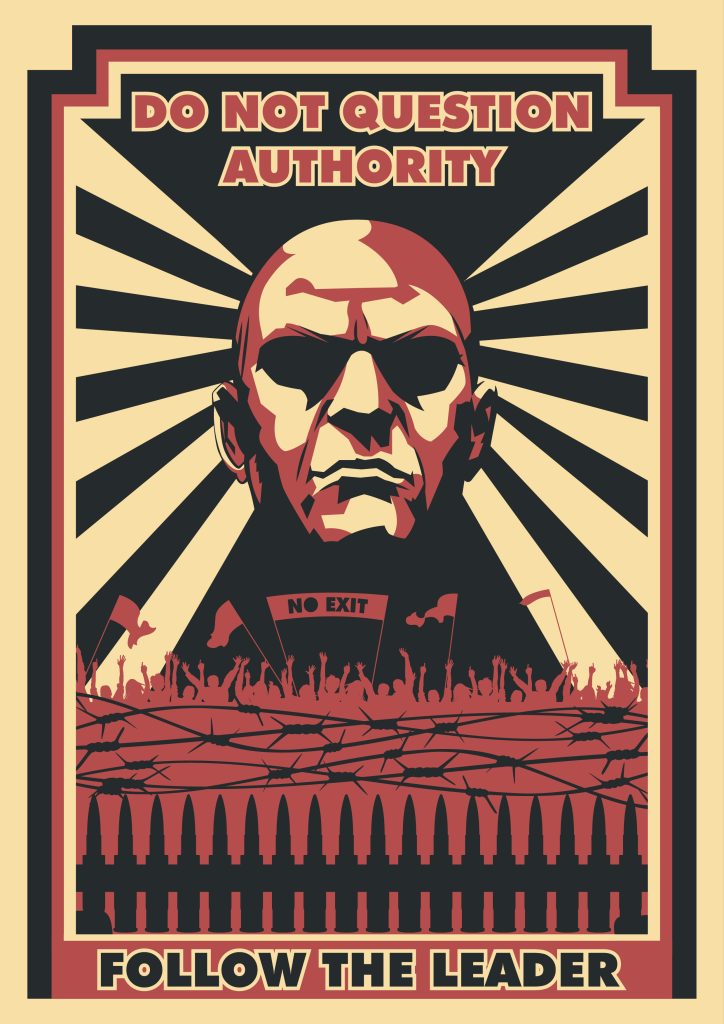
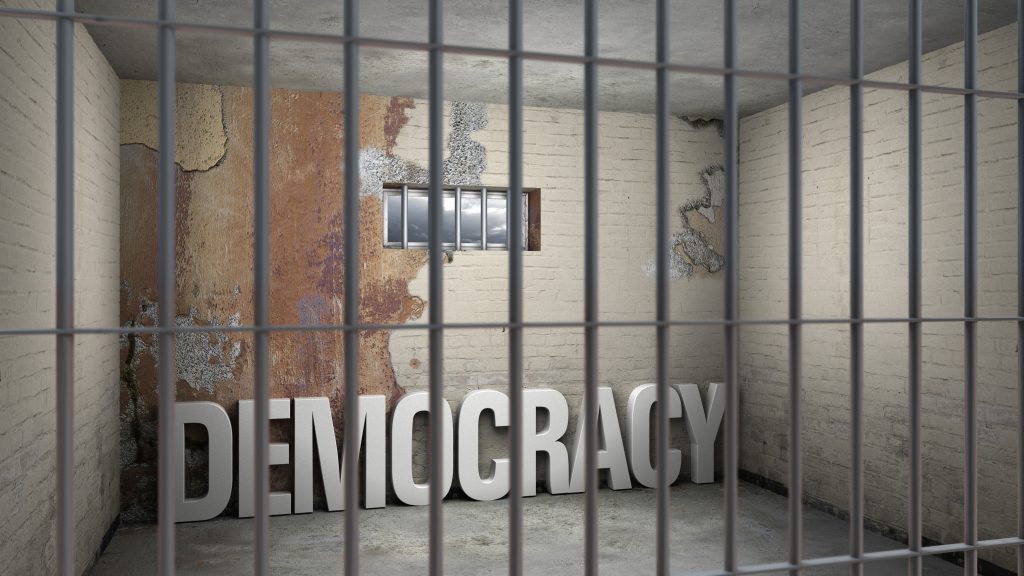
Democracy is in grave danger and is facing crucial days. The democracy of freedoms, of debate and the contest of ideas, and the freedom of the vote are at risk of disappearing, just as happened with the autonomous bodies. The defense of basic freedoms is the last link where the totalitarian government has not yet managed to destroy or break the indomitable spirit of expression of liberal and democratic Mexican thought. But the spaces are shrinking every day because the regime, angry and fearful, knowing that its feet are made of clay, seeks to eliminate all libertarian expression through repression.
Today in Mexico, to be a revolutionary is to speak the libertarian truths that those in power do not want to hear.

@rpascoep
Further Reading: