Ricardo Pascoe Pierce
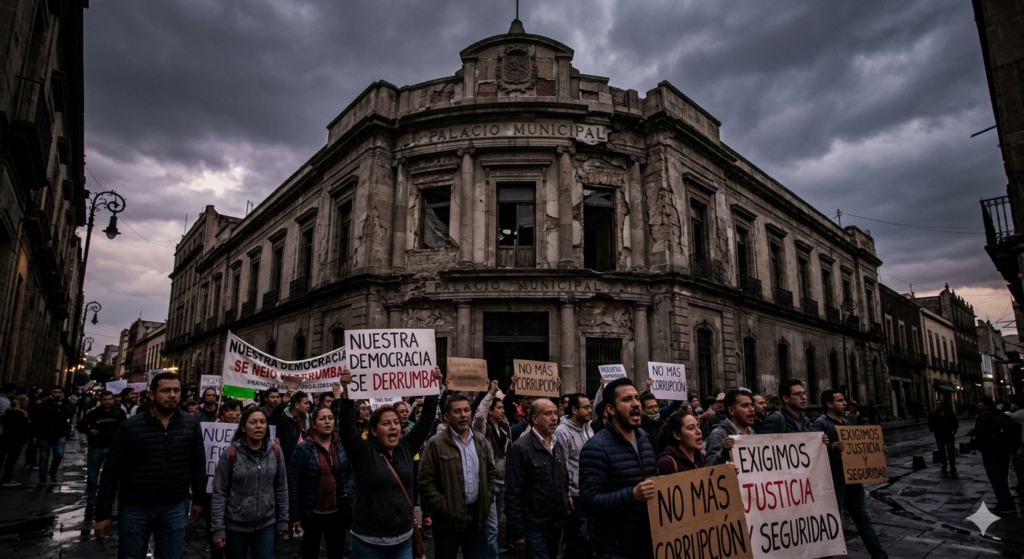
Democracy in Mexico is going through a period of deep tensions that have cast doubt on both its functioning and its legitimacy. More than three decades after the start of the democratic transition—marked by electoral openness, party pluralism, and the establishment of autonomous institutions—the country faces a paradox: while access to power through competitive elections remains intact, the quality of democracy appears to be deteriorating in key areas such as the rule of law, accountability, public trust, and government effectiveness. The presence of drug trafficking has had a decisive impact on this deterioration, increasing corruption given the relationship between organized crime and the State.
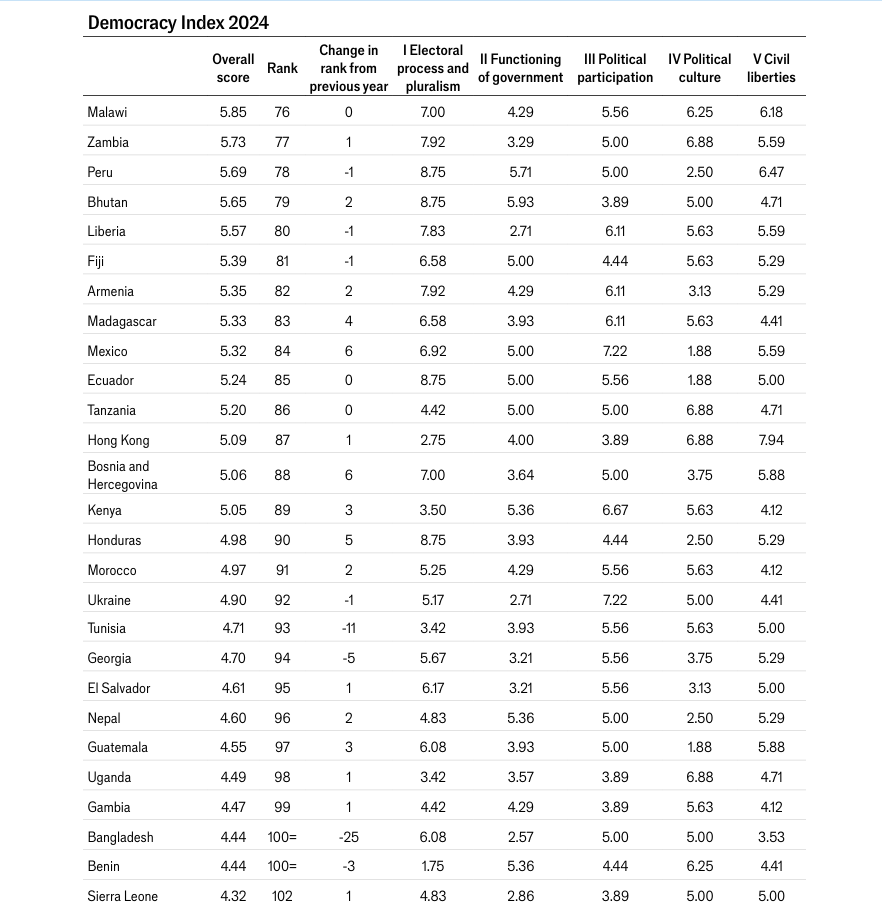
Internationally, Mexico is assessed as a hybrid democracy with a marked downward trend. The Democracy Index of the British magazine The Economist classifies Mexico as a flawed democracy. Freedom House defines Mexican democracy as partially free. The Varieties of Democracy Institute (V-Dem) observes that our democratic institutions are undergoing erosion. The World Justice Project ranks Mexico as a nation whose democracy ranks among the lowest in the world, at 120th out of 140 countries, where 1 is the best, and 140 is the worst.
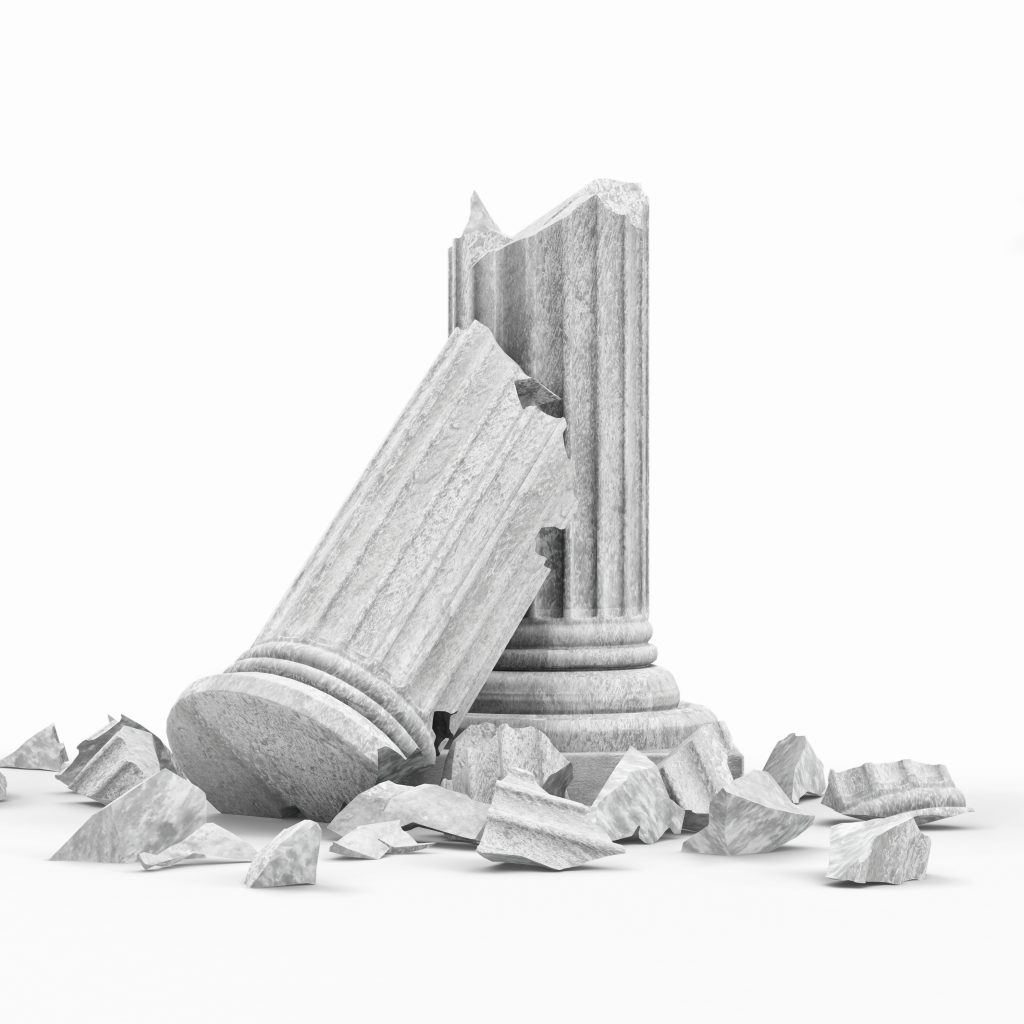
One of the most evident symptoms of this crisis is institutional erosion. For years, Mexico built a network of autonomous agencies designed to balance political power, ensure fair elections, and oversee strategic areas such as transparency, economic competition, and human rights. However, in recent years, these institutions have been taken over by loyalists of the ruling party, subjected to political pressure, budget cuts, and rhetorical attacks, thereby weakening their authority. When checks and balances are perceived as obstacles rather than democratic safeguards, the system loses its equilibrium and moves toward a more centralized logic of power.
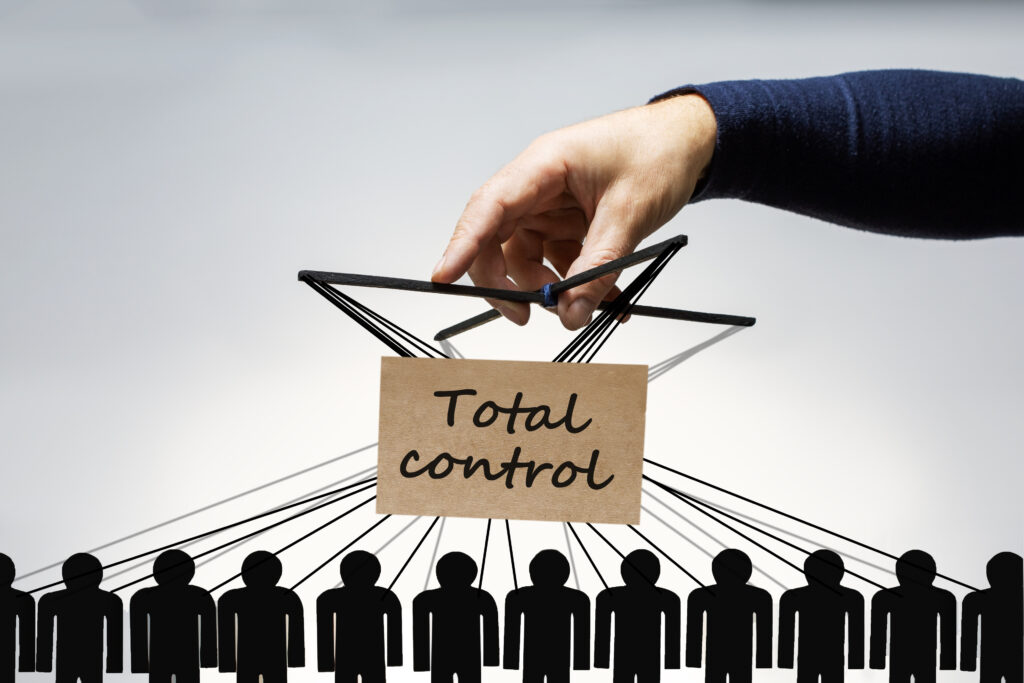
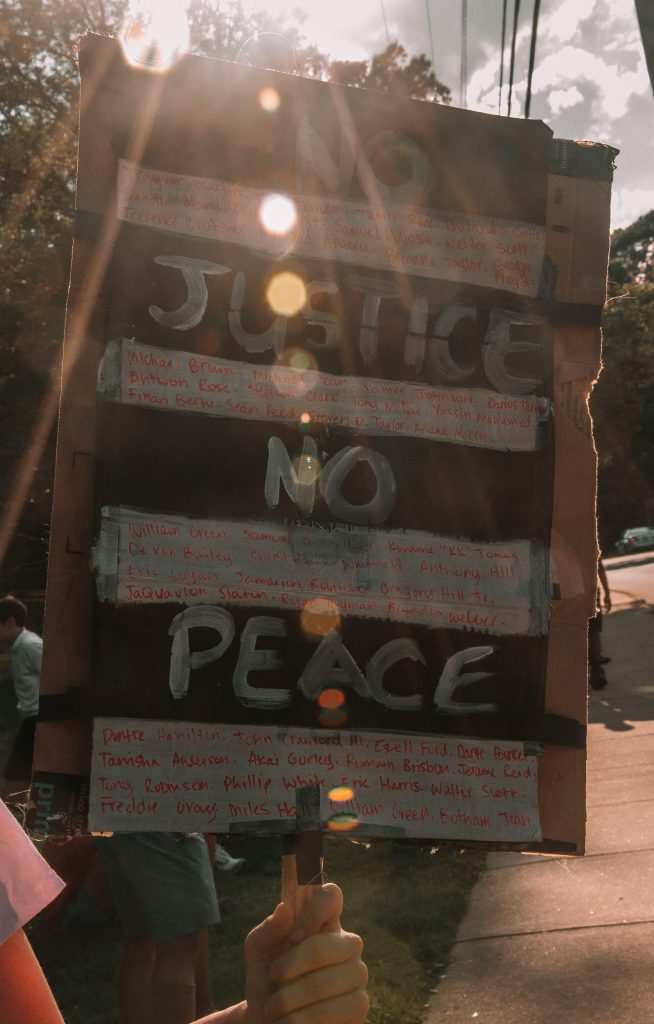
The rule of law shows signs of persistent fragility. Impunity remains one of the country’s most serious structural problems: the vast majority of crimes (over 95%) go uninvestigated or unpunished, creating a vicious cycle of distrust in authorities and the erosion of the rule of law. This situation is exacerbated by widespread violence in various regions of the country, where organized crime has managed to capture or influence local institutions. In these contexts, formal democracy—based on elections—coexists with realities of territorial control and coercion by organized crime that distort the will of the people.

Another central element of the crisis is political polarization. Public discourse has become increasingly confrontational, dividing society into antagonistic blocs and reducing spaces for dialogue. The “friends versus enemies” logic replaces democratic debate based on arguments and the exchange of ideas among peers. This polarization not only affects social cohesion but also hinders the building of the consensus necessary to implement long-term public policies. In a polarized environment, politics becomes reactive, short-sighted, and highly dependent on charismatic leadership.
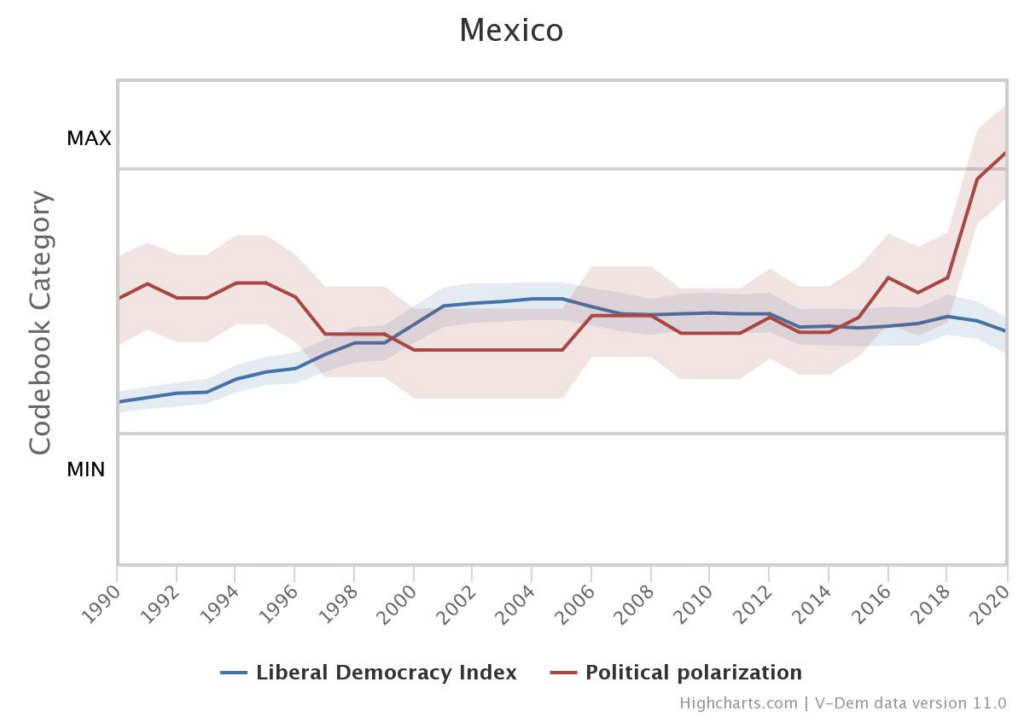
The concentration of power in the executive branch is another cause for concern. Although Mexico formally maintains a system of separation of powers, in practice, the other branches are increasingly subordinated to the central government, whether due to political affinity or structural weakness. Congress has lost its capacity for independent deliberation, acting more as a rubber-stamp body than as an effective check on executive power. This phenomenon reduces the quality of the legislative process and limits the diversity of perspectives in decision-making. The judiciary, resulting from the election of its members, has created a “Frankenstein” lacking independence and autonomy of judgment, subordinate to the ruling party in all its decisions. The members of the Supreme Court of Justice of the Nation, in addition to being unsuitable, are all members of the ruling party without exception.

The relationship between democracy and outcomes is also central to the problem. A significant portion of the citizenry perceives that democracy has failed to translate into substantive improvements in their quality of life. The persistence of inequality, job insecurity, and corruption fuels a sense of disillusionment. When democracy fails to meet expectations regarding material well-being and justice, it loses legitimacy and opens the door to alternatives that promise solutions, even at the expense of democratic norms.

In this context, the role of civil society and the media takes on crucial importance. However, both face significant challenges. On the one hand, civil society organizations have been delegitimized by official discourse or have seen their operational capacities reduced. The recent decisions by the tax authority (SAT) to threaten their sources of funding are a politically coercive act, not a genuine concern for the legitimacy of their funding.

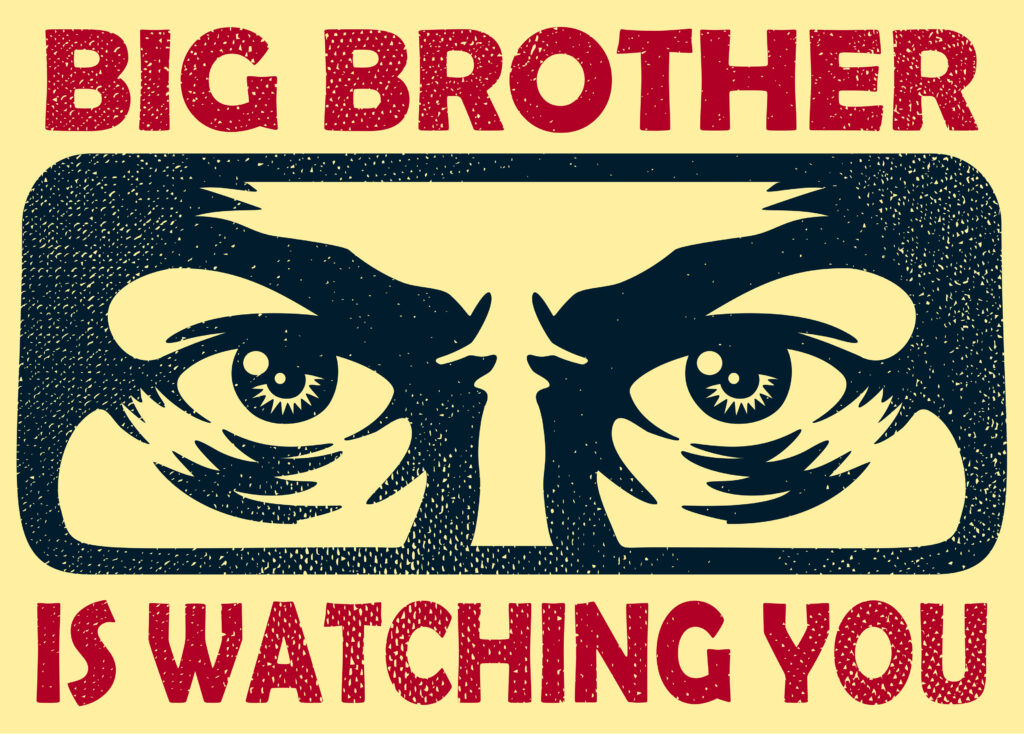
On the other hand, the media ecosystem is strained by the concentration of audiences on digital platforms, the proliferation of misinformation, and economic and political pressures. The quality of public debate suffers when information is fragmented or distorted. The “Mañanera” press conference is a totalitarian tool, reminiscent of “Big Brother” from George Orwell’s novel 1984.
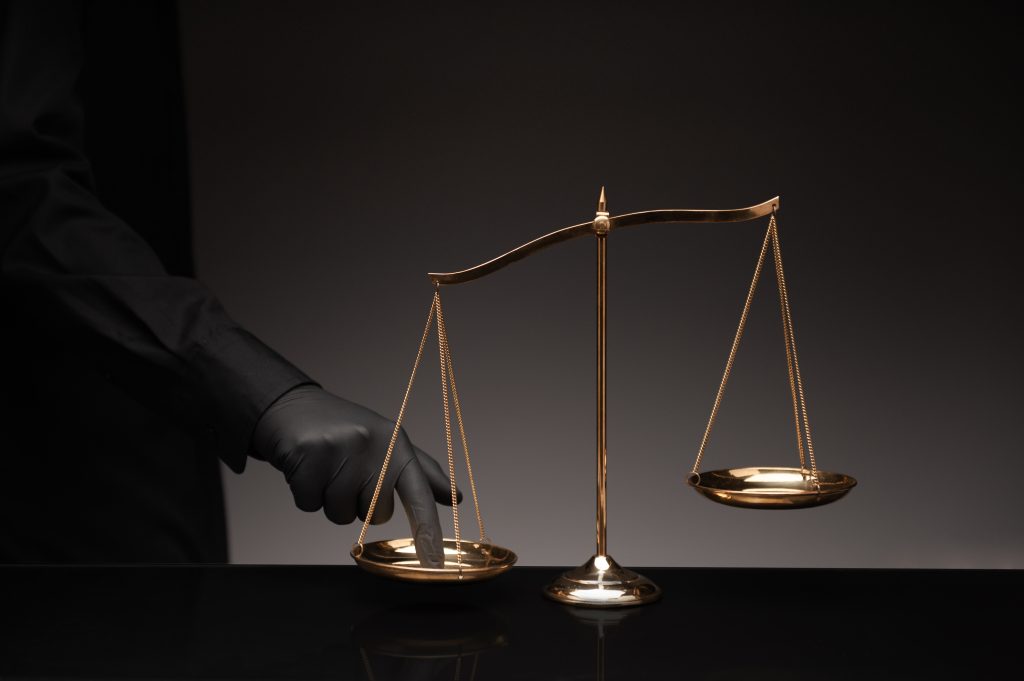
The electoral sphere is not without risks either. Elections remain competitive, but they face threats such as political violence, organized crime’s interference in local campaigns, and the intensive use of public resources or polarizing narratives. Electoral integrity depends not only on the technical organization of the elections but also on the broader context in which they take place. Every election day sees candidates withdrawing due to intimidation or being assassinated in the midst of the campaign. Violence is a hallmark of elections in Mexico.

All the factors mentioned contribute to the country’s deteriorating economic situation. The international community observes the downward drift in Mexico’s democracy and adopts a “wait-and-see” stance before investing. It is concerned by the Bank of Mexico’s growing lack of autonomy, as well as the government’s expropriatory fiscal practices, endorsed by the politically subordinate Supreme Court of Justice of the Nation. The absence of checks and balances on the Mexican state is becoming entrenched.
Against this backdrop, the crisis of democracy in Mexico should not be understood as an imminent collapse, but rather as a process of permanent, cumulative erosion. It continues to function in formal terms, but faces a loss of quality that, if left unaddressed, could result in a model increasingly limited in its capacity to represent the nation as a whole and could consolidate authoritarian tendencies.
Overcoming this crisis requires addressing several challenges. First, it is necessary to rebuild trust in institutions by strengthening their autonomy, transparency, and professionalism. This requires not only legal changes but also a political culture that values checks and balances and respect for the rules. Second, progress must be made in effectively combating impunity, which involves reforming and strengthening law enforcement and the administration of justice. Without justice, there can be no democracy.
Likewise, it is essential to reduce polarization by promoting spaces for pluralistic dialogue and holding political leaders accountable for moderating public discourse. Democracy cannot be sustained through constant confrontation. Finally, it is indispensable to improve the state’s capacity to generate tangible results in people’s lives. Democracy must demonstrate that it can be not only a system of rules, but an effective instrument for collective well-being.
Neither López Obrador nor Sheinbaum has deigned to meet with or engage in dialogue with representatives of the opposition. This behavior by the leaders reinforces the drift toward exclusion, polarization, and the failure to resolve major national problems.

In short, the crisis of democracy in Mexico is complex and multifaceted. It is not merely about institutions or elections, but about the interaction between power, society, and outcomes. The challenge lies in preventing this erosion from becoming irreversible deterioration, and in rebuilding a democratic pact that combines freedom, dialogue among equals, legality, and effectiveness. Only in this way can democracy regain its legitimacy and respond to the demands of a society that is increasingly demanding and aware of its rights.

@rpascoep
Further Reading: