

Ricardo Pascoe Pierce
The Mexican government is responding in extreme terms to two recent events that have changed the coordinates of the country’s internal and external political and military situation. The ruling party’s response is because both events, apparently unrelated, are in fact closely linked. The events in question are the location and subsequent death of Nemesio Oseguera Cervantes (Mencho), and the government of Claudia Sheinbaum’s proposal for political and electoral reform.
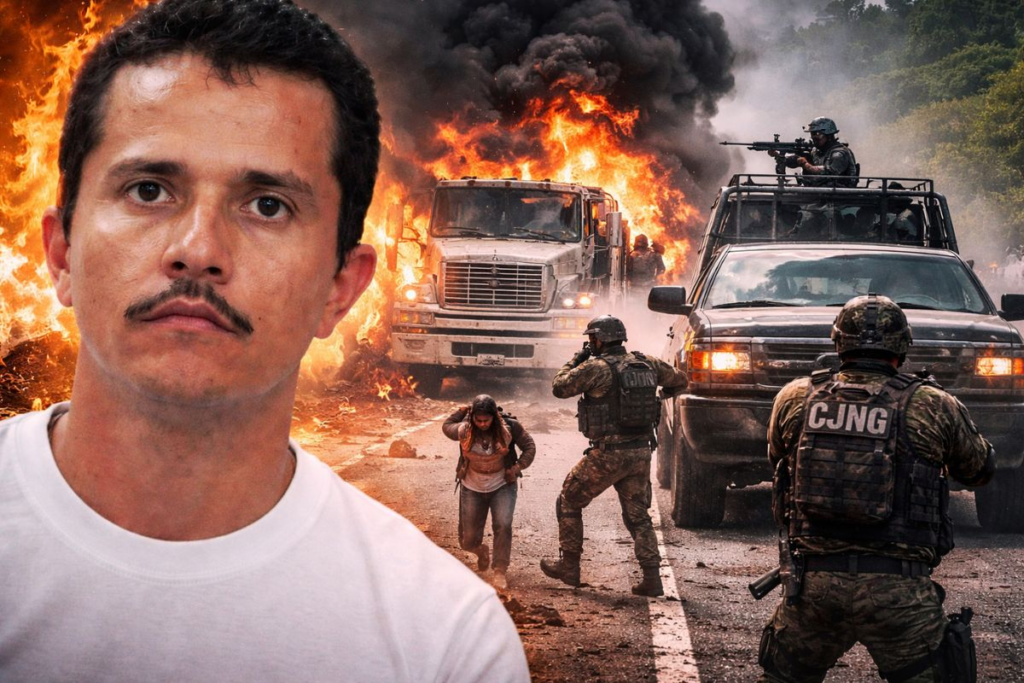
Two events, apparently with different purposes and arising from totally separate spheres, meet and coincide in the new logic of the Mexican rulers. The logic and analysis come from the depths of the ruling party, Morena, which feels seriously threatened in its national hegemony and is preparing to consolidate its absolutist control in the face of what it considers an existential threat to its government.

To understand how the convergence of the dangers foreseen by Mencho’s death and the aggressiveness of the political-electoral reform is articulated, each situation must be broken down to clearly understand their unexpected interrelation. As the hours and days pass, some of the realities surrounding the gestation, preparation, decisions, and consequences of the military operation that culminated in the death of the leader of the Jalisco New Generation Cartel (CJNG) begin to become clear. First, it is worth noting the president’s evident displeasure with the whole situation. She gives the impression that she was and is frankly opposed to the operation and feels apprehensive about the political and military consequences for herself, her party, and her government. Only in this way can her coldness and absolute lack of empathy with the families of the soldiers who fell during the confrontation with CJNG soldiers be understood.
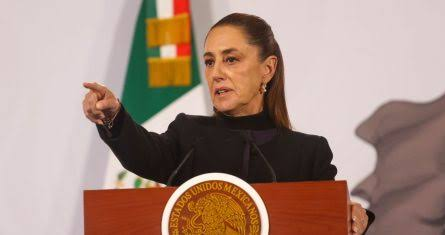
There is an explanation for her coldness. Everything points to her having found out about the operation while it was underway. Who made the decision to act? It seems that it was a decision made by Mexican military commanders through their relationships within Northern Command. The United States detected El Mencho’s location in Tapalpa, Jalisco, and Mexican military intelligence agents confirmed the location. Given this confirmation, the Americans left the decision in the hands of the Mexican military high command: either you act immediately, or we will. It is possible that the Mexican military preferred to act rather than risk informing the president, who, they feared, would reject the operation against El Mencho. Hence, the president only found out when there was no turning back.
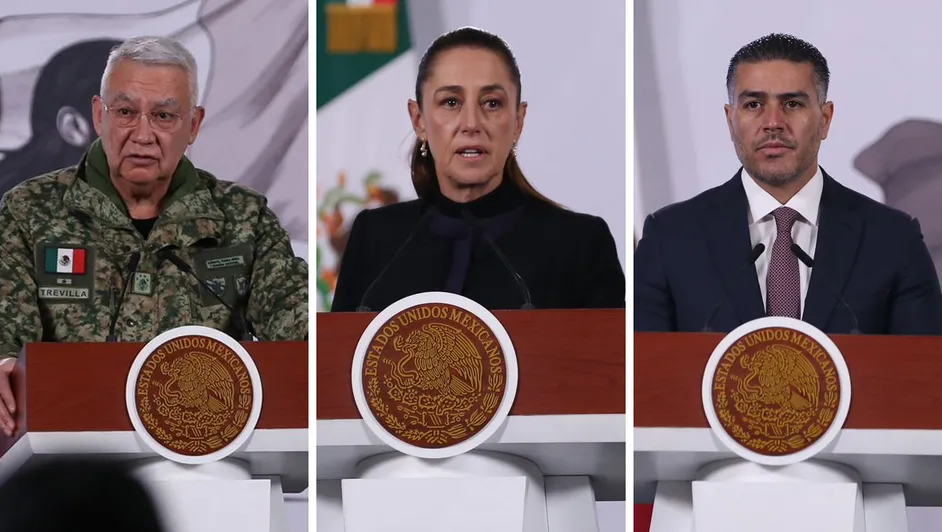
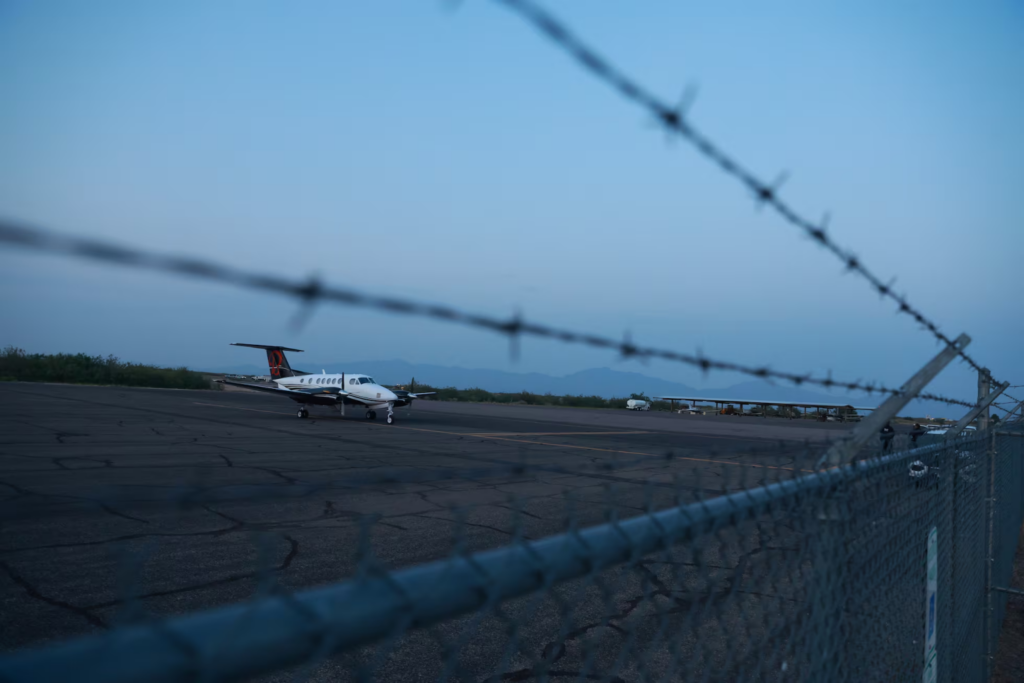
For Sheinbaum, the US-backed operation that culminated in the death of the CJNG leader is comparable to the US operation that ended with the extraction of Mayo Zambada during López Obrador’s six-year term. Both presidents had to accept that US forces carried out, led, or guided operations on national territory behind their backs and without their consent. In both cases, the US secrecy stemmed from suspicions about the Mexican presidents’ possible links to the target to be arrested or killed.
The six-minute conversation with Trump did not overshadow the president’s extreme irritation, nor by the conversation with Infantino to ensure the continuity of the World Cup in Mexico. Nothing and no one could stop the global impact of the images of 252 narco-blockades, the burning of public offices, and the death of security agents in 20 states of the Republic. Much less the national and international conversation sparked by El Mencho’s death about what comes next: internal succession struggles in an international criminal organization with access to multimillion-dollar resources to continue the business. And the prospect of more violence in revenge for the leader’s death. In fact, some analysts say that the war against law enforcement has already begun and has claimed numerous victims.
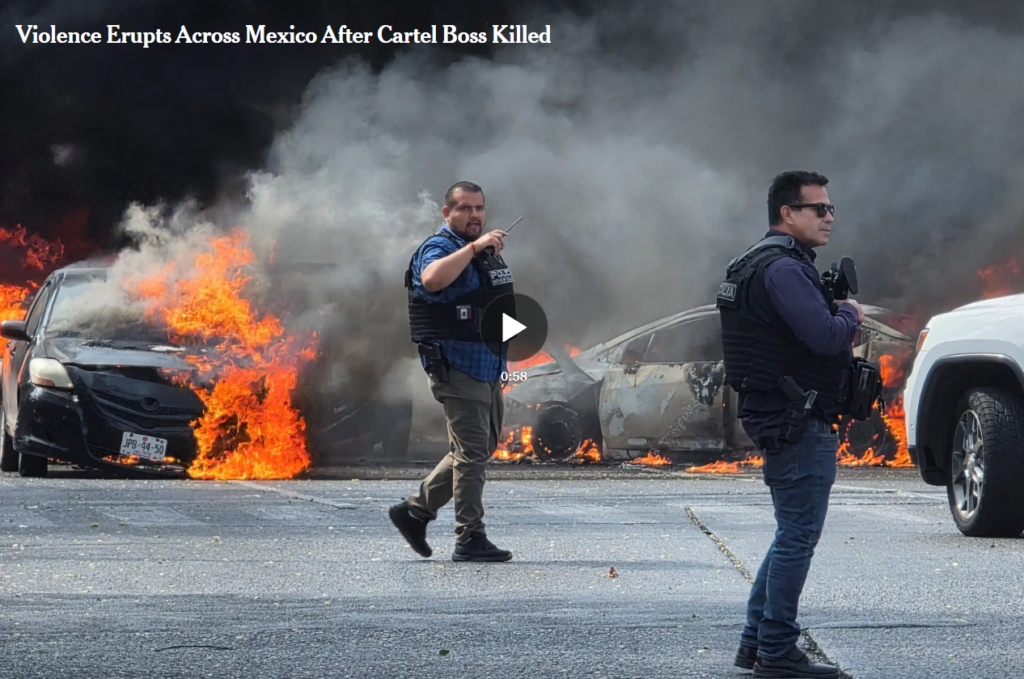
Apologists for the National Palace are trying to distance what is happening in Mexico today from what AMLO, Sheinbaum, and Morena criticized most: the war waged by Calderón and García Luna. They claim that the two moments are not similar because Sheinbaum has legitimacy, whereas Calderón did not. But it is clear that the president is walking a path full of thorns and contradictions. The discontent of López Obrador and sectors of Morena with Sheinbaum’s leadership is growing. The lack of control shown by the events in Tapalpa and the possible loss of presidential authority over the armed forces are factors that alarm Morena’s leaders.

In response, Sheinbaum has launched counterattacks to generate new areas of discussion and mobilization within the party’s ranks. In response to the blow dealt by the Tapalpa operation, which calls into question Sheinbaum’s claims to have staunchly defended national sovereignty, the president presented an aggressive, authoritarian, and regressive proposal for political and electoral reform, supported by Pablo Gómez and Lázaro Cárdenas, two prominent representatives of deep and radical Morenism. She intends to rally Morena’s hardline ranks to reaffirm the party’s support and solidarity with the president and the institution she represents. And she wants to change the national and internal discussion within the party.
For this reason, Sheinbaum openly challenges the Labor Party (PT) and the Green Ecologist Party of Mexico (PVEM): “You are either with me or against me.” These parties are being challenged to contradict the president at her most critical moment. The threat to these parties goes much deeper than constitutional reform: they have to decide whether they dare to go against the essential historical project represented by the 4T. For this reason, it is most likely that these parties will end up voting in favor of the project, even though it represents their probable suicide.
Desperation and vengeful anger are dominating the president’s behavior. But the root of the problem is that she is cornered between objective internal and external factors. She reacts by building new barricades around herself, adopting a mentality of being a besieged force under attack by an enemy army. Powerful internal forces act without her consent or control, while external forces press her relentlessly.

Her visit to Sinaloa to reaffirm her admiration for Governor Rubén Rocha, known for his closeness to criminal elements in the state, has sparked much speculation. Is this the right time to maintain closeness with authorities notoriously linked to the Sinaloa cartel just after the Mexican Army killed the leader of the CJNG? All this in the midst of a civil war between factions of the Sinaloa cartel itself, while federal forces have been unable or unwilling to intervene to end the violence.
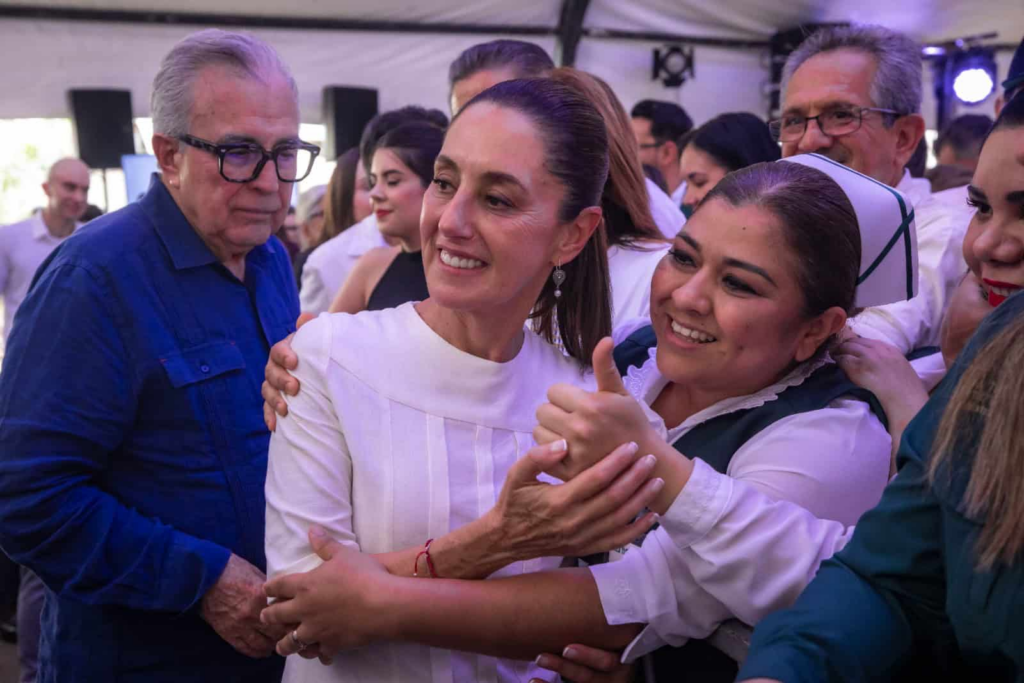
This visit sends a message: not everything has been destroyed in terms of the historical alliances between politics and drug trafficking, despite the elimination of El Mencho. The president is challenging Washington and those within Mexico who believe in the need to confront the cartels, both large and small. It is a high-risk presidential gamble, which has not gone unnoticed here and there. In response to what she considers a blow, she has struck back.
More blows will surely follow the counterattack.

@rpascoep
Further Reading: