
Federico Reyes Heroles
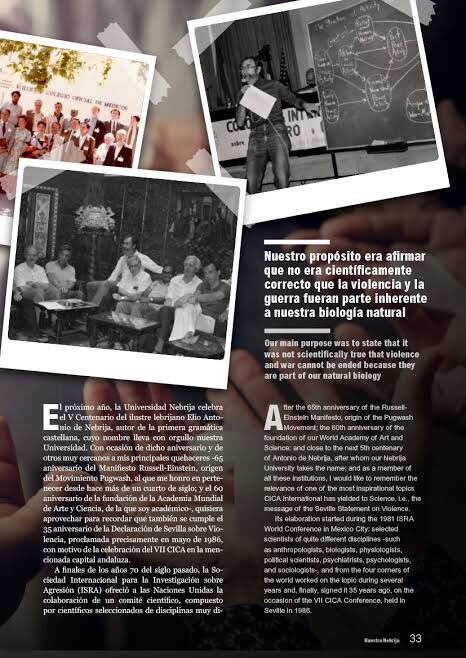
In 1986, the UN declared it the International Year of Peace. To mark the occasion, Santiago Genovés, the brilliant anthropologist of Spanish origin, brought together fourteen experts on the subject to draft what came to be known as The Seville Manifesto, also known as The Seville Statement on Violence which was adopted by approximately 100 scientific societies, including UNESCO. The Manifesto reflects Santiago’s great obsession: the origins of violence. *Algarabía*, issue 137, revisited Genovés’s contributions. What is particularly interesting about this is the way he argues against simplistic explanations.

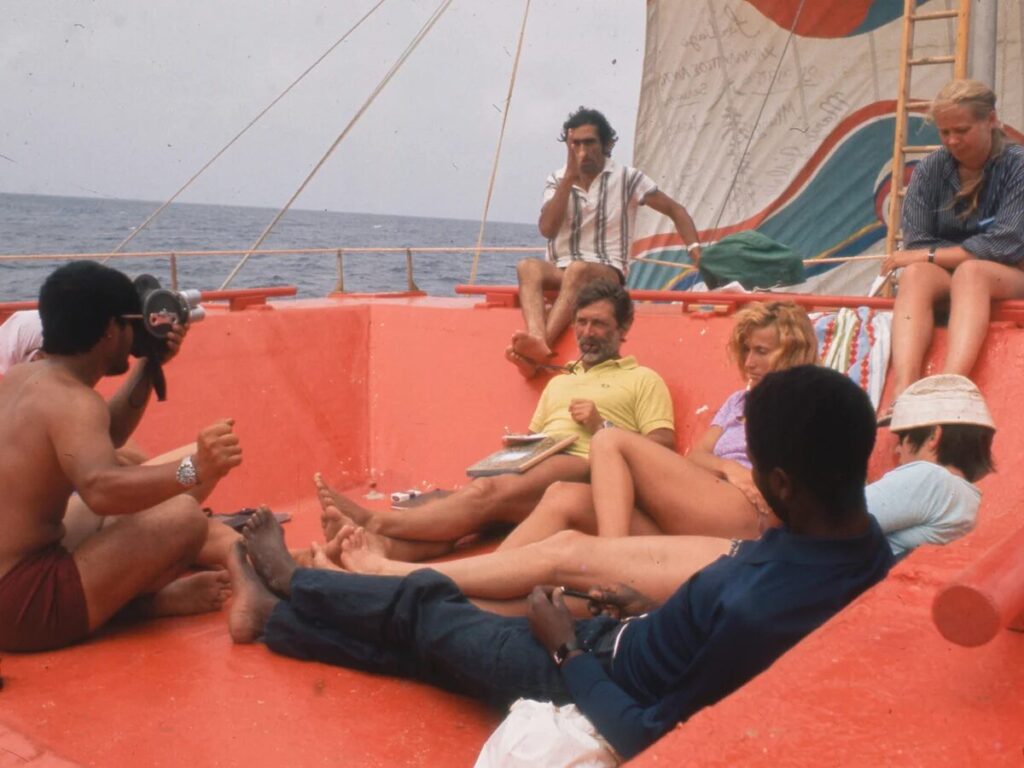
The five points begin with a very specific refrain: “It is scientifically incorrect to say…” followed by a list of common stereotypes: “…that we have inherited from our animal ancestors a propensity for war”; “…that war or any other form of violent behavior is genetically programmed into human nature”; “…that throughout human evolution, aggressive behavior has been selected over other types”; “to say that men have ‘a violent brain’”; “…that war is an instinctive phenomenon driven by a single motive.” In 1969, Santiago was one of those selected by the Norwegian biologist and explorer Thor Heyerdahl, famous for his 1947 Kon-Tiki expedition, which successfully crossed from Peru to Polynesia—a route that may have been used for maritime settlement. Heyerdahl returned to his adventures in 1969 with the Ra, which sank due to a construction flaw in the raft, and later with the Ra-II, which successfully reached the other continent. Genovés participated in both expeditions; years later, in 1973, he set sail on the Acali. The specific mission was different: to answer the question of why violence arises. Living in very close quarters and under adverse conditions, Genovés compiled a series of observations that he would later publish. He followed in the footsteps of Viktor Frankl, the Auschwitz survivor who would shake the world of psychoanalysis with *Man’s Search for Meaning*. Great authors such as Jared Diamond have continued this line of inquiry: they agree that a culture of nonviolence is decisive.
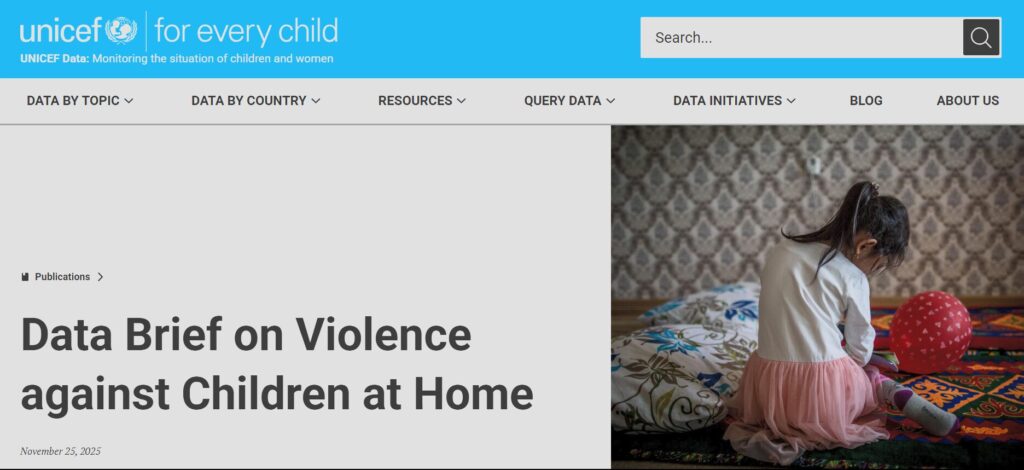
In recent years, day in and day out, we read terrifying news reports, such as the case of Elisa or, more recently, Dafne in Tamaulipas, in which several classmates are emerging as suspects. The hanging bodies in Zacatecas echo that horrific spectacle of dismembered bodies in the port of Veracruz in 2011, which occurred during a national meeting of judges and prosecutors. This pattern is now well-established; on Saturday in Temixco, three dismembered bodies were discovered. Excélsior published—on May 4, 2025—a report based on UNICEF data regarding domestic violence: 55% of children in Mexico have experienced “violent discipline”; 71% of injuries inflicted on minors occur in their homes; 11% of parents believe that physical punishment is necessary for raising children. The psychological consequences are a separate issue altogether. Domestic violence is now more common than robbery. That is why UNICEF—in partnership with the DIF—is promoting a “positive parenting” program.
Returning to the thesis of Genovés and *The Seville Manifesto*: it is not hereditary, it is not genetic, it is not evolutionary, it is not a matter of brain structure, nor is it instinctive. It is cultural. This brings both problems and opportunities. Mexico has become a country that is either more tolerant of or more desensitized to violence—it all begins at home. If, as studies show, most of a person’s values come from the mother in particular, we are facing a great opportunity to reverse this horror. In Norway, the princess’s son will go to prison for rape; in Mexico, we live with a 93% impunity rate (see www.impunidadcero.org). Apparently, religious mandates no longer prevail. 150,000 missing persons?

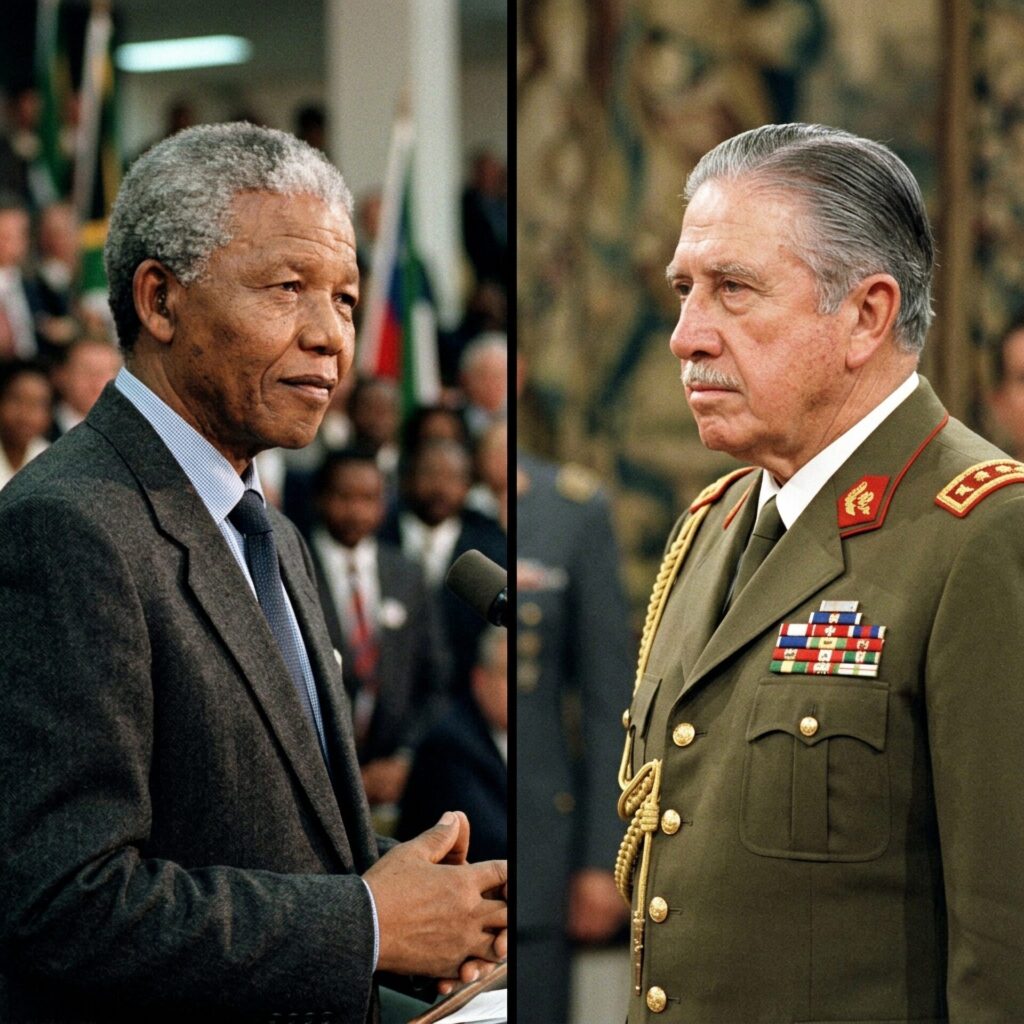
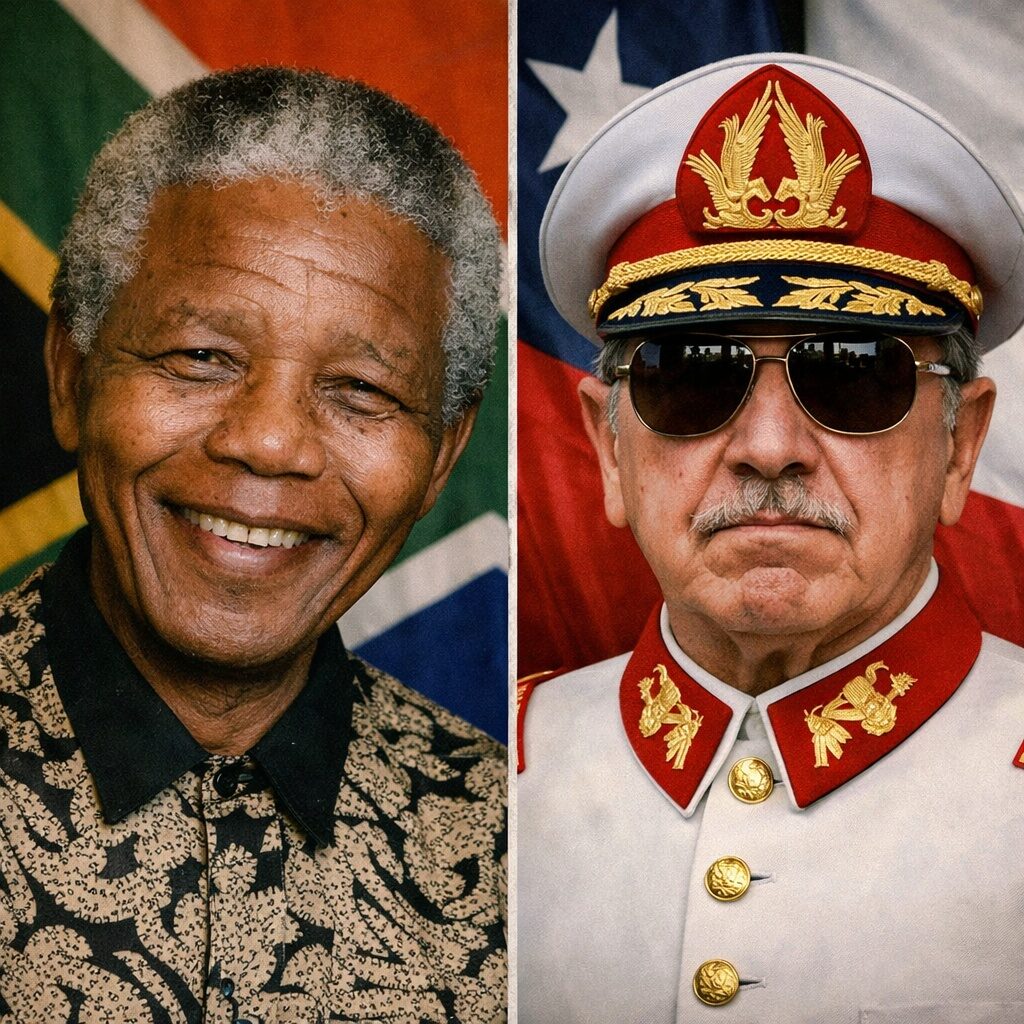
Let’s take UNICEF’s proposal seriously; let’s invest in it to ensure more Mandelas and fewer Pinochets.
Further Reading: