Federico Reyes Heroles
To Manuel Arango, an exceptional human being
When Alexis de Tocqueville—one of the great theorists of liberalism—visited the United States, he was deeply astonished. This experience gave rise to Democracy in America. Why the astonishment? The aristocrat believed that the primary cradles of democracy were England and France. But the democratic energy of the United States was an undeniable phenomenon.
Civil society—as we call it today—the rational intention and decision to defend common interests through organized society rather than individually, shook him to the core. The State, no matter how rich and powerful it may be, cannot take care of everything. Nor is it desirable for it to try. That omnipresent State is a very costly chimera. Many human needs can be addressed far more efficiently by civil society. Tocqueville goes further: that statist pretension is a danger. Organized society is a counterweight as important as the separation of powers.
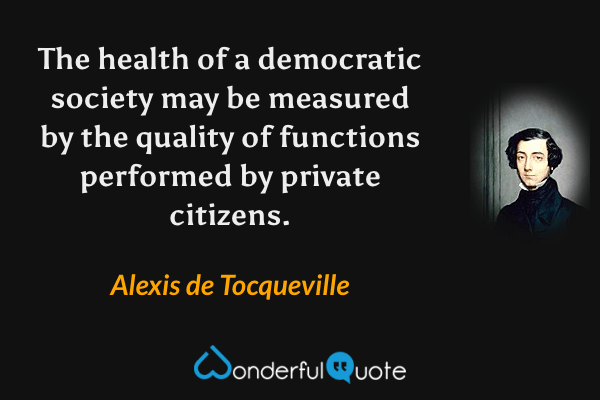
“As soon as a government attempts to go beyond its political sphere… it exercises… an unbearable tyranny,” very clear. The strength of a State is also the result of the strength of its social organizations. Contemporary authors have measured that strength. The results are surprising. Robert Putnam conducted a fascinating study in which he measured social capital across localities in the United States. Where social capital was strong—where citizens trust one another and seal agreements with a simple handshake—legal costs plummet. Tax evasion decreases, as does corruption. Where citizens join hands to fight their own battles to improve conditions in a hospital or maintain a park, well-being increases. Life expectancy rises, and certain ailments even decrease—heart disease, for example.
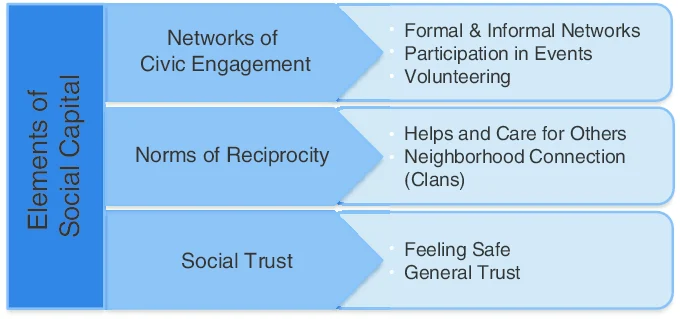
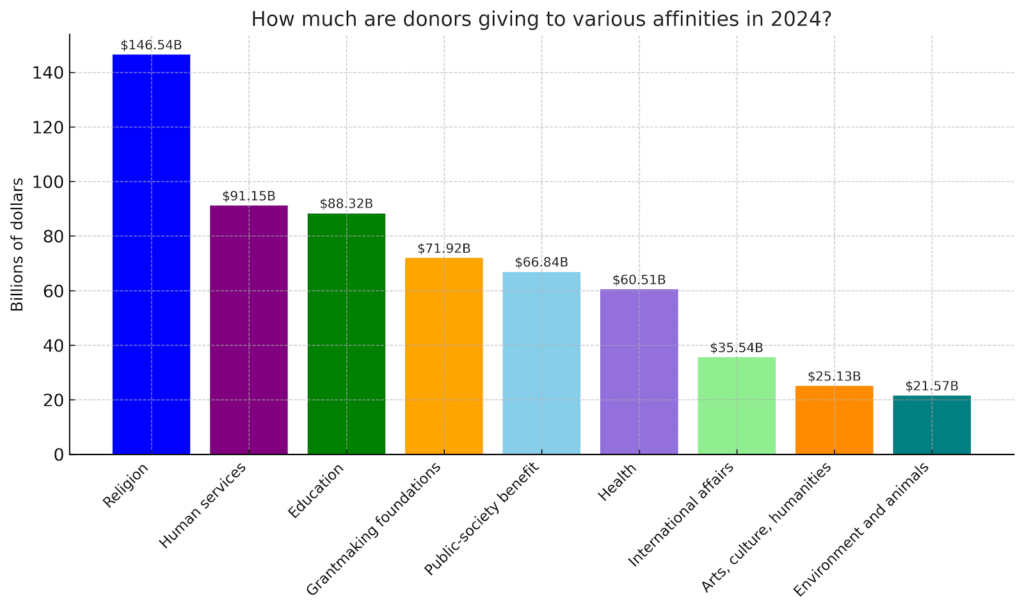
Social organizations are a pillar of democracy, the economy, and well-being. From every angle, the expansion of civil society benefits the State. Therefore, the government must allow citizens and businesses to direct—and that is all—a portion of their tax contributions to social organizations. The State must regulate these organizations and their objectives. But only in this way can more social needs be met. These are areas that the State would struggle to reach, or where intervention would be very costly and inefficient. Consider the blindness hospital or the Conde de Valenciana, where outstanding professionals volunteer their time. The Graue family is one example. So is the work of the CRITs. The tax deduction percentages speak for themselves: France, 66%; Spain, up to 45%; U.S., 60%. Mexico, 7%. Even so, volunteer work accounts for 3.3% of GDP. How about that?
In Mexico, promoting the formation of associations has been very difficult. A major obstacle: so-called interpersonal trust is very low. ITAM showed in 2006 that 61% of Mexicans believed that “people” were corrupt. In 2017, El Financiero highlighted the population’s enormous skepticism: 87% trusted the government little or not at all, and only 23% trusted NGOs. The World Values Survey shows that 50% of Mexicans do not trust their neighbors, and 68% distrust people of other religions. The Mexican Center for Philanthropy, founded by Manuel Arango, has done exemplary work in promoting civil society. But the data from recent years is alarming: 75% of organizations are inactive. Why?
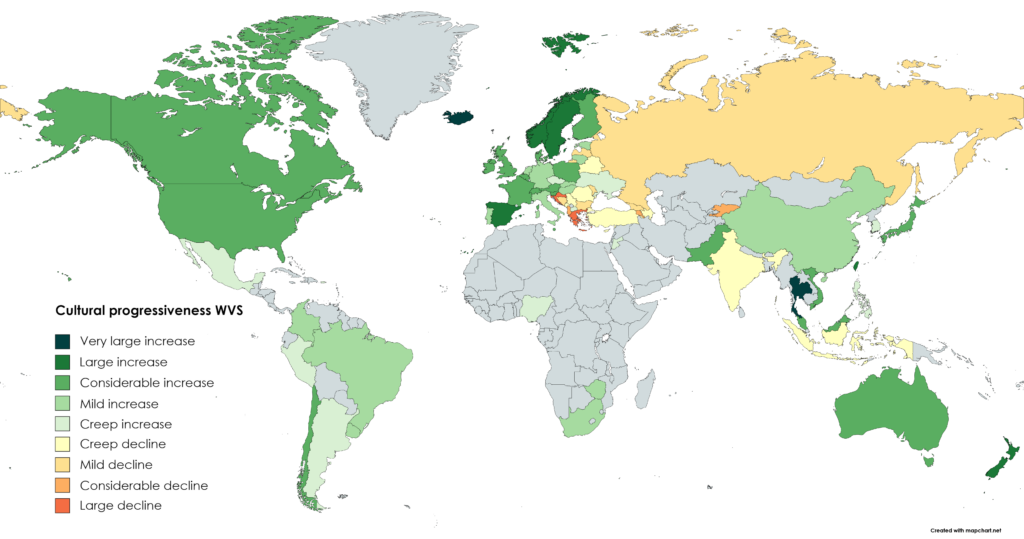
Change in progressive values according to the World Values Survey
Another institutional slash came from Morena, which decided to revoke the tax-deductible status of more than 100 institutions across all sectors. Some are highly significant because the information they generate is uncomfortable for the government, such as México Evalúa, IMCO, Mexicanos Primero, and Mexicanos Contra la Corrupción y la Impunidad. But most are humanitarian organizations.

Slash after slash, they are tearing down the State.

Further Reading: