

Federico Reyes Heroles
The history is long and complex. Jacobo Dayán brilliantly recalled it with Carmen Aristegui. When World War II ended, and the Nuremberg trials were held (1945–1946), the discussions revealed that traditional criminal law was insufficient to conceptualize the human actions the world had witnessed. From this emerged the so-called Nuremberg Principles, which defined new categories of crime.
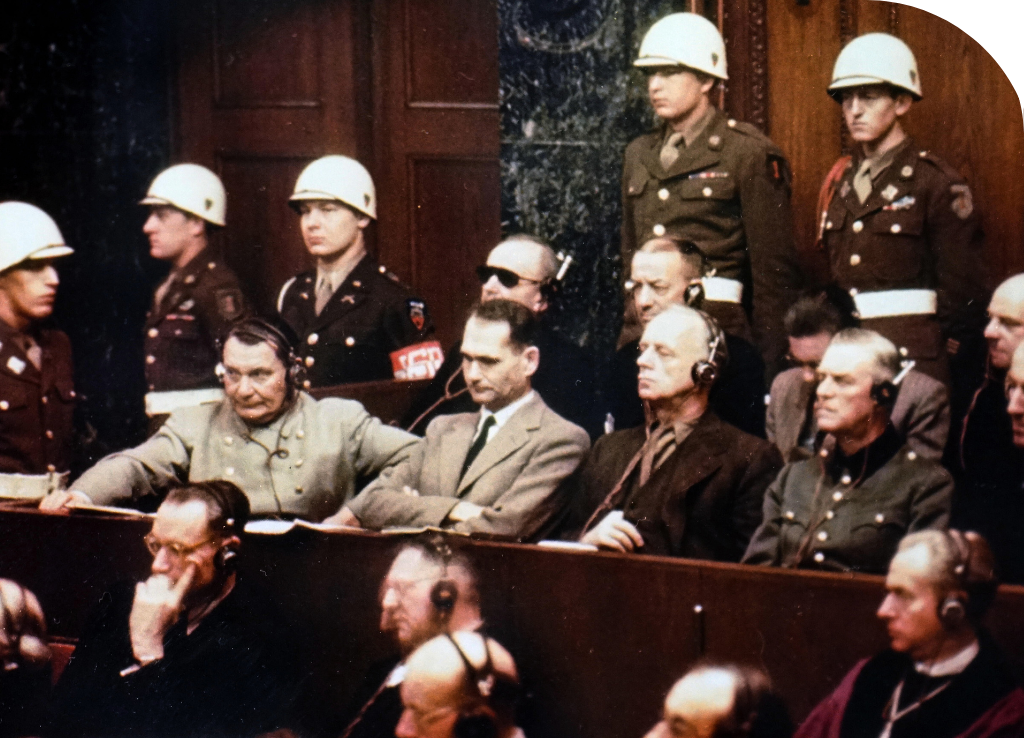
First and foremost, it was established that international crimes were committed by individuals and not by abstract entities. The law had to be capable of holding individuals accountable. Furthermore, hierarchies or hierarchical orders did not exempt individuals from responsibility. Anyone who obeyed a criminal order was also responsible. Crimes against humanity were defined, regardless of the dynamics of war. New crimes were defined, such as those against peace or war crimes.
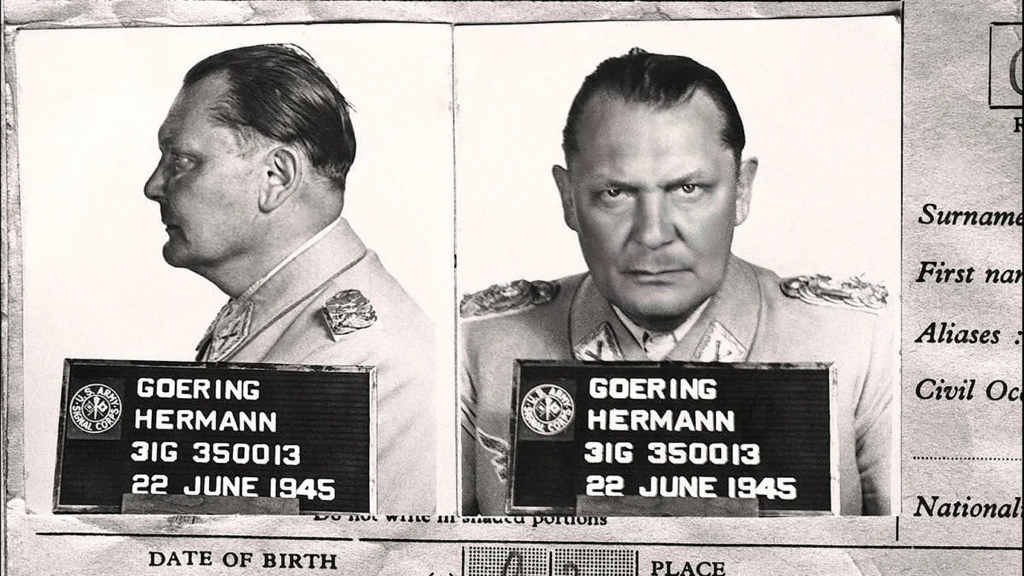
Given the impossibility of an all-encompassing classification, the dynamic nature of the definition was invoked to address the atrocities human beings commit against themselves, which are always one step ahead. Based on the universal rights derived from natural law, a new era of international law was born. These rights were placed above national codes. From this arose a new dimension of international justice, another era in the march of civilization. It was this new pact that opened the door to international criminal tribunals to try cases such as those in the former Yugoslavia or Rwanda. It was also from this that the legal weight of genocide emerged.
Many years passed before these agreements were institutionalized. This occurred in 1998 with the so-called Rome Statute, which established the International Criminal Court.
Let us recall that the International Court of Justice (ICJ)—headquartered in The Hague and established in 1945 by the United Nations—has another mission: to address conflicts between states and to issue advisory opinions to the United Nations.

Mexico is part of this entire framework, as well as of the Inter-American Human Rights System, which includes the Inter-American Commission in Washington and the Inter-American Court based in San José, Costa Rica. The latter system operates on a subsidiary basis; that is, a claimant may turn to it only after exhausting all domestic remedies, and even then only if there is a failure in the administration of local justice.
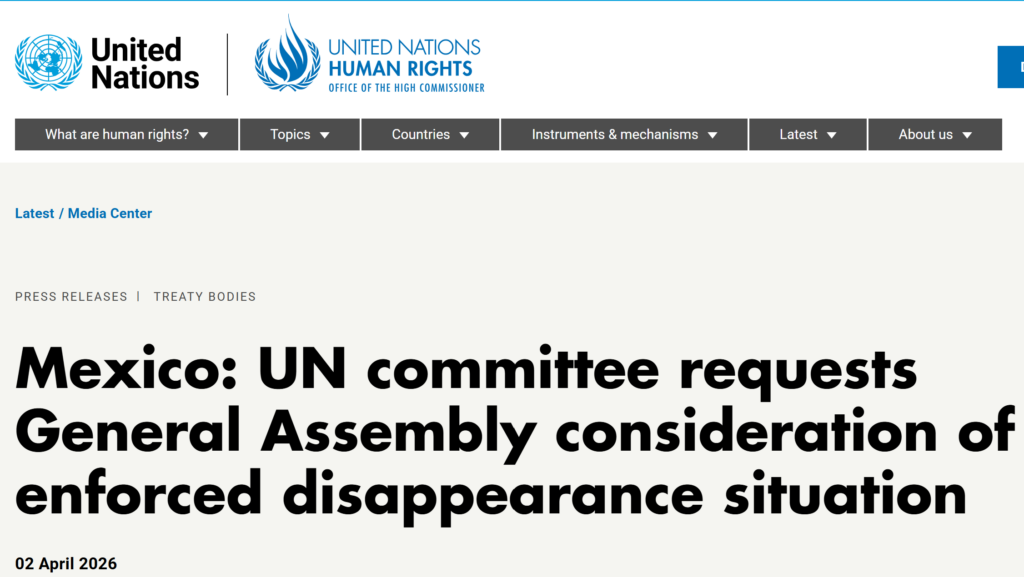
On April 3, the United Nations Committee on Enforced Disappearances (CED) requested—based on Article 34 of the relevant Convention—that the United Nations Secretary-General refer the case of disappearances in Mexico to the General Assembly. This Committee has been following our case—as highlighted by José Ramón Cossío Díaz—with systematic visits and reports since at least 2012. Much of the information gathered by the Committee comes from Mexican civil society. But it also includes data collected by the Mexican government itself. Pascal Beltrán del Río pointed this out yesterday: despite the absurd attempt to whitewash the situation, the figures are horrifying—more than 70,000 unidentified bodies. The worsening situation is a horror; every report shows it.
Under Calderón, the average number of daily disappearances was 7.8; under AMLO, it rose to 24.6; Sheinbaum’s average is now 40. The National Registry of Missing Persons shows a 74% increase under the current administration.

The reactions of the government (SRE-Segob) and the National Human Rights Commission (CNDH) were shameful. The CED does not blame one government or another. It does, however, point out that Mexican society is experiencing a widespread and systematic attack by criminal groups and officials who provide “support or acquiescence.” For this reason, it calls for “mobilizing attention” and providing technical assistance, such as forensic experts. It is a great opportunity.

But the government sees only interference and biased information. Paranoia and procrastination. P and P.

Further Reading: