

Federico Reyes Heroles
“Nothing frightens man more than being touched by the unknown,” the opening line of a work that revolutionized philosophy and the social sciences in the 1960s: Crowds and Power. Elias Canetti would spend more than ten years writing it. Not content with that endeavor, he would simultaneously write a wonderful book of aphorisms titled The Province of Man. But why did Crowds and Power shake up the world of ideas? Armed with a powerful arsenal for analyzing human behavior—think of Max Weber or Sigmund Freud—Canetti would uncover a facet of human nature that had been off the radar: the radical transformation of individuals when they find themselves swept up by the crowd. While on the one hand, we loathe being touched by the unknown, on the other, exploding into a crowd implies an implosion of our personality. The crowd allows us to be someone else.
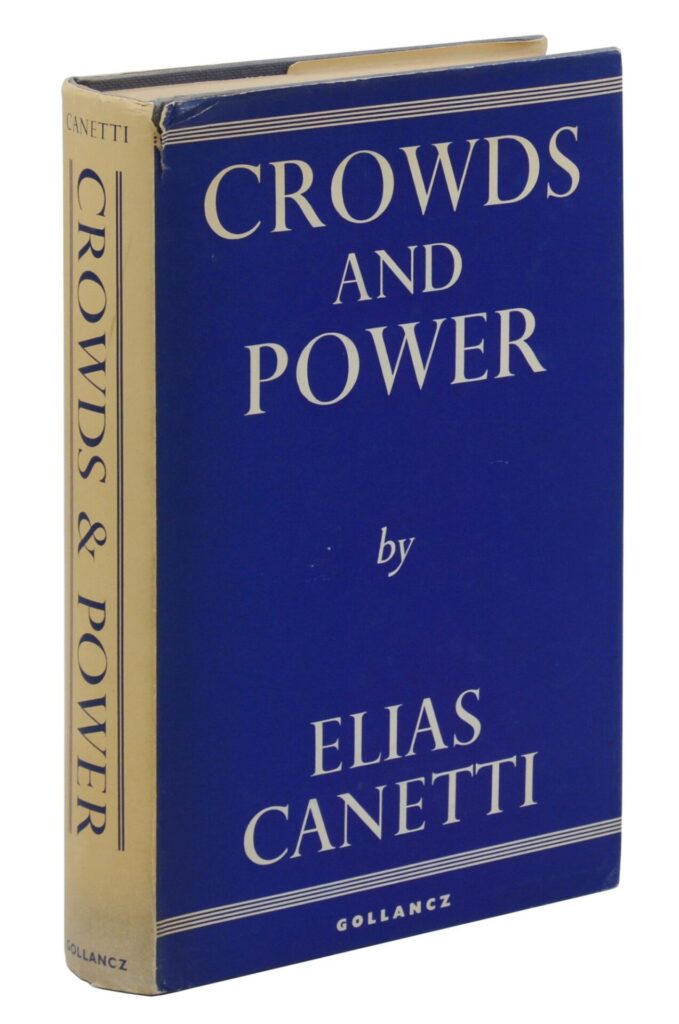
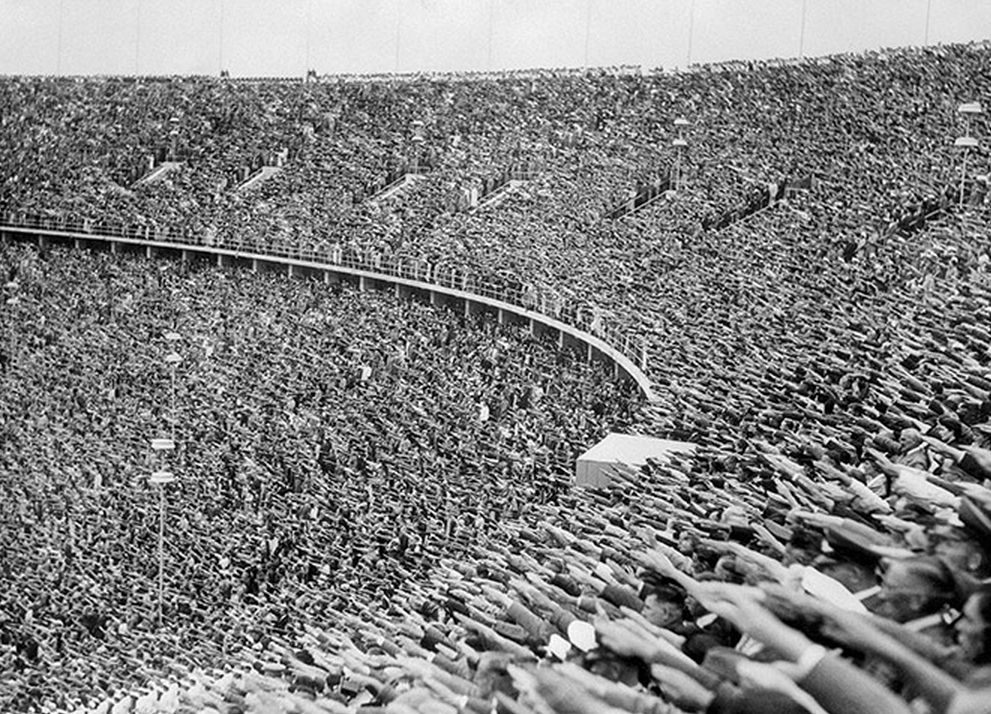
The Bulgarian-born, multilingual writer, awarded the Nobel Prize in Literature in 1981, developed an anthropological, ethnological, psychological, and even mythical approach in Crowds and Power. In the crowd, we all explode and implode, but each crowd has different impulses. Canetti emigrated as a child to England, then to Austria, Switzerland, and Germany, where he witnessed the rise of Nazism. The fury unleashed by the masses would leave a deep mark on him. Laura Toribio published a solid summary in Excélsior on what we now know about that fury. Science explains that “…high emotional arousal—such as that caused by the World Cup—temporarily shuts down the prefrontal cortex of fans, leading to mimetic behavior.” The Nazis’ mass rallies were an effective strategy of covert communication, which is why they held them systematically, just as Mussolini and Franco did. The euphoria or frustration of a Mexican national team match doesn’t stay in the stands or on social media—says Laura Toribio—it also alters brain function, especially in the areas responsible for impulse control and decision-making. In the words of researcher Hugo Sánchez Castillo, from the UNAM School of Psychology, the effect is directly on the behavior of individuals who are no longer just individuals—they become part of the crowd. Collective “over-identification” diminishes individuality and encourages behaviors that, under normal circumstances, would be socially inhibited.
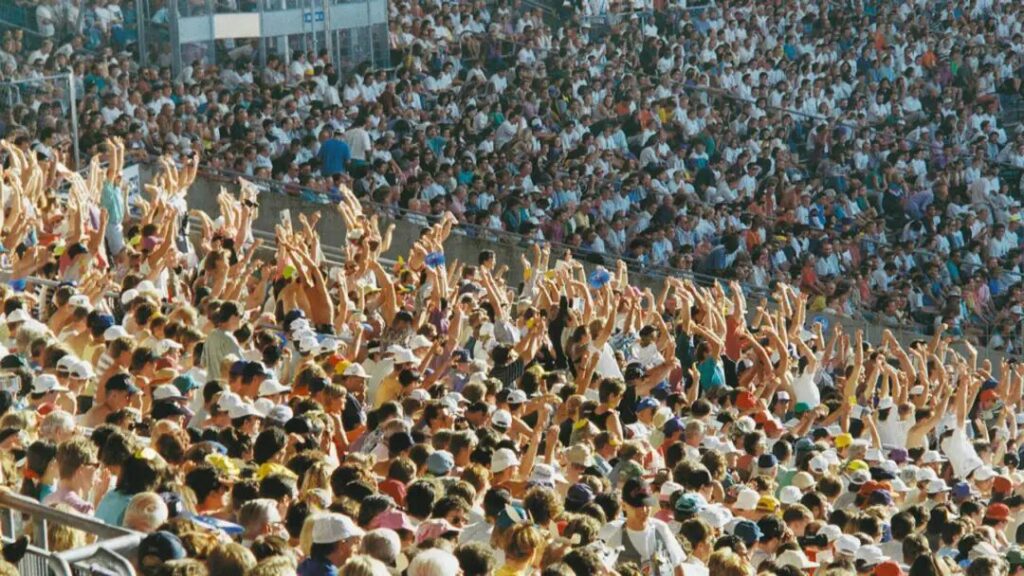
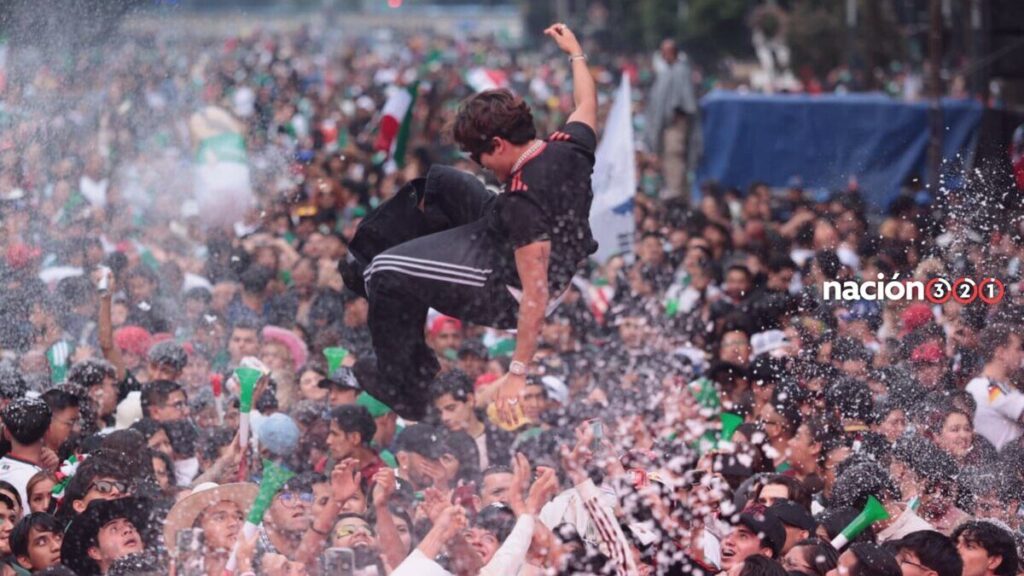
Synchronized collective behaviors emerge—the “wave,” similar attire, and reactions in unison—“Gooooool!”—A momentary sense of solidarity arises, a frenzy that can lead to aggressive behavior. On Wednesday the 24th, I attended our national team’s match against the Czech Republic. From the walk leading up to the stadium entrance, the mockery of authority was evident: people were dousing themselves with tequila. During the match, the verbal abuse was not only vulgar but also futile, as individual shouts did not carry beyond one’s own section or box.
No one was safe; a relative of one of the national team players, surrounded by children, was injured when a beer glass was thrown at him. Groping of women was part of the spectacle. At the El Ángel monument, such incidents became frequent. The Secretariat of Public Safety reported 26 arrests and five people hospitalized. In addition, a man was arrested with about a hundred doses of narcotics. The Mexican Red Cross reported providing medical care to around 800 people, in addition to transporting patients and conducting an 18-hour prevention operation. The prohibition on alcohol was ignored; people openly brought alcohol into the area in defiance of the authorities.
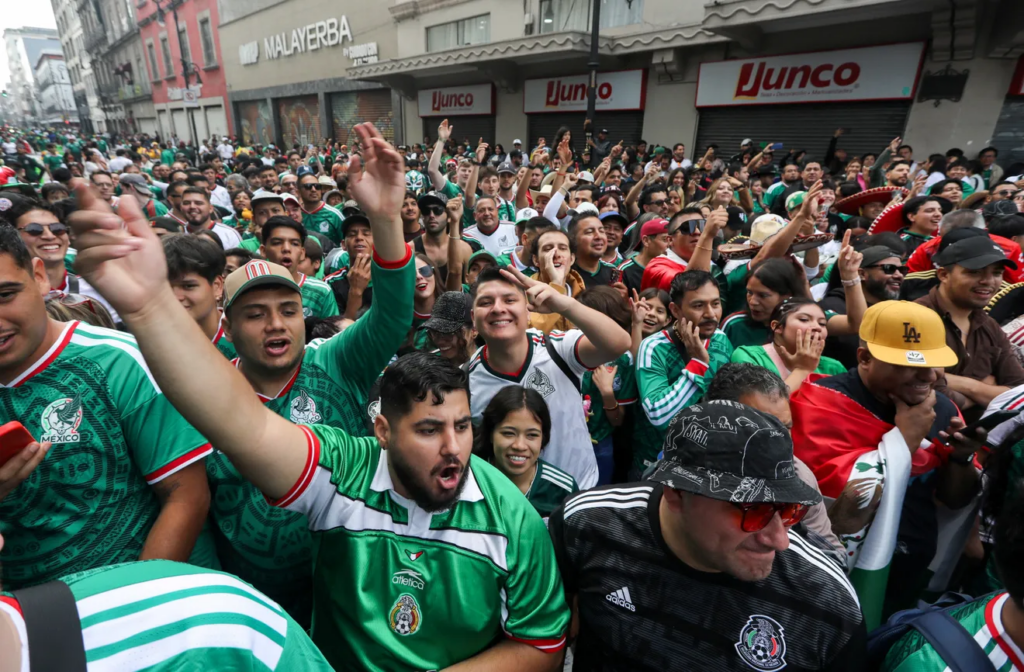
That, on top of cell phone thefts and mountains of trash. The revelry lasted until seven in the morning. In Cabo San Lucas, the “celebrations” led to a mass hit-and-run incident that left 17 people injured. The driver claimed he was surrounded by people who were blocking his path and hitting his car. He ended up covered in blood.


Mexico’s implosion is fueled by hatred toward Mexicans themselves, by selfishness disguised as nationalism. Civility is proudly trampled underfoot.
How terrifying!
Further Reading: