
Federico Reyes Heroles
To Ulises Schmill, a man of great intellect and heart.
Eight charts. Conclusion: “Down the drain,” said an economist friend.
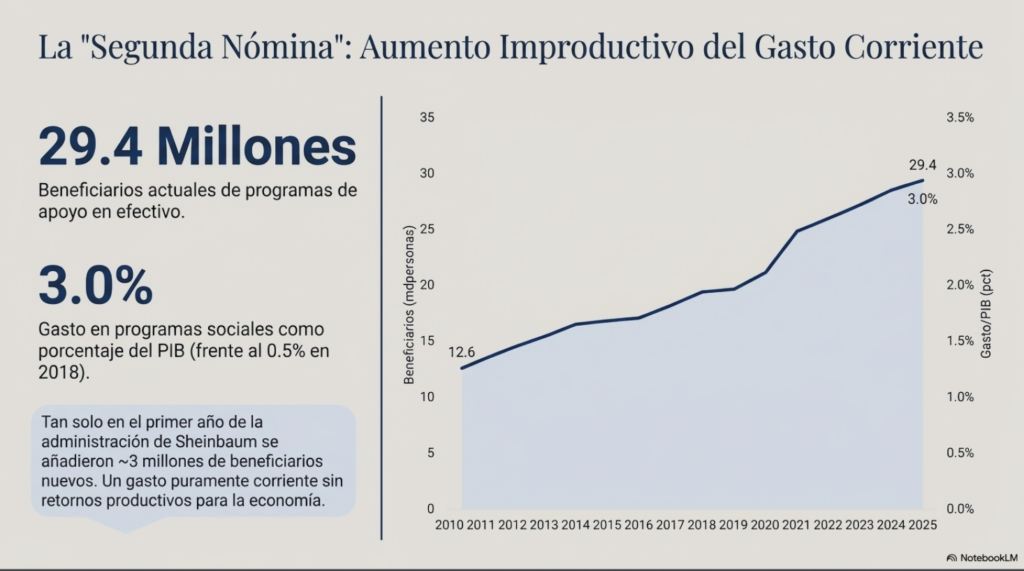
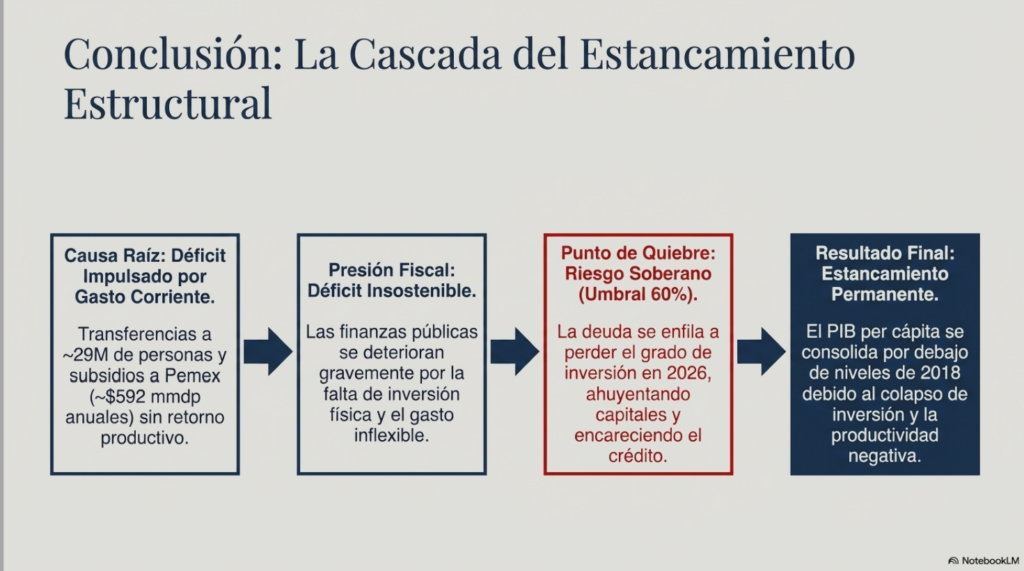
“Current spending has increased, mainly due to the ‘second round’ of cash assistance to 29.4 million people. In Claudia Sheimbaum Pardo’s first year alone, 3 million new beneficiaries were added. Subsidies and welfare spending rose from 0.5% of GDP in 2018 to 3% of GDP.”
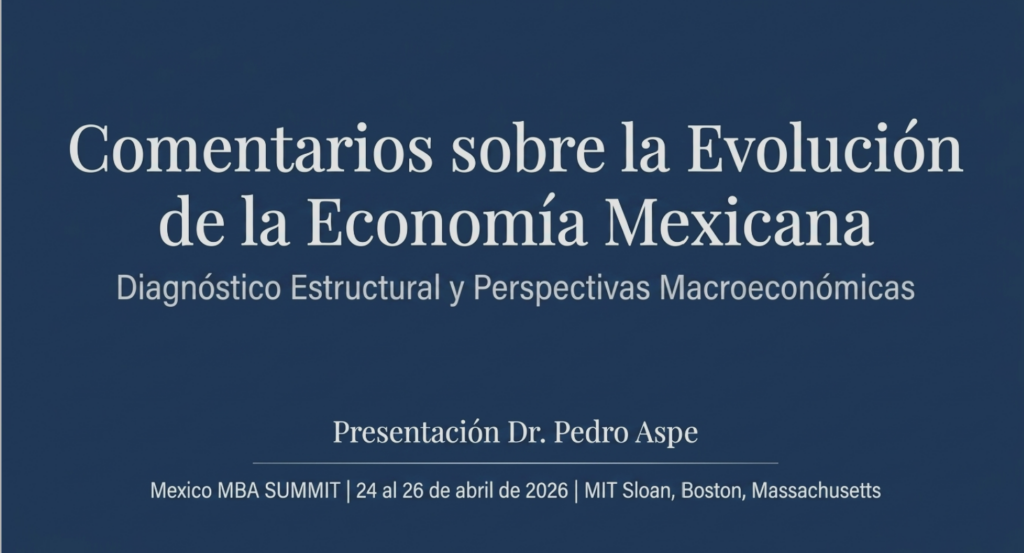
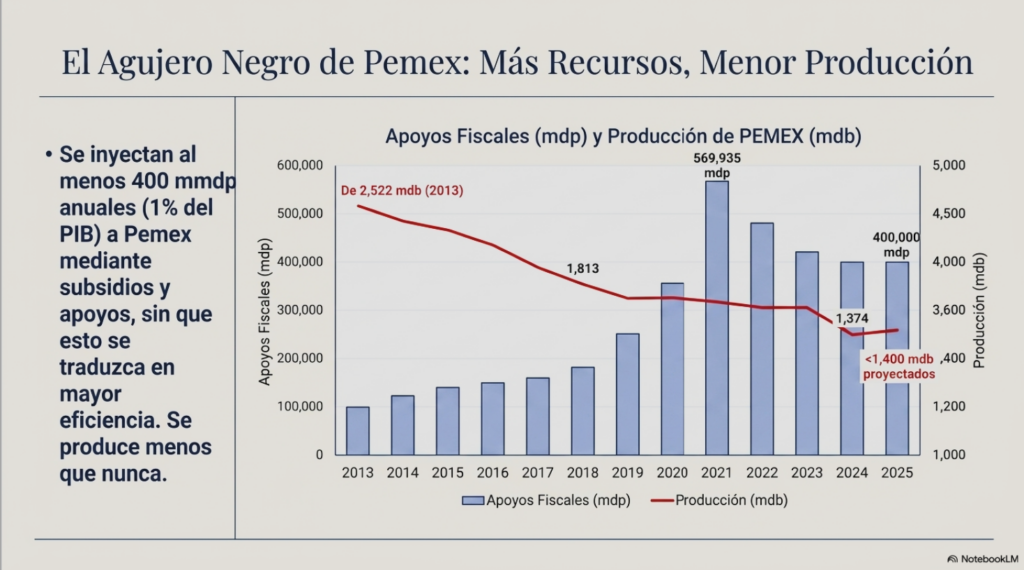
“Support and subsidies to Pemex, at least 400 billion pesos annually (1% of annual GDP) without… increased production or efficiency.” The author, who holds a Ph.D. in economics from MIT, returned to Boston to present his slides. Without any inflammatory intent, but with realism, he let the numbers speak for themselves. Title: Comments on the Evolution of the Mexican Economy. He could have called it On the Brink of the Precipice. That’s not his style. The issues he addresses are based on official information and have long been discussed in many forums. There are no surprises. But the government’s arrogance is such that it seems they don’t even read the front-page headlines. They listen only to themselves and think the “morning press conference” routine is enough to keep Mexico in the dark.
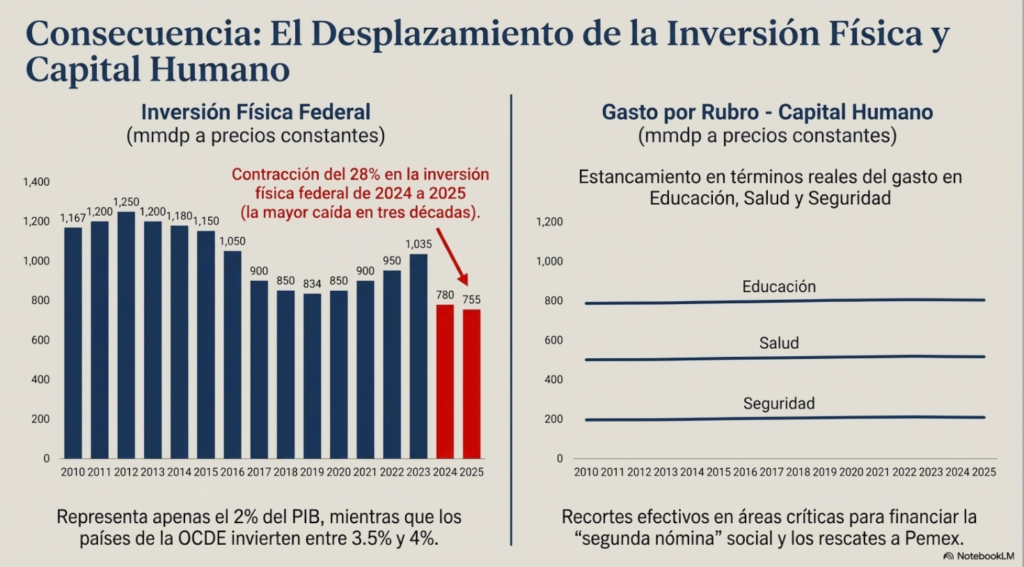
The cash handouts to tens of millions and subsidies with many zeros for Pemex and CFE come at a cost: the decline in federal physical investment, which “contracted by 28% from 2024 to 2025, its sharpest drop in three decades… public investment that represents 2% of GDP, while in other OECD countries it ranges from 3.5% to 4%.” At the same time: “Spending on education, health, and security has stagnated in real terms, with effective cuts to fund social programs, pensions, and Pemex.” Those are the real priorities. The poor first?
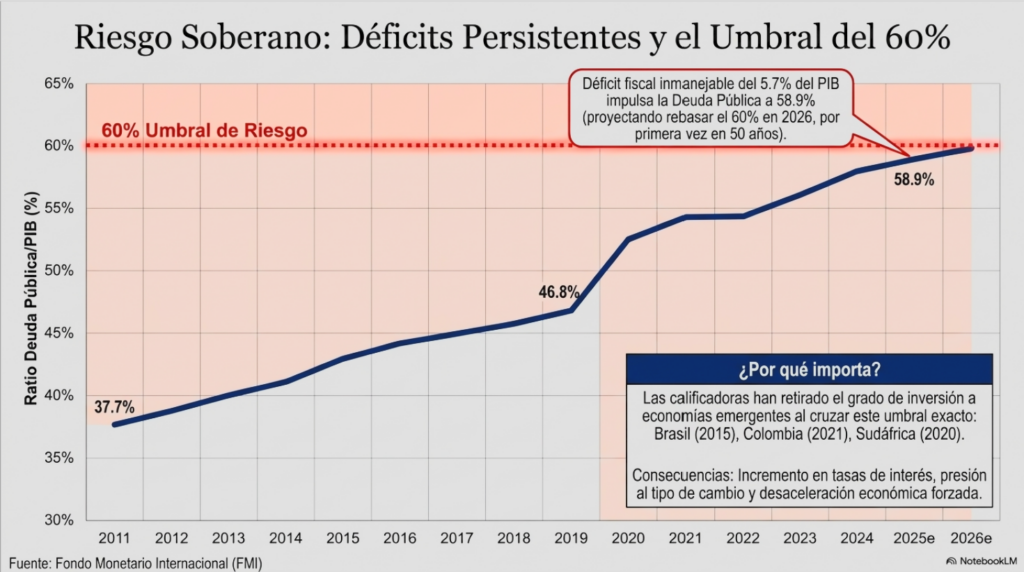
Pedro continues his analysis calmly: “Persistent deficits (social programs and investments with no return, such as Dos Bocas and the Maya Train) have raised public debt to 58.9% of GDP. By 2026, it is projected to exceed 60%, the first time in 50 years.” You read that correctly. Side note: “Rating agencies have downgraded emerging economies to non-investment grade once they cross the 60% threshold: Brazil (2015)/ Colombia (2021)/ South Africa (2020). This increases interest rates, puts pressure on the exchange rate, and slows economic growth.” As for forecasts, S&P, Moody’s, and Fitch have warned about this ad nauseam.
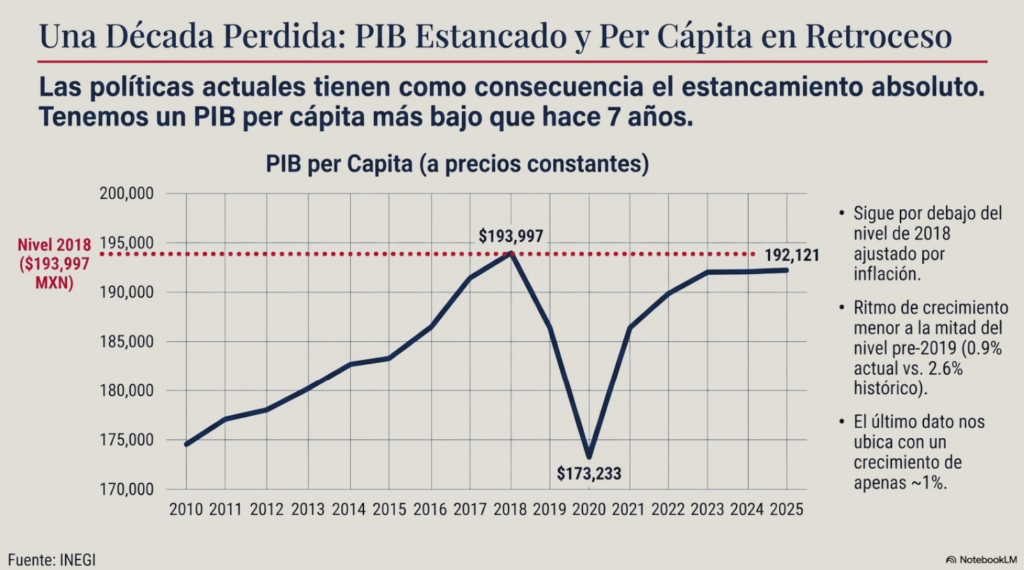
“Current policies,” Aspe continues, “are resulting in stagnation of GDP and GDP per capita. Our GDP per capita is lower than it was seven years ago, after adjusting for inflation, and remains below the 2018 level (193,997 pesos). We are growing at less than half the pace we had before 2019 (2.6% vs. 0.9%). The latest data puts us at around 1%.” Pedro Aspe asks: “Why aren’t we growing?
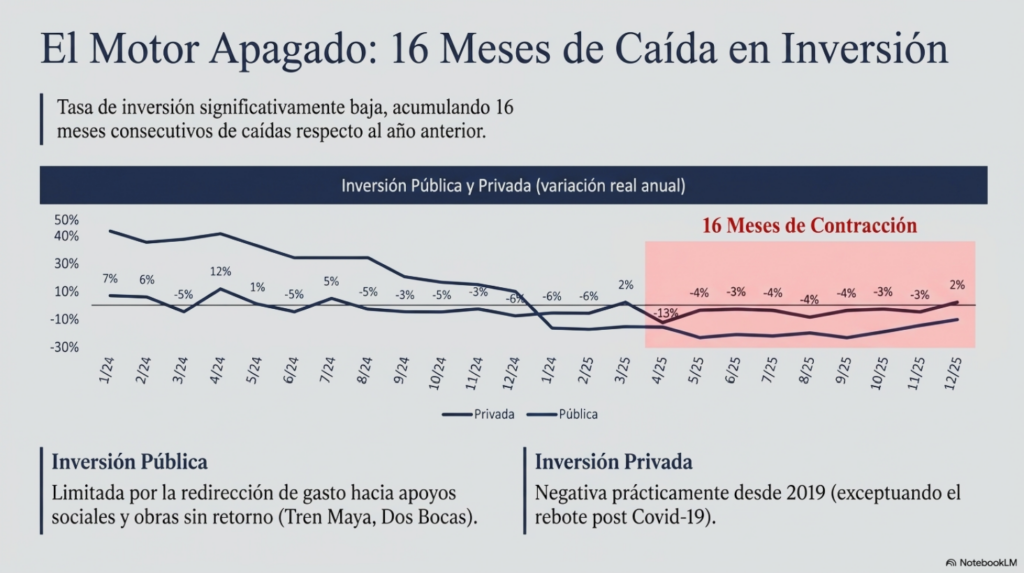
Significantly low investment rate: accumulating 16 consecutive months of declines compared to the previous year,” and adds: “Private Investment: negative practically since 2019 (except for the post-COVID-19 recovery).” But what about the photos with dozens of business leaders committing to invest? And the Mexico Plan? Manipulation and complicity.
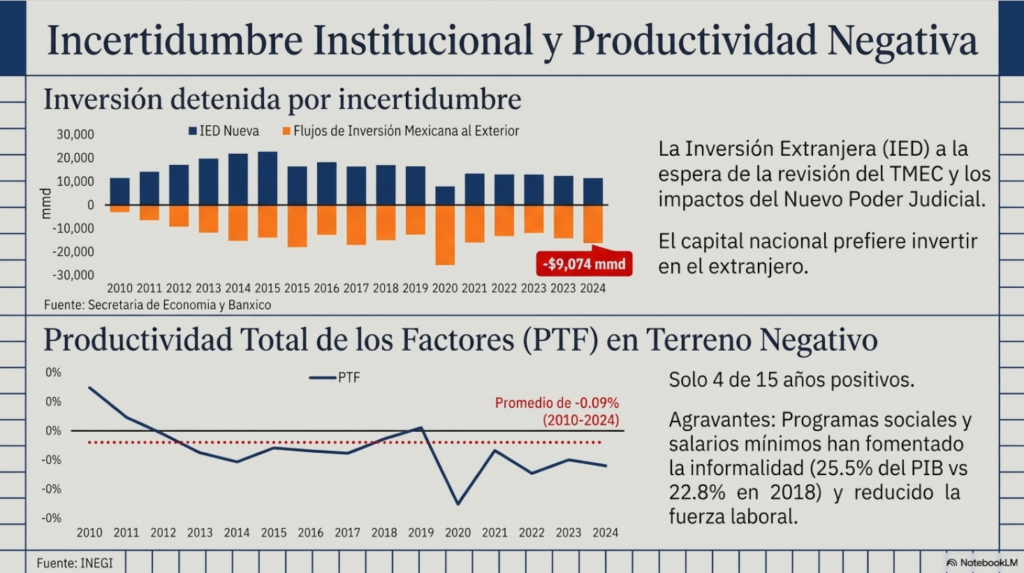
Conclusions: “Foreign and domestic investment stalled by uncertainty… Foreign investment: awaiting the USMCA and the new judiciary…” Domestic investment: “Preferring to invest abroad.” That is our reality. Furthermore, productivity “is not only low, but negative… only four out of 15 years were positive.” Social programs and the minimum wage have fueled informality (25% of GDP is already informal vs. 22.8% in 2018)…”
They’ll discredit Aspe because of that murky “neoliberal” past. It’s part of the denial of everything: figures, horrors in Guerrero, Michoacán, Morelos, Sinaloa—half the country.
Better to pay attention to Bono, Shakira, and BTS and invent traitors to the nation, without even reading the Constitution.

There has always been poverty. But now we are becoming impoverished out of stubbornness. They call it ideology; it’s not scientific at all. It’s predictable and avoidable.

That is new. It’s suicidal.

Further Reading: