
Federico Reyes Heroles
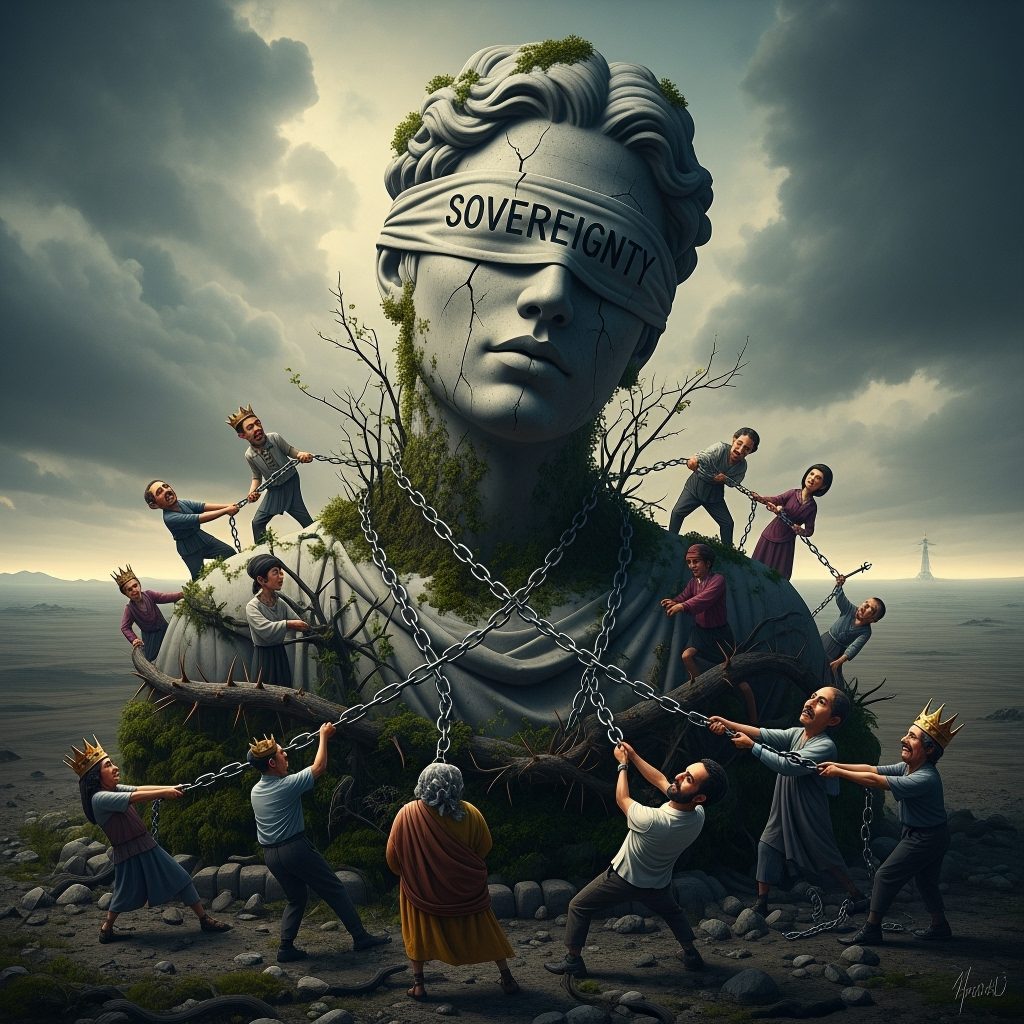
“Absolute, perpetual, indivisible, inalienable, and imprescriptible”—these are the essential elements that the classics attribute to sovereignty. Let’s be realistic: these are conceptual constructs, an ideal that has never existed. Even the great powers, the leaders of empires, faced restrictions at the height of their power. Sovereignty is not an absolute: from the Roman Empire to the United Kingdom of the 19th century and to the United States in the 20th and 21st centuries. Let us leave philosophical fantasy behind and engage with reality.

The title page of the first edition—1651—of Thomas Hobbes’s *Leviathan* is famous. The great sovereign, whose crown extends beyond the frame of the print, holding a sword in his right hand and a pastoral staff in his left, is supported by ten small panels, five bearing symbols of civil power and five of religious power. But perhaps most notable is that the sovereign’s entire body is composed of small human figures. Sovereignty thus arises from the strength that only civic unity can achieve. That is the essence.

In the 20th century, especially after World War II, with the creation of the United Nations and all its branches in health, education, human rights, atomic arms control, and many others, the mythical sovereignty has entered a new era. Conflicts between states are channeled through the International Court of Justice or, in the case of individuals, through the International Criminal Court. Even wars are regulated today. The slow advance of human rights has confronted discrimination, customs and traditions, and racism—which remains prevalent in many places—offering a painful account of the distortions and atrocities that have been shielded behind the banner of sovereignty.
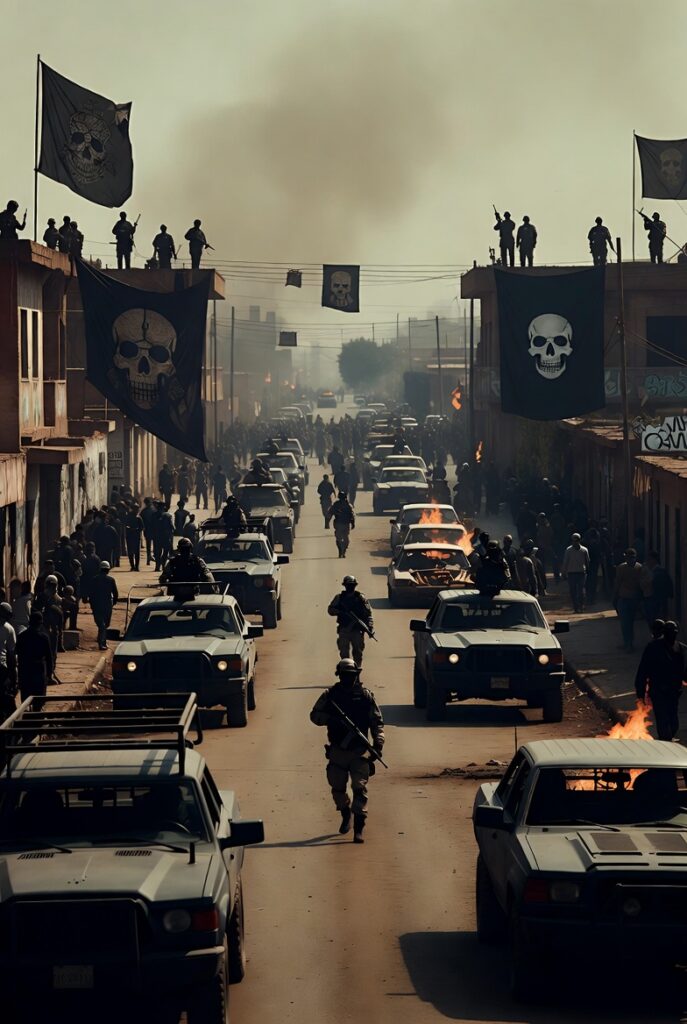
But there are very specific issues that distinguish the degrees of sovereignty. Perhaps the most obvious example is that of security and impunity. If a government is unable to guarantee the security and physical integrity of its citizens, if criminals emerge victorious from their misdeeds, then we are dealing with a weak state. In Mexico, around 90% of crimes go unpunished. In Germany, it is less than 1 percent. Which country is more sovereign? There is structural impunity. The figure varies, but around 40% of the national territory is under the control of organized crime, whose activities have diversified significantly: extortion is everywhere.
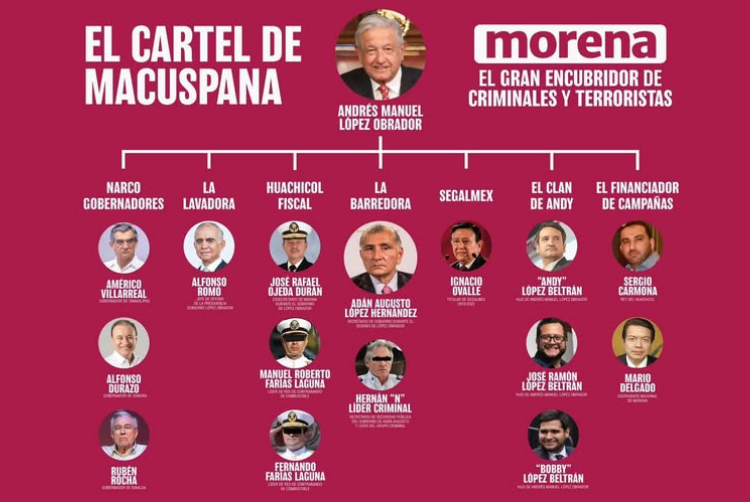
This is nothing new; we have known about it for five decades. Administrations from different parties have been unable to stem the tide. What is alarming, however, is the degree to which organized crime has penetrated the ruling class. The case of Rocha Moya and his network of accomplices points to vote-buying and the purchase of candidacies, threats, and extortion that have been on display since the 2021 election. What’s new? That is why it is astonishing and suicidal that the President has invoked imperial ambitions as a threat to our sovereignty and an attack on her movement. This is how she defends her tribe, in which many are involved with drug trafficking. She knows this. She demands evidence, but, of course, she promotes prosecutorial absolutism: jail without evidence.
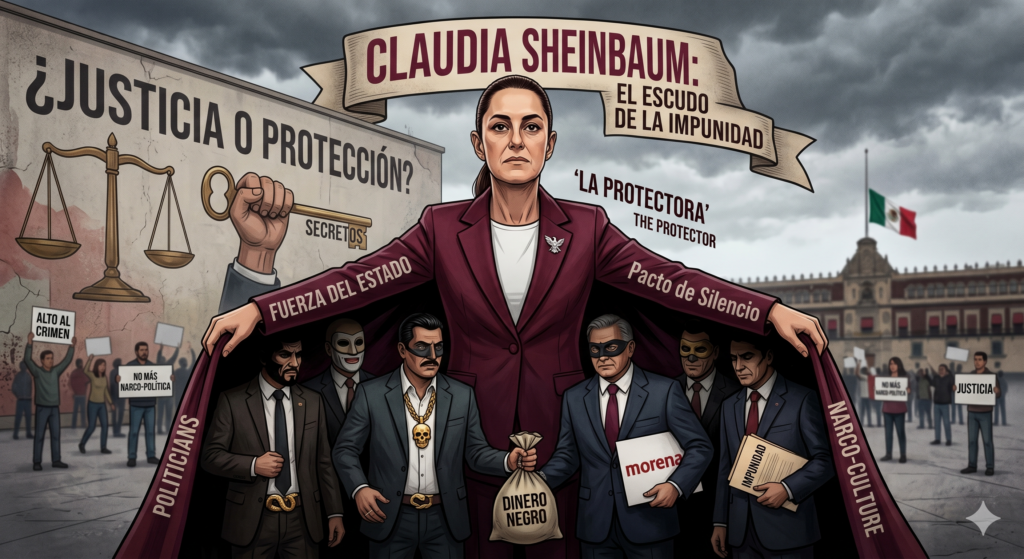
But for her, this could be a great opportunity for redefinition: to bury the figure ostensibly manipulated by the former president and many of his associates involved in crime, and to adopt a vision of State. With the information our northern neighbors possess, revelations could come in a cascade. Sheinbaum must be on the right side, without a shadow of a doubt. That would truly be defending sovereignty, as would investing more in local police forces, training, equipment, and the administration of justice. The disparity is an affront: Pemex lost 46 billion pesos in the first quarter, roughly half of the total security spending during that period. The true and greatest threat to sovereignty is organized crime.
No more demagoguery.

Further Reading: