

Antonio Navalón
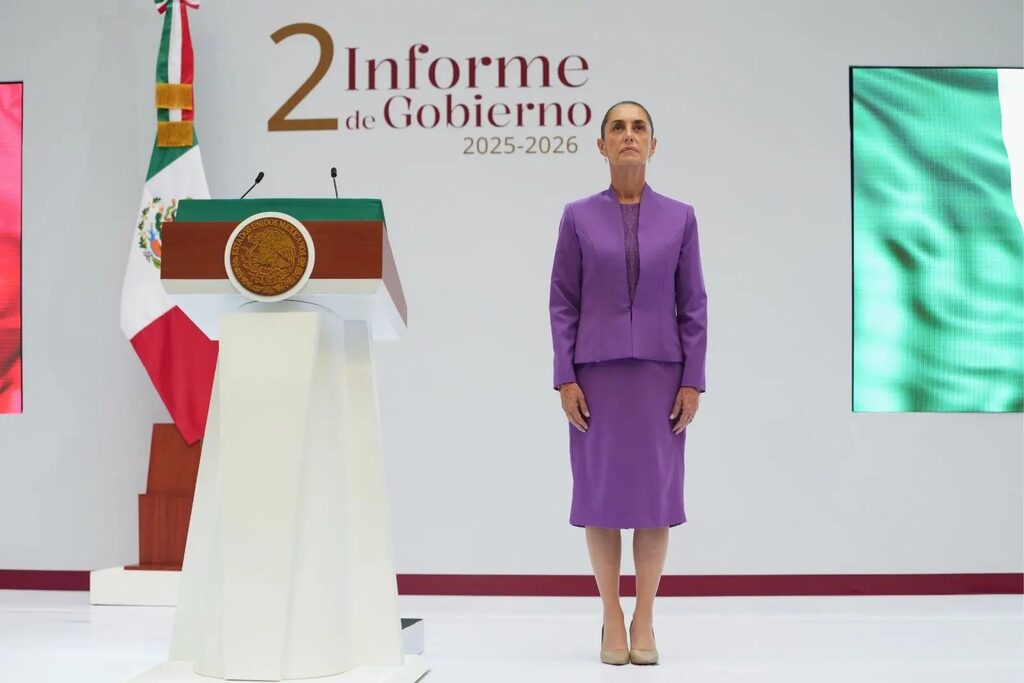
President Claudia Sheinbaum’s Second State of the Nation Address, delivered on September 1, was very revealing. But not so much for what she said, nor even for what she chose not to say; it was revealing because of its confessional nature, what it revealed about the true sentiments of the person who holds the country’s highest political office, and how the President understands power today.
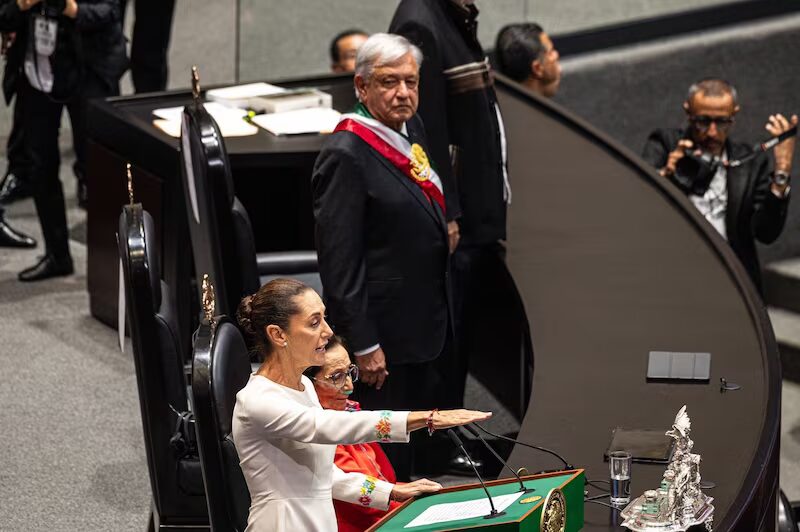
I want to start with something highlighted in various analyses of the speech. This time, she placed her mentor, boss, and—at heart—political creator, Andrés Manuel López Obrador, less at the center. His name came up, for example, when discussing the permanent hiring of teachers, and his legacy was present throughout the entire defense of the Fourth Transformation. But Sheinbaum avoided turning the report into yet another ceremony of personal subservience. Whether it was her own decision or the advice of someone close to her, it was a display of political intelligence.

One of the main criticisms the President has been facing does not stem from her feeling like she is part of the 4T. She is fully within her rights to do so. The problem lies in the insistence with which she asserts continuity and presents herself as the consolidator of that project. The more she insists on this, the more she also becomes a central figure—and almost politically jointly responsible—for the mistakes made by the person who created the Fourth Transformation.
Now, the fact that the word “corruption” did not appear even once in the oral delivery of the Second Report—given everything that is happening in the corridors of power—is not merely an insult to intelligence. It is an extremely serious political signal. The President did speak of “integrity,” “honesty,” and “republican austerity.” On this point, an important clarification is necessary: the written document submitted to Congress does address the fight against corruption—that is, the issue exists in the bureaucratic record. What was missing, however, was any mention of it in the President’s political address to the nation. And that difference matters.
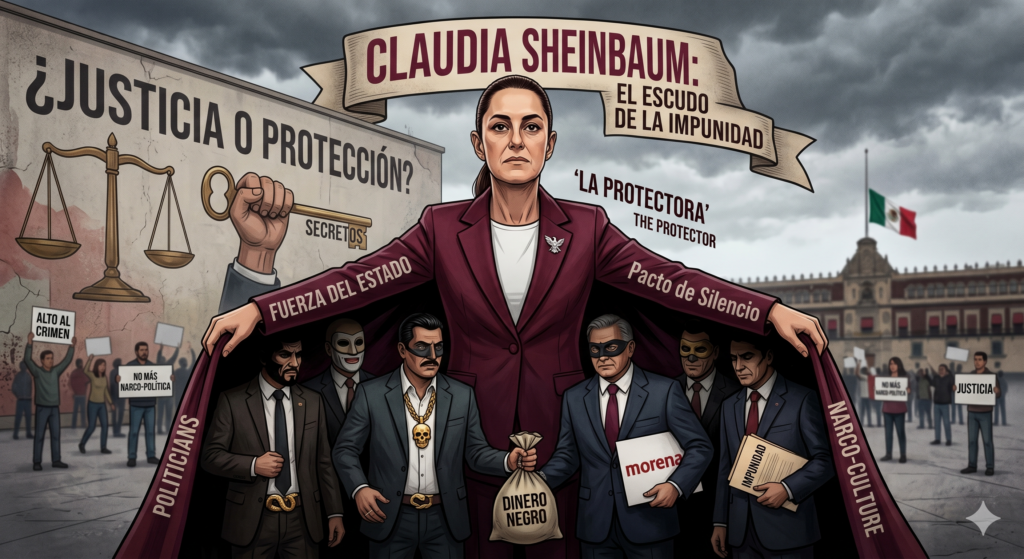
A written report is a technical accountability document. A presidential address is a political selection. It is the decision of what to focus on, what to name, what to present to the nation—and also what to leave out.
Could it be that reality does not fit into the mind of the person who holds the country’s highest executive office? Could it be that we are facing a problem of political perception—a decision not to look at what makes one uncomfortable? Could it be that she, like other presidents—even with a political record that in many respects may be more favorable than that of her predecessor—is also practicing that old “I neither see nor hear them” approach of Carlos Salinas de Gortari? Could it be that she belongs to those who believe that, by dint of denying a problem, the problem disappears? Because even to fight, even to hate, even to rise and wage a battle, one must know the enemy well. And, first and foremost, acknowledge that the enemy exists.
Even in the PRI of the “perfect dictatorship”—the phrase Mario Vargas Llosa used in 1990 to describe the Mexican political system dominated for decades by a hegemonic party—there were limits, and there were purges. These were not necessarily democratic limits or exemplary mechanisms of justice. In many cases, they were mechanisms for the system’s own survival. When someone crossed certain lines—whether on their own, for the sake of their children or siblings, or simply because greed drove them to steal not only more but in an increasingly reckless manner—they fell. They disappeared from the political scene. And when the scandal reached another level, figures within the system itself ended up in prison. Someone, somewhere, took action. Not necessarily out of virtue. Often, simply because the regime understood that protecting one of its own indefinitely could endanger everyone.
In the speech the other day, however, there were no corrupt officials, no one to hold accountable, no remorse—and, therefore, no need for forgiveness. Because what does not exist cannot be forgiven.
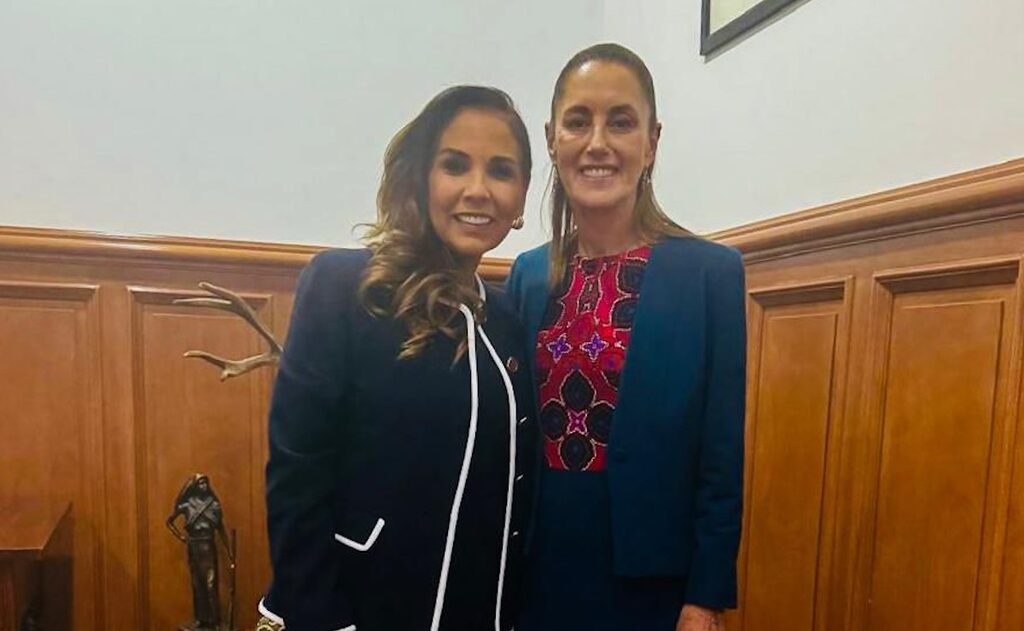
Meanwhile, within her own party, Morena’s national president, Ariadna Montiel, had no choice but to speak out and state the obvious. When questioned about the private flights attributed to Quintana Roo Governor Mara Lezama, she maintained that such behavior is inconsistent with the movement’s principles of austerity and that the governor will have to explain them. Here, too, we must be precise. Journalistic investigations have documented dozens of private flights taken by Lezama and members of her inner circle since her time as mayor of Cancún and throughout her term as governor. A calculation based on 69 of those flights estimated a cost of nearly 20 million pesos. Explanations are needed—not silence. Neither aesthetically nor ethically is it tolerable for the leader who simultaneously holds the office of head of State and head of the Executive Branch to speak of austerity, humility, and honesty without directly addressing the word “corruption” when that very debate exists within the very movement that governs Mexico.
Because the foremost obligation of the head of the executive branch is to do and change whatever is necessary so that, when there are indications and evidence of a crime, an investigation is conducted; so that, when appropriate, a case is brought before a judge; and so that, if liability is established, a sentence is handed down. That is what prosecutors’ offices, judges, and courts are for. This is not about demanding imprisonment based on a news article or replacing justice with political lynching. That would be the exact opposite of the rule of law. It is about ensuring that the accused’s partisan affiliation does not determine the speed of an investigation, the severity of an indictment, or the government’s willingness to hold people accountable.

That is why another point must also be clarified. It cannot be presented as fact that high-security prisons, including Altiplano, are reserved exclusively for the political enemies of the Fourth Transformation. They are not. There are individuals there who have been indicted and sentenced for organized crime and other federal offenses, in addition to politicians, businesspeople, former officials, and high-ranking figures linked to various investigations.
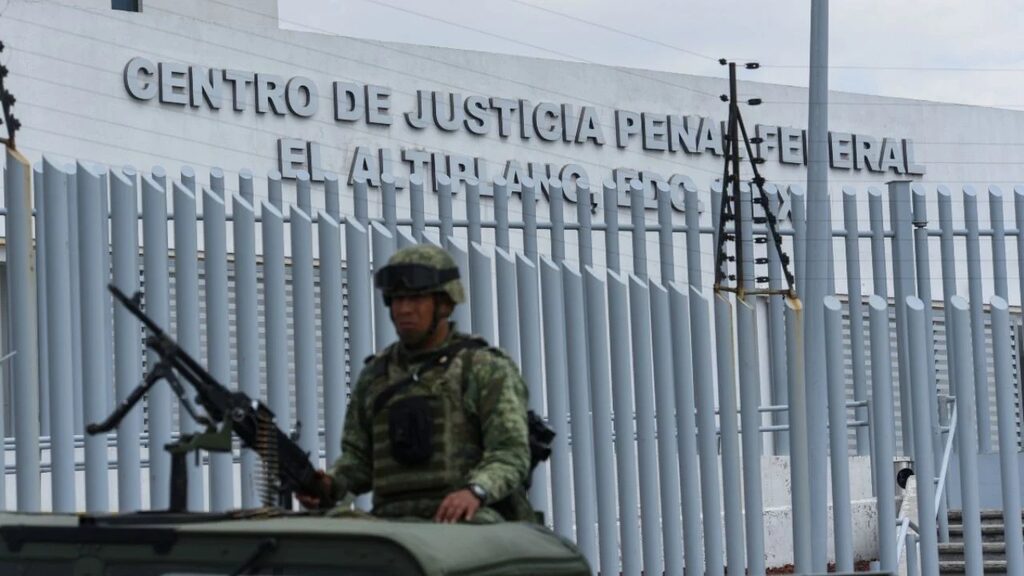
But that does not eliminate the underlying problem. The real danger arises when the perception takes hold that the State acts with immediate force when the accused is standing right in front of it, yet much more cautiously when the scandal originates within the regime itself. The “Altiplano treatment,” so to speak, cannot depend on one’s political preference or ideology that led them there in the first place. And it is to be hoped—or at least assumed—that this situation will not last forever. Not because I harbor any spirit of revenge. That’s not my place; I don’t have that mindset. I wasn’t fortunate enough to be in that position, and perhaps that’s why I never considered pursuing a political career in Morena. It’s because, sooner rather than later, even those who have committed crimes within Morena will have to answer for their actions. And if the evidence exists and the judges so determine, they, too, will have to experience daily life in high-security prisons.
Justice is only justice when it can work both ways. It is very difficult to govern when respect is lost. Ever since the Romans, there has been a clear difference between exercising power and having authority. Power is granted by office; authority, on the other hand, is built on legitimacy, balance, and recognition. And when that happens, power runs the risk of becoming a savage force. A power that is no longer grounded in legitimacy, but in the ability to impose. Ultimately, it comes down to who has the biggest gun.
In this sense, to have authority, it is not enough to simply possess power. It must be exercised with a sense of justice, balance, and consistency—qualities that, at least in this Second Report, we were unable to discern.
Further Reading: