
Ricardo Pascoe Pierce
Morena has already fallen into the trap of its own success. The question of how it rose to the highest echelons of power in Mexico so quickly has now been answered. It allied itself with the oldest and most entrenched structure in the country: drug trafficking. The CEO of that agreement is Andrés Manuel López Obrador. He legitimized it by allowing Morena’s municipal, state, and national structures to enter into specific agreements with local criminal groups. The 2021 election was a feast and a waste of economic resources and agreements in which criminals were integrated into state structures, perpetuating their ability to operate across all sectors. The party has become a cartel, and it can no longer stop operating as one.
Those who think the president will be able to cover her back, giving the 4T government an appearance of respectability and decency, are mistaken. She must ultimately fulfill the mandate—and the legacy—that López Obrador saddled her with. And she has no choice, because that is where the only power lies that keeps her in the position she holds. If she attempts to break with that cursed legacy, she will inevitably fall.
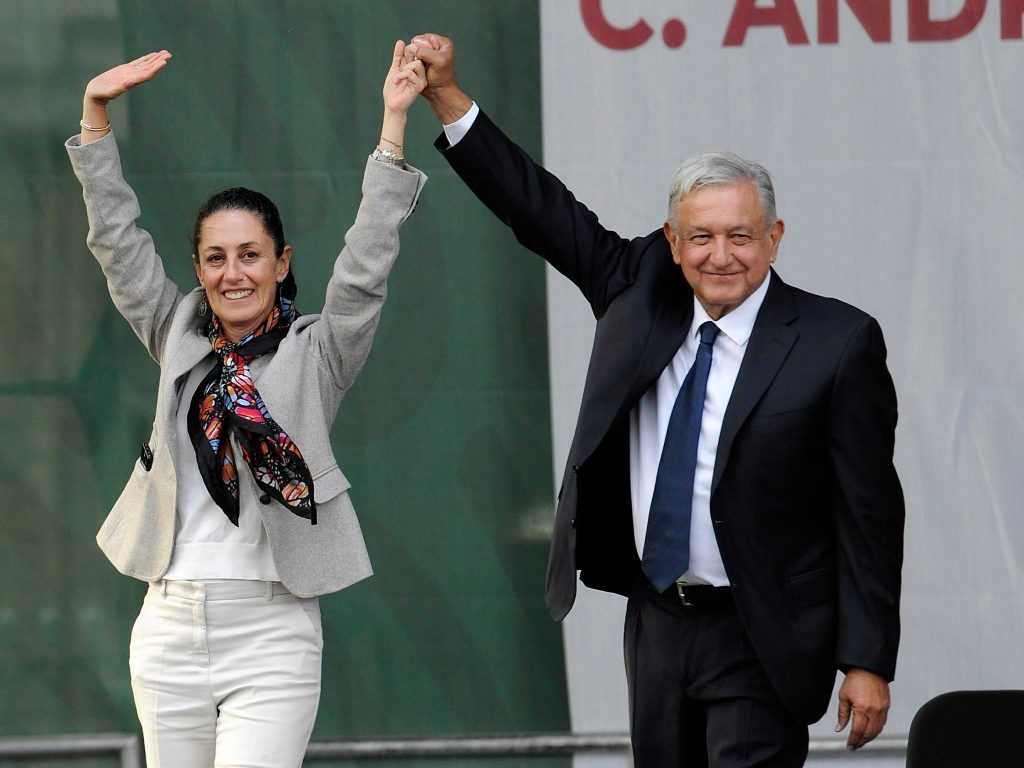
She knows this. She has always been aware of the dark side of her power. She is not naive. She knows she won the presidency with the backing of that dark side. The argument that Morena and the president won in 2024 thanks to the support of beneficiaries of social programs has been thoroughly discredited.
In the two special elections—both the 2022 recall of López Obrador’s mandate and the 2025 judicial election—participation by beneficiaries was meager and lackluster. It proved that their mobilization did not win an election. In the first election, 15 million voted for López Obrador, and in the second, for judges, 13 million voted. Those numbers neither guarantee nor win elections. In reality, those electoral exercises served to confirm that the massive vote of beneficiaries is a myth used to cover up the “other” methods Morena employs to win elections. Notably prominent among these “other” methods is its alliance with organized crime cartels scattered throughout the national territory.
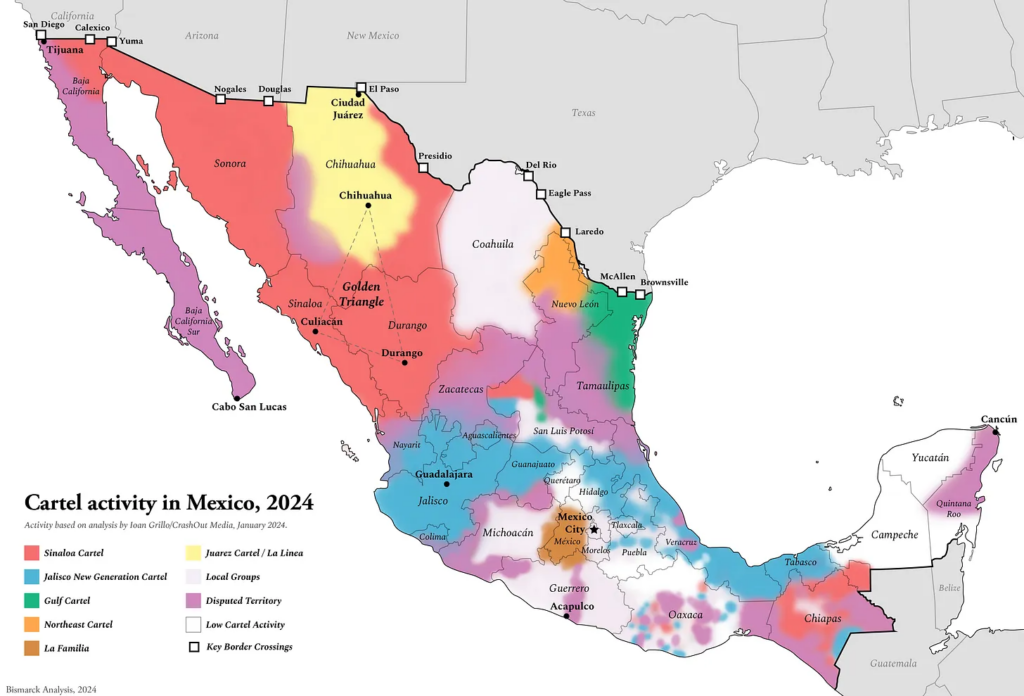
When that alliance with drug trafficking comes under scrutiny, as is currently the case, the country’s political conditions immediately change radically. Under the political conditions before the U.S. indictments of Rocha Moya and nine co-defendants, polls showing the president’s popularity at 70% to 80% seemed credible. But with the indictments, the social mood has shifted radically. It is as if the veil covering the country’s eyes had been lifted. At last, it could see things clearly. The truths are coming to light, and the lies are being exposed.

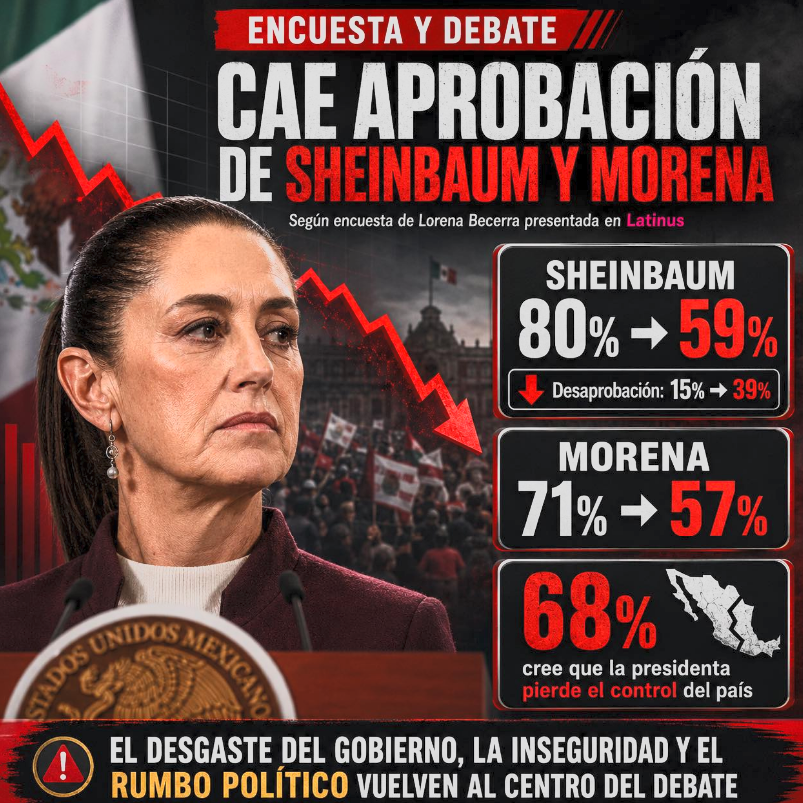
Amid the national upheaval, Lorena Becerra conducted a nationwide in-home survey of 800 valid interviews with individuals aged 18 and older who hold voter registration cards, using electoral districts as sampling units in accordance with INE criteria. It is a technically flawless survey. 68% of respondents said the president has lost control of the country. 28% believe she retains control. In March 2025, 80% approved of the president’s performance. By May 2026, her approval rating had dropped to 59%. She lost 21 approval points in one year and two months. 60% believe that the Sinaloa case is a real example of Morena’s ties to organized crime. 26% believe it is a pretext to attack Morena. The 21 points the president lost can be explained largely, though not exclusively, by the fact that the Sinaloa case has opened the eyes of millions of Mexicans to the danger to Mexico posed by Morena’s alliance with drug trafficking.
Reality is gradually lifting the veil from people’s eyes, and the facts are becoming clear. The relationship between having information and a change in perception is direct and immediate. Morena has sought to hide all relevant information about its administration so that its true nature remains unknown. The dismantling of public access to information regarding government operations, budget spending, and plans is intended to hinder public awareness of Morena’s ties to organized crime.

Morena’s internal crisis has erupted and is growing. Morena’s national leadership is committed to naming its gubernatorial candidates by early June. But in the context of U.S. threats to issue more indictments against Morena members linked to drug trafficking, a troubling question arises: who among the potential gubernatorial candidates can guarantee they are not on the U.S. lists? What if the candidate to succeed Durazo in Sonora is on the list, as Durazo himself presumably is? The same can be said for the cases of Baja California, Baja California Sur, Colima, San Luis Potosí, Zacatecas, Tlaxcala, Michoacán, Guerrero, Campeche, and Quintana Roo. The same can obviously be said of Sinaloa. How many have had their visas revoked?
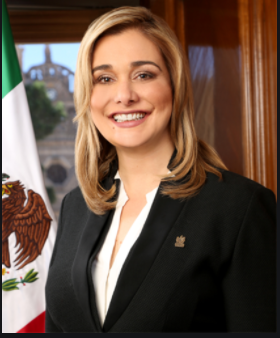
How many individuals with revoked visas will participate in the march organized by Morena against Maru Campos, the governor of Chihuahua, demanding her removal from office for having dismantled a fentanyl production facility in the state’s mountains?
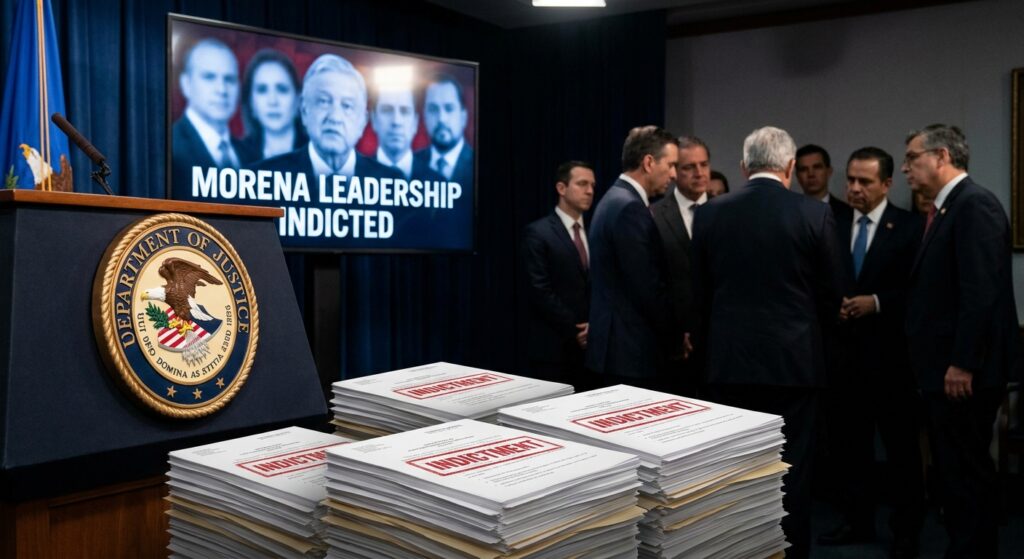
Now that two of the 10 individuals indicted by the United States have voluntarily surrendered to U.S. authorities, reality is setting in for the ruling party and the president: an indictment is a weapon of mass destruction. The findings of the Reforma poll confirm this: most Mexicans trust the U.S. justice system more than their own, the Mexican one. It is a tragedy, no doubt, but the surrender of these two indicted individuals suggests they feel safer in U.S. prisons than waiting to see who “takes them out” first: the cartel or Morena.
In most of the states governed by Morena, operatives who helped them strike deals with drug cartels in 2021—when the current governors won their elections—were slated to be the gubernatorial candidates. And they struck deals with drug cartels for key positions in the areas of security, justice, administration, and finance. Just as Rocha did in Sinaloa, those operatives, now the new governors, would have the mission of ensuring continuity of the agreements made since 2021.
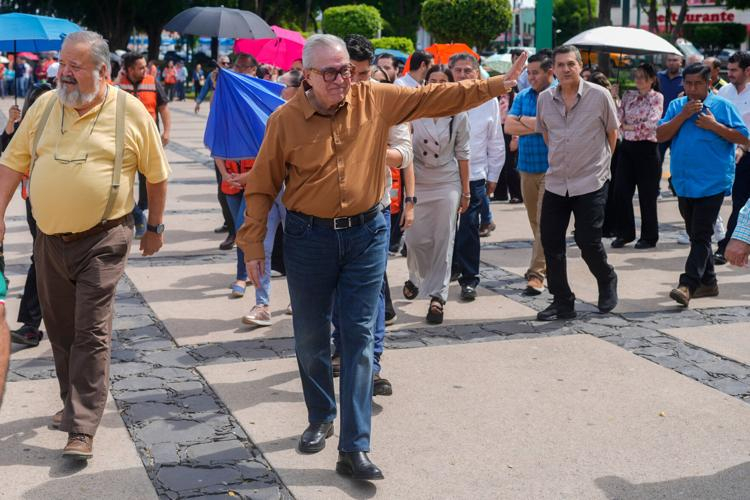
Morena was preparing for the new election, where on the surface, they would be mobilizing votes from beneficiary programs, courtesy of Ariadna Montiel. But behind the scenes would be the agreements with drug cartels and their operatives still entrenched within current state structures, with renewed pacts ready with the leadership of the criminal underworld. The Morena-drug cartel merger within state structures would be decided in the 2027 election. This explains why Morena accelerated its decision-making to avoid internal revolts among Morena factions and groups within the cartels. Early decisions, it was thought, would ensure stability and peace during the transition from one government to another. Furthermore, given the Morena-Cartel agreement, the election is considered a foregone conclusion. When it comes to an agreement between Morena and organized crime, the idea of political alternation is considered out of place and has been ruled out.

But they didn’t count on the U.S. indictments. And worse: so far, only the Sinaloa case has come to light. The rumor is that others are still pending: Sonora, Baja California, Zacatecas, Michoacán, and more. All of this completely destabilizes decision-making within the National Palace and Morena. They cannot decide on candidates without knowing who else will face U.S. indictments, so that they can rule them out of the list.
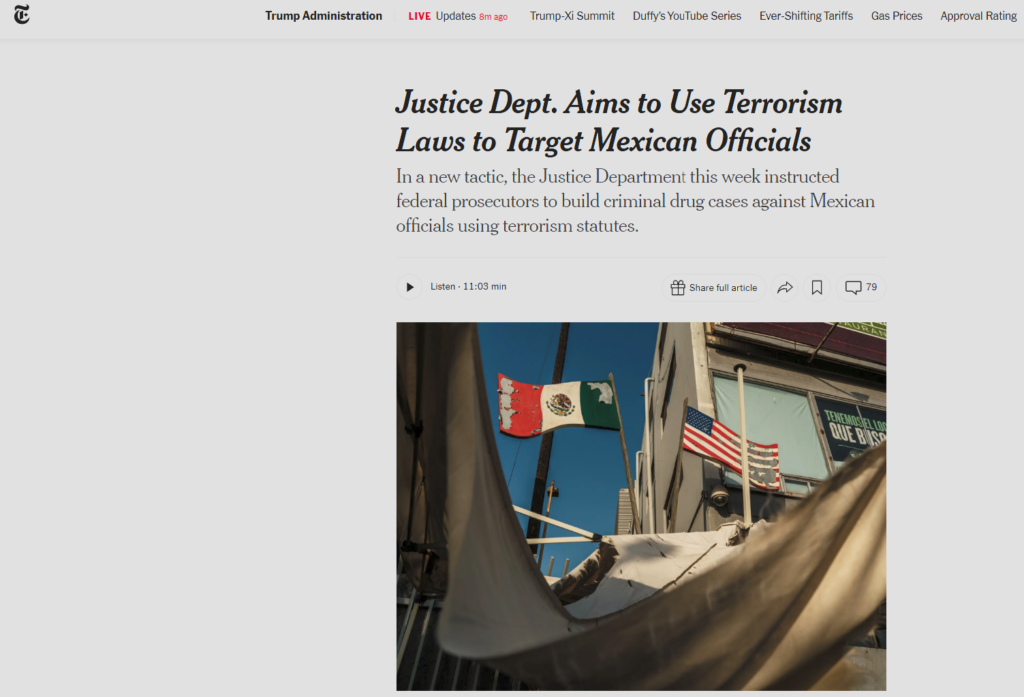
Underlying all of this is an inescapable truth: an indictment kills a candidacy. And many indictments kill a national government.
@rpascoep
Further Reading: