
Ricardo Pascoe Pierce
Despite official propaganda brimming with optimism, Mexico is under siege, both internally and externally. There are many fronts open, and many dangers as well. The ruling team is blind to reality, believing everything their propagandists tell them. And they fall into their own trap: they are the only ones who believe their own versions of reality.
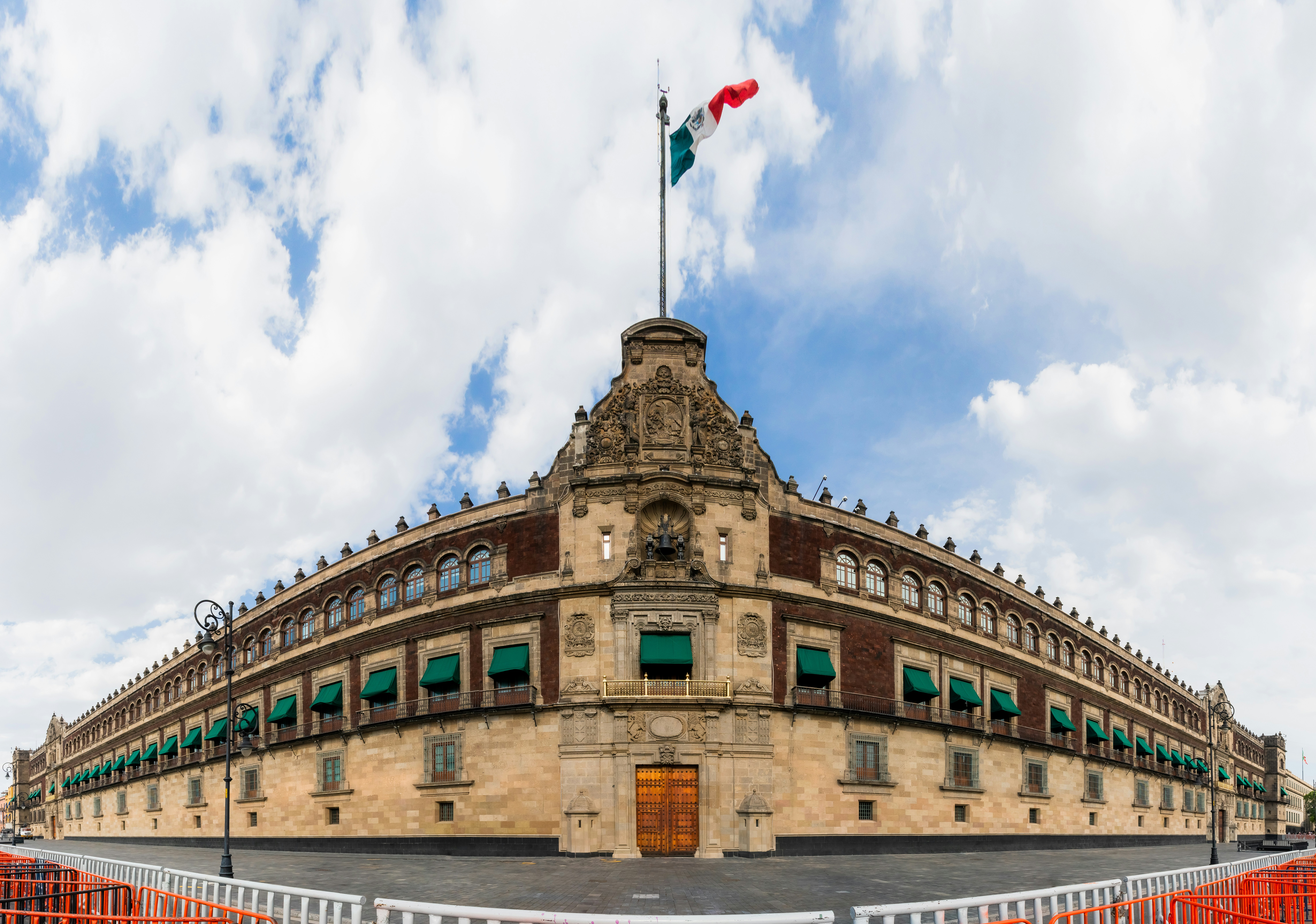
The best example is the case of the woman with her legs up in the air at the National Palace. First of all, the woman herself is surprising, so at home in the National Palace, with the mindset of Empress Marie Antoinette. The rest of the world is insignificant in the face of her inherited—not borrowed—authority. Of course, she thought she was at home; why not, if the power is hers? To save the reputation of the presidential residence, the propagandists, quick on the draw, invented a lie: it was the fault of Artificial Intelligence, just like all the other phenomena that are a nuisance to those in power, such as drug trafficking. And they calmly fed the President the lie.

After defending the propagandists’ fabrication, the President had to admit it was a lie. She even argued that the aggressor should be punished for disrespecting national symbols. The symbol of the National Palace or the President’s reputation? The final outcome of the entire incident is that the presidential office was devalued by agreeing to be part of a stupid conspiracy to cover up for a woman sunbathing at a window of the National Palace.
This example illustrates and characterizes how the government and its members think, reason, and operate. They go from one cover-up to the next. This is now illustrated by their obtuse confrontation with the United Nations regarding the disappeared, dismissing the organization because the government refuses to accept what the rest of the world sees as its frivolous conduct in the face of the wave of disappearances, which defines Mexico as a country in mourning.

Equally concerning is observing how issues affecting the vast majority of Mexicans are handled. Starting with the current government’s economic missteps, due to the excessive weight given to ideological considerations in its decision-making. Although the previous administration bequeathed to the current one a series of companies in technical bankruptcy and unable to generate a surplus to be self-sufficient, it continues to prop them up as a charade and a tragedy, solely to avoid discrediting the legacy and government of Andrés Manuel López Obrador.

The President has just announced that Mexicana de Aviación is profitable, which is false, and that she will acquire more aircraft. She will undoubtedly say the same regarding the Maya Train, the Trans-Isthmus Train, the AIFA airport, the Dos Bocas refinery, and PEMEX. Collectively, these projects require tens of billions of pesos annually in subsidies to keep them operating, given their meager revenues. The case of PEMEX is alarming: it requires hundreds of billions of pesos in subsidies per year, despite being a dysfunctional company riddled with corruption. The total investment required from the public treasury amounts to more than half a trillion pesos annually, drawn directly from the federal budget. The 4T’s economic model positions the State as an investor, operator, and bailer-out of its own investments all at once.
The war in Iran has prompted the bailout State to increase the IEPS tax to prevent runaway increases in the costs of freight, public transportation, food, and manufactured goods. The subsidy paid per liter consumed is: Magna: $1.61; Premium: $0.42; Diesel: $4.55. As can be seen, the increase in diesel prices is the main driver of inflation, rising by 81%. This is a subsidy for gasoline consumption that will cost the public treasury up to 38 billion pesos, and, depending on how long the conflict lasts, could reach some 150 billion pesos.
How will these enormous subsidies—all of which were decided based on political rather than economic criteria—be paid for? The State has only two options: raise taxes, including by creating new ones, or resort to borrowing. Since 2018, the upward trend in public debt has been very clear. The years with marked spikes in debt are: 2020 due to COVID, 2024 due to government spending to win the elections, and 2026 due to external pressures and Morena’s preparations for spending on the 2027 elections. Given this, the answer is clear: the government is choosing to increase debt rather than raise taxes. Subsidies, together with debt, put the economy on a path of stagnation and even toward a state of near-recession. By deciding not to raise taxes and resorting to more debt, this government accepts passing the bill for this six-year term—and for the past—onto future generations. Its “popular success” as the ruling party today will be the misery of millions tomorrow.
All surveys conducted among key members of the private sector, both domestic and foreign, confirm that there will be no new direct investment as long as the factors of uncertainty permeating the national and international situation and context persist. The election of the Supreme Court of Justice of the Nation and its transformation into a wing of the Morena party has discouraged investment. Previously, investors assumed they could be heard by the Court’s Justices and receive fair treatment. Today, that assumption has vanished: the Court is guided by ideological and partisan criteria, where laws and the Constitution itself are subordinated to Morena’s interests.
The Economist said it first: Mexico’s main problem is not Trump. It lies in the misguided policies of the federal government, which fails to distinguish between the negative reality of its economic, political, and social policies and its fantasies of ideological superiority. This blindness prevents the government from understanding the risks inherent in the current moment as the USMCA is renegotiated, a process that is itself subject to the same logic of uncertainty. The ideological restrictions that prevent full investment by Canadian or U.S. companies in various sectors of the Mexican economy—such as the non-tariff barriers erected during the Obrador administration—are factors that strongly influence the potentially disruptive trend in the negotiations. Some argue that Mexico is too important to the United States to risk sectoral or total breakdowns. The radicalized atmosphere in Washington (because there are just as many crazy populists there as there are here) warns us that things can quickly escalate into a serious confrontation, at least on a bilateral level.
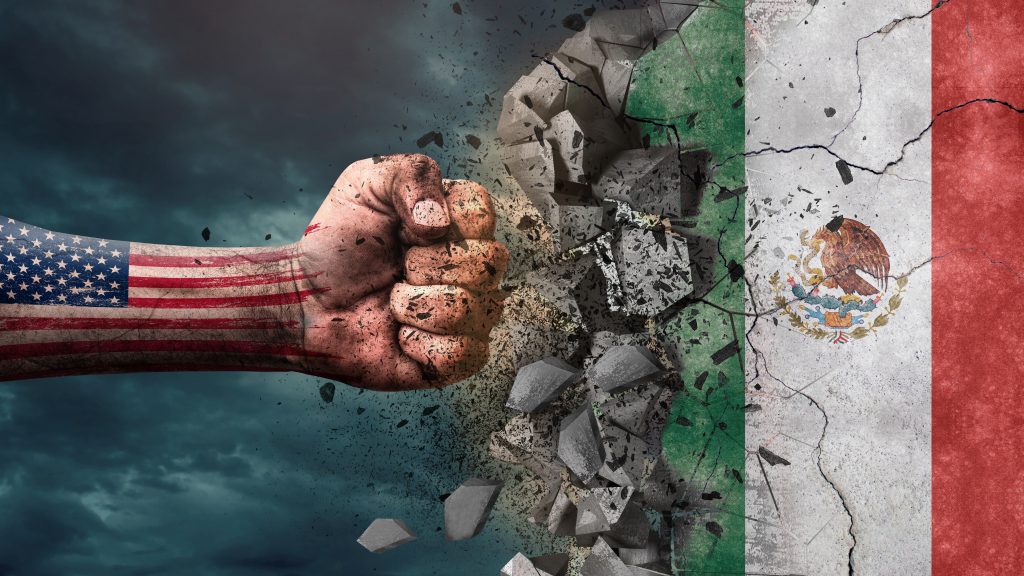
Washington is in a sour mood right now. With the crucial midterm elections in November in the United States looming, everything must be viewed through that lens. Venezuela, Cuba, Iran, Mexico, narco-terrorism, immigration, ICE, USMCA, the economy, oil-producing countries, Ukraine, the European Union, NATO, Putin, and Xi: they all have a place in the historical blender of the moment. There is a willingness to act forcefully, not to say with epic fury, to score points with public opinion, which, at this moment, is largely turning against Trump. But it would be a mistake to assume that we are facing the end of a weakened Trump. No. We are facing a Trump who is far more dangerous than before.

Washington’s temptation to carry out an action—or several—on Mexican soil before November is strong, and growing. The operation that ended El Mencho’s life was a sign of this. More dramatic and significant interventions could take place against prominent politicians linked to drug trafficking and money laundering in Mexico and the United States, with or without the consent and cooperation of Mexican authorities.

Failed domestic policies, dialectically, breed increased external pressure to reorient Mexican policy. The regime’s smug propagandists turn a blind eye to the harsh and dangerous realities of the national situation. Ignoring the true scale of the problems only weakens the options available in the face of the national crisis the country is mired in. And downplaying external pressure does the same. Mexico is besieged by its own problems and by what comes from outside.
@rpascoep
Further Reading:
Thank you for the detailed analysis.