
Ricardo Pascoe Pierce
Although the exact date of their issuance is unknown, on May 21, President Claudia Sheinbaum confirmed during her morning press briefing that there were “red notices” stemming from arrest warrants issued by U.S. authorities against Rocha Moya and other officials from Sinaloa.
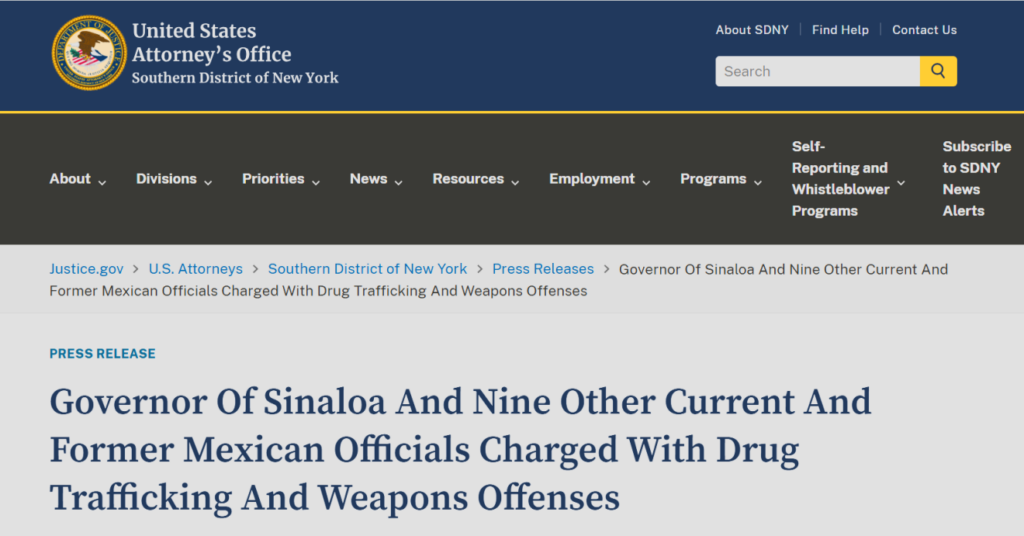
The sequence of events in this case is significant. First, on April 29, 2026, federal prosecutors in the Southern District of New York made public the criminal indictment against Rocha Moya and other officials from the state of Sinaloa. Second, the United States requested Mexico’s provisional detention of him for the purpose of extradition. Finally, and as a result of an international court order, Interpol red notices were activated, the existence of which was publicly acknowledged by Sheinbaum.
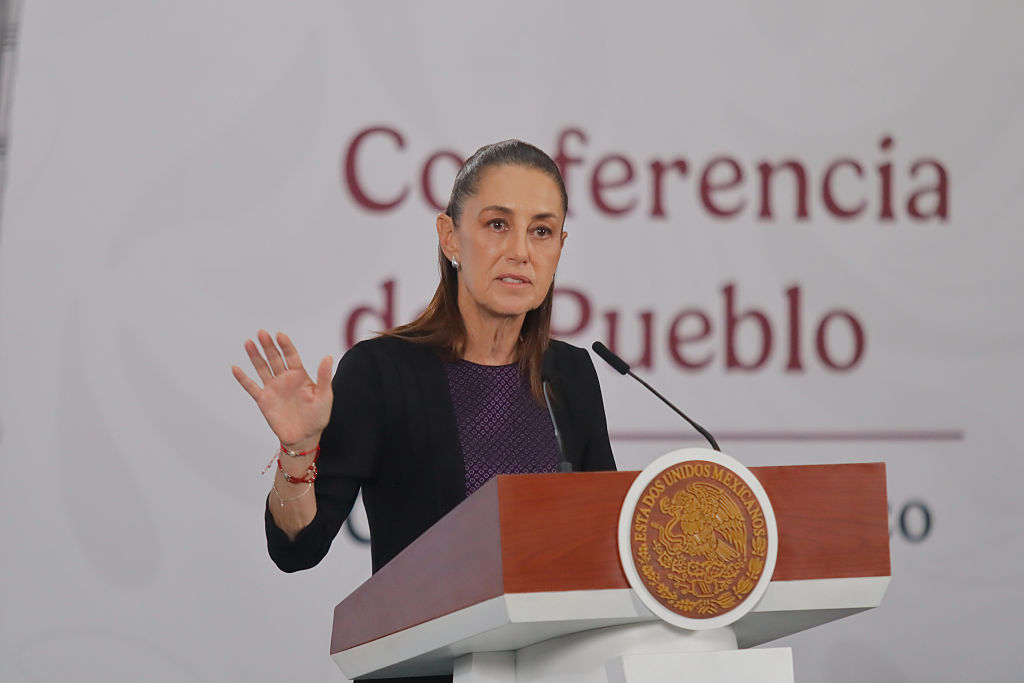
Indeed, the Mexican government is not automatically obligated to detain Rocha Moya simply because a Red Notice is issued against him. Sheinbaum stated that “there is nothing legally binding” requiring the government to maintain special surveillance of the accused while the Attorney General’s Office conducts its investigations.
The president is mistaken. The red notice does imply that the government has obligations it must respect. The immediate legal obligation falls primarily on the Attorney General’s Office and on immigration and police authorities to locate the person or persons, monitor their potential international movements, assess whether provisional detention for extradition purposes is warranted, and, finally, open or continue their own investigations.
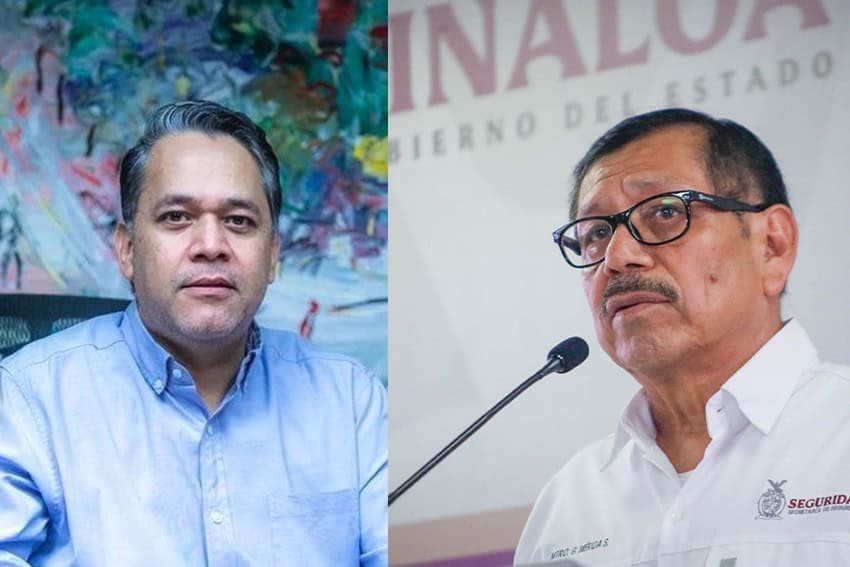
Evidently, Mexican immigration and police authorities did not act in accordance with the law, as they failed to locate or monitor retired General Gerardo Mérida Sánchez and Enrique Díaz Vega, who, via different routes, surrendered to U.S. authorities—one in Arizona and the other apparently in Ireland. Their respective surrenders are legally significant because their testimony may provide evidence that would allow U.S. authorities to bypass formal extradition requests and act directly to secure the capture and removal of the remaining defendants.
The existence of Red Notices has significant practical implications. If Rocha Moya were to leave Mexico, any Interpol member country could provisionally detain him. Also, Mexico is under political, diplomatic, and judicial pressure to cooperate with the U.S. request. And, very importantly, Mexican financial institutions can apply preventive measures, as occurred with the freezing reported in May of the accounts of the accused, their family members, and even companies related to their activities.

Politically speaking, the red notice does not constitute a conviction nor is it proof of guilt. However, it means that there is a formal international criminal charge and that the person is wanted to face legal proceedings.

The meeting on May 21 between U.S. Secretary of Homeland Security Markwayne Mullin—accompanied by Ambassador Ronald Johnson—and President Sheinbaum, Interior Secretary Rosa Isela Rodríguez, and Public Safety Secretary Omar García Harfuch took place in the context of public acknowledgment of the existence of the red notice issued by the U.S. court against the accused.
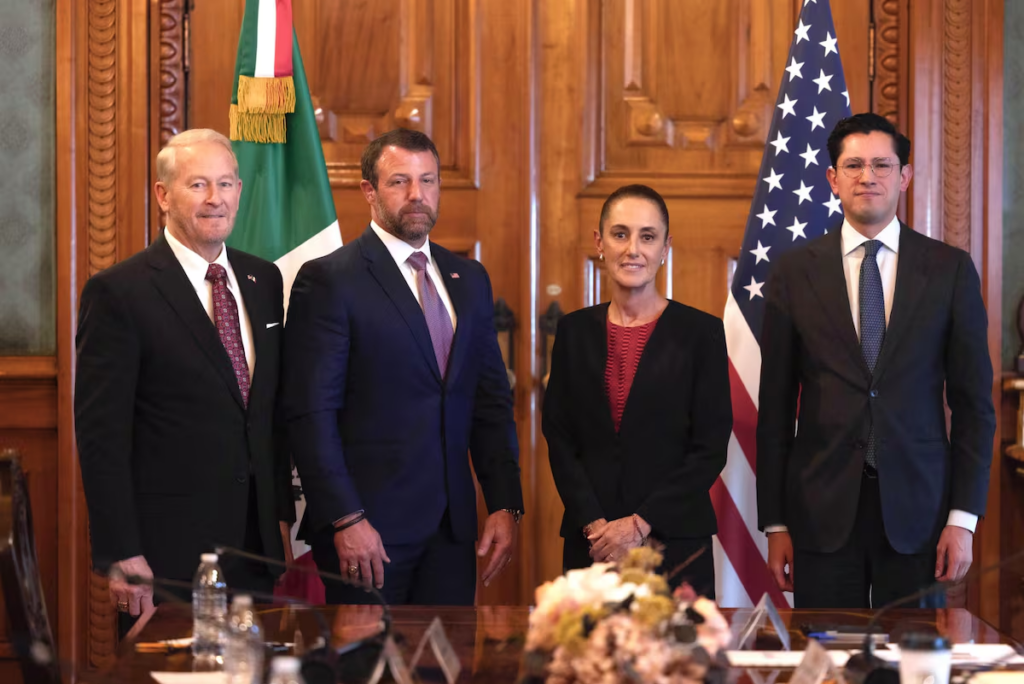
Mullin reportedly demanded not Rocha’s arrest for extradition purposes, but his immediate surrender to the judicial authorities in New York. He stated that the information provided by General Mérida and Díaz Vega was comprehensive and sufficient to establish the guilt of the other defendants. The president reiterated that Mexico had no legal obligation whatsoever to hand over Rocha and the defendants to U.S. authorities. Mullin noted that similar charges would be brought against four other sitting governors for their ties to drug trafficking.
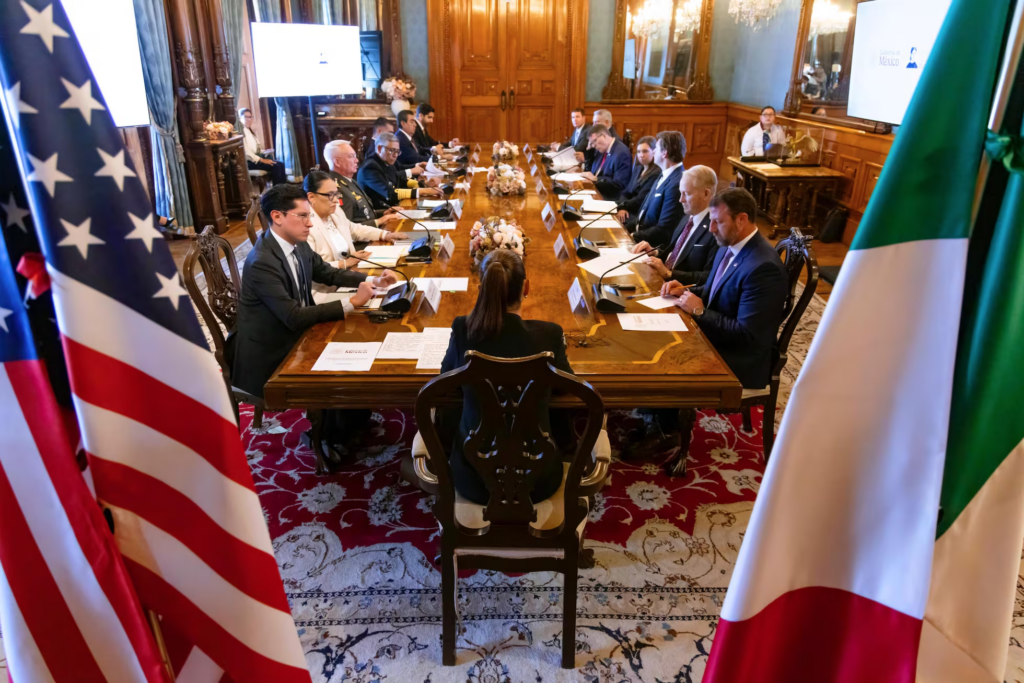
Needless to say, the meeting ended abruptly and on bad terms.

@rpascoep
Further Reading: