What is Terrorism?

Omar Garcia Harfush, Secretary of Security, recently defined terrorism, excluding recent car bombings in Guanajuato as acts of criminal feuds. Critics argue his definition is too narrow, ignoring the broader implications of state and non-state terror in Mexico, where fear is a tool employed by both criminal groups and the government for control.

Supremacy

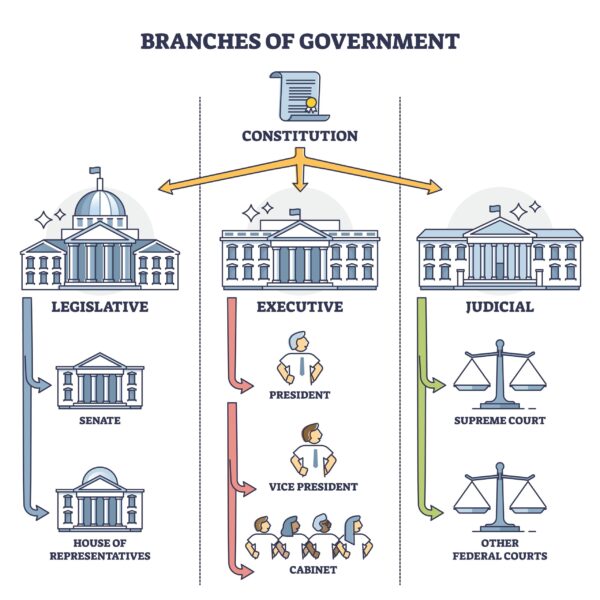
The proposed constitutional reform in Mexico aims to assert supremacy of the Legislative Branch over the Judicial Branch, undermining the independence and balance of power mandated by the Constitution. This move, seen as authoritarian, threatens individual rights and the legal protection offered by the amparo trial, raising concerns about the government’s democratic intentions.

What Follows is the Control of Elections and the Media.

The article discusses the rise of populism and its threat to democracy, drawing parallels between the UK’s historical context and current events in Mexico under President Sheinbaum. Yuval Noah Harari warns against populists undermining democratic institutions and monopolizing authority, ultimately seeking to establish a dictatorship by silencing diverse voices and controlling media and judiciary systems.

Curses

The political system in Mexico has been exposed by the García Luna case, revealing a government that, despite significant power, fails to ensure security and economic development. The presidency’s excess power leads to dysfunction, ineffective governance, and a normalized relationship between politics and organized crime, exacerbating insecurity and violence nationwide.

Intimacies of the Profession

Federico Reyes Heroles reflects on the evolution of his engagement with political criticism since 1981. He emphasizes the importance of nuanced discussion over binary polarization, advocating for informed public debate to enhance decision-making. He expresses concern about the current administration’s tendency toward isolation, which undermines constructive discourse and governance.

In Need of a Boss or a Lady Boss.

The article reflects on the historical significance of the 2000 U.S. election and the judicial decisions that shaped it. It discusses the upcoming election’s implications, particularly focusing on Donald Trump and Kamala Harris. It emphasizes societal shifts, voter mobilization, and the ongoing challenges related to U.S. internal security and global competition, illustrating a pivotal moment in political history.

National Sovereignty or Hemispheric Security?

The U.S. elections present both opportunities and risks for Mexico’s political landscape. While some factions advocate for closer ties with authoritarian regimes, others push for strengthening North American relations. The election outcome will crucially dictate Mexico’s foreign policy direction, particularly regarding its relationships with the U.S., Russia, and China.

Cuba’s Degradation

The Cuban government has systematically suppressed its citizens’ fighting spirit, leading to mass emigration amidst worsening economic turmoil. Persistent power outages result from policy failures and budgetary misallocation, prioritizing repression over public welfare. This strategy aims to control dissent, as over a million Cubans have fled the dire living conditions and lack of freedom.

Oppositions

The post discusses the contrasting trajectories of the PAN and PRI political parties in Mexico. While the PAN began as a reaction to the PRI and aimed for governance, it ultimately mirrored its predecessor’s corrupt practices. Both parties now face pressure to reinvent themselves amid rising challenges from the Morena party.

The Nobel is Scared of his Creature.

Geoffrey Hinton, a Nobel laureate in Physics and AI pioneer, warns of the potential dangers of advanced artificial intelligence, suggesting that its development could threaten humanity’s control. He emphasizes the urgent need for collaboration among scientists to address these issues and prepare for a future where AI might surpass human intelligence.

Shares