The Eternal France.

Antonio Navalón examines the current political turmoil in France, highlighted by Nicolas Sarkozy’s arrest. With declining public confidence in Emmanuel Macron and a fragmented National Assembly, the political landscape is shifting. Sarkozy’s legal battles may signal a resurgence, indicating potential electoral change with figures like Marine Le Pen gaining ground.

U.S. National Security: Mexico’s Strategic Role.

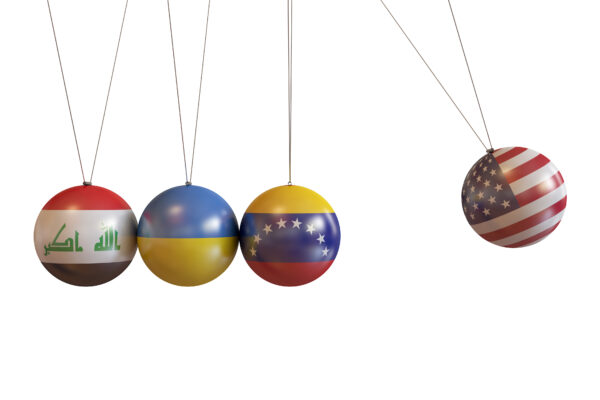
The United States views Mexico as a crucial player in its geopolitical strategies concerning Latin America, particularly in relation to Venezuela and Colombia. Recent actions suggest a testing ground for influence in Mexico, amid concerns about its alliance with drug traffickers and opposition to U.S. policies. Mexico’s foreign policy risks increasing regional tensions.

Polarization in Mexican Politics: A Call for Reconciliation.

The content discusses the decline of Mexican political culture under the Morena regime, marked by exclusion and polarization. It criticizes the government’s focus on imposing decisions without fostering debate, leading to speculation about its ultimate goals. A call for reconciliation and honest dialogue is emphasized as essential for the country’s progress.

The Coup D’état in Venezuela.

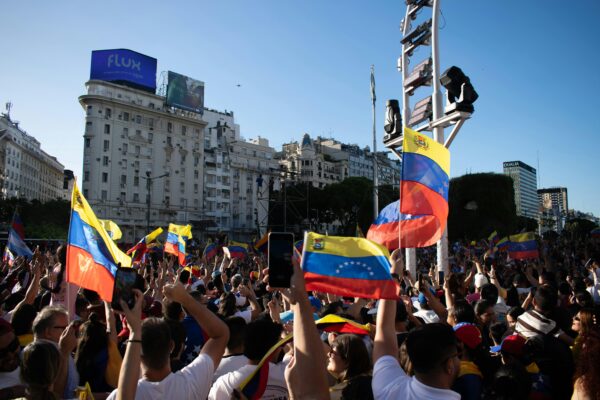
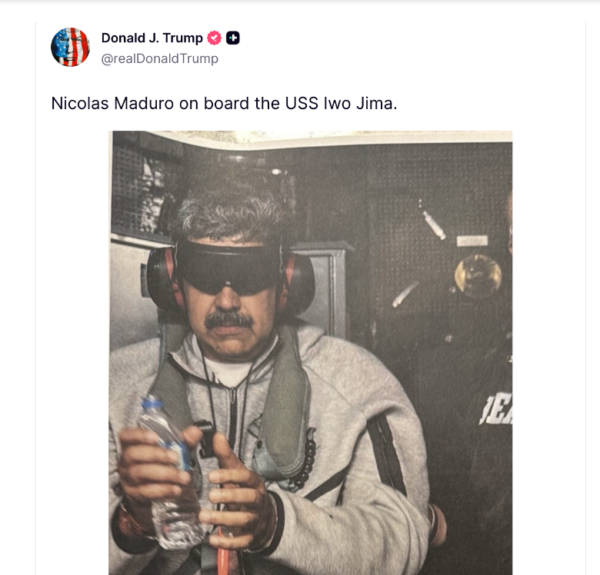
The text criticizes Nicolás Maduro’s regime in Venezuela, labeling him a perpetrator of a coup rather than a victim. It highlights his manipulation of electoral results, control of the judiciary, and external support from Cuba and Russia. The author accuses the populist left of hypocrisy and complicity in perpetuating Maduro’s dictatorship.

Numbers.

The text emphasizes the significance of statistics in human civilization, tracing its historical origins and evolution. It highlights statistics’ contributions to various fields, including public health and safety, while underscoring the necessity for independent data sources to maintain accountability. Ultimately, it advocates for the recognition and seriousness of statistics, especially on World Statistics Day.

The Era of Force: Politics, Power, and Profit.

The text discusses the significant political and social shifts transforming the modern world, emphasizing the replacement of legality and individual rights with profit-driven power dynamics devoid of ethics. It critiques current leaders, notably Trump, for exploiting conflicts and diminishing democratic values, underscoring a new era governed by force rather than law.

PAN: Between Euphoria and Skepticism.

The National Action Party (PAN) launched its relaunch event, attended by prominent figures and grassroots activists, focusing on returning to its founding principles. National president Jorge Romero criticized the current government and announced open membership and candidate selection processes. However, skepticism remained about genuine change and past leadership continuity, indicating internal divisions.

The Global Impact of Trump’s Policies: A Geopolitical Analysis.

Churchill’s observation about Americans reflects current U.S. actions under President Trump, which have destabilized global order established post-World War II. By fostering nationalist ideologies and undermining alliances, Trump’s strategy benefits countries like China and impacts U.S.-Mexico relations, highlighting complexities in migration and economic dependability on Mexican labor.

The Fascination With Disaster.

In a landscape filled with immediate crises, such as pandemics and wars, long-term threats like climate change struggle for attention. Despite undeniable evidence and urgent warnings, human fascination with catastrophe persists, reflecting a desire for last chances. Cultural narratives can amplify this paradox, revealing deeper psychological connections to destruction and survival.

A Nobel Prize that Forces to Take a Stand.

The well-deserved Nobel Peace Prize awarded to María Corina Machado will not remove Nicolás Maduro from power because narco-governments do not bow to anyone’s moral authority. Staying in control is the fundamental condition for survival. He heads a narco-government. Less than a century ago, the most prosperous countries in Latin America were Argentina, Venezuela, and Cuba. And now? They suffer for having been lured by the siren song of populism.

Shares