Edelman Global Trust Barometer 2025.

The content includes various articles and reports focusing on global trust, economic outlooks, and market analysis for 2025. Topics range from JP Morgan’s initiatives, gold market trends, geopolitical impacts of tariffs, and assessments of government leadership. These resources aim to provide insights into critical industries and economic dynamics.

Rethinking Greatness: Lessons from Modern Philosophy.

The text discusses the paradox of rapid scientific advancements and persistent existential crises. Despite progress in medicine and improving global conditions, issues like suicide and societal corruption remain. The philosopher Rob Riemen highlights the degradation of greatness in contemporary society, emphasizing the need for meaningful existence beyond material success.

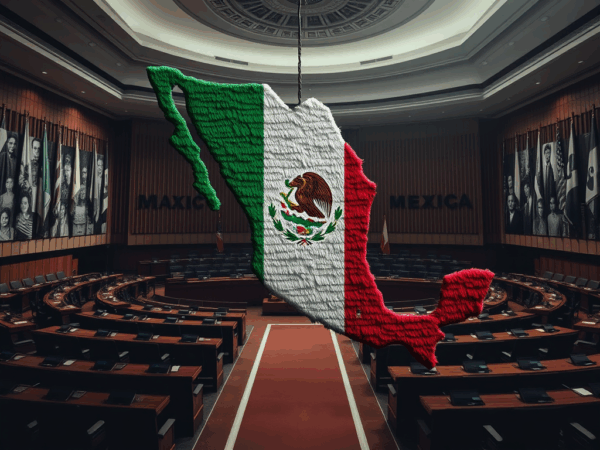
Polarization in Mexican Politics: A Call for Reconciliation.

The content discusses the decline of Mexican political culture under the Morena regime, marked by exclusion and polarization. It criticizes the government’s focus on imposing decisions without fostering debate, leading to speculation about its ultimate goals. A call for reconciliation and honest dialogue is emphasized as essential for the country’s progress.

Must-Watch Video: State of the World 2025

Ian Bremmer’s annual State of the World address on October 21, 2025, in Tokyo outlined key geopolitical developments, including growing global uncertainty due to the unpredictable U.S., evolving U.S.-China relations, and strategies adopted by U.S. allies. The speech was part of the 2025 GZERO Summit hosted by Eurasia Group.

Numbers.

The text emphasizes the significance of statistics in human civilization, tracing its historical origins and evolution. It highlights statistics’ contributions to various fields, including public health and safety, while underscoring the necessity for independent data sources to maintain accountability. Ultimately, it advocates for the recognition and seriousness of statistics, especially on World Statistics Day.

The Era of Force: Politics, Power, and Profit.

The text discusses the significant political and social shifts transforming the modern world, emphasizing the replacement of legality and individual rights with profit-driven power dynamics devoid of ethics. It critiques current leaders, notably Trump, for exploiting conflicts and diminishing democratic values, underscoring a new era governed by force rather than law.

The Global Impact of Trump’s Policies: A Geopolitical Analysis.

Churchill’s observation about Americans reflects current U.S. actions under President Trump, which have destabilized global order established post-World War II. By fostering nationalist ideologies and undermining alliances, Trump’s strategy benefits countries like China and impacts U.S.-Mexico relations, highlighting complexities in migration and economic dependability on Mexican labor.

The Fascination With Disaster.

In a landscape filled with immediate crises, such as pandemics and wars, long-term threats like climate change struggle for attention. Despite undeniable evidence and urgent warnings, human fascination with catastrophe persists, reflecting a desire for last chances. Cultural narratives can amplify this paradox, revealing deeper psychological connections to destruction and survival.

Lessons from Kipling: Power and Memory Today.

The article reflects on contemporary global political dynamics, drawing parallels between historical and current leadership in the U.S. It critiques Donald Trump’s approach to governance as deeply self-serving, contrasting it with past administrations that sought global cooperation. It concludes that today’s events reveal a power struggle influenced by historical economic rivalries and geopolitical strategies.

Luis Maizel’s Monthly Letter: A Paralized Government in a Polarized Country.

Today, we woke up to a government shutdown and without resources. United States law establishes a maximum debt limit that only Congress can increase. The Republicans’ budget proposal was rejected by the Democrats, who demanded a series of concessions in order to vote in favor of temporarily raising the debt ceiling.

Shares