
Steve Bannon and Modern Conservatism: A Deep Dive into His Ideological Roots

The Iranian clerical revolution in 1979 led to a US embassy hostage crisis, impacting Jimmy Carter’s presidency. Steve Bannon, involved in military operations, later became a significant figure linking right-wing populism to traditionalist thought. He critiques modernity, promotes nationalist policies, and influences the Trump movement through media and ideologies rooted in religious and historical cycles.

On How Mexico’s Government Deceives The World.

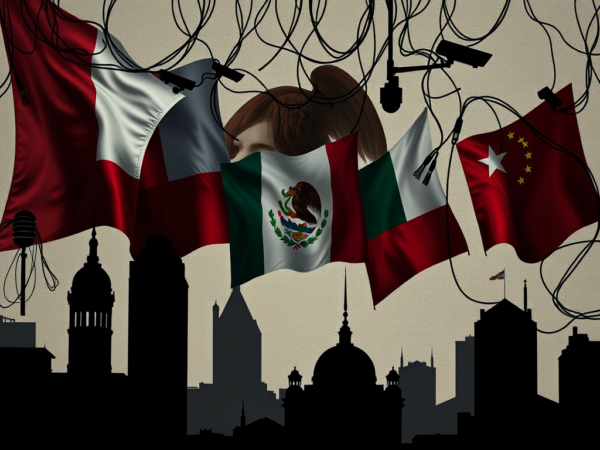
Mexico’s President Claudia Sheinbaum’s absence from key international forums has drawn criticism, particularly regarding drug trafficking and violence. This lack of engagement coincides with a demoralized diplomatic corps and a government hesitant to openly address controversial issues. Mexico’s foreign policy operates in secrecy, reflecting a disconnect with its economic partners and democratic values.

The Five Years of Sepgra.

In June 2020, Sepgra emerged as a virtual platform during the pandemic, providing insights on global economic and political issues. Over five years, it published 1978 articles covering diverse topics, navigating challenges like economic turmoil, political polarization, and the impacts of Covid-19, illustrating adaptability while aiming for quality, unbiased content.

Gustav Klimt Portrait Takes the Title of Most Expensive Work of Modern Art Ever Sold.

Gustav Klimt’s ‘Bildnis Elisabeth Lederer’ has set a record as the most valuable modern art piece, auctioned for $236.4 million at Sotheby’s. The portrait, showcasing Klimt’s signature motifs and color, was a highlight of the Leonard A. Lauder Collection, contributing to a total auction value of $527.5 million.

The Inverted Pyramid of Power

President Sheinbaum’s approach to Mexico’s security crisis fails to prioritize public safety, viewing organized crime and cartels as ideological issues rather than urgent threats to citizens. Inaction and normalization of violence hinder growth and progress, with citizens living in a climate of fear. Security is essential to prevent societal collapse.

The Economics of Attention.

The essay discusses the evolution of attention economy from the invention of the bikini by Louis Réard in 1946 to the digital revolution. Yanis Varoufakis argues that society has shifted from tangible goods to a system where attention is commodified, creating techno-feudalism. Users, now products, face a challenge in reclaiming focus amidst constant distraction.

The Global Organized Crime Index 2025.

The global criminal landscape is increasingly adaptive and complex, shaped by socio-economic shifts and technological advancements. The 2025 Index highlights critical changes in drug markets, the rise of non-violent crimes, and growing foreign and private sector involvement. It indicates an urgent need for new resilience strategies to counter evolving organized crime.

The Costs of Loyalty.

The discourse examines the theme of loyalty versus faithfulness in governance, highlighting scandals involving prominent figures like King Charles III and various Latin American presidents. It emphasizes the necessity of judicial integrity amidst political corruption, especially in Mexico, where a decline in trust is noted due to governmental actions undermining rule of law.

The Impact of Governance on Economic Development.

The key to a nation’s progress lies in balancing governmental and market roles, ensuring a capable state that safeguards property rights and functions effectively. Successful examples highlight that while democracy is important, a strong, rule-abiding state is crucial for sustainable growth and prosperity, as evidenced by varied global outcomes.

Authoritarian Populism and Media Warfare.

Pablo Iglesias, former vice president of Spain, embraces authoritarian populism through media initiatives like Canal Red and Diario Red, aiming to polarize audiences. Backed by substantial foreign funding, his approach seeks to challenge liberal democracy, promoting a narrative against reactionary voices while manipulating public discourse in Latin America and beyond.

Shares