Pause.

Michael Ignatieff explores the necessity of promoting trust and overcoming division in diverse societies in “Everyday Virtues.” He emphasizes the importance of a strong societal framework for coexistence, reflecting on global examples. Additionally, innovative publications by various authors and artists celebrate culture and humanity, enriching our understanding of history and the present.

2025: A Year to Remember.

The end of the year reflects a challenging global climate, with wars and economic instability. Trump’s administration has shifted power dynamics in the U.S., sidelining traditional political structures. The upcoming USMCA renegotiation will be crucial for regional economic stability, as issues of leadership ineptitude underline a deeper crisis in democracy and governance.

China vs Mexico: Lessons in Development Models.

The content explores the contrasting development paths of nations like China and Mexico. Dan Wang emphasizes China’s rapid infrastructure advancements, while Carl Frey highlights the need for a balance between centralization and decentralization for effective progress. Both authors argue against blindly imitating successful models without considering local contexts. Mexico’s challenges stem from a lack of this balance.

The Nobel Prize in Economics is Explained Simply.

Joel Mokyr, Philippe Aghion, and Peter Howitt won the 2025 Nobel Prize in Economics for their contributions to understanding economic growth through “creative destruction.” Their work clarified how innovation transforms markets, enhancing productivity and well-being, while emphasizing the necessity for continuous renewal as a driver of societal advancement and economic resilience.

U.S. National Security Strategy.

This official report of the United States Government outlines the priorities of the Trump administration concerning foreign policy, revealing a shift in its geopolitical strategy and values.

The Year of War.

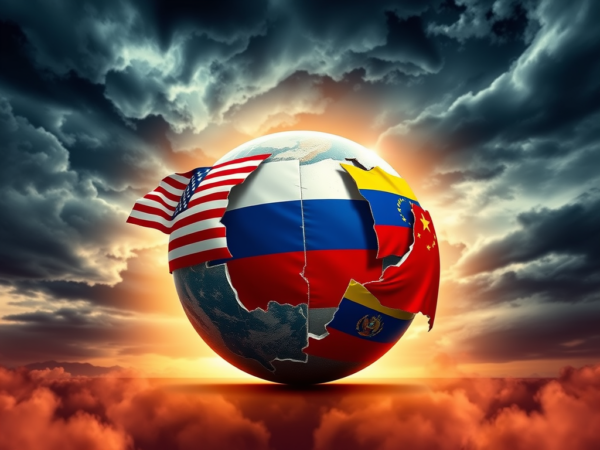
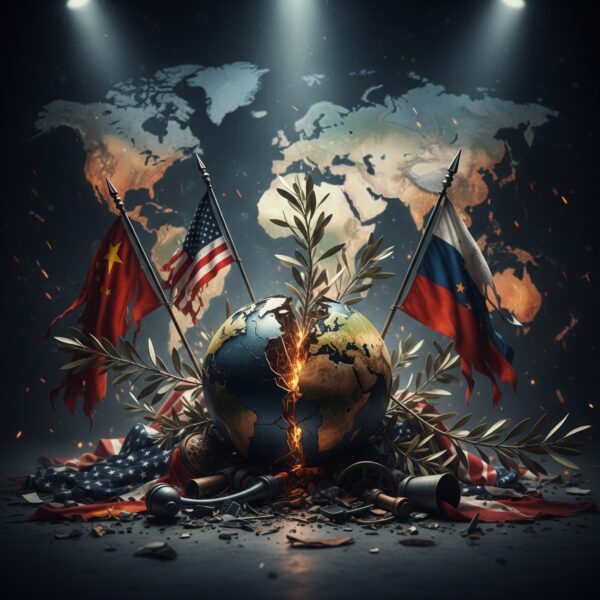
ith less than four weeks to go before we bid farewell to 2025—amidst the fury, the din, the missiles, and the drones—it is inevitable that we pause and take stock of how, in our political and social sphere, we will close out the year. Now that the first quarter of the century is over, we understand that we are not living in exceptional circumstances. Each period leading up to the world wars was unique in its time, yet they all shared the same air of menace.

Fantasies of the Past To Justify the Present.

Any analysis of López Obrador’s book “Grandeza” (Greatness) must start from its essentially political and ideological nature, rather than as an academic historical review. It is a text written based on assumptions about the past to explain and defend his vision of the present. López Obrador’s book is a gem for studying how a man imbued with Judeo-Christian values seeks to twist the human experience to fit his very particular vision of the universe and the humanity that inhabits it.

Mexico, Stuck in Time.

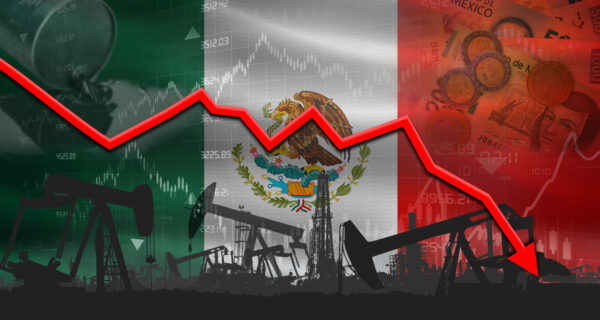
The text discusses Mexico’s struggle to achieve sustained economic growth since the mid-20th century, emphasizing the failures of successive governments. It highlights the paradox of Mexico as both prosperous and stagnant, attributing this to neglect of critical infrastructure and effective governance. Political conflicts further hinder needed reforms.

How Digital Mercenaries Manipulate Elections.

In 2023, journalists uncovered “Team Jorge,” an Israeli company manipulating elections worldwide, claiming to have influenced 33 elections. Led by Tal Hanan, the firm employed a vast network of digital avatars for disinformation. The investigation revealed the persistent threat of digital manipulation, highlighting the evolving landscape of political influence.

Shares