“I Guarantee”

In her address to business leaders, President Sheinbaum emphasized the importance of strengthening the free trade agreement and ensuring safe foreign investments in Mexico. However, her contradictory remarks raise doubts about the credibility of her guarantees. The prevailing uncertainty regarding Mexico’s political landscape may deter potential investors, undermining economic stability.

National Sovereignty or Hemispheric Security?

The U.S. elections present both opportunities and risks for Mexico’s political landscape. While some factions advocate for closer ties with authoritarian regimes, others push for strengthening North American relations. The election outcome will crucially dictate Mexico’s foreign policy direction, particularly regarding its relationships with the U.S., Russia, and China.

Neighbors With Increasingly Conflicting Issues.

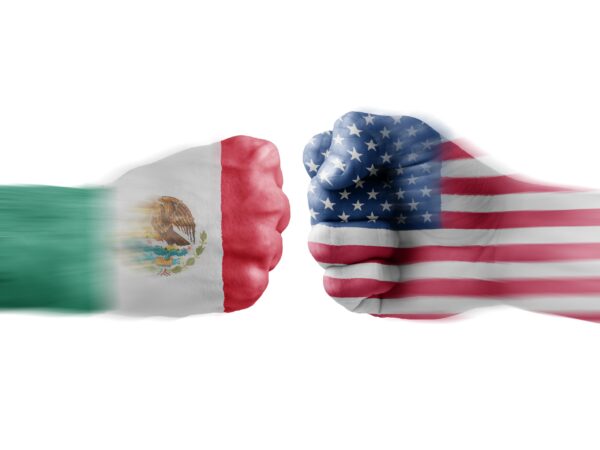
The United States and Mexico share a complex relationship characterized by economic interdependence alongside political tensions. Mexico’s support of authoritarian regimes, including Cuba and Venezuela, and its neutrality towards Russia fosters conflict with U.S. interests. This ideological divide complicates Mexico’s commitment to market economies amidst growing ties with China and organized crime.

An Opportunity

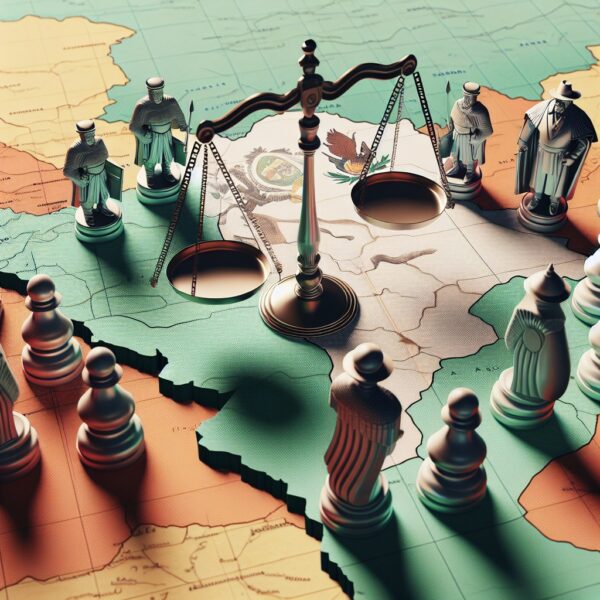
In July 1914, as World War I loomed, Mexico faces a similar uncertainty due to a controversial judicial reform. It divides opinions on its necessity and implications. The Supreme Court’s review could present President Sheinbaum with a chance to strengthen governance and the Rule of Law, albeit the reform prioritizes political motives over justice.

The War Waged by Politicians Using the Judiciary in Bolivia.

Ricardo Pascoe Pierce warns of potential judicial manipulation in Mexico, drawing parallels with Bolivia under Evo Morales. He highlights the dangers of politically motivated judicial appointments, resulting in a judiciary that serves political interests rather than justice. The piece underscores the urgency for resistance to prevent the erosion of democratic principles and maintain constitutional order.

Distortions

The article criticizes Mexico’s new government for prioritizing power consolidation over democratic principles like checks and balances. It highlights the dangers of diminishing freedoms and citizen rights, arguing for economic competition and reduced government dependency. The author warns that undermining the Rule of Law risks authoritarianism, stressing that Mexico’s fate is intertwined with global dynamics.

Arrogance, Short-Sightedness and its Consequences

The end of Andrés Manuel López Obrador’s presidency marks significant changes in Mexican politics. His era is characterized by strong personal control, political degradation, and a focus on electoral success over economic development. As his successor takes over, Mexico faces institutional weaknesses, societal dependency on direct cash transfers, and political uncertainties.

New Dawn or the Same Dusk

Claudia Sheinbaum is set to become the first female president of Mexico, continuing President López Obrador’s policies, including the daily “mañaneras.” Her administration faces challenges such as handling the CUSMA/USMCA/TMEC trade agreement, the nation’s security and cartel issues, and maintaining strategic economic relations with the United States and Canada.

Shares