The Shift in Mexico’s Direction: Implications for the Future

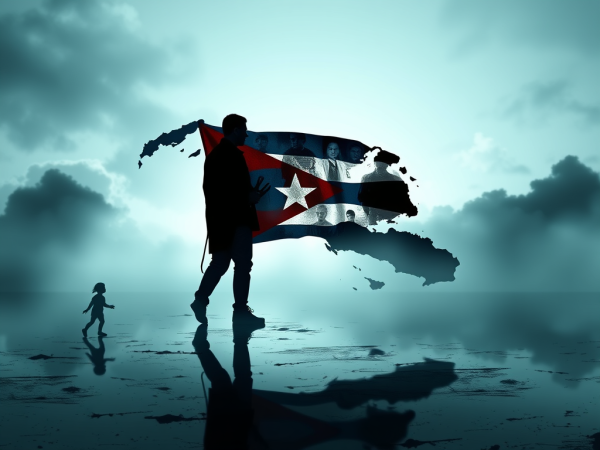
The article discusses Mexico’s political paradox, where President Sheinbaum enjoys widespread approval despite rising concerns among analysts about the economy and governance. It outlines major changes due to the López Obrador administration, including a shift away from aspirations for modernity and a concerning rise in central authority and control over democratic institutions.

Europe Today: To Be Or Not To Be.

The Real Instituto Elcano’s discussion questioned Europe’s defense strategy amid US unilateral actions, particularly under Trump, highlighting Europe’s dependence on American military capabilities. With rising global challenges, the need for Europe to establish military and technological autonomy is paramount to avoid geopolitical irrelevance and uphold democratic values respected by its allies.

What happened to the Mappa Mundi?

In a dramatic military operation against Iran, the U.S. claimed success in destroying nuclear facilities. Amid a tense global response, including condemnation from Russia, China, and the UN, questions arise about the motives behind the assault and the potential for long-term conflict. Iran’s leaders promise ongoing revenge, complicating future U.S.-Iran relations.

Mexico: Law Enforcement and Security on Edge.

President Sheinbaum’s National Security Law initiative faces strong opposition within Morena, particularly regarding the transfer of organized crime intelligence to the federal SSPC. This represents a shift from military to civilian oversight of security. Internal party tensions and political dynamics complicate its approval, revealing differing visions for combating organized crime in Mexico.

Op-Ed: Ukraine vs. Russia: A Battle Over Historical Memory.

June 28 commemorates the Ukrainian Constitution, symbolizing sovereignty and the reclamation of national identity post-USSR. Ukraine’s history diverges from Russia, which misappropriated Ukrainian heritage. The ongoing conflict is a battle over memory and identity, revealing Russia’s fear of a unified, independent Ukraine undermining its imperial narrative rooted in deception.

Can Israel Survive Amid Global Tensions?

Israel, a small nation with a tumultuous history of suffering and persecution, is at a critical juncture marked by the October 7, 2023, attacks. This has reignited debates over its moral stance and nuclear capabilities amid complex geopolitics involving major global powers. The survival of Israel now poses existential dilemmas with potentially catastrophic implications.

The Evolving Battle of Capitalisms in a Turbulent World.

The contemporary world faces conflicts rooted in ideological and resource competition following the Cold War’s end. Different capitalistic models, namely liberal and state-controlled, contribute to international tensions. Future wars may erupt over scarce resources unless effective global governance, equitable rules, and respect for sovereignty are established to prevent hegemonic imposition.

Disorder and Disruption in Mexico.

Luis Rubio discusses the distinct yet intertwined phenomena of disruption and disorder in Mexico, highlighting their historical roots and current implications. Current disruptions stem from both external and internal sources, notably the influence of Trump and the politics of the Morena party, complicating economic growth and governance.

Potential Scenarios for a Post-Theocratic Iran.

The theocratic regime in Iran faces unprecedented vulnerability, influenced by external pressures and internal dissatisfaction. Potential outcomes include the return of the Pahlavi dynasty, establishment of a secular democracy, descent into chaos, or a UN-sanctioned governance. Each scenario poses risks, with a new regime potentially mirroring past tyrannies amid global intervention.

Corruption Exposed: Electoral Fraud in Mexico’s Judiciary Elections

Evidence revealed that the ruling party manipulated judicial elections using cheat sheet ballots, leading to significant fraud. An analysis showed over 80% coincidence between names on ballots and winning candidates. Six board members of the National Electoral Institute ignored the corruption, validating the elections, raising serious questions about electoral integrity.

Shares