Mexico: Ten Political Risks for 2025

This report outlines ten significant risks that may affect Mexico’s business environment and democracy in 2025, highlighting concerns over power centralization and diminished checks and balances. With political instability and President Sheinbaum’s popularity, the government might favor short-term gains over long-term growth, jeopardizing economic competitiveness and nearshoring opportunities.

Eurasia Group Top Risks 2025

In 2025, the world appears promising with diplomatic progress in major conflicts and economic expansion amid a growing population. However, significant challenges persist, particularly the lack of global governance and cooperation. The United States and China prioritize self-interests, leaving global issues unresolved, threatening sustainability and deepening societal divides.

Luis Maizel’s Monthly Letter: 2025, A year of Challenges and Opportunities

The Trump administration is expected to shift towards less government regulation, increased domestic production, and protectionist policies, impacting immigration and taxes. Proposed tariffs on imports and drastic changes in foreign policy, including a focus on ending conflicts, signal significant transformations. Economic indicators show mixed performance, with potential implications for both the U.S. and Mexico.

Understanding Mexico’s Political and Economic Landscape in 2025

In 2025, Mexico faces worsening political and economic challenges under President Claudia Sheinbaum, continuing the prior administration’s ineffective policies. Relations with the U.S. are strained due to alignment with authoritarian regimes and concerns over Chinese investment. Economic growth may stagnate, with increasing deficits and declining foreign investment, risking a credit downgrade.

2025 Economic Outlook: Opportunities and Risks Ahead

As we near the midpoint of the 2020s, the decade characterized by rising equity markets and strong economic growth faces challenges like global conflicts and inflation. Key factors shaping the next stage include US political changes and technological innovations. Market outcomes remain unpredictable, emphasizing the need for diversification and adaptability in investments.

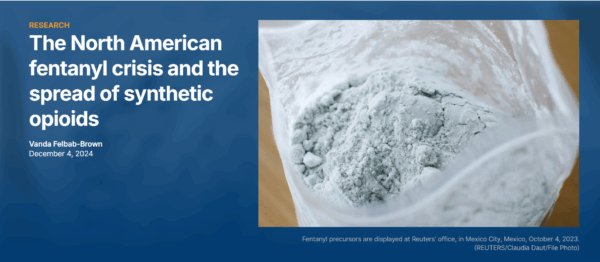
The North American fentanyl crisis and the spread of synthetic opioids

Vanda Felbab-Brown, a Senior Fellow at Brookings Institution, discusses the North American fentanyl crisis and the increase of synthetic opioids. For more in-depth information, the article and various resources on related topics can be accessed through the provided links, covering issues from economic outlooks to security challenges.

Luis Maizel’s Monthly Letter: A New Era Begins.

The letter addresses the aftermath of the U.S. elections, highlighting Trump’s significant support. It discusses economic conditions, potential policy changes, and the implications of the new administration on both domestic and foreign issues. Additionally, it reviews Mexico’s economic challenges and the global context of various economic developments, including inflation and trade relationships.

Challenges and Opportunities in Sheinbaum’s Energy Policy

The Sheinbaum administration’s strategic plan for Mexico’s energy sector highlights environmental focus but raises concerns due to heavy reliance on CFE and limited renewable capacity. The proposed public-private investment split is economically questionable, risking competitiveness. Prioritizing transparent, viable policies is crucial for advancing a sustainable electricity sector and achieving climate goals.

Shares