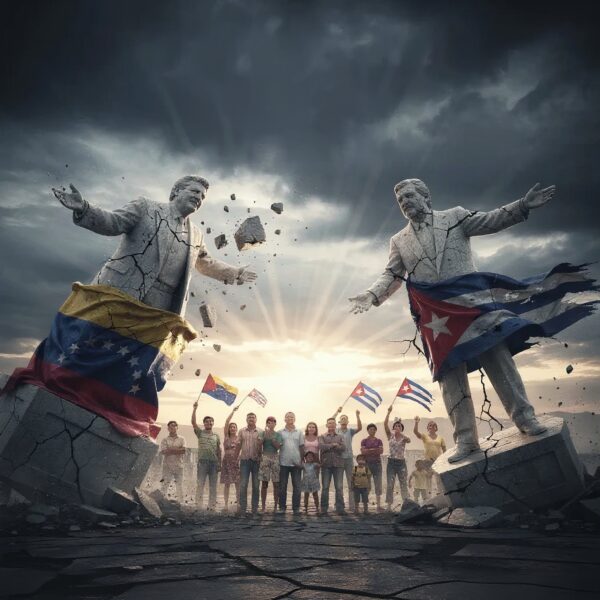
U.S. National Security: Mexico’s Strategic Role.

The United States views Mexico as a crucial player in its geopolitical strategies concerning Latin America, particularly in relation to Venezuela and Colombia. Recent actions suggest a testing ground for influence in Mexico, amid concerns about its alliance with drug traffickers and opposition to U.S. policies. Mexico’s foreign policy risks increasing regional tensions.

Must-Watch Video: State of the World 2025

Ian Bremmer’s annual State of the World address on October 21, 2025, in Tokyo outlined key geopolitical developments, including growing global uncertainty due to the unpredictable U.S., evolving U.S.-China relations, and strategies adopted by U.S. allies. The speech was part of the 2025 GZERO Summit hosted by Eurasia Group.

Numbers.

The text emphasizes the significance of statistics in human civilization, tracing its historical origins and evolution. It highlights statistics’ contributions to various fields, including public health and safety, while underscoring the necessity for independent data sources to maintain accountability. Ultimately, it advocates for the recognition and seriousness of statistics, especially on World Statistics Day.

The Global Impact of Trump’s Policies: A Geopolitical Analysis.

Churchill’s observation about Americans reflects current U.S. actions under President Trump, which have destabilized global order established post-World War II. By fostering nationalist ideologies and undermining alliances, Trump’s strategy benefits countries like China and impacts U.S.-Mexico relations, highlighting complexities in migration and economic dependability on Mexican labor.

The Fascination With Disaster.

In a landscape filled with immediate crises, such as pandemics and wars, long-term threats like climate change struggle for attention. Despite undeniable evidence and urgent warnings, human fascination with catastrophe persists, reflecting a desire for last chances. Cultural narratives can amplify this paradox, revealing deeper psychological connections to destruction and survival.

Lessons from Kipling: Power and Memory Today.

The article reflects on contemporary global political dynamics, drawing parallels between historical and current leadership in the U.S. It critiques Donald Trump’s approach to governance as deeply self-serving, contrasting it with past administrations that sought global cooperation. It concludes that today’s events reveal a power struggle influenced by historical economic rivalries and geopolitical strategies.

The Award That Takes Mexico’s Mask Off.

María Corina Machado’s receipt of the 2025 Nobel Peace Prize highlights her fight against Nicolás Maduro’s regime in Venezuela, fostering renewed hope for democracy among citizens. However, Mexico’s government, represented by President Sheinbaum, notably refrains from supporting Machado, instead maintaining ties with Maduro’s dictatorship, exposing contradictions in Mexico’s foreign policy.

Governing Means Choosing.

Governance involves making difficult choices among conflicting alternatives, often revealing complexities after election promises are made. Current fiscal pressures highlight the struggle to stabilize budgets while fulfilling ambitious pledges. As governmental strategies clash with investor interests, Mexico’s potential for economic growth is threatened unless effective choices are prioritized to foster prosperity.

Luis Maizel’s Monthly Letter: A Paralized Government in a Polarized Country.

Today, we woke up to a government shutdown and without resources. United States law establishes a maximum debt limit that only Congress can increase. The Republicans’ budget proposal was rejected by the Democrats, who demanded a series of concessions in order to vote in favor of temporarily raising the debt ceiling.

Shares