The Snake Bites its Tail.

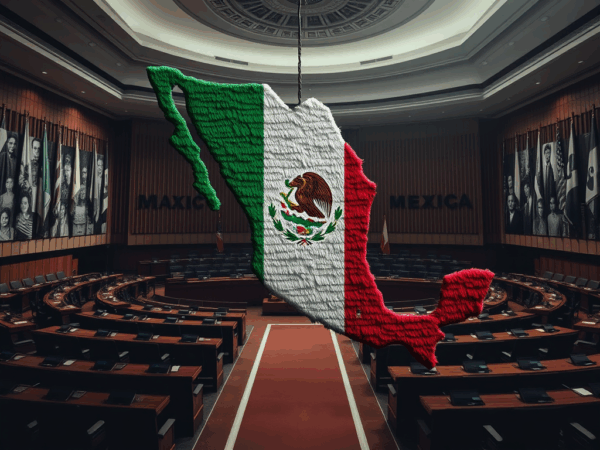
Andrés Manuel López Obrador’s political strategy has always been that the best defense is a good offensive. This strategy involves a willingness to pay an increasingly high price to advance his goals. Polarization is the cornerstone of Morena’s strategy. Attacking, defaming, and lying are its weapons. The logic of the attack strategy is to continue relentlessly until the enemy is annihilated—attack like a snake.

The Impact of AI on Society: Who Holds the Power? The New Mandarins.

The digital revolution has advanced without clear understanding, with generative artificial intelligence offering both innovation and risks. A small elite, potentially 200 experts, controls its development, leading to concentrated knowledge and power. The future depends heavily on these individuals’ mental health, evoking concerns of societal manipulation akin to historical elite dominance.

The Complex Dynamics of US Intervention in Mexico.

In her first year, President Sheinbaum of Mexico has seen an influx of US officials visiting, notably Marco Rubio. Washington has conflicting views on how to engage with Mexico, viewing it as a national security risk due to cartel influence. Ultimately, US intervention seems likely, with Sheinbaum’s political weakness aggravating concerns.

The Future of the Opposition in Mexico: Is There Hope?

Luis Rubio discusses the historical rise of the PAN in Mexico through a gradual strategy, contrasting it with today’s fragmented opposition. Current parties, lacking competent leadership, struggle to challenge the ruling Morena party, which remains tied to López Obrador’s leadership. The future of viable alternatives is uncertain amidst ongoing political stagnation.

Exploring Beethoven’s Triple Concerto: A Musical Feast.

Beethoven’s Triple Concerto showcases his inventive spirit and humor through complex architecture and melodic richness. Celebrated artists Anne-Sophie Mutter, Yo-Yo Ma, and Daniel Barenboim, accompanied by the West-Eastern Divan Orchestra, deliver a vibrant performance of this uplifting piece at the Philharmonie, Berlin in 2019.

The Arab Spring 15 Years Later.

Mohamed Bouazizi, a young Tunisian fruit and vegetable vendor, set himself on fire in public after police confiscated his merchandise and slapped him in front of onlookers. With this extreme gesture of protest and helplessness in the face of police abuse and living conditions under a corrupt regime, his charred body sparked revolt across North Africa, and the world enthusiastically welcomed what we came to know as the Arab Spring.

Ernesto Zedillo y Juan Luis Cebrián Dialogan Sobre la Democracia en Riesgo.

Ernesto Zedillo, expresidente de México (1994-2000), promovió la modernización democrática y luchó contra el narcotráfico. Su gestión se destacó por enfrentar crisis económicas y cerrar 71 años de dominio del PRI. Actualmente, lidera el Centro para el Estudio de la Globalización en Yale, donde Obtuvo el Doctorado en ciencias económicas.

Gold Market Commentary: Stubburn Stagflation.

The content discusses the current gold market amidst persistent stagflation, emphasizing rising gold prices driven by economic uncertainties. It includes links to various related articles, covering topics like tariffs, economic outlooks, and strategies from financial leaders, providing insights into the implications of these factors on the global economy and investment climate.

Politics in the Age of Digital Doubles.

The political landscape is shifting as robotic advancements outpace human leadership qualities, with candidates utilizing digital avatars to connect with voters, particularly the youth. However, this reliance risks distorting authenticity and promoting authoritarian tendencies, as illustrated by Yoon Suk-yeol’s presidency, which ended in impeachment due to his detachment from reality.

The End of American Hegemony: China’s Rise Explained.

The recent display of power by China signifies a shift away from the values of democracy, human rights, and equality once championed by the West. With the U.S. under Trump’s leadership becoming increasingly isolated, authoritarian regimes are strengthening alliances. The global order is changing, favoring authoritarianism over democratic principles.

Shares