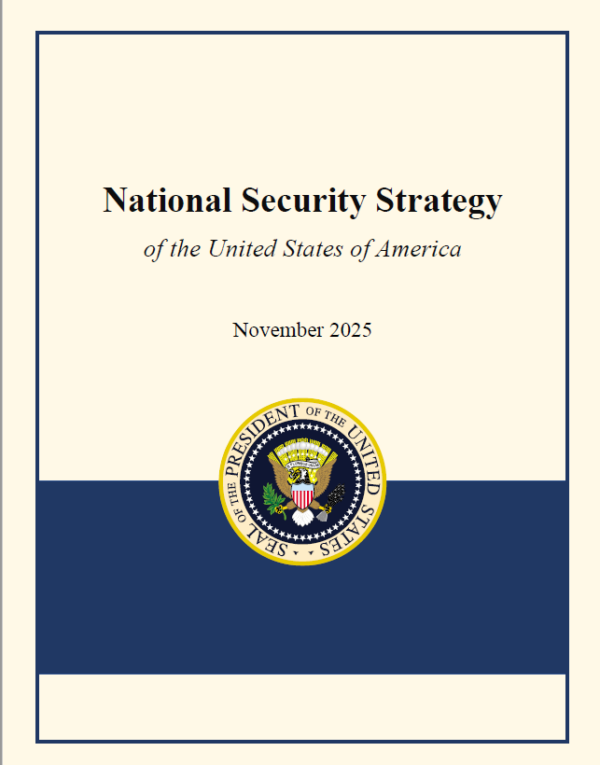
U.S. National Security Strategy.
This official report of the United States Government outlines the priorities of the Trump administration concerning foreign policy, revealing a shift in its geopolitical strategy and values.

This official report of the United States Government outlines the priorities of the Trump administration concerning foreign policy, revealing a shift in its geopolitical strategy and values.

The Canadian economy is expected to grow slightly over 1% in 2025 and 2026, avoiding recession despite trade uncertainties. Consumer spending and government initiatives support growth, though unemployment may rise initially. Regional economic performances differ, with Atlantic Canada performing well, while Ontario faces significant challenges due to tariffs and real estate corrections.
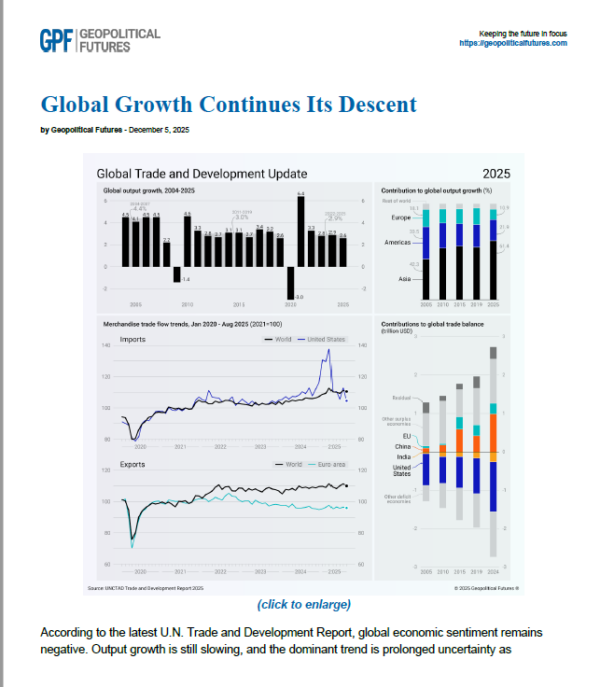
The post discusses ongoing trends in global growth. In addition there are links for multiple articles on geopolitical and economic issues. Key topics include U.S. polarization, organized crime, economic outlooks for Mexico, gold demand trends, governmental effectiveness, and significant initiatives from financial institutions aimed at enhancing resilience in critical sectors.
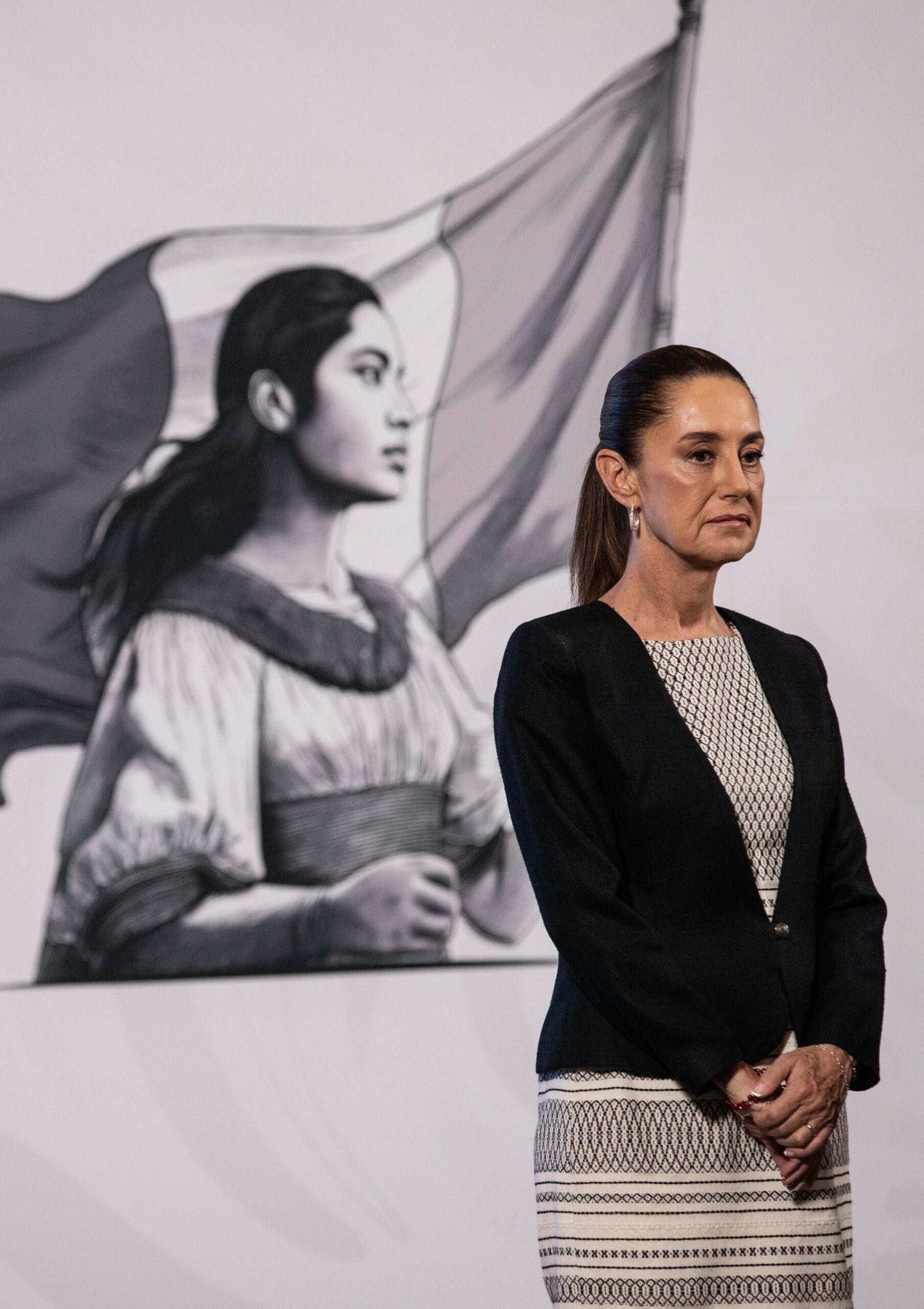
The 2027 election poses significant challenges for President Sheinbaum and her party, Morena, as they navigate complex electoral reforms and candidate selections. The looming conflict with López Obrador, who asserts his influence over candidate appointments, raises concerns about governance and party unity, echoing historical political struggles in Mexico. Time is critical.

ith less than four weeks to go before we bid farewell to 2025—amidst the fury, the din, the missiles, and the drones—it is inevitable that we pause and take stock of how, in our political and social sphere, we will close out the year. Now that the first quarter of the century is over, we understand that we are not living in exceptional circumstances. Each period leading up to the world wars was unique in its time, yet they all shared the same air of menace.

Any analysis of López Obrador’s book “Grandeza” (Greatness) must start from its essentially political and ideological nature, rather than as an academic historical review. It is a text written based on assumptions about the past to explain and defend his vision of the present. López Obrador’s book is a gem for studying how a man imbued with Judeo-Christian values seeks to twist the human experience to fit his very particular vision of the universe and the humanity that inhabits it.

The text discusses Mexico’s struggle to achieve sustained economic growth since the mid-20th century, emphasizing the failures of successive governments. It highlights the paradox of Mexico as both prosperous and stagnant, attributing this to neglect of critical infrastructure and effective governance. Political conflicts further hinder needed reforms.

In 2023, journalists uncovered “Team Jorge,” an Israeli company manipulating elections worldwide, claiming to have influenced 33 elections. Led by Tal Hanan, the firm employed a vast network of digital avatars for disinformation. The investigation revealed the persistent threat of digital manipulation, highlighting the evolving landscape of political influence.

Jesús Reyes Heroles, born in 1921, whose home had no books, left Tuxpan to find a secondary school. He went to Tampico, where he found one. A good student and obsessive reader, he had to migrate again to San Luis Potosí in search of a high school. Later, in Mexico city, he entered law school, living in a horrible place. Determined to move forward, he obtained a scholarship in Buenos Aires and embarked on his postgraduate studies. In the past, the possibility of broadening one’s life spectrum through education and economic growth existed. No more.

The political climate in the U.S. is increasingly polarized, with extreme leftist and rightist ideologies dominating. Economic indicators show stability, despite rising layoffs and inflation. In Mexico, business sentiment is low amid government unrest. Globally, economic growth varies, with advancements in AI and challenges in countries like China and Japan.