
Milei’s Victory: A Shift in Argentina’s Political Landscape.

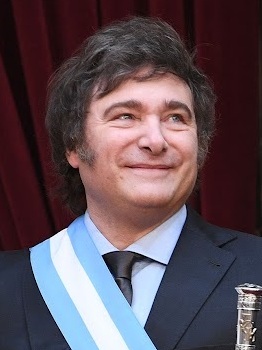
Javier Milei’s recent electoral victories in Argentina reflect public discontent with Kirchnerism’s governance, characterized by corruption and economic ruin. His administration has reduced inflation and poverty while navigating political challenges. With newfound congressional support, Milei aims to implement economic reforms and stabilize governance, challenging expectations and potential outcomes.

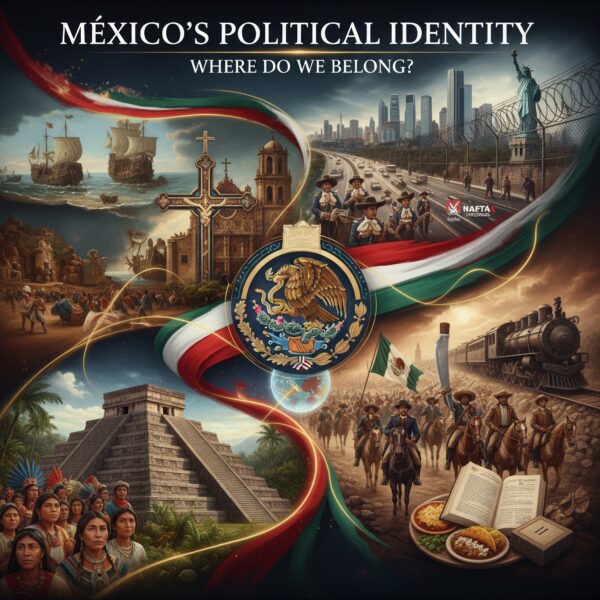
Mexico’s Political Identity: Where Do We Belong?

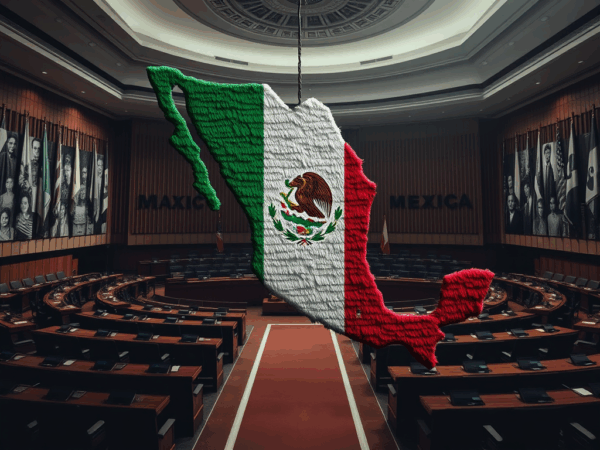
Blood, but above all, personal will and instinct are powerful magnets. They define who we follow, who convinces us, and who does not suit us. And today, more than ever, Mexico needs to ask itself who it is. To which orbit does it belong, and which world does it want to join?

The Crisis in Mexico: Governance Under Sheinbaum’s Leadership.

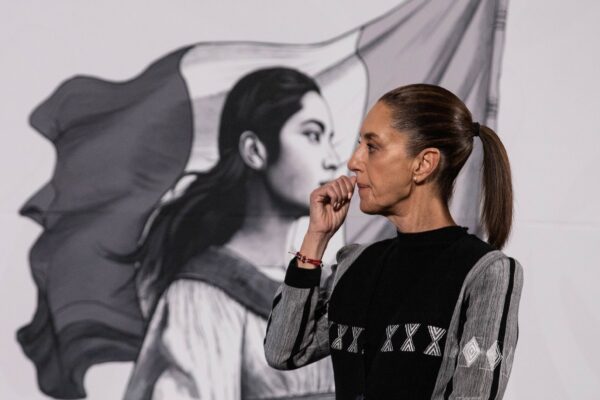
Claudia Sheinbaum faces an escalating political crisis as López Obrador threatens armed insurrection should she deviate from his ideological framework. Historical parallels with past Mexican presidencies highlight her precarious position. As internal chaos and economic stagnation grow, Sheinbaum struggles to assert authority while balancing national loyalties amid increasing social unrest.

Authoritarian Populism and Media Warfare.

Pablo Iglesias, former vice president of Spain, embraces authoritarian populism through media initiatives like Canal Red and Diario Red, aiming to polarize audiences. Backed by substantial foreign funding, his approach seeks to challenge liberal democracy, promoting a narrative against reactionary voices while manipulating public discourse in Latin America and beyond.

U.S. National Security: Mexico’s Strategic Role.

The United States views Mexico as a crucial player in its geopolitical strategies concerning Latin America, particularly in relation to Venezuela and Colombia. Recent actions suggest a testing ground for influence in Mexico, amid concerns about its alliance with drug traffickers and opposition to U.S. policies. Mexico’s foreign policy risks increasing regional tensions.

Must-Watch Video: State of the World 2025

Ian Bremmer’s annual State of the World address on October 21, 2025, in Tokyo outlined key geopolitical developments, including growing global uncertainty due to the unpredictable U.S., evolving U.S.-China relations, and strategies adopted by U.S. allies. The speech was part of the 2025 GZERO Summit hosted by Eurasia Group.

The Coup D’état in Venezuela.

The text criticizes Nicolás Maduro’s regime in Venezuela, labeling him a perpetrator of a coup rather than a victim. It highlights his manipulation of electoral results, control of the judiciary, and external support from Cuba and Russia. The author accuses the populist left of hypocrisy and complicity in perpetuating Maduro’s dictatorship.

Cayetana Álvarez de Toledo – Conferencia “Los Enemigos de la Libertad de Expresión”

La conferencia “Los enemigos de la libertad de expresión” presentada por Cayetana Álvarez de Toledo se llevó a cabo el 31 de enero de 2025 en el Museo Americano de la Diáspora Cubana en Miami. Incluye un enlace al video y una lista de lecturas y videos complementarios relacionados con democracia y derechos.

A Nobel Prize that Forces to Take a Stand.

The well-deserved Nobel Peace Prize awarded to María Corina Machado will not remove Nicolás Maduro from power because narco-governments do not bow to anyone’s moral authority. Staying in control is the fundamental condition for survival. He heads a narco-government. Less than a century ago, the most prosperous countries in Latin America were Argentina, Venezuela, and Cuba. And now? They suffer for having been lured by the siren song of populism.

Venezuela’s Struggle for Democracy: The Rise of María Corina Machado

Image: on instagram.com

Federico Reyes Heroles

Julio María Sanguinetti, that great figure, said: “…contrary to what is said, the 1980s were not a lost decade—he was referring to the economy—…for Latin America, it was a decade of democratic progress. But now, everything looks different.” This must have been around 2010. Castro was still in power. Nicaragua was already under the Ortega dictatorship. Honduras was in the throes of coups and violence. Argentina was back to the corruption of Peronism. And Hugo Chávez, yes, the same man who attempted a coup against Carlos Andrés Pérez, was ruling Venezuela and suffocating democracy in his country. Riding on a wave of brutal repression in all areas, he set new records. The country, considered in the 1950s, along with Colombia and Costa Rica, one of only three democracies on the continent, was subjugated by the United Socialist Party of Venezuela, Chávez’s instrument for silencing any opposition. The former coup army officer had already formed the Bolivarian Movement. President Rafael Caldera dismissed the case and released Chávez. The Fifth Republic Movement was born and brought him to the presidency in 1998. Re-elected in 2000, he won a referendum in 2004 and was re-elected again in 2006. Democracy opened the door for him, and he destroyed it. Only death removed him from power in 2013.

Photo: Jorge Silva /REUTERS on reuters.com

A new constitution revealed his perverse intentions. Electoral institutions were co-opted or destroyed, as was the judiciary. Exceptionally high oil prices enabled a boom period during which poverty declined, and social programs brought medicine and food to households. But reality set in, spending was unsustainable, and collapse ensued. Crime increased, corruption flourished, and “enabling laws” facilitated censorship and the persecution of critics. The end of freedoms had arrived. The “neighborhood” fell into line: the Castros in Cuba, Evo Morales in Bolivia, Rafael Correa in Ecuador, Tabaré Vázquez in Uruguay, Lula da Silva in Brazil, and, of course, the Ortegas in Nicaragua. Honduras was caught in a cycle of coups and violence. Haiti in disaster

Photo Krittiraj Adchasai on iStock

Maduro, the heir apparent, aggravated the situation: 9.3 million people in food insecurity, an exodus of around eight million Venezuelans, almost a third of the population—a tragedy. Fortunately, the Venezuelan opposition also grew stronger at the same time.

Photo: on UNICEF

One figure rose to prominence on the world stage: María Corina Machado. She started with a foundation to care for children in poverty; she founded the NGO Súmate to fight for electoral transparency and to push for the revocation of the highly questionable referendum that gave Chávez the green light. The ruling party removed her from Congress and accused her of “treason” for meeting with George W. Bush.

Photo: Eric Draper/White House Photo

Later, through Vente Venezuela, she achieved remarkable social participation, consistently through peaceful means. This remarkable woman has exposed the atrocities of the dictatorial regime. In the underground, she has endured all kinds of intrigues and threats.

Photo: on ventevenezuela.org

That is what the Nobel Committee rewarded: “…for her tireless work to promote democratic rights for the people of Venezuela…,” argued its president. “When authoritarians take power, it is crucial to recognize the courageous defenders of freedom who stand up and resist.”

Image: on facebook.com

The crossroads were clear: recognizing the value of Machado’s struggle meant accepting that Maduro is trampling universal values. We are still waiting for the records that prove his victory in 2024. She aligned herself with ideology. She took refuge in the flexible Estrada doctrine: non-intervention. But in the case of Peru, the legal removal of Boluarte, her interference is acceptable. Again, ideology, not principles. But the historical causes of the old Mexican left were similar. Left-wing dictators, welcome. A superior morality assists them.

Photo: Alexander van Steenberge on Unsplash

Loyalties or principles? There were no nuances.

Image: AI-generated using Shutterstock’s system

No comment.

Photo: on ambito.com

Further Reading:

https://sepgra.com/morena-a-legacy-of-corruption-nepotism-and-mismanagement/
https://sepgra.com/the-danger-of-systematic-lying-in-government/
https://sepgra.com/the-invasion-of-the-little-angels/
https://sepgra.com/challenges-and-triumphs-in-contemporary-mexico/
https://sepgra.com/it-was-foreseeable/
https://sepgra.com/barbarism/
https://sepgra.com/is-mexico-a-sovereign-republic/
https://sepgra.com/mexicos-democratic-crisis-a-call-for-action-v/
https://sepgra.com/mexicos-democratic-crisis-a-call-for-action-iv/
https://sepgra.com/mexicos-democratic-crisis-a-call-for-action-iii/
https://sepgra.com/mexicos-democratic-crisis-a-call-for-action-ii/
https://sepgra.com/mexicos-democratic-crisis-a-call-for-action/
https://sepgra.com/the-fiats-republic/
https://sepgra.com/those-blessed-memories/
https://sepgra.com/farewell-to-democracy/
https://sepgra.com/the-corseted-prince-challenges-in-mexican-leadership/
https://sepgra.com/four-words/
https://sepgra.com/auditing-a-good-idea/
https://sepgra.com/the-absence-of-mexicos-president-at-francis-funeral-a-deep-dive/
https://sepgra.com/ruination-day/
https://sepgra.com/coyoacan-sets-the-course/


Share and Enjoy !

Shares
Shares