The Complex Nature of Democracy: Insights and Quotes

Democracy is a complex concept that varies in interpretation, providing a framework for governance and legitimacy in society. Mexico’s current Morena government has approached democracy in a literal sense, raising concerns about its procedural integrity and the representation of public preferences. The quality of democracy in Latin America remains critically at stake.

Pause.

Michael Ignatieff explores the necessity of promoting trust and overcoming division in diverse societies in “Everyday Virtues.” He emphasizes the importance of a strong societal framework for coexistence, reflecting on global examples. Additionally, innovative publications by various authors and artists celebrate culture and humanity, enriching our understanding of history and the present.

2025: A Year to Remember.

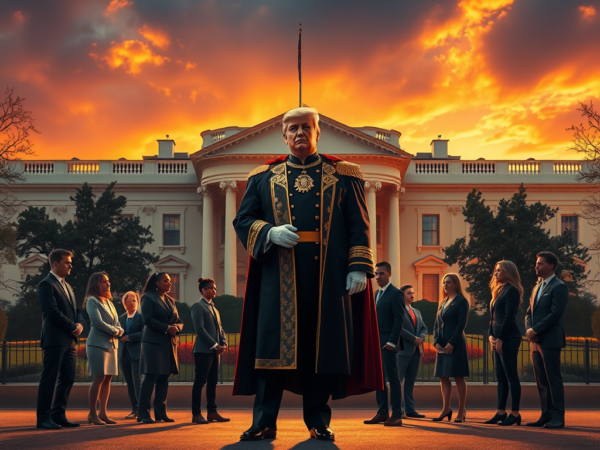
The end of the year reflects a challenging global climate, with wars and economic instability. Trump’s administration has shifted power dynamics in the U.S., sidelining traditional political structures. The upcoming USMCA renegotiation will be crucial for regional economic stability, as issues of leadership ineptitude underline a deeper crisis in democracy and governance.

My Readings in 2025.

In times of upheaval, many books emerge addressing significant geopolitical and historical themes. Noteworthy titles include Hal Brands’ exploration of Eurasian geopolitics and Claudio Lomnitz’s analysis of Mexico’s dual realities. Robert Kaplan’s pessimistic insights mirror the Weimar Republic, highlighting the fragility of democracy, while Timothy W. Ryback details Hitler’s rise without popular support.

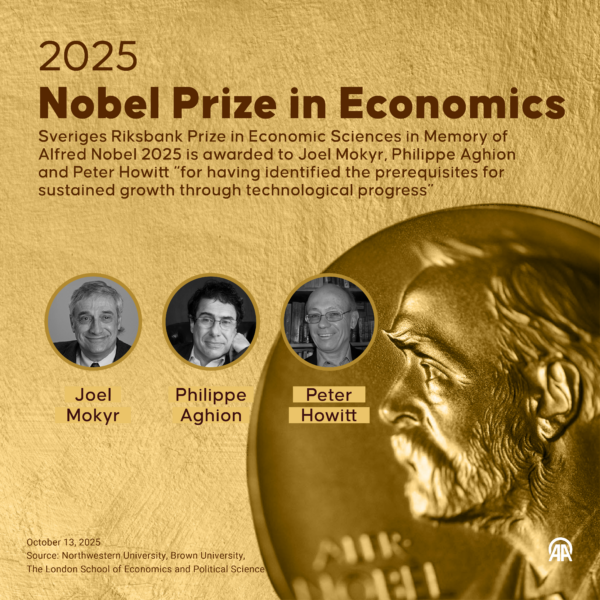
The Nobel Prize in Economics is Explained Simply.

Joel Mokyr, Philippe Aghion, and Peter Howitt won the 2025 Nobel Prize in Economics for their contributions to understanding economic growth through “creative destruction.” Their work clarified how innovation transforms markets, enhancing productivity and well-being, while emphasizing the necessity for continuous renewal as a driver of societal advancement and economic resilience.

The Role of Ethics in Global Politics and Human History.

The content discusses the role of ethics in history and modern society, highlighting global challenges such as migration, racial tensions, and governance failures, particularly in the U.S. and Mexico. It emphasizes the need for ethical leadership and cooperation in addressing crises, while critiquing demagoguery and the loss of democratic values.

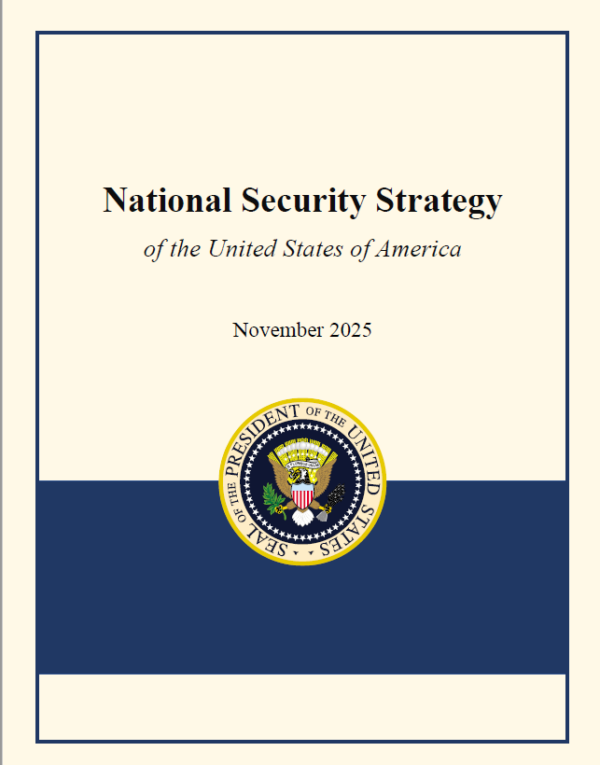
U.S. National Security Strategy.

This official report of the United States Government outlines the priorities of the Trump administration concerning foreign policy, revealing a shift in its geopolitical strategy and values.

Luis Maizel’s Monthly Letter: The United States Is Becoming Increasingly Polarized.

The political climate in the U.S. is increasingly polarized, with extreme leftist and rightist ideologies dominating. Economic indicators show stability, despite rising layoffs and inflation. In Mexico, business sentiment is low amid government unrest. Globally, economic growth varies, with advancements in AI and challenges in countries like China and Japan.

The Five Years of Sepgra.

In June 2020, Sepgra emerged as a virtual platform during the pandemic, providing insights on global economic and political issues. Over five years, it published 1978 articles covering diverse topics, navigating challenges like economic turmoil, political polarization, and the impacts of Covid-19, illustrating adaptability while aiming for quality, unbiased content.

The Economics of Attention.

The essay discusses the evolution of attention economy from the invention of the bikini by Louis Réard in 1946 to the digital revolution. Yanis Varoufakis argues that society has shifted from tangible goods to a system where attention is commodified, creating techno-feudalism. Users, now products, face a challenge in reclaiming focus amidst constant distraction.

Shares