
Former MI6 boss on Trump, Putin and a ‘New Era’ for International Relations.

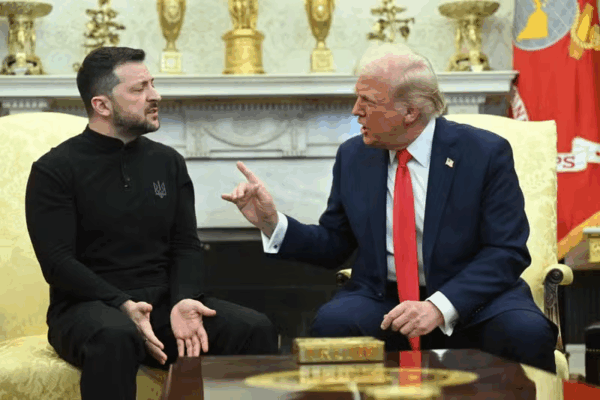
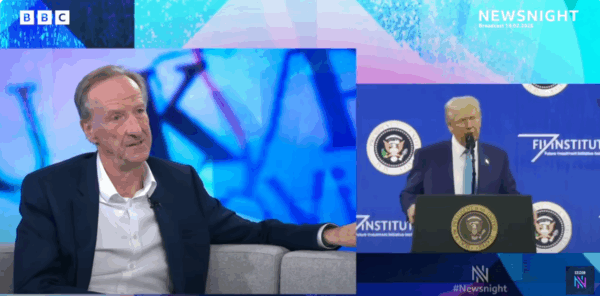
As Donald Trump labels Ukraine’s President Zelensky a “dictator” amidst US-Russia peace talks, Sir Alex Younger and Catherine Belton analyze the implications for international relations. They suggest the White House is initiating a potentially transformative “new era” in diplomacy during a discussion featured on BBC’s Newsnight program.

It had to be Munich.

The post discusses the historical context of communism and compares it to contemporary political phenomena, particularly the influence of Donald Trump on U.S.-European relations. It highlights the erosion of traditional alliances, the internal crises faced by the U.S., and how authoritarianism gains traction amid global instability. The implications of this shift are profound.

What Kyiv is saying

The Kyiv Independent critiques Trump’s approach to the Ukraine war, suggesting he aims for a settlement favoring Putin. The mood in Ukraine reflects resistance to conceding territory, encouraged by recent U.S. interests in Ukraine’s rare earth minerals. A long-lasting peace seems distant, with Kyiv hesitant to engage in talks lacking clear conditions.

The Ukrainian Opportunity.

The Trump administration’s handling of the Ukraine conflict has faced criticism for prioritizing negotiations with Putin while sidelining Ukrainian interests, leading to significant diplomatic blunders. Zelensky emphasized Ukraine’s need for NATO inclusion and condemned any peace that sacrifices territory, drawing historical parallels to appeasement strategies that failed in the past.

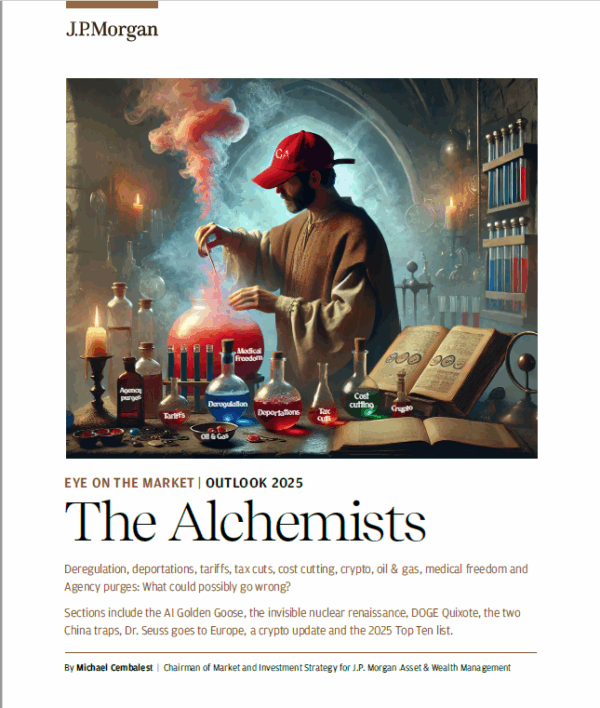
JP Morgan’s Eye on the Market 2025 Outlook.

The document provides navigation instructions for reading its contents and includes a list of additional resources and videos related to various topics, such as Trump’s foreign policy, global economic prospects, and political risks for 2025. Each link offers further insights into distinct global issues.

An Attempt at Explaining Trump’s Foreign Policy.

U.S. President Donald Trump’s second term emphasizes a shift in foreign policy, marked by aggressive tariffs against China and threats to allies. While these actions reflect a strategy to leverage economic power for concessions, new initiatives like the annexation of Greenland suggest broader ambitions, potentially transforming trans-Atlantic relations.

Trump, at war with the United States,

Donald Trump’s presidency has seen aggressive maneuvers aimed at undermining U.S. allies, exemplified by delayed tariffs that threaten Mexico’s economy and weakened support for Ukraine. His actions reflect a self-serving ideology, with dangerous implications for international relations, cultural diversity, and democracy, fostering divisions and vulnerability in both the U.S. and Latin America.

“The World As We Knew It Is Dead”

The content discusses the global crises stemming from institutional failures post-World War II, comparing the current U.S. situation to historical empires. It highlights the rise of populism linked to disillusionment with democracy, the shift in global power towards China, and the need for new sovereignty concepts in North America. The piece critiques failed governance in Europe and addresses geopolitical dynamics in the Middle East and Russia.

The Era of Certainties: Trump and Political Change

The content discusses the implications of Donald Trump’s return to the presidency, framing it as the start of an era of certainties amid a political landscape marked by concentrated power. It highlights potential conflicts, disruptive policies, and Trump’s alliances, particularly with technocrats like Elon Musk, as shaping U.S. and global dynamics moving forward.

Shares