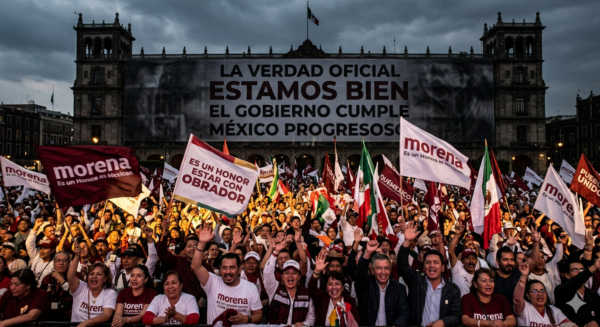
The Double Standard of Moral Outrage in Mexican Politics.

The post criticizes the hypocrisy of leftist Mexican opinion on international law, highlighting their selective outrage against the US while defending authoritarian regimes. It argues that invoking sovereignty to protect dictators is opportunistic, noting historical examples where moral responsibility superseded legal constraints. Ultimately, it warns that ideological consistency jeopardizes Mexico’s national interest in trade and diplomacy.

Governments vs. People: Navigating Sovereignty in Latin America.

The text discusses the evolving relationship between state sovereignty and individual rights, highlighting the inadequacies of the UN in addressing modern issues. It critiques the actions of authoritarian regimes and the failure to uphold human rights, particularly in Latin America. The dilemma of defending people versus governments is central to the discussion.

Luis Maizel’s Monthly Letter: Inflation vs. Unemployment. The Fed’s decision.

The U.S. economy shows signs of growth amid rising unemployment and inflation. The Fed faces pressure to lower interest rates further while managing tariff controversies. Positive trends in home sales and consumer activity contrast with negative sentiments about affordability and confidence. Globally, economic fluctuations persist, impacting trade and investments.

Eurasia Group Top Risks 2026

The year 2026 marks significant geopolitical instability, driven by an unpredictable U.S. political shift and ongoing global conflicts. While some nations, like China and India, bolster their positions, Europe faces heightened challenges. An AI revolution is also underway, complicating governance. The global landscape is turbulent, with lasting implications for future generations.

Unmasking the Dual Standards in Latin American Diplomacy.

Brazil, Chile, Colombia, Uruguay, Mexico, and Spain issued a joint statement condemning unilateral military actions in Venezuela, emphasizing adherence to international law and advocating for dialogue led by Venezuelans. However, the critique highlights the hypocrisy of these nations, which previously failed to challenge Nicolás Maduro’s human rights violations and electoral fraud.

Venezuela’s Strategic Role in Global Conflicts.

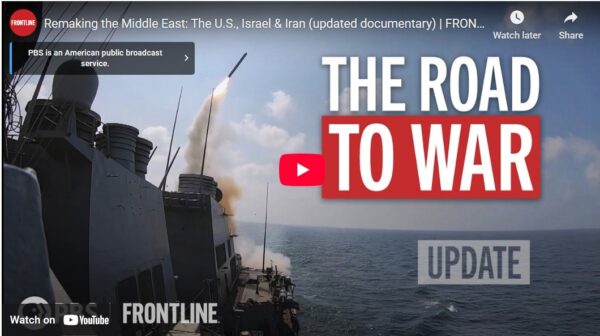
The power of weapons is evident. A country that spends nearly $200 billion annually on defense, invests around $200 million daily, and, at least in theoretical terms, has the best army in the world, should be able to impose its will. Both the United States and Russia boast cutting-edge armed forces, but recent experience has shown that theoretical superiority does not guarantee victory.

Maduro Has Fallen. What’s Next?

With Nicolás Maduro’s forced removal from Venezuela, a new historical stage begins in the relationship between the United States and Latin America. As Marco Rubio said at the press conference on the same day as the military action in Caracas, “those who did not believe we would act, take note: we did act, and we are serious.

The Aftermath of the Berlin Wall—and Mexico’s Missing Lesson.

The fall of the Berlin Wall in 1989 allowed Eastern European nations to reshape their political and economic landscapes. While countries like Poland thrived under effective leadership, Mexico’s current government, lacking opposition and relying on flawed policies, is likely headed for stagnation. This raises concerns about the sustainability of its strategies.

The Art of Listening: A Key to Civic Resolutions

The content explores the importance of listening in personal and societal discourse, citing examples from literature and social media. It critiques the lack of genuine conversation in political debates, where interruptions prevent thoughtful engagement. The piece argues that effective decision-making relies on diverse perspectives and emphasizes the need to revive the art of listening.

Neither Less Poverty, Nor Less Violence.

The National Institute of Statistics and Informatics (INEGI) reported optimistic economic data for Mexico, claiming job growth and reduced crime. However, real incomes are declining, and most workers are in the informal sector, leading to increased poverty. The government’s statistics misrepresent the harsh realities facing many citizens, particularly regarding violence and economic hardship.

Shares