
Ricardo Pascoe Pierce
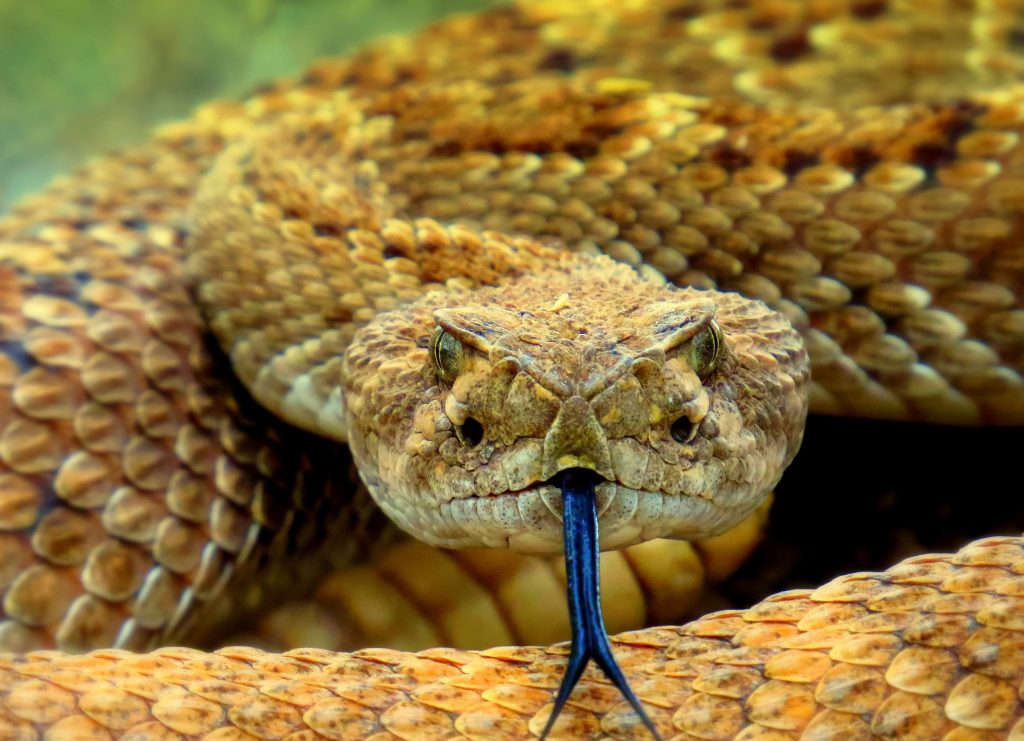
Andrés Manuel López Obrador’s political strategy has always been that the best defense is a good offensive. This strategy involves a willingness to pay an increasingly high price to advance his goals. Polarization is the cornerstone of Morena’s strategy. Attacking, defaming, and lying are its weapons. But polarization should not only occur sporadically; it must be deepened permanently, to the point of demoralizing opponents who stand in the way. The logic of the attack strategy is to continue relentlessly until the enemy is annihilated—attack like a snake.
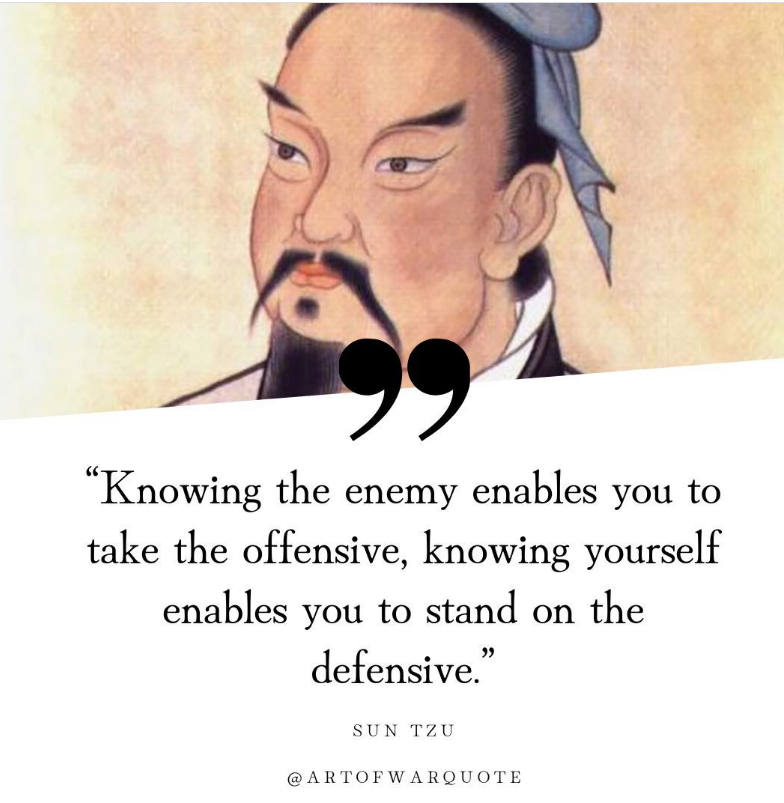
Polarization creates its own enemies. When you polarize, social, political, economic, and military resistance emerges that must be overcome. If polarization had not been promoted, that resistance would have remained calm, contained, and withdrawn in a context of democratic competition. By resorting to polarization as the central strategy of the Morenista conglomerate, it is impossible to avoid a tactical conclusion. Sun Tzu wrote that defense and offensive are two sides or pieces of a single strategy. Defense is the preparatory stage to strengthen one’s own army. The decisive phase is the offensive, the moment when victory is sought. They are applied together or separately, depending on the specific circumstances. What unites the two sides of the single strategy (defense-offensive) is the option of tactical or strategic retreat. Retreat is the space for movement between defense and offensive. The dialectic between defense and offensive is a reflection of the complexity of the imponderable political, economic, social, and military circumstances that exist between the two movements. And tactical or strategic retreat is always the hinge between the two.
The temporary success of AMLO’s strategy in politics is mainly due to his ability to polarize, which enables him to subdue and control his movement, while ensuring that it follows him in his mobilization against the perceived social decay represented by the infidels. These infidels are perfectly defined as conservatives—those who preserve. And Morena’s army is that of the transformers.

It’s all about control and intimidation. The paradox of control becomes more complex when it comes to the process of consolidating the power of one over the others. The philosophical problem that this paradox presents is that, once governmental power or the center of command has been conquered, all interest becomes obsessively focused on the destruction of the opponent, thereby weakening control over the process because the entire political system becomes dependent on the leader. Centralization becomes the raison d’être of maintaining control over the masses, some of whom are compliant, but many of whom are also dissatisfied.

The government becomes not only more rigid and less attentive to social demands, but also places its obsessions at the center of its regular work, relegating even the interests of its own base. Its budgetary priorities are defined in terms of the leader and his or her needs. Many of these priorities do not align with the community’s interests. For example, Morena sacrifices the health and education of all Mexicans to continue with the system of handing out money as a priority for social control. This handout money does not solve the problem of poverty (some argue that it even perpetuates poverty, without providing stable employment). Still, the leader’s interest is not to have to contain social protests, so that he can devote himself to his budgetary priorities, including PEMEX, CFE, Tren Maya, Dos Bocas, and all the contractors involved in these businesses.
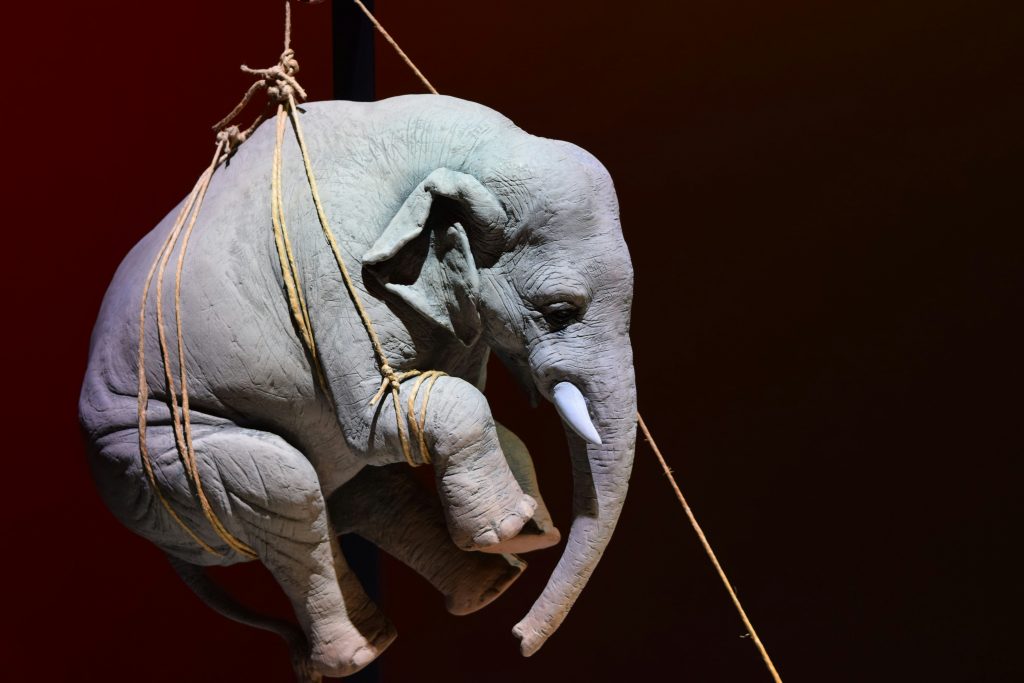
The best method of social control for the Morena regime is social and political polarization. It is the ideal tool to ensure the closure of ranks among its supporters, even if they lie, steal, and betray. These were simply phrases, as empty as the vast majority of political slogans in campaigns. The strength of the grassroots’ loyalty depends on a portion of the budget dedicated to handing out money to the people. That loyalty is as empty as the coffers of each household after spending that “pocket money.”

But in the paradox of control they are imposing on the country, the rigidity of their interests is beginning to undermine the country’s stability. AMLO had political control over the country. Sheinbaum does not; she has bureaucratic control, which is much less reliable. But she does not enjoy the political strength of her predecessor. The lack of centralist control opens the door to massive corruption that corrodes the foundations of this political movement. The snake is beginning to sow the seeds of its own destruction.
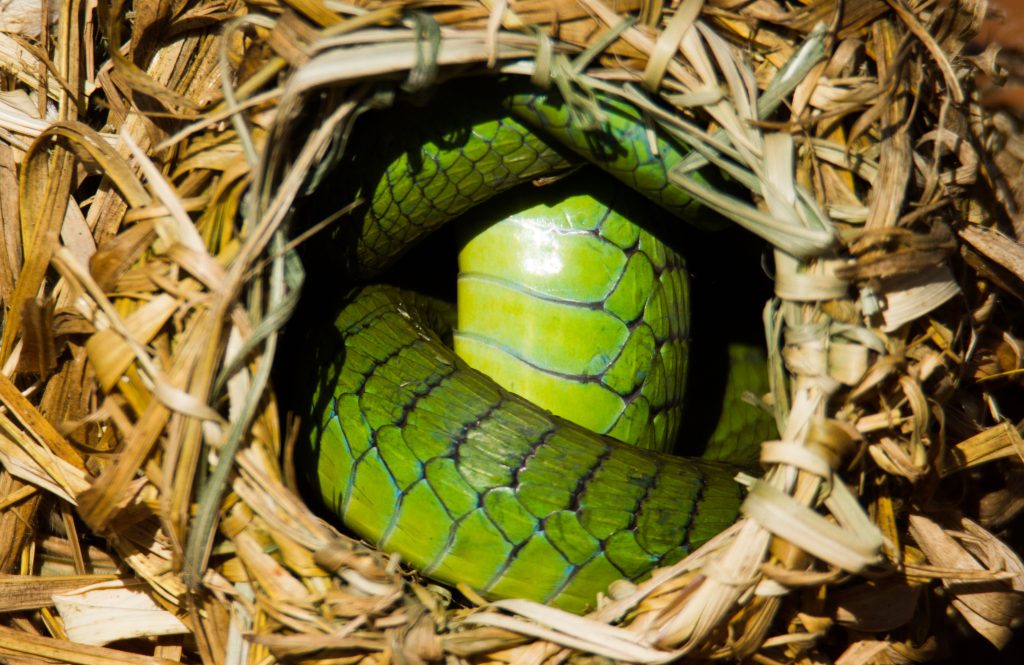
The signs are everywhere. The worst enemies of Morenistas today are other Morenistas. The leaks about La Barredora, fuel theft, Adán Augusto López’s income, and the leaks that will surely follow soon, coming from within the government and the party. These are warnings of how corruption is spreading through every pore of the government and the party, and so are the denunciations. The feast is over.

The decomposition of Morena is in the air. No one is in charge of that party. Morena governments are divided by factions and currents, but not for ideological reasons, but rather for material interests and access to the budget. Where did so many newly rich people suddenly come from, with properties all over the country? Their welfare cards do not explain much. The serpent’s eggs are scattered throughout Morena territory.

The paradox, therefore, is this: the greater the arbitrary political power, the less control they have over events, because they have more fragmented interests. But at the center of power, in the National Palace and Palenque, they cannot admit a single deviation from the path, not a single fault or corruption, nor a hint of illegality. To maintain the cohesion of the whole, they must ignore the deviations of the parts. They apply the ostrich policy, but the serpent is preparing to destroy the scaffolding of power.

We will therefore see the results of this paradox of centralized power in real time. Adan Augusto will not resign from any position, even though the vice admirals will be imprisoned, the fuel theft will be a buried issue, Hernán Bermúdez will remain silent and accept his time in prison without additional punishment, and Morena will talk about honesty ad nauseam. The president will insist, in multiple mañaneras, that the only person to blame for Mexico’s problems is Ricardo Salinas Pliego. Even more so than Salinas de Gortari and Calderón. Is he the new, and urgently needed, “object of hatred” of the 4T? The president’s words and tone of voice lack the strength and appeal necessary for such an undertaking.

In the logic of the “Morena system,” if one falls, the others fall like dominoes. Who are the others? We hear in the media, in intelligence reports, in the Guacamaya Leaks, and in hearings in the U.S. Congress that the list is long, as long as from here to Tijuana and back to Tuxtla Gutiérrez, passing coincidentally through Palenque. The Morena system suffers from progressive muscle paralysis due to the paradox that haunts it. As it becomes increasingly powerful, its internal unity is breaking down, and its lack of leadership condemns it to fragmentation, perhaps faster than imagined. It came to power, became corrupt, and is now tearing itself apart internally, just like what happened to the PRD.
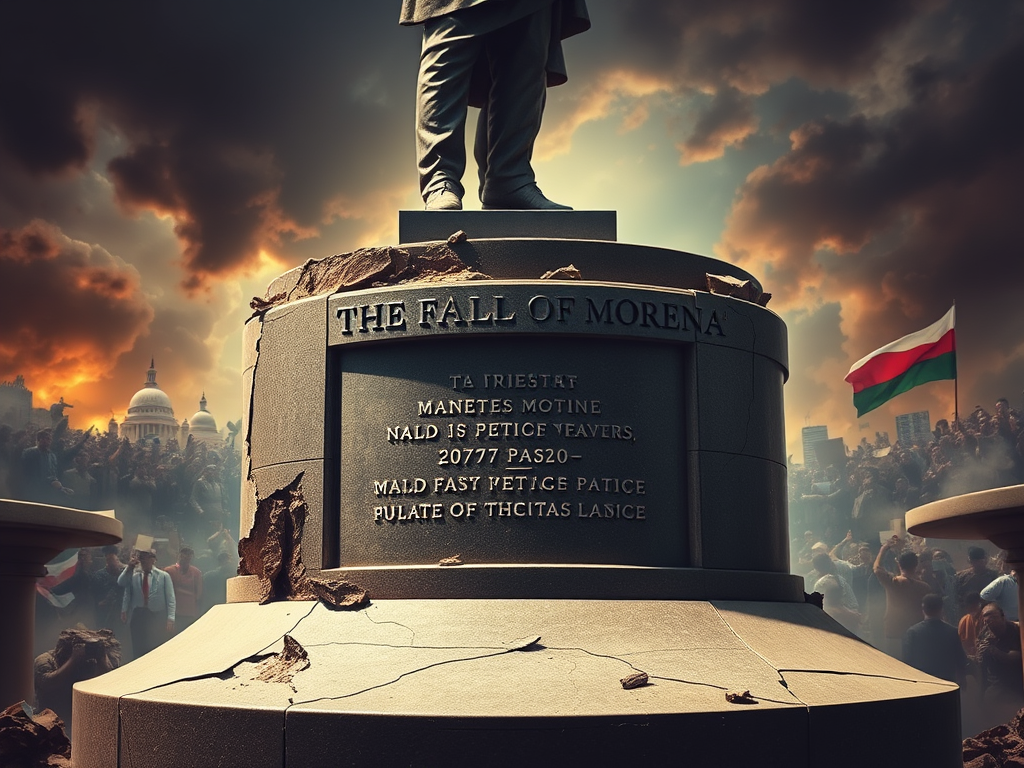
What remains to be seen is whether Morena will push Mexico down its downward path to hell, like a snake that swallows all power in one big bite, gets massive indigestion, and vomits it all up at the end of the day. Faced with such a fate, Mexico is called upon to show resistance and resilience, refusing to follow Morena’s self-destructive path and reconstituting itself as a democratic and constitutional republic.
@rpascoep
Further Reading: